
BuddhistCatholicContemplativeEvangelicalGeneral ChristianHinduJewishLatter-day SaintMuslimNew VisionsProgressive Christian
Beliefs
- Buddhist
- Catholic
- Contemplative
- Evangelical
- General Christian
- Hindu
- Jewish
- Latter-day Saint
- More Voices
- Muslim
- New Visions
- Pagan
- Progressive Christian
Topics
- Religion News
- Food and Religion
- Sports and Religion
- Religious Art
- Religious Music and Entertainment
- Religious Events
- History and Religion
- Style and Religion
- Politics and Religion
- Women in Religion
- Recreation Outdoors and Religion
- Business Finance and Religion
- Careers Workplace and Religion
- Education and Religion
- Family Parenting and Religion
- Health Fitness and Religion
- Home and Religion
- Relationships and Religion
- Technology and Religion
- Travel and Religion
Columnists
- Buddhist Columnists
- Business Finance and Religion Columnists
- Careers Workplace and Religion Columnists
- Catholic Columnists
- Contemplative Columnists
- Education and Religion Columnists
- Evangelists Columnists
- Family Parenting and Religion Columnists
- General Christian Columnists
- Health Fitness and Religion Columnists
- Hindu Columnists
- History and Religion Columnists
- Home and Religion Columnists
- Jewish Columnists
- More Voices Columnists
- Latter Day Columnists
- Muslim Columnists
- New Visions Columnists
- Nonreligious Columnists
- Pagan Columnists
- Politics and Religion Columnists
- Progressive Columnists
- Recreation Outdoors and Religion Columnists
- Relationships and Religion Columnists
- Religion News Columnists
- Religious Art Columnists
- Religious Events Columnists
- Religious Music and Entertainment Columnists
- Sports and Religion Columnists
- Style and Religion Columnists
- Technology and Religion Columnists
- Travel and Religion Columnists
- Women in Religion Columnists
Resource Library
- 2026 Calendar
- Library of World Religions
- The 100 Most Holy Places on Earth
- Patheos Answers
- Podcasts
- Videos
- Faith Leaders Database
- Anglican Episcopalian
- Bahai
- Baptist
- Buddhism
- Christianity
- Confucianism
- Eastern Orthodoxy
- Hinduism
- Holiness and Pentecostal
- ISKCON
- Islam
- Judaism
- Lutheran
- Methodist
- The Church of Jesus Christ of Latter-day Saints
- New Age
- Paganism
- Presbytarian and Reformed
- Protestantism
- Religion Behind the Scenes
- Roman Catholic
- Scientology
- Shia Islam
- Sikhism
- Sufism
- Sunni Islam
- Taoism
- Zen
- See all religions
Research Tools
 Ad-Free & Subscriber Log-In Subscription Support
Follow Patheos 

- Trending:
- Advent
- |
- Forgiveness
- |
- Thanksgiving
- |
- Election
- |
- Seasonal Holidays
- |
- Marriage

- Home
- Evangelical
- Politics and Religion
- God and the Contingency of This World
God and the Contingency of This World
Last updated on: November 25, 2026 at 6:00 am by Gene Veith
God and the Contingency of This World 2026-11-21T12:56:46-05:00 Gene Veith
Patheos Explore the world's faith through different perspectives on religion and spirituality! Patheos has the views of the prevalent religions and spiritualities of the world.
Yesterday we discussed all of the recent nationwide outages, coming to the point that our technology is “contingent,” a concept with important philosophical and theological implications.
“Contingency” is expressed when we say things about the uncertainties of life and that this world passes away. But contingency isn’t all bad. It gives us variety and surprise, makes life interesting and is a tonic against boredom. Contingency as a philosophical concept refers to realities that are not necessary, that could be otherwise, that are susceptible to change.
Most things in life and the world are contingent, but not everything. Mathematics, for example, doesn’t change on us. Nor do the laws of physics or other natural laws that science discovers. Nor do moral absolutes, despite the best effort of people today to make them contingent. But “being”–that is, things as opposed to ideas–seems to be contingent.
Deep thinkers, though, have argued that some kind of “being” has to be “necessary” in order to account for everything that is contingent. That necessary being, the foundation of all existence that is not contingent, is God.
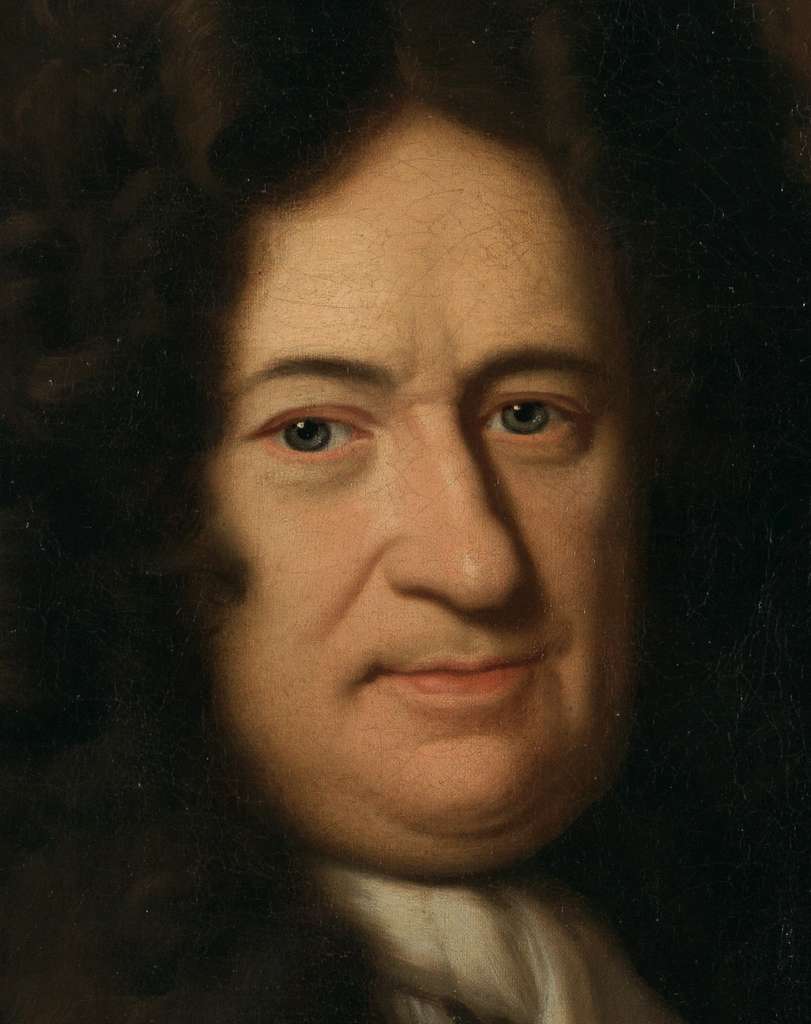
The great Catholic philosopher Thomas Aquinas developed these notions into a proof of the existence of God. The great Lutheran philosopher Gottfried Leibniz developed these notions in an arguably more rigorous way in his own proof of the existence of God.
Aquinas’s Proof of God’s Existence from Contingency
Here is a summary of St. Thomas Aquinas’s argument by Gabriel Blanchard:
The necessity-contingency pair is often associated with questions of ontology, or the study of being. One of the principal questions of philosophy is whether anything is absolutely necessary—whether there is any entity, or force, or substance, or what have you, that must exist, such that positing its non-existence is simply a contradiction in terms, like positing a dark light. Most philosophers in our tradition, especially (though not by any means only) the religious philosophers, have answered yes to this question; from St. Augustine to Alfred North Whitehead, many of them have specified that this “necessary being” is one of the things that is meant by the word God.
St. Thomas Aquinas goes further than this, making the idea of contingent being one of his five proofs for the existence of God. The argument runs like this: all the things we see around us are contingent; they do not have to exist, they did not always exist, and and they will not last forever. But if everything were contingent, then, with infinite time, we should long ago have reached the point where every contingent thing had lapsed into nothingness. (Though its scope is more limited, covering only matter and energy, the second law of thermodynamics forms an analogy to this argument.) Therefore, all contingent things must be sustained by some necessary thing: even if some contingent things depend on each other, that just knocks the problem one step further back, so to speak, since those other contingent things have to rely on something too. Hence, in order to avoid a “turtles all the way down” scenario, we must posit the existence of a necessary being; and we may call this being God.
Here is another explanation of Aquinas’s argument by Thomist theologian Frank Sheed, who is praised for his lucid explanations of Aquinas’s five proofs of God’s existence:
If we consider the universe, we find that everything in it bears this mark, that it does exist but might very well not have existed. We ourselves exist, but we would not have existed if a man and a woman had not met and mated. The same mark can be found upon everything. A particular valley exists because a stream of water took that way down, perhaps because the ice melted up there. If the melting ice had not been there, there would have been no valley. And so with all the things of our experience. They exist, but they would not have existed if some other thing had not been what it was or done what it did.
None of these things, therefore, is the explanation of its own existence or the source of its own existence. In other words, their existence is contingent upon something else. Each thing possesses existence, and can pass on existence; but it did not originate its existence. It is essentially a receiver of existence. Now it is impossible to conceive of a universe consisting exclusively of contingent beings, that is, of beings which are only receivers of existence and not originators. The reader who is taking his role as explorer seriously might very well stop reading at this point and let his mind make for itself the effort to conceive a condition in which nothing should exist save receivers of existence.
Anyone who has taken this suggestion seriously and pondered the matter for himself before reading on, will have seen that the thing is a contradiction in terms and therefore an impossibility. If nothing exists save beings that receive their existence, how does anything exist at all? Where do they receive their existence from? In such a system made up exclusively of receivers, one being may have got it from another, and that from still another, but how did existence get into the system at all? Even if you tell yourself that this system contains an infinite number of receivers of existence, you still have not accounted for existence. Even an infinite number of beings, if no one of these is the source of its own existence, will not account for existence.
Thus we are driven to see that the beings of our experience, the contingent beings, could not exist at all unless there is also a being which differs from them by possessing existence in its own right. It does not have to receive existence; it simply has existence. It is not contingent: it simply is. This is the Being that we call God.
All this may seem very simple and matter of course, but in reality we have arrived at a truth of inexhaustible profundity and of inexhaustible fertility in giving birth to other truths.
Leibniz’s Proof of God’s Existence from Contingency
Aquinas’s version of contingency focuses on things not lasting forever. Leibniz focuses on something even more basic. He asks, “Why is there something rather than nothing? The sufficient reason … is found in a substance which … is a necessary being bearing the reason for its existence within itself.” (Quoted in the Wikipedia article on the Cosmological Argument, which goes into more detail about these and related arguments.)
Here is how apologist Evan Minton explains Leibniz’s argument:
The argument’s premises are:
1: Everything that exists has an explanation of its existence (either in the necessity of its own nature or in an external cause).
2: If the universe has an explanation of its existence, that explanation is God.
3: The universe exists.
4: Therefore, The universe has an explanation of its existence.
5: Therefore, the explanation of the universe’s existence is God.
Now, this is a logically airtight argument. So if the atheist wants to deny the conclusion, he has to say that one of the three premises is false. Let’s examine the premises to see what reasons can be given for affirming them.
Minton goes on to defend each of the premises, which you read at the link. See, for example, what he says about the objection that maybe the universe itself is that necessary being:
As we think about this big ole world we live in, none of the things that it consists of seem to exist necessarily. It seems like all of these things didn’t have to exist. It seems like they could have failed to exist.
But, you might say, perhaps the matter that these things are made of exists necessarily? Perhaps that although the galaxies, stars, planets, people, etc. and everything in the universe doesn’t exist necesarilly, the material stuff these things are made of exists necesarilly.
This proposal just simply doesn’t work. Allow me to explain why. You see, according to physicists, matter consists of teensy weensy particles called “quarks.” Everything in our world are just different arrangements of these quarks. But it seems to me that one could ask why a different collection of quarks could not have existed in the stead of this one? Are we expected to believe that every single quark in existence cannot possibly fail to exist? Does the skeptic want us to buy into the notion that all of the quarks in the universe have to exist?
“Okay, well maybe quarks aren’t necessarily existent. But maybe the particles of which the quarks are composed exist necessarily.” This suggestion won’t work because quarks aren’t composed of anything! They just are the basic units of matter. So if a quark doesn’t exist, the matter doesn’t exist.
One advantage of the argument from contingency is that it does away with the comeback to cosmological arguments that hinge on the necessity of creation, well, who created God? God is a necessary being. He is the necessary being. His existence is foundational to all existence. Therefore, there is no question of His being created or needing to be created.
Illustration: Gottfried Wilhelm Leibniz by Christoph Francke (1695) via Picryl, Public Domain.
Aquinas's proof from contingency
Leibniz's proof from contingency
Previous Post

November 24, 2026
The Contingency of Our Technology
Recent Comments
"One might even imagine people beginning to believe that they transcend NVIDIA chips, their material ..."
The Contingency of Our Technology
"We have been directed to call it Super Intelligence. Your flouting of this edict is ..."
The Contingency of Our Technology
"An extremely important and excellent article. Thank you and bless you for the recommendation!"
The Contingency of Our Technology
"Thank you. This helps."
Browse Our Archives
Select a Category America Apologetics Art baseball Bible Blog Christ Church crime Culture Economics Education Ethics Family Food Football Government History Holidays Holy Week Humor International Islam Language Law Life Issues Literature Media Medicine Movies Music Nature News Personal Philosophy Politics psychology Reformation Religions Sacraments Science sex Social Science Sports technology television terrorism Theology Uncategorized Vocation war
Select a Month November 2026 October 2026 September 2026 August 2026 July 2026 June 2026 May 2026 April 2026 March 2026 February 2026 January 2026 December 2025 November 2025 October 2025 September 2025 August 2025 July 2025 June 2025 May 2025 April 2025 March 2025 February 2025 January 2025 December 2024 November 2024 October 2024 September 2024 August 2024 July 2024 June 2024 May 2024 April 2024 March 2024 February 2024 January 2024 December 2023 November 2023 October 2023 September 2023 August 2023 July 2023 June 2023 May 2023 April 2023 March 2023 February 2023 January 2023 December 2022 November 2022 October 2022 September 2022 August 2022 July 2022 June 2022 May 2022 April 2022 March 2022 February 2022 January 2022 December 2021 November 2021 October 2021 September 2021 August 2021 July 2021 June 2021 May 2021 April 2021 March 2021 February 2021 January 2021 December 2020 November 2020 October 2020 September 2020 August 2020 July 2020 June 2020 May 2020 April 2020 March 2020 February 2020 January 2020 December 2019 November 2019 October 2019 September 2019 August 2019 July 2019 June 2019 May 2019 April 2019 March 2019 February 2019 January 2019 December 2018 November 2018 October 2018 September 2018 August 2018 July 2018 June 2018 May 2018 April 2018 March 2018 February 2018 January 2018 December 2017 November 2017 October 2017 September 2017 August 2017 July 2017 June 2017 May 2017 April 2017 March 2017 February 2017 January 2017 December 2016 November 2016 October 2016 September 2016 August 2016 July 2016 June 2016 May 2016 April 2016 March 2016 February 2016 January 2016 December 2015 November 2015 October 2015 September 2015 August 2015 July 2015 June 2015 May 2015 April 2015 March 2015 February 2015 January 2015 December 2014 November 2014 October 2014 September 2014 August 2014 July 2014 June 2014 May 2014 April 2014 March 2014 February 2014 January 2014 December 2013 November 2013 October 2013 September 2013 August 2013 July 2013 June 2013 May 2013 April 2013 March 2013 February 2013 January 2013 December 2012 November 2012 October 2012 September 2012 August 2012 July 2012 June 2012 May 2012 April 2012 March 2012 February 2012 January 2012 December 2011 November 2011 October 2011 September 2011 August 2011 July 2011 June 2011 May 2011 April 2011 March 2011 February 2011 January 2011 December 2010 November 2010 October 2010 September 2010 August 2010 July 2010 June 2010 May 2010 April 2010 March 2010 February 2010 January 2010 December 2009 November 2009 October 2009 September 2009 August 2009 July 2009 June 2009 May 2009 April 2009 March 2009 February 2009 January 2009 December 2008 November 2008 October 2008 September 2008 August 2008 July 2008 June 2008 May 2008 April 2008 March 2008 February 2008 January 2008 December 2007 November 2007 October 2007
Give A Subscription
Follow Us!
TAKE THE
Religious Wisdom Quiz
Who stopped the sun from setting during a battle?
Select your answer to see how you score.
Samuel Moses Joshua Elijah
Books by This Author Books by Gene Veith
Related posts from Cranach

The Contingency of Our Technology
A Scientist on the Location of Heaven


A Catholic Century or an Evangelical Century?
TRENDING AT PATHEOS Evangelical

Pope Francis and The Devil – A Pagan...
According to his private diaries, Pope Francis saw visions of the devil...

Rock N' Roll-- Morphing into/for a New Generation...
Well, should we be grateful, or is rock n' roll just dead? ...

Ansley Gordon Brings Faith and Fresh Stories to...
For screenwriter and actress Ansley Gordon, Christmas has always been about more...

Chris Pratt on Veterans, Faith, “The Way of...
For Chris Pratt, service is not something that ends when a person...

Chapter 5, Sarah: The Quest for Safety in...
Open and Relational Theology & Social Psychology About this series: This series...

When Worry Gets You Nowhere, How Can Faith...
Sometimes, we think that by worrying, we can somehow predict the future....
view all Evangelical blogs
What Are Your Thoughts?leave a comment
Ad-Free & Subscriber Log-In Subscription Support
- About Us
- 2026 Calendar
- Videos
- Podcasts
- Library of World Religions
- Faith In Media Tracker
- Advertise With Us
- Write for Us
- Privacy Policy
- Terms of Service
- Do Not Sell My Data
- Contact Us
- Radiant Digital
- Manage Newsletter Subscriptions
- Unsubscribe From Notifications
- Sitemap
Copyright 2008-2026, Patheos, part of the Radiant Digital network of media brands. All rights reserved.
Subscription Support Ad-Free & Subscriber Log-In
Follow Patheos