
BuddhistCatholicContemplativeEvangelicalGeneral ChristianHinduJewishLatter-day SaintMuslimNew VisionsProgressive Christian
Beliefs
- Buddhist
- Catholic
- Contemplative
- Evangelical
- General Christian
- Hindu
- Jewish
- Latter-day Saint
- More Voices
- Muslim
- New Visions
- Pagan
- Progressive Christian
Topics
- Religion News
- Food and Religion
- Sports and Religion
- Religious Art
- Religious Music and Entertainment
- Religious Events
- History and Religion
- Style and Religion
- Politics and Religion
- Women in Religion
- Recreation Outdoors and Religion
- Business Finance and Religion
- Careers Workplace and Religion
- Education and Religion
- Family Parenting and Religion
- Health Fitness and Religion
- Home and Religion
- Relationships and Religion
- Technology and Religion
- Travel and Religion
Columnists
- Buddhist Columnists
- Business Finance and Religion Columnists
- Careers Workplace and Religion Columnists
- Catholic Columnists
- Contemplative Columnists
- Education and Religion Columnists
- Evangelists Columnists
- Family Parenting and Religion Columnists
- General Christian Columnists
- Health Fitness and Religion Columnists
- Hindu Columnists
- History and Religion Columnists
- Home and Religion Columnists
- Jewish Columnists
- More Voices Columnists
- Latter Day Columnists
- Muslim Columnists
- New Visions Columnists
- Nonreligious Columnists
- Pagan Columnists
- Politics and Religion Columnists
- Progressive Columnists
- Recreation Outdoors and Religion Columnists
- Relationships and Religion Columnists
- Religion News Columnists
- Religious Art Columnists
- Religious Events Columnists
- Religious Music and Entertainment Columnists
- Sports and Religion Columnists
- Style and Religion Columnists
- Technology and Religion Columnists
- Travel and Religion Columnists
- Women in Religion Columnists
Resource Library
- 2026 Calendar
- Library of World Religions
- The 100 Most Holy Places on Earth
- Patheos Answers
- Podcasts
- Videos
- Faith Leaders Database
- Anglican Episcopalian
- Bahai
- Baptist
- Buddhism
- Christianity
- Confucianism
- Eastern Orthodoxy
- Hinduism
- Holiness and Pentecostal
- ISKCON
- Islam
- Judaism
- Lutheran
- Methodist
- The Church of Jesus Christ of Latter-day Saints
- New Age
- Paganism
- Presbytarian and Reformed
- Protestantism
- Religion Behind the Scenes
- Roman Catholic
- Scientology
- Shia Islam
- Sikhism
- Sufism
- Sunni Islam
- Taoism
- Zen
- See all religions
Research Tools
 Ad-Free & Subscriber Log-In Subscription Support
Follow Patheos 

- Trending:
- Advent
- |
- Forgiveness
- |
- Thanksgiving
- |
- Election
- |
- Seasonal Holidays
- |
- Marriage

- Home
- Evangelical
- Politics and Religion
- Parties of Interest vs. Parties of Principle
Parties of Interest vs. Parties of Principle
Last updated on: October 9, 2026 at 8:34 am by Gene Veith
Parties of Interest vs. Parties of Principle 2026-10-09T08:34:35-04:00 Gene Veith
Patheos Explore the world's faith through different perspectives on religion and spirituality! Patheos has the views of the prevalent religions and spiritualities of the world.
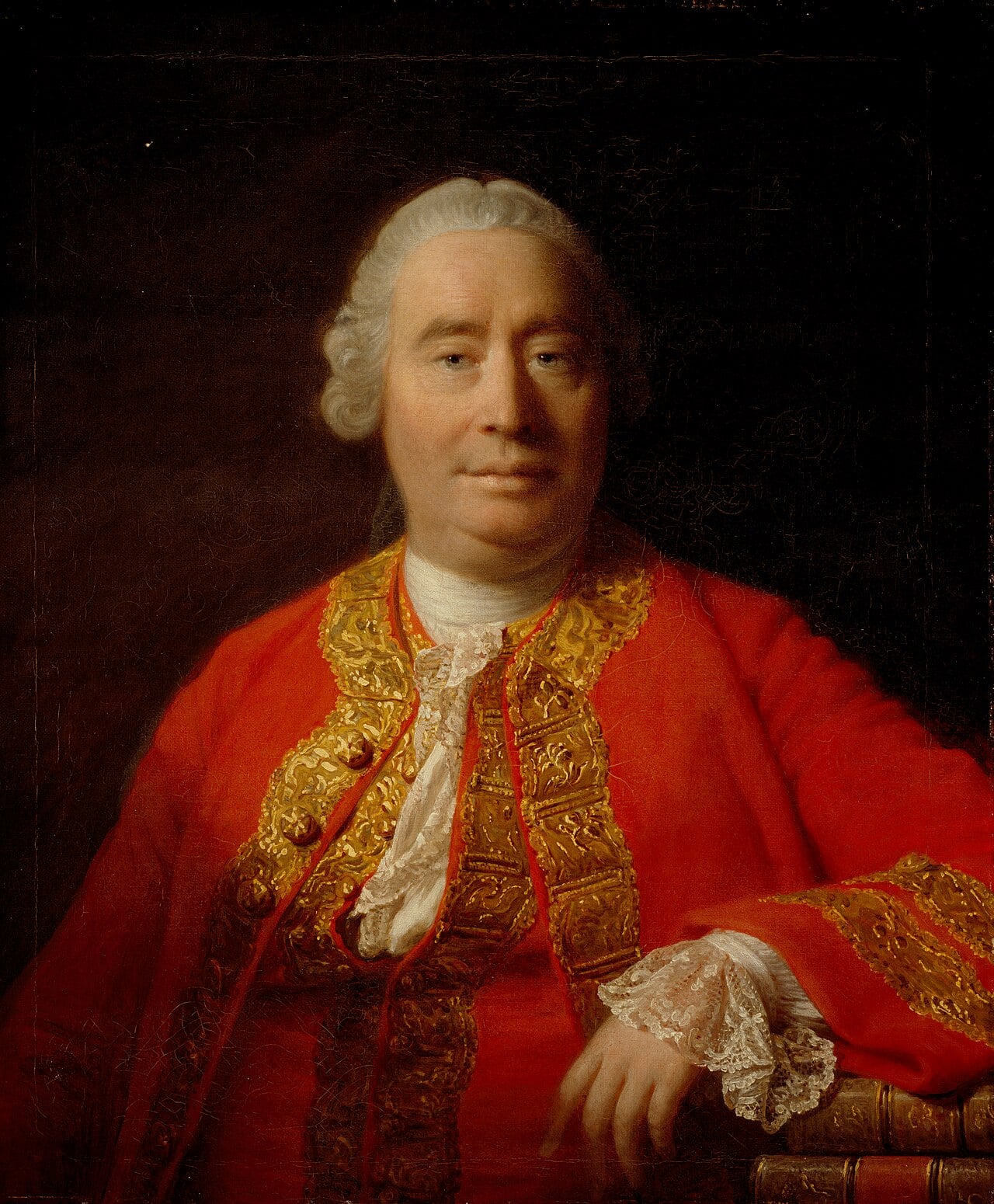
Which is the noblest approach to politics? To stand on principle? Or to pursue your own interests?
I’ll bet all of you would pick principle over self-interest. I know I would. But then I read an op-ed in the Wall Street Journal by Ryan Streeter, executive director of the Civitas Institute, entitled Can David Hume Save the Democratic Party? Now I’m having second thoughts.
David Hume (1711-1776) was a Scottish philosopher known for his empiricism and materialism, but also for his skepticism of not only religion but also rationalism. He argued convincingly that we can never know the causes of anything–causality just shows one even followed by another–and turned the conventional wisdom about reason upside down, arguing that “Reason is, and ought only to be the slave of the passions.”
Hume is sort of a philosophical wrecking ball, challenging reason at the height of the Age of Reason, and forcing subsequent philosophers to wrestle with issues they thought were settled. One scholar said of Hume, “no man has influenced the history of philosophy to a deeper or more disturbing degree.”
Interestingly, the Lutheran convert J. G. Hamann was not only the first to translate Hume into German, he used Hume’s work as part of his own apologetic for Christianity. Hume skeptically said that believing in Christianity requires a continual miracle, which Hamann as a good Lutheran agreed with. Hume also shot down the possibility of reason explaining everything, which Hamann as a good Lutheran agreed with. Hume also showed that believing anything requires some prior faith, which Hamann as a good Lutheran also agreed with.
Anyway, back to our topic. Here is what Hume said about politics, as recounted by Streeter:
In a popular book of essays that James Madison, Alexander Hamilton and other Founders admired, Hume criticizes “parties from principle,” those organized around ideology. “Parties from principle, especially abstract speculative principle, are known only to modern times, and are, perhaps, the most extraordinary and unaccountable phaenomenon, that has yet appeared in human affairs.”
He contrasts them with parties “from interest,” which form around professional and geographical interests. The interests of farmers and sea merchants are different, which is reflected in their political allegiances. Parties of interest are alive and well on K Street in Washington.
Parties from principle produce fanatical behavior in a way that parties from interest don’t, Hume observed. Parties of interest compromise to get what they want, but ideological purists don’t. This was the root of religious wars and of present-day culture wars.
Hume explains that humans universally dislike ideas opposing their own, and when “superstition” (fear and ignorance) blends with “enthusiasm” (hope and ignorance), they do crazy things. Modern innovations—pamphleteering in Hume’s day, social media in ours—have made it easier to organize and motivate ideologues.
Used to, Democrats were the party of farmers, factory workers, and other manual laborers. Republicans were the party of Wall Street, big business, and small business. Each party worked to advance the interests of their constituency. Whichever party won the presidency, in legislative races agricultural states tended to vote Democratic while the big business states of the East Coast tended to vote Republican. Actual governing required the two parties to balance each other’s interests and compromise with each other. The result was a dynamic balance of interests, in which both businesses and workers thrived.
And, of course, there were other competing interests within both parties (importers vs. exporters; corporations vs. independent operators; right-to-work advocates vs. labor unions; small towns vs. cities; etc., etc.). The system allowed them all to work out their issues.
Government was all about getting things done. It was not about some ideological crusade or some competing promises of utopia that people on either side invested their lives in. The bigger, more important issues of meaning, values, hopes, and faith were matters of religion, not political ideologies.
Thus, significantly, under interest-based politics there would be committed, believing Christians in both parties. Christian farmers had different interests than Christian business owners, so they had different political positions. But they could both worship at the same churches. They could get along with each other where it counted the most.
In fact, though Americans had many different churches and religious beliefs, members of both parties with their different interests tended to agree on a common ideology. Not just patriotism, but what used to be called “Americanism,” a belief in the American ideals of liberty, equality, and Constitutional democracy.
In Streeter’s op-ed, arguing that political parties should be built around voters’ interests rather than ideology, he focuses on today’s Democrats:
Viewed through Hume’s lens, Democrats’ intramural struggle with socialism is only the latest evidence that they are morphing from a party from interest into a party from principle. Coalitions consisting of organized labor, minority populations, immigrants, farmers and urban machines have given way to a party dominated by highly educated people driven by superstitions and enthusiasms about race, sex and class.
We could say the same thing about Republicans, though they seem to be fixated on ideology without having a single ideology to fixate on. The Republican party today is a hodge-podge of MAGA populists, libertarians, small-government Reaganites, war-mongering neo-conservatives, Christian dominionists, protectionists, free-marketers, etc., etc.
If we had a politics based on interest rather than ideology today, both parties would be competing for the working class vote, which used to be the Democratic party’s base but which has become Donald Trump’s base. New bipartisan coalitions could form around issues such as opposing the Iran war (for economic reasons, not because of pacifist ideology) and opposing the AI revolution (because of its threats to jobs and education, not because of anti-technology ideology). Also, common interests would emerge, such as all Americans’ need for a prosperous economy, effective schools, and support for families.
Politics would be de-mystified, political zeal would be turned down several notches, the nation would be better unified, and its problems would be addressed.
Not that we shouldn’t have principles or that individuals shouldn’t stand up for their principles by the way they vote. But the political parties, by this argument, should be coalitions of individuals and groups with common interests, rather than embodiments of a particular ideology. And the focus of government should be more modest than it is today, seeking to advance the interests of its citizens rather than to implement a particular ideology.
Now a problem with this view is that some issues, even some interests, are innately principle-based. I suspect what started the shift to ideology in American political parties was the issue of slavery, which split the nation to the point of civil war. And today the pro-life movement is and must be a matter of principle. Often the political conflicts are between one side fighting for principle (the abolition of slavery; the defense of life) against the other side’s interests (plantation owners’ need for labor; women who don’t want a baby).
Hume’s view mustn’t itself be turned into an ideology. Our politics needs to be nuanced. Our interests need to be principled, which is where religion becomes important, and our principles need to address people’s interests if they are to succeed politically. (Lincoln’s side argued that the practice of slavery threatens the livelihood of paid workers in the emerging industrial revolution. Pro-lifers can appeal to the universal human interest and need for children.)
So I ask you again, which is the noblest approach to politics? To stand on principle? Or to pursue your own interests?
Illustration: David Hume (1766) by Allan Ramsay – National Galleries Scotland, Public Domain, https://commons.wikimedia.org/w/index.php?curid=51564591

Previous Post

October 8, 2026
The Family Estrangement Epidemic
Next Post

October 12, 2026 Monday Miscellany, 10/12/26
Recent Comments
"Can we teach the AI to play tic-tac-toe and develop a winning strategy?"
"Yes, people are saying......"
"Not that I'm aware of. I'm simply sharing the cryptic comments of those who know ..."
"David, as you, I have been involved with computer program development for a very long ..."
Browse Our Archives
Select a Category America Apologetics Art baseball Bible Blog Christ Church crime Culture Economics Education Ethics Family Food Football Government History Holidays Holy Week Humor International Islam Language Law Life Issues Literature Media Medicine Movies Music Nature News Personal Philosophy Politics psychology Reformation Religions Sacraments Science sex Social Science Sports technology television terrorism Theology Uncategorized Vocation war
Select a Month November 2026 October 2026 September 2026 August 2026 July 2026 June 2026 May 2026 April 2026 March 2026 February 2026 January 2026 December 2025 November 2025 October 2025 September 2025 August 2025 July 2025 June 2025 May 2025 April 2025 March 2025 February 2025 January 2025 December 2024 November 2024 October 2024 September 2024 August 2024 July 2024 June 2024 May 2024 April 2024 March 2024 February 2024 January 2024 December 2023 November 2023 October 2023 September 2023 August 2023 July 2023 June 2023 May 2023 April 2023 March 2023 February 2023 January 2023 December 2022 November 2022 October 2022 September 2022 August 2022 July 2022 June 2022 May 2022 April 2022 March 2022 February 2022 January 2022 December 2021 November 2021 October 2021 September 2021 August 2021 July 2021 June 2021 May 2021 April 2021 March 2021 February 2021 January 2021 December 2020 November 2020 October 2020 September 2020 August 2020 July 2020 June 2020 May 2020 April 2020 March 2020 February 2020 January 2020 December 2019 November 2019 October 2019 September 2019 August 2019 July 2019 June 2019 May 2019 April 2019 March 2019 February 2019 January 2019 December 2018 November 2018 October 2018 September 2018 August 2018 July 2018 June 2018 May 2018 April 2018 March 2018 February 2018 January 2018 December 2017 November 2017 October 2017 September 2017 August 2017 July 2017 June 2017 May 2017 April 2017 March 2017 February 2017 January 2017 December 2016 November 2016 October 2016 September 2016 August 2016 July 2016 June 2016 May 2016 April 2016 March 2016 February 2016 January 2016 December 2015 November 2015 October 2015 September 2015 August 2015 July 2015 June 2015 May 2015 April 2015 March 2015 February 2015 January 2015 December 2014 November 2014 October 2014 September 2014 August 2014 July 2014 June 2014 May 2014 April 2014 March 2014 February 2014 January 2014 December 2013 November 2013 October 2013 September 2013 August 2013 July 2013 June 2013 May 2013 April 2013 March 2013 February 2013 January 2013 December 2012 November 2012 October 2012 September 2012 August 2012 July 2012 June 2012 May 2012 April 2012 March 2012 February 2012 January 2012 December 2011 November 2011 October 2011 September 2011 August 2011 July 2011 June 2011 May 2011 April 2011 March 2011 February 2011 January 2011 December 2010 November 2010 October 2010 September 2010 August 2010 July 2010 June 2010 May 2010 April 2010 March 2010 February 2010 January 2010 December 2009 November 2009 October 2009 September 2009 August 2009 July 2009 June 2009 May 2009 April 2009 March 2009 February 2009 January 2009 December 2008 November 2008 October 2008 September 2008 August 2008 July 2008 June 2008 May 2008 April 2008 March 2008 February 2008 January 2008 December 2007 November 2007 October 2007
Give A Subscription
Follow Us!
TAKE THE
Religious Wisdom Quiz
True or False: Ruth was from Moab and chose to stay with her mother-in-law Naomi.
Select your answer to see how you score.
FALSE TRUE
Books by This Author Books by Gene Veith
Related posts from Cranach

Who Receives the New Benefit of Clergy

Will Trump & the Democrats Moderate or Double...


TRENDING AT PATHEOS Evangelical

Reasons for Restraint: Ricardo Gonzalez, Florida and Dec...
The Morning of January 3 I begin with the dead. On the...

I published this column for Thanksgiving 2012 in the Deseret News....

For many years, Catholicism has been caught up in division over the...

'Statements of Faith' never get shorter
Nothing demonstrates a conservative commitment to faith and faithfulness like a "statement...

Michele's Reviews - Future Grace by John Piper
In God's Place, at God's Pace, by Future Grace Impatience is...

Bama Gramma's Blackout Christmas: the Power of Light...
Another Christmas Skit: I have an alter ego: Bama Gramma. She shows...
view all Evangelical blogs
What Are Your Thoughts?leave a comment
Ad-Free & Subscriber Log-In Subscription Support
- About Us
- 2026 Calendar
- Videos
- Podcasts
- Library of World Religions
- Faith In Media Tracker
- Advertise With Us
- Write for Us
- Privacy Policy
- Terms of Service
- Do Not Sell My Data
- Contact Us
- Radiant Digital
- Manage Newsletter Subscriptions
- Unsubscribe From Notifications
- Sitemap
Copyright 2008-2026, Patheos, part of the Radiant Digital network of media brands. All rights reserved.
Subscription Support Ad-Free & Subscriber Log-In
Follow Patheos