
BuddhistCatholicContemplativeEvangelicalGeneral ChristianHinduJewishLatter-day SaintMuslimNew VisionsProgressive Christian
Beliefs
- Buddhist
- Catholic
- Contemplative
- Evangelical
- General Christian
- Hindu
- Jewish
- Latter-day Saint
- More Voices
- Muslim
- New Visions
- Pagan
- Progressive Christian
Topics
- Religion News
- Food and Religion
- Sports and Religion
- Religious Art
- Religious Music and Entertainment
- Religious Events
- History and Religion
- Style and Religion
- Politics and Religion
- Women in Religion
- Recreation Outdoors and Religion
- Business Finance and Religion
- Careers Workplace and Religion
- Education and Religion
- Family Parenting and Religion
- Health Fitness and Religion
- Home and Religion
- Relationships and Religion
- Technology and Religion
- Travel and Religion
Columnists
- Buddhist Columnists
- Business Finance and Religion Columnists
- Careers Workplace and Religion Columnists
- Catholic Columnists
- Contemplative Columnists
- Education and Religion Columnists
- Evangelists Columnists
- Family Parenting and Religion Columnists
- General Christian Columnists
- Health Fitness and Religion Columnists
- Hindu Columnists
- History and Religion Columnists
- Home and Religion Columnists
- Jewish Columnists
- More Voices Columnists
- Latter Day Columnists
- Muslim Columnists
- New Visions Columnists
- Nonreligious Columnists
- Pagan Columnists
- Politics and Religion Columnists
- Progressive Columnists
- Recreation Outdoors and Religion Columnists
- Relationships and Religion Columnists
- Religion News Columnists
- Religious Art Columnists
- Religious Events Columnists
- Religious Music and Entertainment Columnists
- Sports and Religion Columnists
- Style and Religion Columnists
- Technology and Religion Columnists
- Travel and Religion Columnists
- Women in Religion Columnists
Resource Library
- 2026 Calendar
- Library of World Religions
- The 100 Most Holy Places on Earth
- Patheos Answers
- Podcasts
- Videos
- Faith Leaders Database
- Anglican Episcopalian
- Bahai
- Baptist
- Buddhism
- Christianity
- Confucianism
- Eastern Orthodoxy
- Hinduism
- Holiness and Pentecostal
- ISKCON
- Islam
- Judaism
- Lutheran
- Methodist
- The Church of Jesus Christ of Latter-day Saints
- New Age
- Paganism
- Presbytarian and Reformed
- Protestantism
- Religion Behind the Scenes
- Roman Catholic
- Scientology
- Shia Islam
- Sikhism
- Sufism
- Sunni Islam
- Taoism
- Zen
- See all religions
Research Tools
 Ad-Free & Subscriber Log-In Subscription Support
Follow Patheos 

- Trending:
- Advent
- |
- Forgiveness
- |
- Thanksgiving
- |
- Election
- |
- Seasonal Holidays
- |
- Marriage

- Home
- Evangelical
- Politics and Religion
- Charles Finney’s Reinvention of Worship
Charles Finney’s Reinvention of Worship
Last updated on: August 19, 2026 at 9:11 am by Gene Veith
Charles Finney’s Reinvention of Worship 2026-08-19T09:11:52-04:00 Gene Veith
Patheos Explore the world's faith through different perspectives on religion and spirituality! Patheos has the views of the prevalent religions and spiritualities of the world.
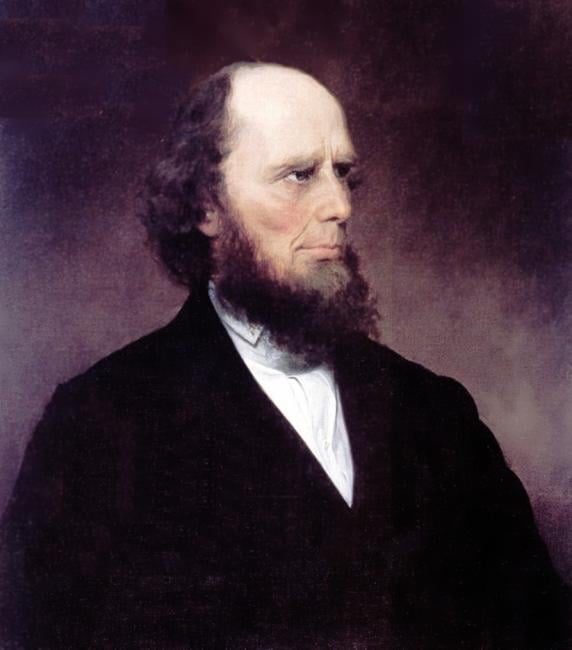
Last week we discussed Roman Catholic controversies over worship. So this week we’ll look at Protestant worship, specifically, at the influence of Charles G. Finney (1792-1875). He used to be controversial, but his worship innovations can now be found across virtually all Protestant traditions.
I came across this eye-opening article by Scott Aniol, a scholar of worship at Southwestern Baptist Theological Seminary, entitled Roots of Evangelical Worship: Charles G. Finney. (Notice that Aniol is a Southern Baptist, studying and critiquing his own tradition.)
“Many factors, cultural and theological, converged to form what we might call today ‘Evangelical Worship,'” writes Aniol, “including Enlightenment philosophy, German Pietism, John and Charles Wesley, American revival and democracy, and rural camp meetings. None, however, had as significant impact as one individual—nineteenth-century Revivalist Charles G. Finney (1792–1875).”
Finney’s Theology
It’s important to realize that Finney was not an orthodox Christian. Dr. Aniol quotes from Finney’s Systematic Theology,
Influenced by theologian Nathaniel Taylor’s “New Haven Theology,” Finney denied the imputation of Adam’s sin to all humankind, and thus, “We deny that the human condition is morally depraved”; sin comes only from choice, not from nature. Therefore, “the sinner has all the faculties and natural abilities requisite to render perfect obedience to God”; most people are simply morally weak and lack the will to do so. “All [the sinner] needs,” Finney argued, “is to be induced to use these powers and attributes as he ought.”
He also held to an extreme version of Arminianism. “As for Christian sanctification,” says Aniol, “Finney was influenced by Wesleyan Perfectionism, insisting that given the right conditions, Christians could experience ‘entire sanctification.’” But he was not an orthodox Arminian either, since they believe in original sin and justification by faith. Specifically, Finney rejected the “prevenient grace” that Arminians believe enables a person to “make a decision for Christ” and to receive the Holy Spirit’s gift of moral perfection. Essentially, as Michael Horton notes, Finney held to the heresy of Pelagianism.
Michael Horton’s critique of Finney from a Reformed perspective goes into more detail about his departure from Christian–and certainly Protestant–orthodoxy. Here is what Finney believed about the atonement (quoting his Systematic Theology, the bolds are from me):
The first thing we must note about the atonement, Finney says, is that Christ could not have died for anyone else’s sins than his own. . . .The purpose of that death was to reassert God’s moral government and to lead us to eternal life by example, as Adam’s example excited us to sin. Why did Christ die? God knew that “The atonement would present to creatures the highest possible motives to virtue. Example is the highest moral influence that can be exerted…If the benevolence manifested in the atonement does not subdue the selfishness of sinners, their case is hopeless” (p. 209).
He also rejected salvation by grace:
Finney argued strenuously against the belief that the new birth is a divine gift, insisting that “regeneration consists in the sinner changing his ultimate choice, intention, preference; or in changing from selfishness to love or benevolence,” as moved by the moral influence of Christ’s moving example (p. 224). “Original or constitutional sinfulness, physical regeneration, and all their kindred and resulting dogmas, are alike subversive of the gospel, and repulsive to the human intelligence” (p. 236).
And Finney explicitly rejected justification by faith:
“For sinners to be forensically pronounced just, is impossible and absurd…As we shall see, there are many conditions, while there is but one ground, of the justification of sinners…As has already been said, there can be no justification in a legal or forensic sense, but upon the ground of universal, perfect, and uninterrupted obedience to law. . . .
The doctrine of an imputed righteousness, or that Christ’s obedience to the law was accounted as our obedience, is founded on a most false and nonsensical assumption.” After all, Christ’s righteousness “could do no more than justify himself. It can never be imputed to us…It was naturally impossible, then, for him to obey in our behalf.” This “representing of the atonement as the ground of the sinner’s justification has been a sad occasion of stumbling to many” (pp. 320-322).
Rather, justification–and salvation–requires obedience to the Law.
“Perseverance in obedience to the end of life is also a condition of justification.” Furthermore, “present sanctification, in the sense of present full consecration to God, is another condition…of justification. Some theologians have made justification a condition of sanctification, instead of making sanctification a condition of justification. But this we shall see is an erroneous view of the subject” (pp. 326-327). Each act of sin requires “a fresh justification” (p. 331).
Finney’s version of Christianity is completely legalistic. And Finney’s influence on American Protestantism as a revivalist and the leader of the Second Great Awakening has no doubt contributed to the popular impression that Christianity is all about being good, as opposed to finding forgiveness because we are not good. That has been a far more toxic legacy than what he did to Protestant worship.
Finney on Worship
Aniol connects Finney’s theology to his worship reforms (my bolds):
Because Finney believed that conversion and sanctification could be produced by human means, he sought to create experiences in his services that would “induce” sinners to accept the claims of Christianity or be motivated to complete sanctification. In his Revival Lectures, Finney insisted that “there is nothing in religion beyond the ordinary powers of nature,” and revival is therefore “a result of the use of the appropriate means.” In order to create revival, then, “God has found it necessary to take advantage of the excitability there is in mankind, to produce powerful excitements among them, before he can lead them to obey.” He argued, “there must be excitement sufficient to wake up the dormant moral powers.”
This required changing traditional worship.
Finney argued that in order to create the necessary excitement, churches must employ “new measures” since “The Tradition of the Elders” (the title of one of his sermons) that were familiar to the congregation would never produce the desired results. Many of the measures he advocated had first appeared in early nineteenth-century rural camp meetings, such as altar calls and the use of choruses, but Finney brought them into the urban mainstream.
Finney found the newly emerging pop culture as the perfect tool for creating exciting experiences because it was immediate and it stimulated excitement. Finney urged those writing and leading music in his meetings to look to the advertisers of the day for inspiration.
Finney’s revivals would consist of emotional music, building up to a fiery sermon. Hearers made to feel guilty but not quite ready to fully commit were invited to sit at an “anxious bench” near the front, where they would be close to the tearful sinners responding to the “altar call.” More often than not, those on the anxious bench would eventually feel their pull and come forward.
With the major exceptions of Anglicans and Lutherans, who followed some version of the historic liturgy, traditional Protestant worship then and now was formal and reverent, consisting of a simple order of worship comprised of hymns, Bible readings, prayers, and a sermon.
But the enormous popularity of the revivals led many churches, especially those on the evangelical side, to incorporate the revival style into their own Sunday services. This, in turn, led to other changes. Concludes Aniol,
This new way of thinking affected not only the content and style of worship and music, but it transformed the view of the church and its worship. Music for church services was chosen based on whatever would create an exciting atmosphere for unbelievers or believers. Liturgy within corporate worship eventually began to mimic that of an evangelistic meeting, with an altar call replacing the Lord’s Table as the climax of the service. Finney’s revivalist measures marked a decided break with the Judeo-Christian worship tradition.
Aniol closes by quoting another church historian, the author of Protestant Worship: Traditions in Transition:, who connects the change in worship to a shift in other practices:
All of these influences converged to create what liturgical historian James White argues was a new worship tradition, which he suggests was adopted by “most of the traditions of Protestant worship” and “provided a ‘black hole’ that tended to swallow up many of the distinctive characteristics of previous traditions.” This new tradition minimized the Lord’s supper and baptism, a “concert-stage arrangement with the choir elevated and facing the congregation” developed, services celebrating distinctly American holidays replaced the Christian year, and extemporaneous prayer became the established norm.
Illustration: Charles Grandison Finney By unknown photographer – version of Christian History vol. VII, n. 4, issue 20, Public Domain, https://commons.wikimedia.org/w/index.php?curid=5020948

Previous Post

August 18, 2026
God's Consolation of Job in the Whirlwind
Next Post

August 20, 2026 A Way to Solve the Population Problem
Recent Comments
"Can we teach the AI to play tic-tac-toe and develop a winning strategy?"
"Yes, people are saying......"
"Not that I'm aware of. I'm simply sharing the cryptic comments of those who know ..."
"David, as you, I have been involved with computer program development for a very long ..."
Browse Our Archives
Select a Category America Apologetics Art baseball Bible Blog Christ Church crime Culture Economics Education Ethics Family Food Football Government History Holidays Holy Week Humor International Islam Language Law Life Issues Literature Media Medicine Movies Music Nature News Personal Philosophy Politics psychology Reformation Religions Sacraments Science sex Social Science Sports technology television terrorism Theology Uncategorized Vocation war
Select a Month November 2026 October 2026 September 2026 August 2026 July 2026 June 2026 May 2026 April 2026 March 2026 February 2026 January 2026 December 2025 November 2025 October 2025 September 2025 August 2025 July 2025 June 2025 May 2025 April 2025 March 2025 February 2025 January 2025 December 2024 November 2024 October 2024 September 2024 August 2024 July 2024 June 2024 May 2024 April 2024 March 2024 February 2024 January 2024 December 2023 November 2023 October 2023 September 2023 August 2023 July 2023 June 2023 May 2023 April 2023 March 2023 February 2023 January 2023 December 2022 November 2022 October 2022 September 2022 August 2022 July 2022 June 2022 May 2022 April 2022 March 2022 February 2022 January 2022 December 2021 November 2021 October 2021 September 2021 August 2021 July 2021 June 2021 May 2021 April 2021 March 2021 February 2021 January 2021 December 2020 November 2020 October 2020 September 2020 August 2020 July 2020 June 2020 May 2020 April 2020 March 2020 February 2020 January 2020 December 2019 November 2019 October 2019 September 2019 August 2019 July 2019 June 2019 May 2019 April 2019 March 2019 February 2019 January 2019 December 2018 November 2018 October 2018 September 2018 August 2018 July 2018 June 2018 May 2018 April 2018 March 2018 February 2018 January 2018 December 2017 November 2017 October 2017 September 2017 August 2017 July 2017 June 2017 May 2017 April 2017 March 2017 February 2017 January 2017 December 2016 November 2016 October 2016 September 2016 August 2016 July 2016 June 2016 May 2016 April 2016 March 2016 February 2016 January 2016 December 2015 November 2015 October 2015 September 2015 August 2015 July 2015 June 2015 May 2015 April 2015 March 2015 February 2015 January 2015 December 2014 November 2014 October 2014 September 2014 August 2014 July 2014 June 2014 May 2014 April 2014 March 2014 February 2014 January 2014 December 2013 November 2013 October 2013 September 2013 August 2013 July 2013 June 2013 May 2013 April 2013 March 2013 February 2013 January 2013 December 2012 November 2012 October 2012 September 2012 August 2012 July 2012 June 2012 May 2012 April 2012 March 2012 February 2012 January 2012 December 2011 November 2011 October 2011 September 2011 August 2011 July 2011 June 2011 May 2011 April 2011 March 2011 February 2011 January 2011 December 2010 November 2010 October 2010 September 2010 August 2010 July 2010 June 2010 May 2010 April 2010 March 2010 February 2010 January 2010 December 2009 November 2009 October 2009 September 2009 August 2009 July 2009 June 2009 May 2009 April 2009 March 2009 February 2009 January 2009 December 2008 November 2008 October 2008 September 2008 August 2008 July 2008 June 2008 May 2008 April 2008 March 2008 February 2008 January 2008 December 2007 November 2007 October 2007
Give A Subscription
Follow Us!
TAKE THE
Religious Wisdom Quiz
Rejoice in the Lord always. I will say it again: __!
Select your answer to see how you score.
Pray Rejoice Hope Believe
Books by This Author Books by Gene Veith
Related posts from Cranach


Who Receives the New Benefit of Clergy

TRENDING AT PATHEOS Evangelical

For many years, Catholicism has been caught up in division over the...

'Statements of Faith' never get shorter
Nothing demonstrates a conservative commitment to faith and faithfulness like a "statement...

Michele's Reviews - Future Grace by John Piper
In God's Place, at God's Pace, by Future Grace Impatience is...

Bama Gramma's Blackout Christmas: the Power of Light...
Another Christmas Skit: I have an alter ego: Bama Gramma. She shows...

Thanksgiving as a Way of Life: A Christian...
Each year, Thanksgiving brings families and friends together to share meals, stories,...

Two Women Doctors Who Went Against the Current
Women physicians who transformed healthcare for "Indians" “I shall have an advantage...
view all Evangelical blogs
What Are Your Thoughts?leave a comment
Ad-Free & Subscriber Log-In Subscription Support
- About Us
- 2026 Calendar
- Videos
- Podcasts
- Library of World Religions
- Faith In Media Tracker
- Advertise With Us
- Write for Us
- Privacy Policy
- Terms of Service
- Do Not Sell My Data
- Contact Us
- Radiant Digital
- Manage Newsletter Subscriptions
- Unsubscribe From Notifications
- Sitemap
Copyright 2008-2026, Patheos, part of the Radiant Digital network of media brands. All rights reserved.
Subscription Support Ad-Free & Subscriber Log-In
Follow Patheos