
BuddhistCatholicContemplativeEvangelicalGeneral ChristianHinduJewishLatter-day SaintMuslimNew VisionsProgressive Christian
Beliefs
- Buddhist
- Catholic
- Contemplative
- Evangelical
- General Christian
- Hindu
- Jewish
- Latter-day Saint
- More Voices
- Muslim
- New Visions
- Pagan
- Progressive Christian
Topics
- Religion News
- Food and Religion
- Sports and Religion
- Religious Art
- Religious Music and Entertainment
- Religious Events
- History and Religion
- Style and Religion
- Politics and Religion
- Women in Religion
- Recreation Outdoors and Religion
- Business Finance and Religion
- Careers Workplace and Religion
- Education and Religion
- Family Parenting and Religion
- Health Fitness and Religion
- Home and Religion
- Relationships and Religion
- Technology and Religion
- Travel and Religion
Columnists
- Buddhist Columnists
- Business Finance and Religion Columnists
- Careers Workplace and Religion Columnists
- Catholic Columnists
- Contemplative Columnists
- Education and Religion Columnists
- Evangelists Columnists
- Family Parenting and Religion Columnists
- General Christian Columnists
- Health Fitness and Religion Columnists
- Hindu Columnists
- History and Religion Columnists
- Home and Religion Columnists
- Jewish Columnists
- More Voices Columnists
- Latter Day Columnists
- Muslim Columnists
- New Visions Columnists
- Nonreligious Columnists
- Pagan Columnists
- Politics and Religion Columnists
- Progressive Columnists
- Recreation Outdoors and Religion Columnists
- Relationships and Religion Columnists
- Religion News Columnists
- Religious Art Columnists
- Religious Events Columnists
- Religious Music and Entertainment Columnists
- Sports and Religion Columnists
- Style and Religion Columnists
- Technology and Religion Columnists
- Travel and Religion Columnists
- Women in Religion Columnists
Resource Library
- 2026 Calendar
- Library of World Religions
- The 100 Most Holy Places on Earth
- Patheos Answers
- Podcasts
- Videos
- Faith Leaders Database
- Anglican Episcopalian
- Bahai
- Baptist
- Buddhism
- Christianity
- Confucianism
- Eastern Orthodoxy
- Hinduism
- Holiness and Pentecostal
- ISKCON
- Islam
- Judaism
- Lutheran
- Methodist
- The Church of Jesus Christ of Latter-day Saints
- New Age
- Paganism
- Presbytarian and Reformed
- Protestantism
- Religion Behind the Scenes
- Roman Catholic
- Scientology
- Shia Islam
- Sikhism
- Sufism
- Sunni Islam
- Taoism
- Zen
- See all religions
Research Tools
 Ad-Free & Subscriber Log-In Subscription Support
Ad-Free & Subscriber Log-In Subscription Support
Follow Patheos 

- Trending:
- Forgiveness
- |
- Marriage
- |
- Consciousness
- |
- Death Penalty
- |
- Election
- |
- Halloween

- Home
- Evangelical
- Politics and Religion
- Protecting the Church from the State
Protecting the Church from the State
Last updated on: July 22, 2026 at 6:00 am by Gene Veith
Protecting the Church from the State 2026-07-18T16:40:11-04:00 Gene Veith
Patheos Explore the world's faith through different perspectives on religion and spirituality! Patheos has the views of the prevalent religions and spiritualities of the world.
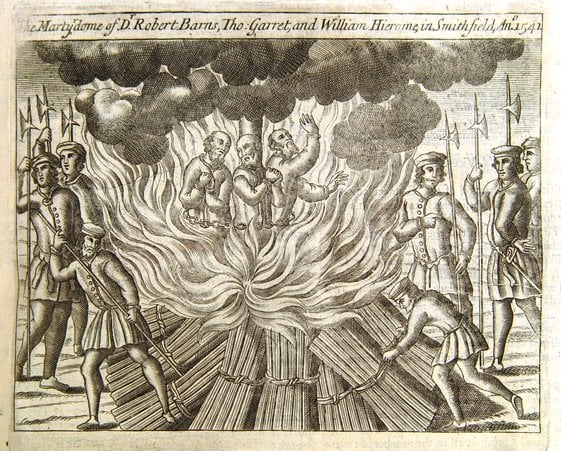
Part III of our series on the Doctrine of the Two Kingdom: This is the issue of most importance today, when the state presumes to dictate what the church and its members are allowed to believe and practice. This includes overt persecution and issues of religious liberty. But this aspect of the Two Kingdoms teaching also addresses what many Christians today would like to see: a state church; Christianity as the national religion; the state enforcing Christian teaching.
You might think that Lutherans should be the last to complain about these kinds of arrangements, since, despite their doctrine of the Two Kingdoms, they have often been state churches and, in some countries, still are the state church. But, as you will see, this has given Lutherans bitter experience to draw on. We will discuss both the Prussian Union, which precipitated the migrations that led to the Lutheran Church Missouri Synod, and the “German Christian” movement that Nazified the church. As I show, there is a reason why all of the state churches in Europe are liberal in the extreme. And why confessional orthodoxy thrives only in churches that are independent of the state. . . .
Fortunately, the possibility of imposing a “Confessional State”–whether of the Catholic, Reformed, or Pentecostal variety–in our highly secularized nation today is, at the most, zero. Integralism, New Apostolic Reformation, and Dominionism are mainly thought experiments and discussion fodder on the internet. But they have done their damage in tempting Christians away from the Gospel, turning congregations into political machines, and driving away terrified non-Christians.
The bigger issue today is how Christians can function in our highly secularized nation and in nations that are actively hostile to the church and its teachings. The doctrine of the Two Kingdoms can protect the church from the state.
The danger the church in the Western democracies face is not so much the overt persecution that is still practiced in Communist and Islamic countries but the state dictating what the church is allowed to teach and practice. In those cases, the state rules the church. Put another way, the dominant secular ideologies favored by the government and the culture as a whole determine and limit the message of the church.
This too has been tried historically, including among Lutherans. The Reformation opposition to the temporal authority of the church led to a new appreciation for the God-given temporal authority of the rulers of the state. Thus, the Lutheran princes in Germany played a key role in Luther’s reformation of the church. The consequent religious wars, in which the Roman church tried to eradicate the Reformation by force through the Holy Roman Emperor, were finally settled by applying the principle of cuius regio, eius religio–“whose realm, his religion”–meaning that the religion of the ruler, whether Catholic or Lutheran or, after the Thirty Years’ War, Reformed, would be the religion of his dominion. This would lead to the establishment of “state churches” throughout Europe. The Scandinavian kingdoms, many of the German principalities, and scattered enclaves in Eastern Europe had Lutheran state churches. The Netherlands, Scotland, many of the cantons of Switzerland, and a number of the principalities of Germany and Eastern Europe had Calvinist state churches, with the Church of England following its own brand of Reformed theology in Anglicanism. The Catholic nations–Italy, France, Spain, and the Holy Roman Empire–in effect had a state church, but they followed the older model of papal supremacy. But in the Protestant state churches, the king, queen, or other secular ruler was the head of the church.
The state Lutheran churches would seem to be violating the confessional principle of the distinction between the Two Kingdoms. But, arguably, the church and state could work together if both spheres respected the jurisdiction of each other, with the church considering the sovereign’s control to be limited only to the church’s temporal, institutional existence. But the inherent contradictions came to a head in the 19th century when the king of Prussia, Friedrich Wilhelm III–a patron of the Enlightenment whose own religious convictions were Reformed–became head of the Lutheran state church. Because of its militarism and the defeat of Napoleon, Prussia ruled much of Germany, including many Reformed principalities. To merge his realm into one state church under control of the king, Friedrich Wilhelm imposed a common liturgy that both Lutheran and Reformed congregations were required by law to use, one that toned down the Lutherans’ sacramental theology. The king also mandated that the two confessions join together into one church body, known as the Prussian Union. Pastors who refused to conduct the new liturgy and to accept the new merger–who were overwhelmingly Lutheran–were suspended, evicted from their parsonages, and banned from ministry. If they still served their flock in private, they were imprisoned. In some cases with resistant congregations, soldiers were sent in to be quartered in the homes of dissidents and to take over church buildings.
The Prussian Union was the catalyst for large-scale migrations of confessional Lutherans to America, Canada, Australia, New Zealand, South Africa, Brazil, Argentina, and the remaining Lutheran principalities of Germany. Those who came to America would become the founders of the Lutheran Church Missouri Synod. They were not seeking a state church, since they were witnesses of how a state-controlled church can be devastating to orthodox theology. Nor were they seeking a “confessional state.” Rather, they were seeking religious liberty. They found it in the United States of America.
Later, an even more malignant case of the state’s rule over the church came about with the rise of Nazism in Germany. The so-called “German Christian” movement even used Two Kingdom language to justify the Nazification of the church. Since God rules through the secular government, the secular government must be a legitimate object of devotion and worship. The “German Christians” took over the state churches–whether Lutheran, Reformed, or Union–and imposed a Nazi theology. The state churches in Germany had long adopted the higher critical approach to Scripture along with liberal theology, which taught that in order for Christianity to survive, it must change to conform to modern culture. Allow me to quote myself, from an article I wrote for Religion & Liberty Online:
The modern culture their theologians sought to conform to was that of National Socialism. To eliminate the Jewish foundations of Christianity, they called for removing the Old Testament from the Bible. They also published a “dejudaized” version of the New Testament that removed Jewish references and concepts.
What about Jesus? Wasn’t He a Jew? The “German Christians” claimed he was not. Jesus was from Galilee, which they said had been settled by Aryans from Iran and India. These Galileans were supposedly forced to convert to Judaism, but they were not Jews “by blood.” The “German Christians” denied that Jesus was miraculously born of the Virgin Mary, teaching instead that He was the illegitimate son of a Germanic soldier serving in the Roman legion. Thus, according to them, Jesus was an Aryan and a German!
The “German Christians” went so far as to commission the poet and historical novelist Lulu von Strauss und Torney to write a “Fifth Gospel” depicting this Nazi view of Jesus. In her narrative, she removed Christ’s miracles, His moral teachings, His saving work, and His resurrection. Rather, she portrayed Him as a German hero who battled the Jews until they crucified Him.
The “German Christians” also repudiated Christian ethics, with its emphasis on love, compassion, and forgiveness. These were signs of what they called “negative Christianity,” with its dogmas, fixation on sin, and calls for repentance. Instead, the “German Christians” promoted what they called “positive Christianity,” which was an optimistic, this-worldly, fighting religion.[1]
This idolatry was opposed by the so-called “Confessing Church,” whose most famous proponent was the pastor and theologian Dietrich Bonhoeffer, who was killed in a concentration camp. Another important leader was Hermann Sasse, who after the war migrated to Australia and became an important advocate for confessional Lutheranism, becoming an ally of the Lutheran Church Missouri Synod. Some 700 dissenting pastors were arrested, including the head of the underground church, Martin Niemöller, who was sent to a concentration camp but survived. Confessing congregations often protected their pastors. Again, quoting myself:
According to William Shirer’s The Rise and Fall of the Third Reich, Germany in 1935 had, in round numbers, 18,000 Protestant pastors. Of these, 3,000 were “German Christians.” An equal number were committed to the Confessing Church. The other 12,000 kept their heads down, publicly committing to neither side.
The tendency has been to disparage that silent majority, but very likely many and maybe most of them took Niemöller’s advice simply to remain faithful in their local congregations, teaching and preaching like before, despite what the hierarchy might say. And they took at least some risk in not embracing the “German Christians.”[2]
Today, Europe is overwhelmingly secular. And yet its state churches, for the most part, remain. Pretty much without exception, from the Church of England’s wokery to the Church of Finland’s embrace of the LGBTQ cause and its complicity in the persecution of Päivi Räsänen and Bishop Juhana Pohjola, the state churches are theologically liberal and heterodox. Confessional Lutheranism survives only in church bodies that are independent of the state, which is the arrangement most compatible with the doctrine of the Two Kingdoms.
Next up: Clarifying the Doctrine of the Two Kingdoms
Notes
[1] Gene Edward Veith, “Fighting for the Church in a Time of Crisis: The Barmen Declaration,” Religion & Liberty Online, 23 May 2024. https://blog.acton.org/archives/125566-fighting-for-the-church-in-a-time-of-crisis-the-barmen-declaration.html. All of this is documented in Susannah Heschel, The Aryan Jesus: Christian Theologians and the Bible in Nazi Germany (Princeton, NJ: Princeton University Press, 2010).
[2] Ibid.
Illustration: Martyrdom of the three Lutherans–Robert Barnes, Thomas Garret, and William Hierome–on the order of King Henry VIII, head of the Church of England (1541), from Foxe’s Book of Martyrs (1684), Public Domain via Sacrifiles.
[See Foxe’s account here.]
Previous Post
July 21, 2026
Protecting the State from the Church
Next Post

July 23, 2026 Clarifying the Doctrine of the Two Kingdoms
Recent Comments
"Apropos to the post on Gen Z a couple days ago: "If you want the ..."
"“Don't eat with your hands, son, use your entrenching tool.”"
"You serious, Clark?"
"And all tools are made of media, thus making language and literature a tool (see, ..."
Browse Our Archives
Select a Category America Apologetics Art baseball Bible Blog Christ Church crime Culture Economics Education Ethics Family Food Football Government History Holidays Holy Week Humor International Islam Language Law Life Issues Literature Media Medicine Movies Music Nature News Personal Philosophy Politics psychology Reformation Religions Sacraments Science sex Social Science Sports technology television terrorism Theology Uncategorized Vocation war
Select a Month October 2026 September 2026 August 2026 July 2026 June 2026 May 2026 April 2026 March 2026 February 2026 January 2026 December 2025 November 2025 October 2025 September 2025 August 2025 July 2025 June 2025 May 2025 April 2025 March 2025 February 2025 January 2025 December 2024 November 2024 October 2024 September 2024 August 2024 July 2024 June 2024 May 2024 April 2024 March 2024 February 2024 January 2024 December 2023 November 2023 October 2023 September 2023 August 2023 July 2023 June 2023 May 2023 April 2023 March 2023 February 2023 January 2023 December 2022 November 2022 October 2022 September 2022 August 2022 July 2022 June 2022 May 2022 April 2022 March 2022 February 2022 January 2022 December 2021 November 2021 October 2021 September 2021 August 2021 July 2021 June 2021 May 2021 April 2021 March 2021 February 2021 January 2021 December 2020 November 2020 October 2020 September 2020 August 2020 July 2020 June 2020 May 2020 April 2020 March 2020 February 2020 January 2020 December 2019 November 2019 October 2019 September 2019 August 2019 July 2019 June 2019 May 2019 April 2019 March 2019 February 2019 January 2019 December 2018 November 2018 October 2018 September 2018 August 2018 July 2018 June 2018 May 2018 April 2018 March 2018 February 2018 January 2018 December 2017 November 2017 October 2017 September 2017 August 2017 July 2017 June 2017 May 2017 April 2017 March 2017 February 2017 January 2017 December 2016 November 2016 October 2016 September 2016 August 2016 July 2016 June 2016 May 2016 April 2016 March 2016 February 2016 January 2016 December 2015 November 2015 October 2015 September 2015 August 2015 July 2015 June 2015 May 2015 April 2015 March 2015 February 2015 January 2015 December 2014 November 2014 October 2014 September 2014 August 2014 July 2014 June 2014 May 2014 April 2014 March 2014 February 2014 January 2014 December 2013 November 2013 October 2013 September 2013 August 2013 July 2013 June 2013 May 2013 April 2013 March 2013 February 2013 January 2013 December 2012 November 2012 October 2012 September 2012 August 2012 July 2012 June 2012 May 2012 April 2012 March 2012 February 2012 January 2012 December 2011 November 2011 October 2011 September 2011 August 2011 July 2011 June 2011 May 2011 April 2011 March 2011 February 2011 January 2011 December 2010 November 2010 October 2010 September 2010 August 2010 July 2010 June 2010 May 2010 April 2010 March 2010 February 2010 January 2010 December 2009 November 2009 October 2009 September 2009 August 2009 July 2009 June 2009 May 2009 April 2009 March 2009 February 2009 January 2009 December 2008 November 2008 October 2008 September 2008 August 2008 July 2008 June 2008 May 2008 April 2008 March 2008 February 2008 January 2008 December 2007 November 2007 October 2007
Follow Us!
TAKE THE
Religious Wisdom Quiz
Who said, "You shall have no other gods before me"?
Select your answer to see how you score.
God Joshua Moses Aaron
Books by This Author Books by Gene Veith
Related posts from Cranach


Gen Z Wants Evildoers to Be Punished, Not...

On Trump's Political Ads That You Paid For

TRENDING AT PATHEOS Evangelical

The Sermon on the Mount, Part I: Matthew...
The Sermon on the Mount, Part I (Matthew 4:12-5:12) St. Matthew moves...

What's up from Crossway: Reviewing some of their latest A few weeks...

Janie Learns the Way of the Cross: A...
Teaching children about Jesus' Passion can be challenging. Many parents and educators...

Looking For Good Catholic Writing - October 2026
He alone extends the heavens, and he walks upon the waves of...

In "Irreplaceable," our book on vocation and technology, Trevor Sutton and I...

I was strolling through the top floor of the brand new Parthenon...
view all Evangelical blogs
What Are Your Thoughts?leave a comment
Ad-Free & Subscriber Log-In Subscription Support
- About Us
- 2026 Calendar
- Videos
- Podcasts
- Library of World Religions
- Faith In Media Tracker
- Advertise With Us
- Write for Us
- Privacy Policy
- Terms of Service
- Do Not Sell My Data
- Contact Us
- Radiant Digital
- Manage Newsletter Subscriptions
- Unsubscribe From Notifications
- Sitemap
Copyright 2008-2026, Patheos. All rights reserved.
Subscription Support Ad-Free & Subscriber Log-In
Follow Patheos