
BuddhistCatholicContemplativeEvangelicalGeneral ChristianHinduJewishLatter-day SaintMuslimNew VisionsProgressive Christian
Beliefs
- Buddhist
- Catholic
- Contemplative
- Evangelical
- General Christian
- Hindu
- Jewish
- Latter-day Saint
- More Voices
- Muslim
- New Visions
- Pagan
- Progressive Christian
Topics
- Religion News
- Food and Religion
- Sports and Religion
- Religious Art
- Religious Music and Entertainment
- Religious Events
- History and Religion
- Style and Religion
- Politics and Religion
- Women in Religion
- Recreation Outdoors and Religion
- Business Finance and Religion
- Careers Workplace and Religion
- Education and Religion
- Family Parenting and Religion
- Health Fitness and Religion
- Home and Religion
- Relationships and Religion
- Technology and Religion
- Travel and Religion
Columnists
- Buddhist Columnists
- Business Finance and Religion Columnists
- Careers Workplace and Religion Columnists
- Catholic Columnists
- Contemplative Columnists
- Education and Religion Columnists
- Evangelists Columnists
- Family Parenting and Religion Columnists
- General Christian Columnists
- Health Fitness and Religion Columnists
- Hindu Columnists
- History and Religion Columnists
- Home and Religion Columnists
- Jewish Columnists
- More Voices Columnists
- Latter Day Columnists
- Muslim Columnists
- New Visions Columnists
- Nonreligious Columnists
- Pagan Columnists
- Politics and Religion Columnists
- Progressive Columnists
- Recreation Outdoors and Religion Columnists
- Relationships and Religion Columnists
- Religion News Columnists
- Religious Art Columnists
- Religious Events Columnists
- Religious Music and Entertainment Columnists
- Sports and Religion Columnists
- Style and Religion Columnists
- Technology and Religion Columnists
- Travel and Religion Columnists
- Women in Religion Columnists
Resource Library
- 2026 Calendar
- Library of World Religions
- The 100 Most Holy Places on Earth
- Patheos Answers
- Podcasts
- Videos
- Faith Leaders Database
- Anglican Episcopalian
- Bahai
- Baptist
- Buddhism
- Christianity
- Confucianism
- Eastern Orthodoxy
- Hinduism
- Holiness and Pentecostal
- ISKCON
- Islam
- Judaism
- Lutheran
- Methodist
- The Church of Jesus Christ of Latter-day Saints
- New Age
- Paganism
- Presbytarian and Reformed
- Protestantism
- Religion Behind the Scenes
- Roman Catholic
- Scientology
- Shia Islam
- Sikhism
- Sufism
- Sunni Islam
- Taoism
- Zen
- See all religions
Research Tools
 Ad-Free & Subscriber Log-In Subscription Support
Follow Patheos 

- Trending:
- Advent
- |
- Forgiveness
- |
- Thanksgiving
- |
- Election
- |
- Seasonal Holidays
- |
- Marriage

- Home
- Evangelical
- Politics and Religion
- How the Weekend Was Invented
How the Weekend Was Invented
Last updated on: July 10, 2026 at 8:05 am by Gene Veith
How the Weekend Was Invented 2026-07-10T08:05:55-04:00 Gene Veith
Patheos Explore the world's faith through different perspectives on religion and spirituality! Patheos has the views of the prevalent religions and spiritualities of the world.
Our weeks have seven days. On the final day of the workweek, we thank God it’s Friday, then start living for the weekend, having a good time on Saturday and using Sunday as a day of rest and worship.
Did you know that the weekend–that is, two days off after five days of work–didn’t exist until the 1920s and wasn’t standard until 1938? Before that, everyone worked six days a week.
I stumbled quite randomly upon a fascinating article by Yosef Bitton in the Jewish periodical Tablet entitled The Rabbis Who Gave America the Weekend.
Before getting into that story, we should consider why our weeks have seven days. In ancient Egypt, a week was 10 days, making for a month–the time it takes for the moon to circle the earth–of three weeks. Assyria had a six day week. Ancient China had a 15 day week. The ancient Germans had a five day week. In ancient Rome, a week had 8 days.
More recently, with the French Revolution, in the mad Enlightenment effort to make everything new, the attempt was made to apply the metric system to the calendar, with a 10 day week. The Soviet Union, in the Communist attempt to liquidate the past and get rid of the Christian Sunday, tried to introduce a five day week with a rotating day of rest. Each day was named after a color (yellow, orange, red, purple, and green), with each worker assigned a color that corresponded to his day off.
That we have seven days a week is directly due to the influence of the Bible. The first chapter of Genesis describes God’s creation of the universe in six days, followed–crucially–by the day He rested. Accordingly, God decreed that human beings should follow that same pattern. “Six days you shall labor, and do all your work,” according to the Commandment, “but the seventh day is a Sabbath to the Lord your God. On it you shall not do any work” (Exodus 20:9-10).
This shaped the Jewish calendar and then the Christian calendar, which substituted Sunday for Saturday as the day of rest. After the Roman emperor Constantine became a Christian, he decreed in 321 A.D. that the Roman Empire adopt the seven-day week, with a day of rest.
Since then, the seven-day week spread throughout the world, not only to Christian countries but also to non-Christian countries–Muslim, Hindu, Buddhist, Communist–and just about everywhere, except for some tribal societies. The French Enlightenment abandoned the metric system for weeks and went back to the Christian numbering in 1805. The Soviets gave up the color-coded week and went back to the Christian calendar in 1940.
But why do we now have two days of rest? Both Sunday and Saturday? (Understanding, of course, that some people do have to work on those days, though they usually still have a five day work week, unless they choose to work overtime.)
This is where Yosef Bitton’s article picks up. The problem was that Jews and Christians observe different days of rest. For Jews, the prohibition of working on the Sabbath, the seventh day of the week, is extremely strict. The Christian sabbath, though, is the first day of the week, Sunday, the day of Christ’s resurrection.
Jews who worked for Christians got Sunday off, but had to violate their Sabbath obligation. Many Jews could fully observe their religious law only by starting their own businesses or working for fellow Jews, thus getting Saturday off.
In the United States, Reformed Protestantism also put a big emphasis on not working on Sunday, their Sabbath. They pushed through the so-called “blue laws,” requiring businesses to close on Sunday. That meant that Jewish businesses had to be closed for two days, both Saturday to obey the Jewish law and Sunday to obey the American law.
Jewish activists tried to get exemptions allowing them to have Saturday off instead of Sunday, but to no avail. Reformed Judaism, the theologically liberal branch of the religion, called for Jews to just switch their sabbath day to Sunday, as the Christians did.
Then an Orthodox rabbi named Bernard Drachman (1861-1945) had a brilliant idea. Instead of arguing in terms of which day of the week should be the day of rest, why not urge that both of them be days off? That way, both Jews and Christians would benefit, and Christians could be persuaded to go along with what the Jews needed.
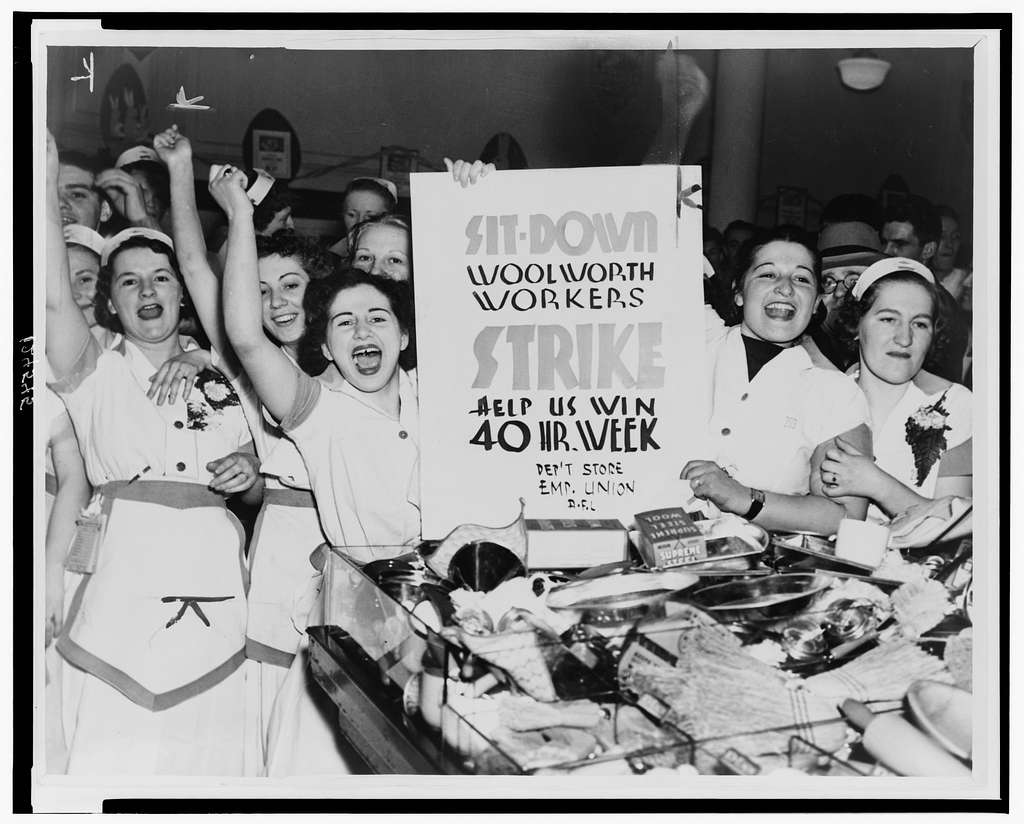
Drachman’s initiative, with the support of other rabbis who rejected the compromise offered by Reformed Judaism, was taken up by the America’s labor movement. Unions began demanding not so much one day or the other but a five day work week. That is to say, the 40-hour week.
Bitton sums up what happened next:
The idea spread slowly at first, then with remarkable speed. Beginning in 1919, the Sabbath Alliance joined forces with Jewish-led labor unions. In 1920, the Amalgamated Clothing Workers of America endorsed the five-day work week. In 1924, a convention of Orthodox rabbis from New York, New Jersey, and Connecticut formally endorsed the two-day weekend; that same year, 50,000 garment workers struck in support of it. Two years later, the number doubled—100,000 clothing workers across New York and Philadelphia. By 1927, the U.S. Bureau of Labor Statistics declared the five-day workweek practically standard in the clothing industry, and it spread from there across the American economy.
Wikipedia fills out the story: Henry Ford adopted the 5-day work week, with Saturday and Sunday off, in 1926. In 1938, the Fair Labor Standards Act mandated a 40-hour work week, which had the effect of establishing the weekend.
Photo: Female employees of Woolworths holding sign indicating that they are striking for a 40-hour work week (1937) by Library of Congress via Picryl, Public Domain
Previous Post

July 9, 2026
AI + Population Collapse = The World as a Small Town
Next Post

July 13, 2026 Monday Miscellany, 7/13/26
Recent Comments
"I'm parking this note here for later reference. Apropos to 1another's frequent discussion of the ..."
Belief and Disbelief in Christ’s Presence ..."
"I'll add my voice to others here regarding gratitude. Grace is a faithful categorization of ..."
Gratitude as the Parent of All ..."
"What this study requires is letting Ryan Burge loose on the data. I checked and ..."
Belief and Disbelief in Christ’s Presence ..."
"That's quite a stunted conception of the power of language."
God and the Contingency of This ..."
Browse Our Archives
Select a Category America Apologetics Art baseball Bible Blog Christ Church crime Culture Economics Education Ethics Family Food Football Government History Holidays Holy Week Humor International Islam Language Law Life Issues Literature Media Medicine Movies Music Nature News Personal Philosophy Politics psychology Reformation Religions Sacraments Science sex Social Science Sports technology television terrorism Theology Uncategorized Vocation war
Select a Month November 2026 October 2026 September 2026 August 2026 July 2026 June 2026 May 2026 April 2026 March 2026 February 2026 January 2026 December 2025 November 2025 October 2025 September 2025 August 2025 July 2025 June 2025 May 2025 April 2025 March 2025 February 2025 January 2025 December 2024 November 2024 October 2024 September 2024 August 2024 July 2024 June 2024 May 2024 April 2024 March 2024 February 2024 January 2024 December 2023 November 2023 October 2023 September 2023 August 2023 July 2023 June 2023 May 2023 April 2023 March 2023 February 2023 January 2023 December 2022 November 2022 October 2022 September 2022 August 2022 July 2022 June 2022 May 2022 April 2022 March 2022 February 2022 January 2022 December 2021 November 2021 October 2021 September 2021 August 2021 July 2021 June 2021 May 2021 April 2021 March 2021 February 2021 January 2021 December 2020 November 2020 October 2020 September 2020 August 2020 July 2020 June 2020 May 2020 April 2020 March 2020 February 2020 January 2020 December 2019 November 2019 October 2019 September 2019 August 2019 July 2019 June 2019 May 2019 April 2019 March 2019 February 2019 January 2019 December 2018 November 2018 October 2018 September 2018 August 2018 July 2018 June 2018 May 2018 April 2018 March 2018 February 2018 January 2018 December 2017 November 2017 October 2017 September 2017 August 2017 July 2017 June 2017 May 2017 April 2017 March 2017 February 2017 January 2017 December 2016 November 2016 October 2016 September 2016 August 2016 July 2016 June 2016 May 2016 April 2016 March 2016 February 2016 January 2016 December 2015 November 2015 October 2015 September 2015 August 2015 July 2015 June 2015 May 2015 April 2015 March 2015 February 2015 January 2015 December 2014 November 2014 October 2014 September 2014 August 2014 July 2014 June 2014 May 2014 April 2014 March 2014 February 2014 January 2014 December 2013 November 2013 October 2013 September 2013 August 2013 July 2013 June 2013 May 2013 April 2013 March 2013 February 2013 January 2013 December 2012 November 2012 October 2012 September 2012 August 2012 July 2012 June 2012 May 2012 April 2012 March 2012 February 2012 January 2012 December 2011 November 2011 October 2011 September 2011 August 2011 July 2011 June 2011 May 2011 April 2011 March 2011 February 2011 January 2011 December 2010 November 2010 October 2010 September 2010 August 2010 July 2010 June 2010 May 2010 April 2010 March 2010 February 2010 January 2010 December 2009 November 2009 October 2009 September 2009 August 2009 July 2009 June 2009 May 2009 April 2009 March 2009 February 2009 January 2009 December 2008 November 2008 October 2008 September 2008 August 2008 July 2008 June 2008 May 2008 April 2008 March 2008 February 2008 January 2008 December 2007 November 2007 October 2007
Give A Subscription
Follow Us!
TAKE THE
Religious Wisdom Quiz
What does Proverbs 22:6 say about training a child?
Select your answer to see how you score.
Train up a child in the way he should go, and when he is old he will not depart from it. Teach a child discipline, and he will live in wisdom. Guide the young, and they will not stumble. Children should be seen and not heard.
Books by This Author Books by Gene Veith
Related posts from Cranach


Who Receives the New Benefit of Clergy

Jobs That Do Not Involve Loving and Serving...
TRENDING AT PATHEOS Evangelical

"Why Do Churches Talk So Much About Money?"
If you were inclined to do so, you could probably find any...

Watch and Pray: On Mark 13:33-37
Jesus said to his disciples: “Be watchful! Be alert! You do not...

Debate on Purgatory & Biblical Evidences for It
This is from a combox on my video channel, Catholic Bible Highlights....

Set the table for the coming King
On Thursday we visited my sister-in-law for Thanksgiving, and throughout the entire...

If I Stop Becoming, Will I Disappear?
(At our most recent half day Zen retreat, Dr Chris Hoff, a...

A Modest Proposal for President Trump
Trump should just quit the loser Republicans who failed him so badly...
view all Evangelical blogs
What Are Your Thoughts?leave a comment
Ad-Free & Subscriber Log-In Subscription Support
- About Us
- 2026 Calendar
- Videos
- Podcasts
- Library of World Religions
- Faith In Media Tracker
- Advertise With Us
- Write for Us
- Privacy Policy
- Terms of Service
- Do Not Sell My Data
- Contact Us
- Radiant Digital
- Manage Newsletter Subscriptions
- Unsubscribe From Notifications
- Sitemap
Copyright 2008-2026, Patheos, part of the Radiant Digital network of media brands. All rights reserved.
Subscription Support Ad-Free & Subscriber Log-In
Follow Patheos