
BuddhistCatholicContemplativeEvangelicalGeneral ChristianHinduJewishLatter-day SaintMuslimNew VisionsProgressive Christian
Beliefs
- Buddhist
- Catholic
- Contemplative
- Evangelical
- General Christian
- Hindu
- Jewish
- Latter-day Saint
- More Voices
- Muslim
- New Visions
- Pagan
- Progressive Christian
Topics
- Religion News
- Food and Religion
- Sports and Religion
- Religious Art
- Religious Music and Entertainment
- Religious Events
- History and Religion
- Style and Religion
- Politics and Religion
- Women in Religion
- Recreation Outdoors and Religion
- Business Finance and Religion
- Careers Workplace and Religion
- Education and Religion
- Family Parenting and Religion
- Health Fitness and Religion
- Home and Religion
- Relationships and Religion
- Technology and Religion
- Travel and Religion
Columnists
- Buddhist Columnists
- Business Finance and Religion Columnists
- Careers Workplace and Religion Columnists
- Catholic Columnists
- Contemplative Columnists
- Education and Religion Columnists
- Evangelists Columnists
- Family Parenting and Religion Columnists
- General Christian Columnists
- Health Fitness and Religion Columnists
- Hindu Columnists
- History and Religion Columnists
- Home and Religion Columnists
- Jewish Columnists
- More Voices Columnists
- Latter Day Columnists
- Muslim Columnists
- New Visions Columnists
- Nonreligious Columnists
- Pagan Columnists
- Politics and Religion Columnists
- Progressive Columnists
- Recreation Outdoors and Religion Columnists
- Relationships and Religion Columnists
- Religion News Columnists
- Religious Art Columnists
- Religious Events Columnists
- Religious Music and Entertainment Columnists
- Sports and Religion Columnists
- Style and Religion Columnists
- Technology and Religion Columnists
- Travel and Religion Columnists
- Women in Religion Columnists
Resource Library
- 2026 Calendar
- Library of World Religions
- The 100 Most Holy Places on Earth
- Patheos Answers
- Podcasts
- Videos
- Faith Leaders Database
- Anglican Episcopalian
- Bahai
- Baptist
- Buddhism
- Christianity
- Confucianism
- Eastern Orthodoxy
- Hinduism
- Holiness and Pentecostal
- ISKCON
- Islam
- Judaism
- Lutheran
- Methodist
- The Church of Jesus Christ of Latter-day Saints
- New Age
- Paganism
- Presbytarian and Reformed
- Protestantism
- Religion Behind the Scenes
- Roman Catholic
- Scientology
- Shia Islam
- Sikhism
- Sufism
- Sunni Islam
- Taoism
- Zen
- See all religions
Research Tools
 Ad-Free & Subscriber Log-In Subscription Support
Follow Patheos 

- Trending:
- Advent
- |
- Forgiveness
- |
- Thanksgiving
- |
- Election
- |
- Seasonal Holidays
- |
- Marriage

- Home
- Evangelical
- Politics and Religion
- There Is No Scientific Consensus in Physics
There Is No Scientific Consensus in Physics
Last updated on: May 28, 2026 at 8:22 am by Gene Veith
There Is No Scientific Consensus in Physics 2026-05-28T08:22:42-04:00 Gene Veith
Patheos Explore the world's faith through different perspectives on religion and spirituality! Patheos has the views of the prevalent religions and spiritualities of the world.
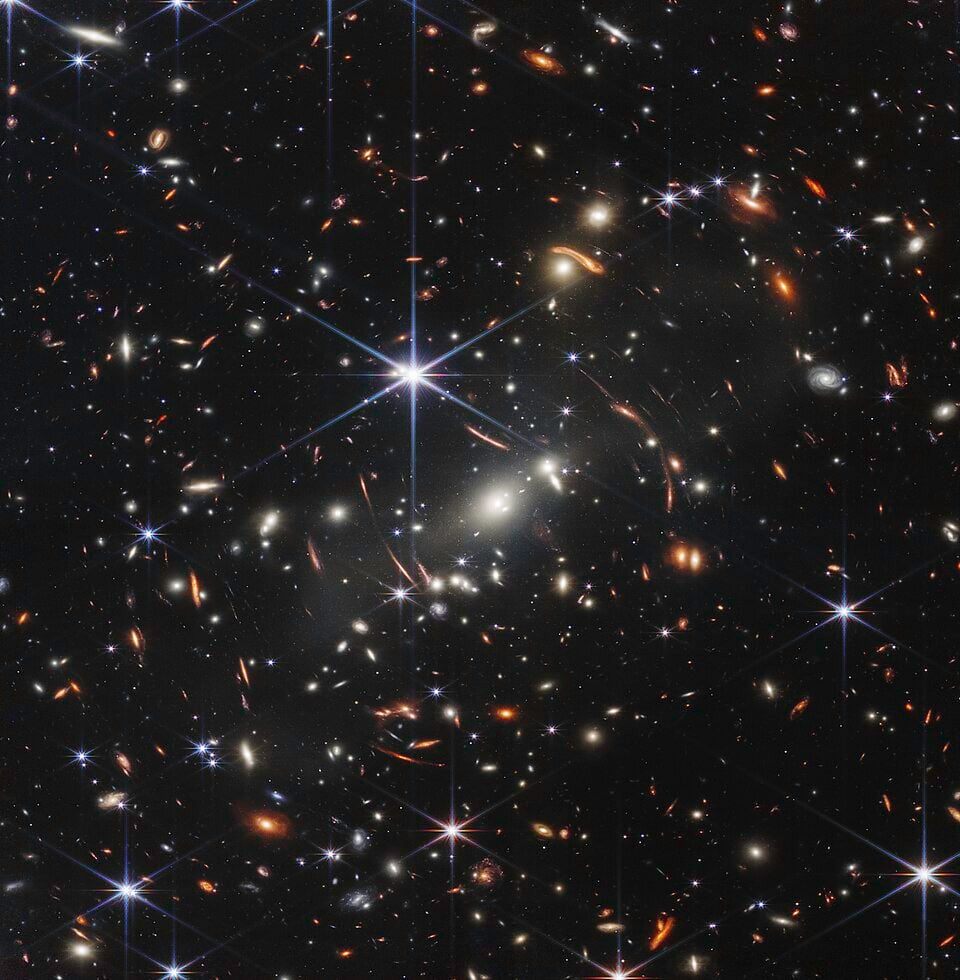
In the modern “social imaginary,” science provides the only certainty, uncovering physical properties by rigorous experimentation and analyzing them with the rationality of mathematics. Science–not religion, not philosophy, not culture–gives us the only knowledge that can be considered objectively true.
But the American Physical Society conducted one of the largest surveys of scientists in history, questioning some 1,600 physicists in the whole range of specialties, from quantum physics to astrophysics, to see where they stood on issues of particle physics, general relativity, and cosmology.
The findings can be summed up in the title of the report by researchers Niayesh Afshordi, Phil Halper, Matteo Rini, and Michael Schirber: Far from Settled: Respondents at Odds over Greatest Physics Mysteries, with the deck, “One of the largest physics surveys ever conducted finds respondents divided on most topics. Surprisingly, some ‘textbook’ answers only racked up a minority of votes.” (The published paper is entitled Big Mysteries Survey: Physicists’ Views on Cosmology, Black Holes, Quantum Mechanics, and Quantum Gravity. The complete survey results are here.)
The biggest agreement that emerged was on a vague description of the Big Bang, with 68% saying that it involved a “hot dense state — which may or may not correspond to a beginning of time.” But only 20% of these scientists believe that the Big Bang was the beginning of time, even though that is the teaching of virtually all science textbooks!
A slim majority (51%) believe that the “unexpected uniformity of the universe” could be accounted for by cosmic inflation–the textbook answer–with 8% holding to a cyclic universe; 7% looking to quantum gravity; 5% thinking the laws of physics have changed; 10% saying it’s not inflation, but they don’t have an alternative; 6% having some “other” theory; and 13% having “no opinion.’
On all other questions, the answers are all over the place. I’ll let Frank Landymore , writing in Futurism, tell you some more of the results in his article with the great title, Someone Asked Physicists What They Really Believe About the Universe and… Yikes, with the deck, “Does anyone know anything?”
There was even more disagreement over dark matter, a hypothetical substance that we can see the gravitational fingerprints of everywhere and which appears to make up 80 percent of the mass in the universe, but which we are yet to prove exists because it’s invisible to all forms of direct detection. It’s an essential part of the standard model, but it doesn’t elucidate what dark matter is. Naturally, opinions differ, with only 10 percent holding the traditional view that it’s made of massive particles called WIMPs, and 21 percent answering that it’s a hybrid of some of the other popular ideas, like it being trapped in primordial black holes.
Dark energy’s responses reflect recent developments in the field. The traditional view of it as a cosmological “constant” was just 24 percent, which was less than the view that dark energy changes over time, at 26 percent, after observations from a recent DESI survey indicated that it may be weakening.
Just over a third (36%) of the respondents hold to the mainline “Copenhagen” theory of quantum mechanics! Fewer than a third (30%) believe in Stephen Hawking’s contention that information is preserved in a black hole through the release of radiation. Less than a fifth (19%) believe in “string theory” to account for quantum gravity.
I was most interested in the question about the “Anthropic Principle,” how to account for the fact that the universe appears to be “fine tuned” for life, that if a wide range of constants in the universe, such as the mass of an electron, varied only minutely, the universe would not have formed complex structures and life would be impossible. One in five (20%) believe in the utterly unscientific dogma of the multiverse, that there is an infinite number of universes to account for all possibilities and we are in one that happens to be hospitable to life. An explanation I hadn’t heard of, that some Darwinian process within the cosmos, such as baby universes within black holes, made life possible, is held by 6%. Nearly a tenth (9%) of the scientists believe in Intelligent Design! The answer with the largest response, 26%, is that this fine-tuning is just a “brute fact” that needs no further explanation.
In each of the questions, 13% or more of the scientists said that they have “no opinion.” That is probably the most “scientific”of the answers. If you don’t know the answer, don’t say that you do. If there is not enough evidence to come to a conclusion, keep it as an open question.
But the nearly complete lack of consensus may itself be evidence of what the great historian of science Thomas Kuhn observed in The Structure of Scientific Revolutions: Historically, scientists have always created paradigms to account for their observations (such as the geocentric model of the universe). Eventually, anomalies appear–observations that do not fit the paradigm–whereupon scientists try to adjust the paradigm so that they will fit (as in the supposed epicycles of planetary movements around the earth). Eventually, a “paradigm shift” occurs, offering a model to better account for the data (the heliocentric model of the universe). This is at first resisted by mainline scientists (Galileo’s persecution), but eventually accepted. Whereupon the cycle continues.
Today we seem to be in a similar state. The existing scientific paradigms are not able to account for the evermore sophisticated observations. So scientists try to tweak the paradigms and oppose the scientists who are proposing new paradigms, but those aren’t currently working either.
If scientists can’t account for 80% of the mass over the universe, to the point of saying that it’s invisible and can’t be detected–that is, that the empirical evidence and thus the scientific method can no longer apply to it–where does that leave modern science?
Then again, what do you call something that cannot be seen or studied empirically but that comprises much of reality, exerts great power, and moves the stars? Wouldn’t that describe God? Could “dark matter” be some kind of spiritual realm that underlies the created order?
What do you call an energy that cannot be detected but that holds the universe together? Could “dark energy” be the power of God?
Maybe the next paradigm will be Intelligent Design. Though spoken against, ridiculed, and suppressed–just as Kuhn says happens with scientific revolutions that introduce new paradigms–maybe that will become the new reigning paradigm. I’m astonished that, according to this study, nearly one out of ten (9%) physicists–far more than I thought there would be–believe Intelligent Design is the answer.
Photo: Webb’s First Deep Field by NASA, ESA, CSA, and STScI – https://webbtelescope.org/contents/media/images/2022/038/01G7JGTH21B5GN9VCYAHBXKSD1, Public Domain, https://commons.wikimedia.org/w/index.php?curid=120346043
Previous Post

May 27, 2026
Bringing the Protestant Mainline Back to Orthodoxy
Next Post

May 29, 2026 A Third of Americans Are Having an "Existential Crisis"
Recent Comments
"Can we teach the AI to play tic-tac-toe and develop a winning strategy?"
"Yes, people are saying......"
"Not that I'm aware of. I'm simply sharing the cryptic comments of those who know ..."
"David, as you, I have been involved with computer program development for a very long ..."
Browse Our Archives
Select a Category America Apologetics Art baseball Bible Blog Christ Church crime Culture Economics Education Ethics Family Food Football Government History Holidays Holy Week Humor International Islam Language Law Life Issues Literature Media Medicine Movies Music Nature News Personal Philosophy Politics psychology Reformation Religions Sacraments Science sex Social Science Sports technology television terrorism Theology Uncategorized Vocation war
Select a Month November 2026 October 2026 September 2026 August 2026 July 2026 June 2026 May 2026 April 2026 March 2026 February 2026 January 2026 December 2025 November 2025 October 2025 September 2025 August 2025 July 2025 June 2025 May 2025 April 2025 March 2025 February 2025 January 2025 December 2024 November 2024 October 2024 September 2024 August 2024 July 2024 June 2024 May 2024 April 2024 March 2024 February 2024 January 2024 December 2023 November 2023 October 2023 September 2023 August 2023 July 2023 June 2023 May 2023 April 2023 March 2023 February 2023 January 2023 December 2022 November 2022 October 2022 September 2022 August 2022 July 2022 June 2022 May 2022 April 2022 March 2022 February 2022 January 2022 December 2021 November 2021 October 2021 September 2021 August 2021 July 2021 June 2021 May 2021 April 2021 March 2021 February 2021 January 2021 December 2020 November 2020 October 2020 September 2020 August 2020 July 2020 June 2020 May 2020 April 2020 March 2020 February 2020 January 2020 December 2019 November 2019 October 2019 September 2019 August 2019 July 2019 June 2019 May 2019 April 2019 March 2019 February 2019 January 2019 December 2018 November 2018 October 2018 September 2018 August 2018 July 2018 June 2018 May 2018 April 2018 March 2018 February 2018 January 2018 December 2017 November 2017 October 2017 September 2017 August 2017 July 2017 June 2017 May 2017 April 2017 March 2017 February 2017 January 2017 December 2016 November 2016 October 2016 September 2016 August 2016 July 2016 June 2016 May 2016 April 2016 March 2016 February 2016 January 2016 December 2015 November 2015 October 2015 September 2015 August 2015 July 2015 June 2015 May 2015 April 2015 March 2015 February 2015 January 2015 December 2014 November 2014 October 2014 September 2014 August 2014 July 2014 June 2014 May 2014 April 2014 March 2014 February 2014 January 2014 December 2013 November 2013 October 2013 September 2013 August 2013 July 2013 June 2013 May 2013 April 2013 March 2013 February 2013 January 2013 December 2012 November 2012 October 2012 September 2012 August 2012 July 2012 June 2012 May 2012 April 2012 March 2012 February 2012 January 2012 December 2011 November 2011 October 2011 September 2011 August 2011 July 2011 June 2011 May 2011 April 2011 March 2011 February 2011 January 2011 December 2010 November 2010 October 2010 September 2010 August 2010 July 2010 June 2010 May 2010 April 2010 March 2010 February 2010 January 2010 December 2009 November 2009 October 2009 September 2009 August 2009 July 2009 June 2009 May 2009 April 2009 March 2009 February 2009 January 2009 December 2008 November 2008 October 2008 September 2008 August 2008 July 2008 June 2008 May 2008 April 2008 March 2008 February 2008 January 2008 December 2007 November 2007 October 2007
Give A Subscription
Follow Us!
TAKE THE
Religious Wisdom Quiz
Who prophesied the fall of Babylon?
Select your answer to see how you score.
Jeremiah Isaiah Daniel Ezekiel
Books by This Author Books by Gene Veith
Related posts from Cranach
A Scientist on the Location of Heaven

Gen Z Wants Evildoers to Be Punished, Not...

The Testimony of Josephus about Jesus
TRENDING AT PATHEOS Evangelical

For many years, Catholicism has been caught up in division over the...

'Statements of Faith' never get shorter
Nothing demonstrates a conservative commitment to faith and faithfulness like a "statement...

Michele's Reviews - Future Grace by John Piper
In God's Place, at God's Pace, by Future Grace Impatience is...

Bama Gramma's Blackout Christmas: the Power of Light...
Another Christmas Skit: I have an alter ego: Bama Gramma. She shows...

Thanksgiving as a Way of Life: A Christian...
Each year, Thanksgiving brings families and friends together to share meals, stories,...

Two Women Doctors Who Went Against the Current
Women physicians who transformed healthcare for "Indians" “I shall have an advantage...
view all Evangelical blogs
What Are Your Thoughts?leave a comment
Ad-Free & Subscriber Log-In Subscription Support
- About Us
- 2026 Calendar
- Videos
- Podcasts
- Library of World Religions
- Faith In Media Tracker
- Advertise With Us
- Write for Us
- Privacy Policy
- Terms of Service
- Do Not Sell My Data
- Contact Us
- Radiant Digital
- Manage Newsletter Subscriptions
- Unsubscribe From Notifications
- Sitemap
Copyright 2008-2026, Patheos, part of the Radiant Digital network of media brands. All rights reserved.
Subscription Support Ad-Free & Subscriber Log-In
Follow Patheos