
BuddhistCatholicContemplativeEvangelicalGeneral ChristianHinduJewishLatter-day SaintMuslimNew VisionsProgressive Christian
Beliefs
- Buddhist
- Catholic
- Contemplative
- Evangelical
- General Christian
- Hindu
- Jewish
- Latter-day Saint
- More Voices
- Muslim
- New Visions
- Pagan
- Progressive Christian
Topics
- Religion News
- Food and Religion
- Sports and Religion
- Religious Art
- Religious Music and Entertainment
- Religious Events
- History and Religion
- Style and Religion
- Politics and Religion
- Women in Religion
- Recreation Outdoors and Religion
- Business Finance and Religion
- Careers Workplace and Religion
- Education and Religion
- Family Parenting and Religion
- Health Fitness and Religion
- Home and Religion
- Relationships and Religion
- Technology and Religion
- Travel and Religion
Columnists
- Buddhist Columnists
- Business Finance and Religion Columnists
- Careers Workplace and Religion Columnists
- Catholic Columnists
- Contemplative Columnists
- Education and Religion Columnists
- Evangelists Columnists
- Family Parenting and Religion Columnists
- General Christian Columnists
- Health Fitness and Religion Columnists
- Hindu Columnists
- History and Religion Columnists
- Home and Religion Columnists
- Jewish Columnists
- More Voices Columnists
- Latter Day Columnists
- Muslim Columnists
- New Visions Columnists
- Nonreligious Columnists
- Pagan Columnists
- Politics and Religion Columnists
- Progressive Columnists
- Recreation Outdoors and Religion Columnists
- Relationships and Religion Columnists
- Religion News Columnists
- Religious Art Columnists
- Religious Events Columnists
- Religious Music and Entertainment Columnists
- Sports and Religion Columnists
- Style and Religion Columnists
- Technology and Religion Columnists
- Travel and Religion Columnists
- Women in Religion Columnists
Resource Library
- 2026 Calendar
- Library of World Religions
- The 100 Most Holy Places on Earth
- Patheos Answers
- Podcasts
- Videos
- Faith Leaders Database
- Anglican Episcopalian
- Bahai
- Baptist
- Buddhism
- Christianity
- Confucianism
- Eastern Orthodoxy
- Hinduism
- Holiness and Pentecostal
- ISKCON
- Islam
- Judaism
- Lutheran
- Methodist
- The Church of Jesus Christ of Latter-day Saints
- New Age
- Paganism
- Presbytarian and Reformed
- Protestantism
- Religion Behind the Scenes
- Roman Catholic
- Scientology
- Shia Islam
- Sikhism
- Sufism
- Sunni Islam
- Taoism
- Zen
- See all religions
Research Tools
 Ad-Free & Subscriber Log-In Subscription Support
Follow Patheos 

- Trending:
- Advent
- |
- Forgiveness
- |
- Thanksgiving
- |
- Election
- |
- Seasonal Holidays
- |
- Marriage

- Home
- Evangelical
- Politics and Religion
- The Priesthood of All Believers & Vocation
The Priesthood of All Believers & Vocation
Last updated on: May 7, 2026 at 11:04 am by Gene Veith
The Priesthood of All Believers & Vocation 2026-05-07T11:04:25-04:00 Gene Veith
Patheos Explore the world's faith through different perspectives on religion and spirituality! Patheos has the views of the prevalent religions and spiritualities of the world.
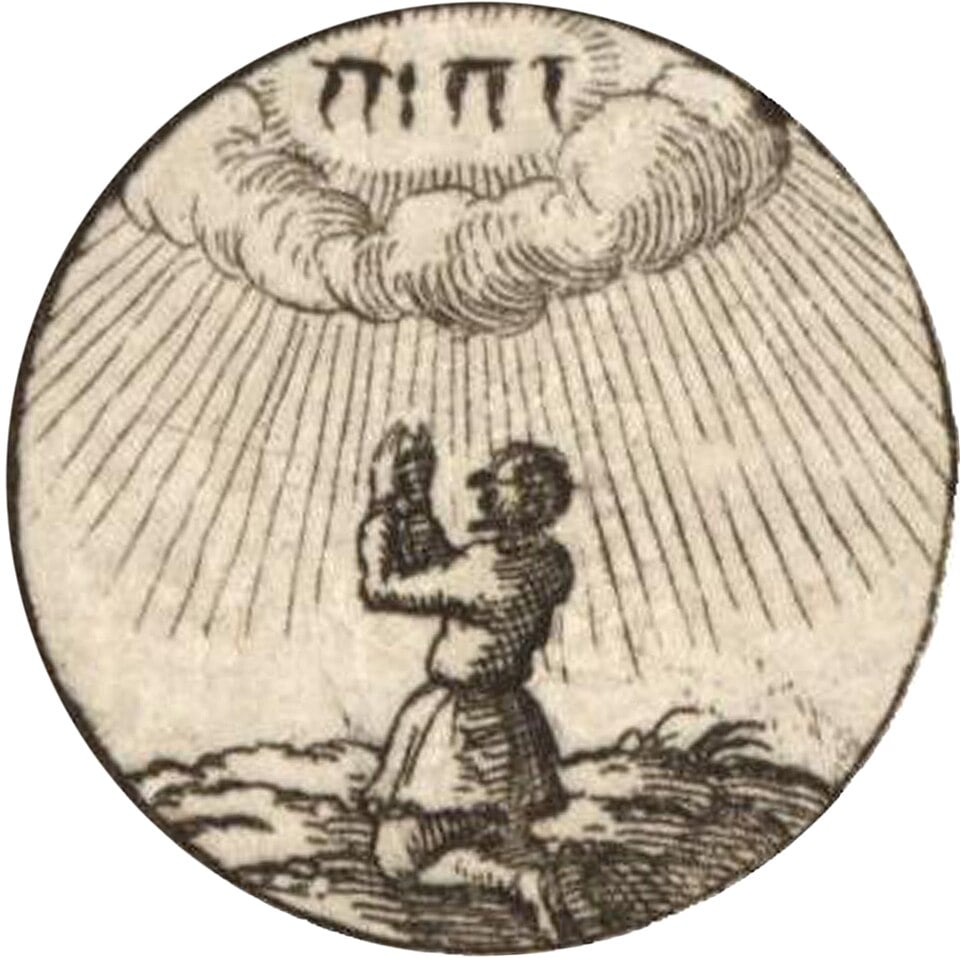
Lutheran Mission Australia, a new confessional church body, has been publishing articles in its newsletter about various facets of Lutheran spirituality and posting them on its website. I was asked if I might contribute something on the Priesthood of all believers, and I told them I had just the thing: a paper I gave so long ago that I can’t remember the occasion.
It was too long, so LMA communications manager Libby Krahling expertly cut it down to fit, but also included a link to the entire paper, making it available online. She also Australianized it, replacing my quotation from the LCMS Lutheran Service Book with the equivalent passage from the liturgy of the Australian church, and changing my American spellings to those of the King’s English followed in the Commonwealth Realms, including Australia (“neighbour” instead of “neighbor,” etc.)
So I thought I would post the short version here at the Cranach blog and link to the long version at the LMA website. (The footnote references can be found in the online versions.)
Priesthood and the Doctrine of Vocation
by Gene Edward Veith
Abstract:
In this previously unpublished paper, Lutheran theologian and writer, Dr Gene Veith, identifies the source of confusion in the contemporary church over the roles of pastors and laypeople. In many modern churches, the pastor acts more like a CEO of a company, supervising and managing the church, while the lay people fulfil all or most of the ministry activities. This disordering of roles within such churches stems from an ‘anti-church’ movement, which espouses ideas such as ‘everyone a minister’, and which ultimately leads to the belief that there is no need for pastors. This is evident in both the activities of ‘mega churches’ and in the increase in house or home churches.
In this paper, Veith argues that at its heart, this mistaken belief stems at least in part from an improper understanding of the ‘priesthood of all believers’, and that the church could benefit from a better understanding of the doctrine of vocation, which rightly identifies and values the office of the holy ministry and the vocations of all believers.
This extract is taken from a longer paper. Readers are encouraged to download and read the full paper via the link at the end of this article.
Church without Pastors
Contemporary Christianity is afflicted with two mistakes about the vocations of pastors and laypeople. In one, the pastor lords it over his laypeople, exalting his vocation over theirs. This is evident in the megachurch pastor I interviewed, though this predilection can also be found in conservative churches. In the other misunderstanding, laypeople lord it over their pastors, exalting their vocations over his. Again, this can happen in the whole range of congregations. That contemporary Christianity, though, tends to be oblivious to the doctrine of vocation, however, heightens both tendencies.
[A] megachurch pastor I interviewed believes that all of his members are “ministers.” This assumption is stated explicitly in the slogan ‘everyone a minister’ and in church bulletins today that list as minister ‘everybody.’ The word ‘minister’ literally means ‘service,’ and all Christians indeed, as we shall see, are called to service. The implication here, however, is that ‘ministry’ consists of various kinds of church work. The pastor is the ‘leader,’ a commonly invoked term, and he may continue to do such things as ‘lead the worship service,’ but the spiritual ministry of the church, as such, should be carried out by the laypeople, his followers.
The theological justification for blurring the role of clergy and laity, of course, is the doctrine of the priesthood of all believers. We are now seeing, however, contemporary Christianity taking the next step. If there is no essential difference between clergy and laity, then churches do not need pastors at all…
The Doctrine of Vocation
The Lutheran doctrine of vocation (a Latinate term that means ‘calling’) describes how God works through human beings. Whereas the Reformed version emphasizes what we are to do in our different callings – and even the Lutheran version deals with the ‘duties’ of the various callings – the most important element of Luther’s understanding is that the different vocations are means through which God works.
The Office of the Holy Ministry
According to the Lutheran theology of the office of the holy ministry, God calls pastors and therefore works through them in the church. God proclaims His Word through the voice of the pastor. The Triune God baptizes as the pastor invokes His name and sprinkles the water. Christ distributes His Body and Blood through the hands of the pastor as he presides at the Holy Supper.
That Christ works through the pastor is evident in the Divine Service in the words of absolution:
Christ gave to his church the authority to forgive the sins of those who repent, and to declare to those who do not repent that their sins are not forgiven. Therefore, upon your confession, I, as a called and ordained servant of the word, announce the grace of God to all of you, and on behalf of my Lord Jesus Christ I forgive you all your sins, in the name of the Father and of the Son † and of the Holy Spirit.
In these words, so confusing to non-Lutherans but so comforting in their tangible assurance to those who understand them, the pastor forgives sin. Not because he has the innate ability to do so, but because he is ‘called and ordained’; therefore, he can act ‘on behalf’ of Christ and, by His command, announce the grace of God to the sinner.
The Catechism explains in more detail how Christ works through His ‘called ministers’:
I believe that when the called ministers of Christ deal with us by His divine command, in particular when they exclude openly unrepentant sinners from the Christian congregation and absolve those who repent of their sins and want to do better, this is just as valid and certain, even in heaven, as if Christ our dear Lord dealt with us Himself. [1]
According to the Lutheran confessions, it is the calling that makes the pastor, a vocation externally extended and then publicly ratified in the rite of ordination. In the words of the Augsburg Confession, ‘Our churches teach that no one should publicly teach in the Church, or administer the Sacraments, without a rightly ordered call.’ [2] Christians can be confident that God Himself is serving them through the pastor whom He has called.
The vocations of all believers
And yet, what is said of the office of the holy ministry – that God distributes His gifts by means of human beings acting by virtue of a calling – applies also to all of the vocations. God creates new human beings through the vocation of mothers and fathers. God gives us our daily bread by means of farmers. God protects us by means of earthly magistrates. He heals through physicians and nurses; He bestows the benefit of education through teachers; He makes our lives easier through scientists and engineers; He creates beauty by means of artists and musicians.
This principle too is enshrined in the Lutheran confessions. Just as pastors function ‘in the stead’ of Christ, The Large Catechism teaches that young people ‘should think of their parents as standing in God’s place.’ [3] Through the civil government, says The Large Catechism, ‘God gives to us food, house and home, protection, and security.’ [4] In the vocation of marriage, The Large Catechism describes husbands and wives as themselves gifts of God: ‘Everyone should love and value the spouse God gave to him.’ [5]
The doctrine of vocation teaches that God is active in both the church and the world, governing both of His Kingdoms by calling human beings to different offices and tasks, then working through them to bestow His gifts. Each vocation, said Luther, is a ‘mask of God’; that is, God Himself is hidden in ordinary relationships and ordinary labour, so that God milks the cows through the vocation of the milkmaid. [6]
From the perspective of the person with a particular calling, whether milkmaid or pastor, God works through us when we perform the proper work of that calling in love and service to our neighbour. In the three estates in which we have our multiple callings – the family, the state, and the church – husbands and wives, parents and children, are to love and serve each other; rulers are to love and serve their subjects; workers are to love and serve their customers. The milkmaid loves and serves her neighbors by getting up early, tending to the cows, and not spilling the milk, whereupon God works through her to give nourishment to other people’s children. A pastor loves and serves the members of his congregation when he faithfully preaches God’s Word in its purity.
…
The rhythm of the Christian life is to live not in some spiritual realm but in the ordinary routines of family, work, and citizenship. Here God works through us, though we sin greatly. We bring those sins every week to the Divine Service, where we hear the Gospel, receive Christ in His Body and Blood, and have our sins forgiven. Then we are sent back into our vocations where we live out our faith, which bears fruit in love and service to our neighbours.
One other point about the doctrine of vocation needs to be emphasized. Before the throne of God, all vocations are equal. No special merit attaches to anyone because of his or her vocation, which, after all, comes from and is inhabited by God. The pastor has no advantage over the milkmaid, even though he has devoted his life to church work and she has devoted her life to cows. Both the pastor and the milkmaid must come to God in the very same way: through Jesus Christ, cleansed by His blood and clothed in His righteousness. In this sense, pastors and laypeople, despite their different vocations, have the same standing. And they share the same priesthood.
.…
The Royal Priesthood
Those who believe that ‘everyone is a minister’ are privileging ‘spiritual’ activities at the expense of the lay vocations. Laity are asked to function as pastors, spending their evenings doing church work, even if that means neglecting their marriages, their children, and their jobs. Churches today are far too busy, in my opinion, and much of this seven-days-a-week activity that consumes so much time for pastors and laity alike comes from denigrating the Divine Service, as if receiving the Word and Sacrament on Sunday morning is somehow not enough.
God works through all believers, in all of their diverse vocations. All believers have access to God through Jesus Christ. All believers may handle holy things – the Bible, the Body and Blood of Christ, and what pertains to the ‘holy orders’ they occupy, such as those of marriage, parenthood, and the workplace. All believers may be intercessors, coming before God and praying for others. All believers are therefore priests.
Specifically, a priest is someone who offers up a sacrifice. Under Roman Catholicism, a congregation’s pastor is called a ‘priest’ because in the mass he offers up a sacrifice for the living and the dead. The Reformation, in denying that the mass is a sacrifice, insisted that Christ alone is our Sacrifice, having been offered up on the Cross to atone for the sins of the world. Christ is the once-and-for-all sacrificial victim. Consequently, Christ alone is our priest, having offered up Himself for us and continuing as our intercessor with the Father.
Christ did establish the office of the holy ministry, but the churches of the Lutheran confessions usually call those who hold that office ‘pastors’ – literally, shepherds of Christ’s flock – rather than ‘priests.’ God calls men to that office through the external means of the church, through the seemingly mundane operations of congregational calling committees and voters’ assemblies. Being a pastor is a high calling indeed, worthy of all honour. Since God’s callings are multiple, a man who is a pastor may also have the vocation of being a husband to his wife, a father to his children, and a citizen to his country. A pastor too, for all of his service in the church, also lives in the secular realm where, like his lay parishioners, he must live out his faith. But he is indeed a priest, in the same sense all Christians are priests.
Even though Christ is the great high priest and even though we no longer need to offer up sacrifices to atone for our sins, that having been accomplished for us for all time on the Cross, a priesthood remains. All of God’s people in all of God’s callings share this priesthood. The sacrifices that are offered, however, are those of vocation.
The Bible describes this new priesthood and these new sacrifices: ‘You yourselves like living stones are being built up as a spiritual house, to be a holy priesthood, to offer spiritual sacrifices acceptable to God through Jesus Christ’ (1 Peter 2:5). ‘Present your bodies as a living sacrifice, holy and acceptable to God, which is your spiritual worship’ (Romans 12:1). ‘The one who offers thanksgiving as his sacrifice glorifies me; to one who orders his way rightly I will show the salvation of God!’ (Psalm 50:23).
As Lutheran theologian Vilmos Vatja says,
The Christian brings his sacrifice as he renders the obedience, offers the service, and proves the love which his work and calling require of him. The old man dies as he spends himself for his fellow men. But in this surrender of self, he is joined to Christ and obtains a new life. The work of the Christian in his calling becomes a function of his priesthood, his bodily sacrifice. His work in the calling is a work of faith, the worship of the kingdom of the world.[7]
Thus, when factory workers, farmers, business executives, milkmaids, or pastors come home exhausted from a hard day at work, worn out from making a living for their families and serving their neighbours, they are presenting their bodies as a living sacrifice. When a husband is thankful for his wife, or a mother is thankful for her children, or a worker is grateful for a job well done, or a pastor is thankful for his congregation, they are offering up the sacrifice of thanksgiving. Laymen and pastors alike, in their very different vocations, are all exercising their holy priesthood.
[For the whole paper, go here.]
Illustration: Print illustrating the Augsburg Confession by Wenceslas Hollar, Public Domain, https://commons.wikimedia.org/w/index.php?curid=47441353

Previous Post
May 6, 2026
Owen Barfield on Resurrecting Language & the World
Next Post
May 8, 2026 The Impact of St. Augustine
Recent Comments
"Can we teach the AI to play tic-tac-toe and develop a winning strategy?"
"Yes, people are saying......"
"Not that I'm aware of. I'm simply sharing the cryptic comments of those who know ..."
"David, as you, I have been involved with computer program development for a very long ..."
Browse Our Archives
Select a Category America Apologetics Art baseball Bible Blog Christ Church crime Culture Economics Education Ethics Family Food Football Government History Holidays Holy Week Humor International Islam Language Law Life Issues Literature Media Medicine Movies Music Nature News Personal Philosophy Politics psychology Reformation Religions Sacraments Science sex Social Science Sports technology television terrorism Theology Uncategorized Vocation war
Select a Month November 2026 October 2026 September 2026 August 2026 July 2026 June 2026 May 2026 April 2026 March 2026 February 2026 January 2026 December 2025 November 2025 October 2025 September 2025 August 2025 July 2025 June 2025 May 2025 April 2025 March 2025 February 2025 January 2025 December 2024 November 2024 October 2024 September 2024 August 2024 July 2024 June 2024 May 2024 April 2024 March 2024 February 2024 January 2024 December 2023 November 2023 October 2023 September 2023 August 2023 July 2023 June 2023 May 2023 April 2023 March 2023 February 2023 January 2023 December 2022 November 2022 October 2022 September 2022 August 2022 July 2022 June 2022 May 2022 April 2022 March 2022 February 2022 January 2022 December 2021 November 2021 October 2021 September 2021 August 2021 July 2021 June 2021 May 2021 April 2021 March 2021 February 2021 January 2021 December 2020 November 2020 October 2020 September 2020 August 2020 July 2020 June 2020 May 2020 April 2020 March 2020 February 2020 January 2020 December 2019 November 2019 October 2019 September 2019 August 2019 July 2019 June 2019 May 2019 April 2019 March 2019 February 2019 January 2019 December 2018 November 2018 October 2018 September 2018 August 2018 July 2018 June 2018 May 2018 April 2018 March 2018 February 2018 January 2018 December 2017 November 2017 October 2017 September 2017 August 2017 July 2017 June 2017 May 2017 April 2017 March 2017 February 2017 January 2017 December 2016 November 2016 October 2016 September 2016 August 2016 July 2016 June 2016 May 2016 April 2016 March 2016 February 2016 January 2016 December 2015 November 2015 October 2015 September 2015 August 2015 July 2015 June 2015 May 2015 April 2015 March 2015 February 2015 January 2015 December 2014 November 2014 October 2014 September 2014 August 2014 July 2014 June 2014 May 2014 April 2014 March 2014 February 2014 January 2014 December 2013 November 2013 October 2013 September 2013 August 2013 July 2013 June 2013 May 2013 April 2013 March 2013 February 2013 January 2013 December 2012 November 2012 October 2012 September 2012 August 2012 July 2012 June 2012 May 2012 April 2012 March 2012 February 2012 January 2012 December 2011 November 2011 October 2011 September 2011 August 2011 July 2011 June 2011 May 2011 April 2011 March 2011 February 2011 January 2011 December 2010 November 2010 October 2010 September 2010 August 2010 July 2010 June 2010 May 2010 April 2010 March 2010 February 2010 January 2010 December 2009 November 2009 October 2009 September 2009 August 2009 July 2009 June 2009 May 2009 April 2009 March 2009 February 2009 January 2009 December 2008 November 2008 October 2008 September 2008 August 2008 July 2008 June 2008 May 2008 April 2008 March 2008 February 2008 January 2008 December 2007 November 2007 October 2007
Give A Subscription
Follow Us!
TAKE THE
Religious Wisdom Quiz
Who prophesied the fall of Babylon?
Select your answer to see how you score.
Jeremiah Isaiah Daniel Ezekiel
Books by This Author Books by Gene Veith
Related posts from Cranach

Who Receives the New Benefit of Clergy
TRENDING AT PATHEOS Evangelical

For many years, Catholicism has been caught up in division over the...

'Statements of Faith' never get shorter
Nothing demonstrates a conservative commitment to faith and faithfulness like a "statement...

Michele's Reviews - Future Grace by John Piper
In God's Place, at God's Pace, by Future Grace Impatience is...

Bama Gramma's Blackout Christmas: the Power of Light...
Another Christmas Skit: I have an alter ego: Bama Gramma. She shows...

Thanksgiving as a Way of Life: A Christian...
Each year, Thanksgiving brings families and friends together to share meals, stories,...

Two Women Doctors Who Went Against the Current
Women physicians who transformed healthcare for "Indians" “I shall have an advantage...
view all Evangelical blogs
What Are Your Thoughts?leave a comment
Ad-Free & Subscriber Log-In Subscription Support
- About Us
- 2026 Calendar
- Videos
- Podcasts
- Library of World Religions
- Faith In Media Tracker
- Advertise With Us
- Write for Us
- Privacy Policy
- Terms of Service
- Do Not Sell My Data
- Contact Us
- Radiant Digital
- Manage Newsletter Subscriptions
- Unsubscribe From Notifications
- Sitemap
Copyright 2008-2026, Patheos, part of the Radiant Digital network of media brands. All rights reserved.
Subscription Support Ad-Free & Subscriber Log-In
Follow Patheos