
BuddhistCatholicContemplativeEvangelicalGeneral ChristianHinduJewishLatter-day SaintMuslimNew VisionsProgressive Christian
Beliefs
- Buddhist
- Catholic
- Contemplative
- Evangelical
- General Christian
- Hindu
- Jewish
- Latter-day Saint
- More Voices
- Muslim
- New Visions
- Pagan
- Progressive Christian
Topics
- Religion News
- Food and Religion
- Sports and Religion
- Religious Art
- Religious Music and Entertainment
- Religious Events
- History and Religion
- Style and Religion
- Politics and Religion
- Women in Religion
- Recreation Outdoors and Religion
- Business Finance and Religion
- Careers Workplace and Religion
- Education and Religion
- Family Parenting and Religion
- Health Fitness and Religion
- Home and Religion
- Relationships and Religion
- Technology and Religion
- Travel and Religion
Columnists
- Buddhist Columnists
- Business Finance and Religion Columnists
- Careers Workplace and Religion Columnists
- Catholic Columnists
- Contemplative Columnists
- Education and Religion Columnists
- Evangelists Columnists
- Family Parenting and Religion Columnists
- General Christian Columnists
- Health Fitness and Religion Columnists
- Hindu Columnists
- History and Religion Columnists
- Home and Religion Columnists
- Jewish Columnists
- More Voices Columnists
- Latter Day Columnists
- Muslim Columnists
- New Visions Columnists
- Nonreligious Columnists
- Pagan Columnists
- Politics and Religion Columnists
- Progressive Columnists
- Recreation Outdoors and Religion Columnists
- Relationships and Religion Columnists
- Religion News Columnists
- Religious Art Columnists
- Religious Events Columnists
- Religious Music and Entertainment Columnists
- Sports and Religion Columnists
- Style and Religion Columnists
- Technology and Religion Columnists
- Travel and Religion Columnists
- Women in Religion Columnists
Resource Library
- 2026 Calendar
- Library of World Religions
- The 100 Most Holy Places on Earth
- Patheos Answers
- Podcasts
- Videos
- Faith Leaders Database
- Anglican Episcopalian
- Bahai
- Baptist
- Buddhism
- Christianity
- Confucianism
- Eastern Orthodoxy
- Hinduism
- Holiness and Pentecostal
- ISKCON
- Islam
- Judaism
- Lutheran
- Methodist
- The Church of Jesus Christ of Latter-day Saints
- New Age
- Paganism
- Presbytarian and Reformed
- Protestantism
- Religion Behind the Scenes
- Roman Catholic
- Scientology
- Shia Islam
- Sikhism
- Sufism
- Sunni Islam
- Taoism
- Zen
- See all religions
Research Tools
 Ad-Free & Subscriber Log-In Subscription Support
Ad-Free & Subscriber Log-In Subscription Support
Follow Patheos 

- Trending:
- Forgiveness
- |
- Marriage
- |
- Consciousness
- |
- Death Penalty
- |
- Election
- |
- Halloween

- Home
- Evangelical
- Politics and Religion
- Owen Barfield on Resurrecting Language & the World
Owen Barfield on Resurrecting Language & the World
Last updated on: May 6, 2026 at 8:17 am by Gene Veith
Owen Barfield on Resurrecting Language & the World 2026-05-06T08:17:51-04:00 Gene Veith
Patheos Explore the world's faith through different perspectives on religion and spirituality! Patheos has the views of the prevalent religions and spiritualities of the world.
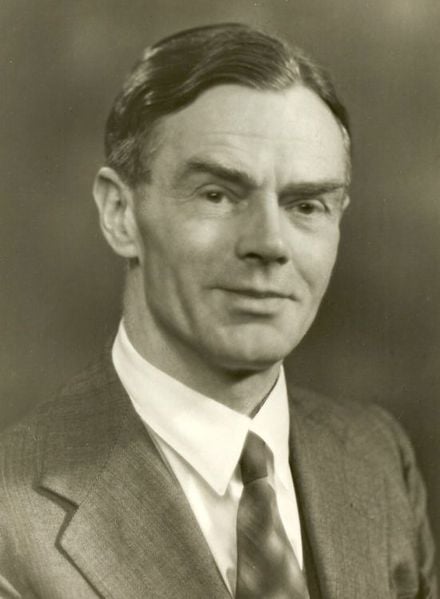
The most prominent members of the Inklings–a group of Christian writers who met at Oxford’s Eagle & Child Pub in the 1930s and 1940s–were C. S. Lewis and J. R. R. Tolkien. You may also know of novelist Charles Williams. A key member of the Inklings, though, is not so well known, though he profoundly shaped both Lewis’s faith and Tolkien’s fantasies: the philosopher, poet, critic, and lawyer Owen Barfield.
Barfield’s influence went beyond the Inklings to include, according to his Wikipedia entry, such different writers as the modernist poet T. S. Eliot, the Nobel prize winning American novelist Saul Bellow, and the Yale literary critic Harold Bloom. Cultural critic James Hillman called Barfield “one of the most neglected important thinkers of the 20th Century.”
All of these figures were living under the shadow of Modernism, with its post-Enlightenment rationalism, scientific materialism, and progressive dismissal of the past. The modernists dismissed “mythological thinking”–including religion–as remnants of a primitive mindset that has nothing to offer the “modern mind.” Such reductionism, though, ruled out much of what human beings continue to find most precious: classic literature, aesthetics, meaning, morality, faith, etc., etc.
What Barfield did, quite persuasively, was to define and recover the value of “mythological thinking.” And, in doing so, to show “modern minds” a way forward that affirms spiritual transcendence and the life of the imagination.
I was generally aware of Barfield’s contributions, but I had never delved into the specifics of what he had to offer. Part of that was being leery of his involvement with anthroposophy, that New Agey spiritualism that was supposed to be compatible with Christianity, unlike its even more occult cousin theosophy, grounded in Eastern religions. Both of these movements were also reactions against stultifying Modernism. I don’t think either of them are compatible with Biblical Christianity, though I don’t deny that Barfield was a Christian who witnessed to Lewis and was instrumental in his coming to faith.
Anyway, I had never read anything by Barfield, but I have to give a big tip of the hat to long-time member of the Cranach community Steven Bauer for putting me on to this video from K. R. Queen. An attorney (like Barfield) and former campus minister, Queen is interesting in his own right as a convert to Christianity, an apologist, and author. (See his website and his YouTube channel.)
In this video, he discusses and applies Barfield’s most important book: Poetic Diction: A Study in Meaning, a book whose ironically prosaic title falls far short of its scope and impact. In trying to discover what Owen Barfield did for Lewis and Tolkien, Queen says that he found insights that can “change how you view everything”! This video, he says, “will change the way you read and how you write, just as it did for Lewis and Tolkien.” It could very well do that!
I am print-oriented, not image oriented, so I would much rather read a text than watch a video. I made an exception for this one, and I’m glad I did. The video takes 18 minutes and 22 seconds. I urge you to watch it.
A Synopsis of the Video
To whet your appetite, let me give a brief synopsis. . . .
Barfield explores the connection between language and reality, as well as the “history of consciousness” as it is preserved in language. Modernist evolutionists have assumed that language began as collection of grunts that referred to tangible objects, later developing into more complex systems that convey ideas and higher nuances of thought. But, as Barfield shows, ancient languages are more complex than modern languages. They are also more poetic, working with vivid imagery charged with rich meaning.
By looking at the etymology of language (that is, the history of our words), we can trace the history of how people thought and experienced their worlds. For example, the Greek pneuma (Latin spiritus, Hebrew ruach) means wind, breath, and spirit. These aren’t three different meanings; rather, the ancients construed them as manifestations of one reality, a force that can’t be seen but can be felt, that moves through everything, and that gives life.
Barfield sees three phases in the history of human consciousness, which he traces by studying language:
(1) Participation: Human beings experience themselves as being part of a meaningful world. They are part of nature, feeling no separation and participating in its life. Individuals and society participate in reality and its meaning.
(2) Non-Participation: The Enlightenment separated matter from meaning, subject from object, ourselves from the rest of the world. “We started to see ourselves not as part of the world but as observers of it.” Our language developed accordingly: It can describe and categorize very effectively. But the concrete imagery of our language was turned into abstractions.
Queen gives the example of the word “contemplate.” It derives from the Latin “con,” meaning with, added to “templum”; that is, temple. Contemplation referred to the revery of the mind and the heart associated with worshiping in a temple. For us, though, it is just another synonym for “think about.”
Physical reality no longer has the meaning or life it once had; that is to say, it is dead. The same can be true of language. But our words are fossils of a richer, more meaningful reality.
(3) Final Participation: But non-participation too is a temporary phase. We cannot go back to “participation” directly. That was spontaneous and non-reflective. Post-Enlightenment, we must deliberately become aware of the meaning of the reality all around us and deliberately find language to describe that meaning. Reading and writing poetry and imaginative stories can recover that sense of meaning. Reality and language can be resurrected. (Queen provides evidence that this is what Lewis and Tolkien were trying to do, which is the key to the sense of wonder that Middle Earth and Narnia evoke.)
All of us can join this final participation by learning to “read” physical reality in the same way we read a book. It is possible to approach a book in terms of the paper it’s written on and the chemical properties of the ink. But what is important for a book is its meaning, which cannot be seen or measured in the same way the marks on paper, or the bits and bytes on a screen, can be. But the meaning is there all the same. We must read with our imagination, playing the images conjured up by the words in our own minds and heart. In our non-participation phase, we treated nature like mere ink on paper, assuming it has no meaning, that we can know it solely by learning its physical characteristics. Queen cites the conversation in the Voyage of the Dawn Treader between the non-participating Eustace Scrubb and a Star. “In our world, a star is a huge ball of flaming gas.” The Star replies, “Even in your world, my son, that is not what a star is, but only what it is made of.”
Modernist science tells us what a thing is made of, which is a useful service. But it cannot tell us what the thing is. For that, we need to know its meaning. We can read reality because reality too has its Author. Queen asks, “Do you think the Author of creation made anything meaningless?”
Note, by the way, how Barfield’s thought ties in to J. G. Hamann’s emphasis on language–which he pushes on to the centrality of the Word of God in creation–and his critique of reducing reality to mental abstractions.
The Video
Now watch the video, which explains and applies all of this better than I can:
Photo: Owen Barfield in 1937 by Unknown author – [1], Public Domain, https://commons.wikimedia.org/w/index.php?curid=114234729

Previous Post
May 5, 2026
The Problem of Skepticism
Next Post
May 7, 2026 The Priesthood of All Believers & Vocation
Recent Comments
"While she worked for Trump she was a tool's tool!"
"I know wired earbuds are making a comeback (I never stopped using them as I ..."
"VCRs, tape decks, and cassette players are all having a revival among a segment of ..."
"As a (retired) lawyer I see potential liability from sharing things like power or sharp ..."
Browse Our Archives
Select a Category America Apologetics Art baseball Bible Blog Christ Church crime Culture Economics Education Ethics Family Food Football Government History Holidays Holy Week Humor International Islam Language Law Life Issues Literature Media Medicine Movies Music Nature News Personal Philosophy Politics psychology Reformation Religions Sacraments Science sex Social Science Sports technology television terrorism Theology Uncategorized Vocation war
Select a Month October 2026 September 2026 August 2026 July 2026 June 2026 May 2026 April 2026 March 2026 February 2026 January 2026 December 2025 November 2025 October 2025 September 2025 August 2025 July 2025 June 2025 May 2025 April 2025 March 2025 February 2025 January 2025 December 2024 November 2024 October 2024 September 2024 August 2024 July 2024 June 2024 May 2024 April 2024 March 2024 February 2024 January 2024 December 2023 November 2023 October 2023 September 2023 August 2023 July 2023 June 2023 May 2023 April 2023 March 2023 February 2023 January 2023 December 2022 November 2022 October 2022 September 2022 August 2022 July 2022 June 2022 May 2022 April 2022 March 2022 February 2022 January 2022 December 2021 November 2021 October 2021 September 2021 August 2021 July 2021 June 2021 May 2021 April 2021 March 2021 February 2021 January 2021 December 2020 November 2020 October 2020 September 2020 August 2020 July 2020 June 2020 May 2020 April 2020 March 2020 February 2020 January 2020 December 2019 November 2019 October 2019 September 2019 August 2019 July 2019 June 2019 May 2019 April 2019 March 2019 February 2019 January 2019 December 2018 November 2018 October 2018 September 2018 August 2018 July 2018 June 2018 May 2018 April 2018 March 2018 February 2018 January 2018 December 2017 November 2017 October 2017 September 2017 August 2017 July 2017 June 2017 May 2017 April 2017 March 2017 February 2017 January 2017 December 2016 November 2016 October 2016 September 2016 August 2016 July 2016 June 2016 May 2016 April 2016 March 2016 February 2016 January 2016 December 2015 November 2015 October 2015 September 2015 August 2015 July 2015 June 2015 May 2015 April 2015 March 2015 February 2015 January 2015 December 2014 November 2014 October 2014 September 2014 August 2014 July 2014 June 2014 May 2014 April 2014 March 2014 February 2014 January 2014 December 2013 November 2013 October 2013 September 2013 August 2013 July 2013 June 2013 May 2013 April 2013 March 2013 February 2013 January 2013 December 2012 November 2012 October 2012 September 2012 August 2012 July 2012 June 2012 May 2012 April 2012 March 2012 February 2012 January 2012 December 2011 November 2011 October 2011 September 2011 August 2011 July 2011 June 2011 May 2011 April 2011 March 2011 February 2011 January 2011 December 2010 November 2010 October 2010 September 2010 August 2010 July 2010 June 2010 May 2010 April 2010 March 2010 February 2010 January 2010 December 2009 November 2009 October 2009 September 2009 August 2009 July 2009 June 2009 May 2009 April 2009 March 2009 February 2009 January 2009 December 2008 November 2008 October 2008 September 2008 August 2008 July 2008 June 2008 May 2008 April 2008 March 2008 February 2008 January 2008 December 2007 November 2007 October 2007
Follow Us!
TAKE THE
Religious Wisdom Quiz
True or False: King Saul was anointed by the prophet Nathan.
Select your answer to see how you score.
TRUE FALSE
Books by This Author Books by Gene Veith
Related posts from Cranach


Gen Z Wants Evildoers to Be Punished, Not...

On Trump's Political Ads That You Paid For

TRENDING AT PATHEOS Evangelical

Emotion in Early Christianity by Andrew Crislip
Andrew Crislip’s Emotion in Early Christianity examines an often overlooked dimension of...

16 Spiritual Touchstones for a More Grounded Life
After decades of spiritual study, here are 16 principles I try...

Catholic Evangelization: Sharing Your Faith Every Day
Welcome back to the Graceful Awakening mini-series called, “From Faith to Mission.” ...

The Pillar of the Boatmen: the Ancient Monument...
The Pillar of the Boatmen is a Romano-Gaulish sculpture that dates from...

In one sense walking into Westminster Abbey is like walking down the...

'Super Scam Me' Exposes AI Jon Bon Jovi...
Leslie Pickett believed she was in a relationship with Jon Bon Jovi....
view all Evangelical blogs
What Are Your Thoughts?leave a comment
Ad-Free & Subscriber Log-In Subscription Support
- About Us
- 2026 Calendar
- Videos
- Podcasts
- Library of World Religions
- Faith In Media Tracker
- Advertise With Us
- Write for Us
- Privacy Policy
- Terms of Service
- Do Not Sell My Data
- Contact Us
- Radiant Digital
- Manage Newsletter Subscriptions
- Unsubscribe From Notifications
- Sitemap
Copyright 2008-2026, Patheos. All rights reserved.
Subscription Support Ad-Free & Subscriber Log-In
Follow Patheos