
BuddhistCatholicContemplativeEvangelicalGeneral ChristianHinduJewishLatter-day SaintMuslimNew VisionsProgressive Christian
Beliefs
- Buddhist
- Catholic
- Contemplative
- Evangelical
- General Christian
- Hindu
- Jewish
- Latter-day Saint
- More Voices
- Muslim
- New Visions
- Pagan
- Progressive Christian
Topics
- Religion News
- Food and Religion
- Sports and Religion
- Religious Art
- Religious Music and Entertainment
- Religious Events
- History and Religion
- Style and Religion
- Politics and Religion
- Women in Religion
- Recreation Outdoors and Religion
- Business Finance and Religion
- Careers Workplace and Religion
- Education and Religion
- Family Parenting and Religion
- Health Fitness and Religion
- Home and Religion
- Relationships and Religion
- Technology and Religion
- Travel and Religion
Columnists
- Buddhist Columnists
- Business Finance and Religion Columnists
- Careers Workplace and Religion Columnists
- Catholic Columnists
- Contemplative Columnists
- Education and Religion Columnists
- Evangelists Columnists
- Family Parenting and Religion Columnists
- General Christian Columnists
- Health Fitness and Religion Columnists
- Hindu Columnists
- History and Religion Columnists
- Home and Religion Columnists
- Jewish Columnists
- More Voices Columnists
- Latter Day Columnists
- Muslim Columnists
- New Visions Columnists
- Nonreligious Columnists
- Pagan Columnists
- Politics and Religion Columnists
- Progressive Columnists
- Recreation Outdoors and Religion Columnists
- Relationships and Religion Columnists
- Religion News Columnists
- Religious Art Columnists
- Religious Events Columnists
- Religious Music and Entertainment Columnists
- Sports and Religion Columnists
- Style and Religion Columnists
- Technology and Religion Columnists
- Travel and Religion Columnists
- Women in Religion Columnists
Resource Library
- 2026 Calendar
- Library of World Religions
- The 100 Most Holy Places on Earth
- Patheos Answers
- Podcasts
- Videos
- Faith Leaders Database
- Anglican Episcopalian
- Bahai
- Baptist
- Buddhism
- Christianity
- Confucianism
- Eastern Orthodoxy
- Hinduism
- Holiness and Pentecostal
- ISKCON
- Islam
- Judaism
- Lutheran
- Methodist
- The Church of Jesus Christ of Latter-day Saints
- New Age
- Paganism
- Presbytarian and Reformed
- Protestantism
- Religion Behind the Scenes
- Roman Catholic
- Scientology
- Shia Islam
- Sikhism
- Sufism
- Sunni Islam
- Taoism
- Zen
- See all religions
Research Tools
 Ad-Free & Subscriber Log-In Subscription Support
Ad-Free & Subscriber Log-In Subscription Support
Follow Patheos 

- Trending:
- Forgiveness
- |
- Marriage
- |
- Consciousness
- |
- Death Penalty
- |
- Election
- |
- Halloween

- Home
- Evangelical
- Politics and Religion
- Is Trump One of Hegel’s “World-Historical Individuals”?
Is Trump One of Hegel’s “World-Historical Individuals”?
Last updated on: May 21, 2026 at 6:00 am by Gene Veith
Is Trump One of Hegel’s “World-Historical Individuals”? 2026-05-11T20:36:31-04:00 Gene Veith
Patheos Explore the world's faith through different perspectives on religion and spirituality! Patheos has the views of the prevalent religions and spiritualities of the world.
Here is something that I think both President Trump’s critics and his fans can agree on: He has a big ego.
He will be putting his signature on our currency. He is putting his portrait on U.S. passports and National Park passes. He has put his name on the Kennedy Center, a new line of battleships, the U.S. Institute of Peace, and children’s savings and investment accounts. (See this for more.)
Why is he doing this? The White House has related the plans for our money, the passports, and National Park passes to the nation’s 250th birthday, but the connection isn’t clear. Is this egomania? Megalomania? Or a defense mechanism to compensate for an inferiority complex? Or is he one of Hegel’s “world-historical figures”?
The Atlantic has published an article by Ashley Parker and Michael Scherer entitled Napoleon, Caesar, Alexander the Great—And Trump:
Hegel’s theory of “world-historical individuals,” men who redirected the course of humanity, focused on three figures: Alexander the Great, Julius Caesar, and Napoleon Bonaparte. Hegel described them as unlikely “heroes of an Epoch” for upending established orders that had previously seemed fixed. They were “practical, political men” who were each condemned in their age for smashing norms and for other conduct “obnoxious to moral reprehension”—as Trump has been accused of, centuries later.
And though Trump has long compared himself to America’s two greatest presidents, we were recently told by two people who are in a position to know such things—a senior administration official and a longtime Trump confidant—that the president had, in private conversations, begun thinking about himself less as a peer of George Washington and Abraham Lincoln, and more as an addition to Hegel’s immortal trifecta.
“He’s been talking recently about how he is the most powerful person to ever live,” the confidant told us. “He wants to be remembered as the one who did things that other people couldn’t do, because of his sheer power and force of will.”
“Upending established orders”? Check.
“Smashing norms?” Check.
Condemned for conduct “obnoxious to moral reprehension”? Check.
Remaking the world through “sheer power and force of will”? That puts us beyond Hegel into the territory of Nietzsche and his Superman.
The Atlantic story focuses not so much on whether Trump is one of these “world-historical” figures as the fact that he believes that he is;
He did recently learn about the powerful triumvirate in a brief passage that someone handed him, the senior official told us, although that person couldn’t recall if it was a poem or an essay or something else. The second senior official suggested that Trump might be recalling a speech he heard at a golf-club event last year, where a speaker placed Trump in the frame of historical figures such as Alexander the Great and Genghis Khan.
The article quotes Trump calling his Middle East intervention as “one of the most important moments in the long and complex history of the World.” It cites his planned triumphal arch, reminiscent of Caesar; his golden over-the-top decor, as in the Imperial style of Napoleon’s France; all the portraits, statues, and banners; naming buildings and monuments after himself. (The story might have mentioned Alexander the Great, who, according to Plutarch, named 70 cities after himself, of which only half a dozen survive.)
Now I don’t put much store by Hegel, that Lutheran heretic whose philosophy would bear bitter fruit in Marxism and progressivism. Nor do I put much store in those approaches that reduce history to movements of vast, impersonal forces. The “Great Man” approach to history is not completely wrong. (Hegel, in accord with his dialectical method, resolves the thesis of the Great Man with the antithesis of the vast impersonal forces, in this synthesis, as described in Wikipedia:
Hegel wrote: “Such are great historical men—whose own particular aims involve those large issues which are the will of the World-Spirit.” Thus, according to Hegel, a great man does not create historical reality himself but only uncovers the inevitable future.
Put another way, the world-historical Great Men embody the already-existing spirit of the times.
So what if Trump is one of these pivotal history-changing, world-shaping heroes? Maybe he is.
But that is not necessarily a good thing. What did these Great Men accomplish? What, exactly, did they change in the world?
Alexander spread Hellenistic civilization across the known world, but he also effectively destroyed Greek democracy.
Julius Caesar laid the foundations for the Roman Empire, but to do that he destroyed the Roman Republic, a constitutional system of representative elections, checks and balances, and citizens’ rights that had lasted nearly 500 years.
Napoleon laid the foundations for modern Europe, but to do that he finished off medieval civilization, abolishing feudalism, the Holy Roman Empire, and Christendom, replacing them with a new law grounded in the Enlightenment and despite being a dictator initiated a “liberal” approach to government grounded in the French Revolution.
I suppose that liberal political order is what the next world-historical figure will overthrow. The “world spirit” may be trending that way, with both the left and the right criticizing “liberal democracy.”
Trump certainly has had a major impact. He has changed American political conservatism beyond recognition. He has radicalized progressives by making them want to emulate him. He has blown up NATO and other institutions of the post-war world order. With his whim-driven tariff regimen, he has taken control of the world’s economy. He has made America militarily aggressive, threatening to seize Greenland, arresting a head of state with an incursion into Venezuela, starting a war with Iran.
But let’s hope he is not a world-historic individual. The acknowledged three came to bad ends. After conquering much of the known world, Alexander died at age 32. Caesar was assassinated. Napoleon was overthrown and died in exile.
We’ll see what Trump’s lasting legacy turns out to be. History will be the judge.
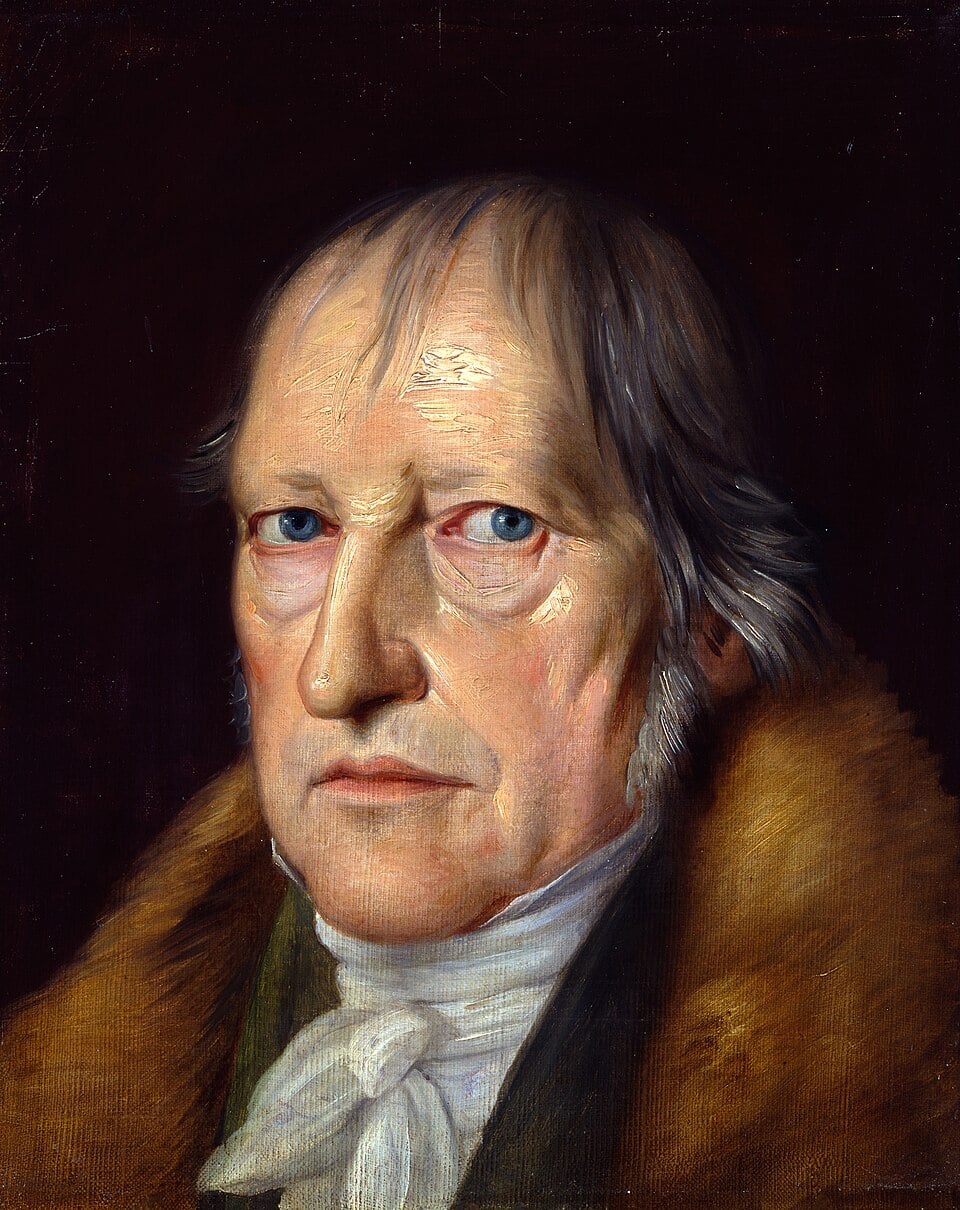
Illustration: G. F. W. Hegel by Jakob Schlesinger (1831) https://recherche.smb.museum/detail/963803 (Alte Nationalgalerie), Public Domain, https://commons.wikimedia.org/w/index.php?curid=126943438

Hegel's world-historical figures
Previous Post

May 20, 2026
Choosing Between Vocations
Next Post

May 22, 2026 Would Evidence of Aliens "Shatter" Christian Beliefs?
Recent Comments
"While she worked for Trump she was a tool's tool!"
"I know wired earbuds are making a comeback (I never stopped using them as I ..."
"VCRs, tape decks, and cassette players are all having a revival among a segment of ..."
"As a (retired) lawyer I see potential liability from sharing things like power or sharp ..."
Browse Our Archives
Select a Category America Apologetics Art baseball Bible Blog Christ Church crime Culture Economics Education Ethics Family Food Football Government History Holidays Holy Week Humor International Islam Language Law Life Issues Literature Media Medicine Movies Music Nature News Personal Philosophy Politics psychology Reformation Religions Sacraments Science sex Social Science Sports technology television terrorism Theology Uncategorized Vocation war
Select a Month October 2026 September 2026 August 2026 July 2026 June 2026 May 2026 April 2026 March 2026 February 2026 January 2026 December 2025 November 2025 October 2025 September 2025 August 2025 July 2025 June 2025 May 2025 April 2025 March 2025 February 2025 January 2025 December 2024 November 2024 October 2024 September 2024 August 2024 July 2024 June 2024 May 2024 April 2024 March 2024 February 2024 January 2024 December 2023 November 2023 October 2023 September 2023 August 2023 July 2023 June 2023 May 2023 April 2023 March 2023 February 2023 January 2023 December 2022 November 2022 October 2022 September 2022 August 2022 July 2022 June 2022 May 2022 April 2022 March 2022 February 2022 January 2022 December 2021 November 2021 October 2021 September 2021 August 2021 July 2021 June 2021 May 2021 April 2021 March 2021 February 2021 January 2021 December 2020 November 2020 October 2020 September 2020 August 2020 July 2020 June 2020 May 2020 April 2020 March 2020 February 2020 January 2020 December 2019 November 2019 October 2019 September 2019 August 2019 July 2019 June 2019 May 2019 April 2019 March 2019 February 2019 January 2019 December 2018 November 2018 October 2018 September 2018 August 2018 July 2018 June 2018 May 2018 April 2018 March 2018 February 2018 January 2018 December 2017 November 2017 October 2017 September 2017 August 2017 July 2017 June 2017 May 2017 April 2017 March 2017 February 2017 January 2017 December 2016 November 2016 October 2016 September 2016 August 2016 July 2016 June 2016 May 2016 April 2016 March 2016 February 2016 January 2016 December 2015 November 2015 October 2015 September 2015 August 2015 July 2015 June 2015 May 2015 April 2015 March 2015 February 2015 January 2015 December 2014 November 2014 October 2014 September 2014 August 2014 July 2014 June 2014 May 2014 April 2014 March 2014 February 2014 January 2014 December 2013 November 2013 October 2013 September 2013 August 2013 July 2013 June 2013 May 2013 April 2013 March 2013 February 2013 January 2013 December 2012 November 2012 October 2012 September 2012 August 2012 July 2012 June 2012 May 2012 April 2012 March 2012 February 2012 January 2012 December 2011 November 2011 October 2011 September 2011 August 2011 July 2011 June 2011 May 2011 April 2011 March 2011 February 2011 January 2011 December 2010 November 2010 October 2010 September 2010 August 2010 July 2010 June 2010 May 2010 April 2010 March 2010 February 2010 January 2010 December 2009 November 2009 October 2009 September 2009 August 2009 July 2009 June 2009 May 2009 April 2009 March 2009 February 2009 January 2009 December 2008 November 2008 October 2008 September 2008 August 2008 July 2008 June 2008 May 2008 April 2008 March 2008 February 2008 January 2008 December 2007 November 2007 October 2007
Follow Us!
TAKE THE
Religious Wisdom Quiz
Go to this tiny creature, you sluggard! Observe its ways and be wise, for it has no commander yet stores provisions. What industrious insect is this?
Select your answer to see how you score.
The grasshopper The ant The spider The bee
Books by This Author Books by Gene Veith
Related posts from Cranach

On Trump's Political Ads That You Paid For

The Family Estrangement Epidemic

As Fulton Sheen Is Beatified, Don't Forget Walter...

How the Integralists Are Like the Socialists
TRENDING AT PATHEOS Evangelical

The Problem with False Prophets
Miller’s Station UMC| 10/18/26| Anchor Verse: Jeremiah 23: 1, 9-23 I...

Emotion in Early Christianity by Andrew Crislip
Andrew Crislip’s Emotion in Early Christianity examines an often overlooked dimension of...

16 Spiritual Touchstones for a More Grounded Life
After decades of spiritual study, here are 16 principles I try...

Catholic Evangelization: Sharing Your Faith Every Day
Welcome back to the Graceful Awakening mini-series called, “From Faith to Mission.” ...

The Pillar of the Boatmen: the Ancient Monument...
The Pillar of the Boatmen is a Romano-Gaulish sculpture that dates from...

In one sense walking into Westminster Abbey is like walking down the...
view all Evangelical blogs
What Are Your Thoughts?leave a comment
Ad-Free & Subscriber Log-In Subscription Support
- About Us
- 2026 Calendar
- Videos
- Podcasts
- Library of World Religions
- Faith In Media Tracker
- Advertise With Us
- Write for Us
- Privacy Policy
- Terms of Service
- Do Not Sell My Data
- Contact Us
- Radiant Digital
- Manage Newsletter Subscriptions
- Unsubscribe From Notifications
- Sitemap
Copyright 2008-2026, Patheos. All rights reserved.
Subscription Support Ad-Free & Subscriber Log-In
Follow Patheos