
BuddhistCatholicContemplativeEvangelicalGeneral ChristianHinduJewishLatter-day SaintMuslimNew VisionsProgressive Christian
Beliefs
- Buddhist
- Catholic
- Contemplative
- Evangelical
- General Christian
- Hindu
- Jewish
- Latter-day Saint
- More Voices
- Muslim
- New Visions
- Pagan
- Progressive Christian
Topics
- Religion News
- Food and Religion
- Sports and Religion
- Religious Art
- Religious Music and Entertainment
- Religious Events
- History and Religion
- Style and Religion
- Politics and Religion
- Women in Religion
- Recreation Outdoors and Religion
- Business Finance and Religion
- Careers Workplace and Religion
- Education and Religion
- Family Parenting and Religion
- Health Fitness and Religion
- Home and Religion
- Relationships and Religion
- Technology and Religion
- Travel and Religion
Columnists
- Buddhist Columnists
- Business Finance and Religion Columnists
- Careers Workplace and Religion Columnists
- Catholic Columnists
- Contemplative Columnists
- Education and Religion Columnists
- Evangelists Columnists
- Family Parenting and Religion Columnists
- General Christian Columnists
- Health Fitness and Religion Columnists
- Hindu Columnists
- History and Religion Columnists
- Home and Religion Columnists
- Jewish Columnists
- More Voices Columnists
- Latter Day Columnists
- Muslim Columnists
- New Visions Columnists
- Nonreligious Columnists
- Pagan Columnists
- Politics and Religion Columnists
- Progressive Columnists
- Recreation Outdoors and Religion Columnists
- Relationships and Religion Columnists
- Religion News Columnists
- Religious Art Columnists
- Religious Events Columnists
- Religious Music and Entertainment Columnists
- Sports and Religion Columnists
- Style and Religion Columnists
- Technology and Religion Columnists
- Travel and Religion Columnists
- Women in Religion Columnists
Resource Library
- 2026 Calendar
- Library of World Religions
- The 100 Most Holy Places on Earth
- Patheos Answers
- Podcasts
- Videos
- Faith Leaders Database
- Anglican Episcopalian
- Bahai
- Baptist
- Buddhism
- Christianity
- Confucianism
- Eastern Orthodoxy
- Hinduism
- Holiness and Pentecostal
- ISKCON
- Islam
- Judaism
- Lutheran
- Methodist
- The Church of Jesus Christ of Latter-day Saints
- New Age
- Paganism
- Presbytarian and Reformed
- Protestantism
- Religion Behind the Scenes
- Roman Catholic
- Scientology
- Shia Islam
- Sikhism
- Sufism
- Sunni Islam
- Taoism
- Zen
- See all religions
Research Tools
 Ad-Free & Subscriber Log-In Subscription Support
Ad-Free & Subscriber Log-In Subscription Support
Follow Patheos 

- Trending:
- Forgiveness
- |
- Marriage
- |
- Consciousness
- |
- Death Penalty
- |
- Election
- |
- Halloween

- Home
- Evangelical
- Politics and Religion
- A Place to Stand
A Place to Stand
Last updated on: October 15, 2025 at 6:00 am by Gene Veith
A Place to Stand 2025-10-05T16:47:52-04:00 Gene Veith
Patheos Explore the world's faith through different perspectives on religion and spirituality! Patheos has the views of the prevalent religions and spiritualities of the world.
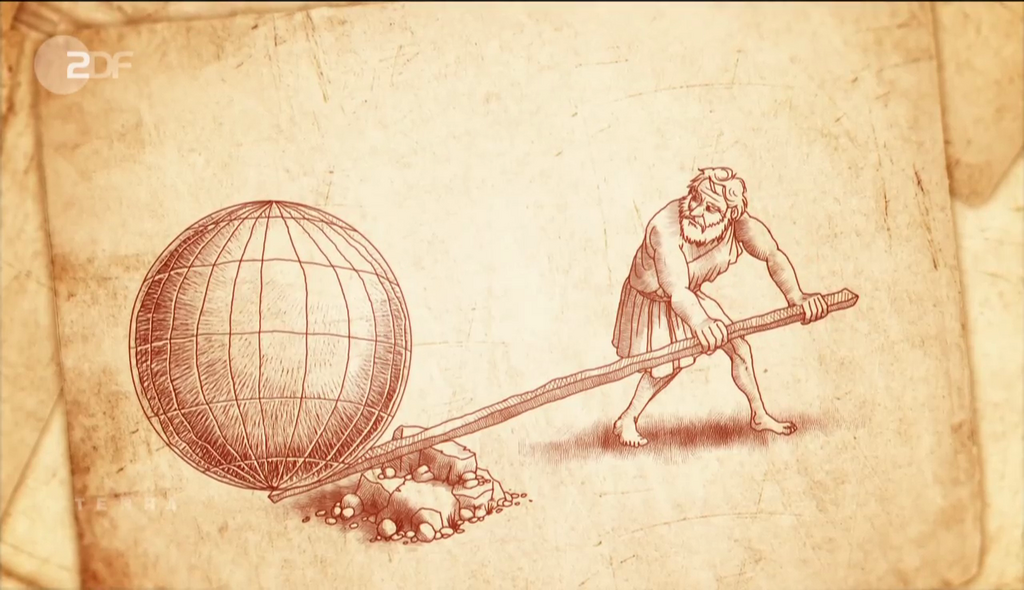
Rummaging through my files of old writings, looking for something else, I came across this, which I wrote as the introduction to a little book I was asked to write by a small publisher on Martin Luther. It is entitled A Place to Stand: The Word of God in the Life of Martin Luther. I bet none of you have read it!
But I love the metaphor, which I found in a book that deserves to be more widely known: John Carroll’s Humanism: The Wreck of Western Culture.
Introduction
If I had a place to stand,” said Archimedes, “I could move the world.” The great Greek engineer was referring to the wonders of the lever, that simple yet astonishingly powerful machine whose properties Archimedes was discovering. He realized that, in principle, the capability of the lever was unlimited. An ordinary weakling could move a boulder the size of a house. All he needed was a fulcrum and a pole strong enough so that it would not break and long enough to multiply the force. That, and a place to stand. The force-multiplying physics of the lever are a function of distance. The heavier the object or the weaker the person trying to move it, the longer the pole you would need and the farther away from it you would have to stand. But with the right fulcrum, the right bar, and the right distance, all you would have to do would be to push the lever down, and the boulder, no matter how heavy it was, would move.
Theoretically, with the right fulcrum, bar, and distance, you could put a lever to planet Earth and move the world itself. If, of course, you had a place to stand. That, naturally, is the rub. You can’t move the world because you cannot get out of the world. You are in it, so it becomes impossible to step outside the world so as to move it or even change it.
Archimedes did not know about space travel, nor did he realize that the world is moving on its own, though we cannot perceive it. But his point holds, and not just for physics.
Try to change the universe. You can’t. You are part of it. You have no place to stand.
Try to change the culture. Social reforms are maddeningly frustrating because the people making the reforms tend to be part of the problem. They themselves have been shaped by the culture they are trying to shape. Even conservatives trying to change the postmodern culture often find that they are conservative in a distinctly postmodern way. They have no place to stand.
Or, for an even more difficult challenge, try to change yourself. The problem is, you are yourself. You can work as hard as you can to get rid of that bad habit, that persistent sin. You might make some progress if you have enough willpower. But what if the source of your sin is precisely your will? How can willpower correct the weakness of your will? You have no place to stand.
The Archimedean paradox applies over and over again.[1] It helps to explain the difficulties of leadership: how to move a family, a business, a church, a government. If you are the leader, what if the problem is the leadership? What do you do then? You need a place to stand.
It helps explain the futility of humanism. Why have we not created the perfect world? Why do we still have wars and poverty and cruelty and misery? We all want peace and happiness. So why have we never been able to achieve them? And why do the very schemes to engineer a perfect society, every utopian system and every socialist scheme of economic justice, only make things worse, creating more war and poverty and cruelty and misery? Human beings cannot change themselves. We need a place to stand.
On April 18, 1521, a thirty-seven-year-old monk from a small town in Germany found himself hauled in front of the emperor. The monk had struggled with guilt and futile attempts to improve himself until he started studying the Bible and came to understand what had been all but forgotten in the church of his day: the gospel that our salvation depends not on our works but on the grace of God through the life, death, and resurrection of Jesus Christ. This was such good news to this monk that he started teaching it, which, in turn, required him to teach against the false spiritual system that had kept him and that continued to keep most people in bondage.
Being an academic in a small backwater university, he posted some theses he wanted to debate. He took issue with the way the church was selling indulgences—a way to buy yourself out of divine punishment—instead of proclaiming the gospel. The sound of his hammer nailing those theses to the church door reverberated far beyond his small town in ways he never anticipated or intended. Before long, the pope of Rome was trying to destroy him. Then the Holy Roman emperor joined the fray.
On that April day, it all came to a head. The monk was being tried by the emperor and all his nobles, with the one church through the pope’s representatives serving as prosecutor. The monk was all by himself against the ultimate political and spiritual authorities of his day. At the end, it all came down to a very simple question: Will you take back everything you have been teaching about the gospel? Or will you be cast out of the church and state as a heretic and be burned at the stake?
The monk replied that his conscience was bound by the Word of God: “Here I stand.”
Martin Luther had a place to stand. And he did move the world. He changed his life. He changed the church. He changed the culture.
At the turn of the millennium, a number of publications surveyed experts and the public to determine who were the most influential people of the last thousand years. Life magazine ranked Luther number three, after Thomas Edison and Christopher Columbus.[2] The Toronto Globe &Mail ranked Luther number two, just after Albert Einstein.[3] Those periodicals were looking for the top hundred, but a more ambitious and possibly more scholarly assessment, in a book ranking the top thousand, placed Luther as number three.[4] Number two was Columbus, and number one was Johannes Gutenberg, hailed as “the man of the millennium” for his printing press, which made possible the information age.
Of course, it was Luther who turned Gutenberg’s invention into an engine—consider it a lever—of revolutionary change as his theses and writings were printed and distributed throughout Europe, so that his understanding of the gospel spread like wildfire. Gutenberg is known for printing the Bible, but it was Luther who made the Bible the printing press’s biggest seller. He did that by making the Bible central in both theology and the culture, and he made it central in the lives of ordinary people by translating it into a language they could read.
But first the largely illiterate public had to be taught how to read, and Luther was largely responsible for igniting an explosion of education. Luther wanted everyone to be able to stand on the Word of God, so he started schools that would pursue his goal of universal education—bringing literacy not just for a clerical elite but for women, peasants, and everyone. Luther wanted them to read the Bible, but once they could read the Bible, they could read anything. And once the underclasses were educated, class barriers were undermined, former peasants started businesses and became rich, social mobility started to happen, and political freedom and self-government were just a matter of time.
So even secularists admit the influence of Luther in the secular arena. They also credit him for breaking the shackles of the Middle Ages, for a new valuation of marriage and the family, for his doctrine of vocation that created a new work ethic, for the concept of individual thinking, for being the first example of the “modern mind,” and for much else.
But he could not have had any of this influence as a mere obscure monk locked in his cloister when he was not teaching his classes at his little university. He was able to exert this influence because he had found a place to stand: the Word of God, which he, in turn, made available in all its liberating power to others. By the Word of God, he meant the Bible, yes, and more specifically the Word of the gospel that he found as he read the Bible. That Word gave him faith in Jesus Christ and in the free gift of salvation that He accomplished on the cross. That faith changed Luther’s life—from the outside—and it gave him the freedom and the confidence to face down the world.
That faith also turned Luther, very much against his will, into a leader who had to manage the forces he had unleashed. He was put into the position of having to apply the Word of God to all of life. He had to lead despite overwhelming opposition from seemingly every side. But true, saving faith, Jesus Himself tells us, can move mountains (Matthew 17:20).
Luther moved the world because he had a place to stand. And since we have that same Word, so can we.
Notes
[1]This discussion of the Archimedean paradox, including the failures of humanism and Luther’s having overcome the dilemma, is drawn from John Carroll, Humanism: The Wreck of Western Culture (London: Fontana, 1993), 2-7.
[2] The Life magazine list can be found at http://www.life.com/Life/millennium/people/01.html.
[3] The Canadian list can be found at http://www.adherents.com/largecom/influ_mil100.html.
[4] Agnes Hooper Gottlieb et al., 1,000 Years, 1,000 People: Ranking the Men and Women Who Shaped the Millennium (Tokyo: Kodansha International, 1998).
Illustration: Archimedes’ Lever. ZDF/Terra X/Gruppe 5/ Susanne Utzt, Cristina Trebbi/ Jens Boeck, Dieter Stürmer / Fabian Wienke / Sebastian Martinez/ xkopp, polloq, CC BY 4.0 <https://creativecommons.org/licenses/by/4.0>, via Wikimedia Commons

Previous Post

October 14, 2025
"In Killing God, We Kill Man"
Next Post

October 16, 2025 AI Bots & "Grassroot" Campaigns
Recent Comments
"So Katie Zacharia lasted only a demiScaramucci as press secretary......"
"Apropos to the post on Gen Z a couple days ago: "If you want the ..."
"“Don't eat with your hands, son, use your entrenching tool.”"
"You serious, Clark?"
Browse Our Archives
Select a Category America Apologetics Art baseball Bible Blog Christ Church crime Culture Economics Education Ethics Family Food Football Government History Holidays Holy Week Humor International Islam Language Law Life Issues Literature Media Medicine Movies Music Nature News Personal Philosophy Politics psychology Reformation Religions Sacraments Science sex Social Science Sports technology television terrorism Theology Uncategorized Vocation war
Select a Month October 2026 September 2026 August 2026 July 2026 June 2026 May 2026 April 2026 March 2026 February 2026 January 2026 December 2025 November 2025 October 2025 September 2025 August 2025 July 2025 June 2025 May 2025 April 2025 March 2025 February 2025 January 2025 December 2024 November 2024 October 2024 September 2024 August 2024 July 2024 June 2024 May 2024 April 2024 March 2024 February 2024 January 2024 December 2023 November 2023 October 2023 September 2023 August 2023 July 2023 June 2023 May 2023 April 2023 March 2023 February 2023 January 2023 December 2022 November 2022 October 2022 September 2022 August 2022 July 2022 June 2022 May 2022 April 2022 March 2022 February 2022 January 2022 December 2021 November 2021 October 2021 September 2021 August 2021 July 2021 June 2021 May 2021 April 2021 March 2021 February 2021 January 2021 December 2020 November 2020 October 2020 September 2020 August 2020 July 2020 June 2020 May 2020 April 2020 March 2020 February 2020 January 2020 December 2019 November 2019 October 2019 September 2019 August 2019 July 2019 June 2019 May 2019 April 2019 March 2019 February 2019 January 2019 December 2018 November 2018 October 2018 September 2018 August 2018 July 2018 June 2018 May 2018 April 2018 March 2018 February 2018 January 2018 December 2017 November 2017 October 2017 September 2017 August 2017 July 2017 June 2017 May 2017 April 2017 March 2017 February 2017 January 2017 December 2016 November 2016 October 2016 September 2016 August 2016 July 2016 June 2016 May 2016 April 2016 March 2016 February 2016 January 2016 December 2015 November 2015 October 2015 September 2015 August 2015 July 2015 June 2015 May 2015 April 2015 March 2015 February 2015 January 2015 December 2014 November 2014 October 2014 September 2014 August 2014 July 2014 June 2014 May 2014 April 2014 March 2014 February 2014 January 2014 December 2013 November 2013 October 2013 September 2013 August 2013 July 2013 June 2013 May 2013 April 2013 March 2013 February 2013 January 2013 December 2012 November 2012 October 2012 September 2012 August 2012 July 2012 June 2012 May 2012 April 2012 March 2012 February 2012 January 2012 December 2011 November 2011 October 2011 September 2011 August 2011 July 2011 June 2011 May 2011 April 2011 March 2011 February 2011 January 2011 December 2010 November 2010 October 2010 September 2010 August 2010 July 2010 June 2010 May 2010 April 2010 March 2010 February 2010 January 2010 December 2009 November 2009 October 2009 September 2009 August 2009 July 2009 June 2009 May 2009 April 2009 March 2009 February 2009 January 2009 December 2008 November 2008 October 2008 September 2008 August 2008 July 2008 June 2008 May 2008 April 2008 March 2008 February 2008 January 2008 December 2007 November 2007 October 2007
Follow Us!
TAKE THE
Religious Wisdom Quiz
What does "Rabbi" mean?
Select your answer to see how you score.
Messenger Teacher Scribe Priest
Books by This Author Books by Gene Veith
Related posts from Cranach



Our New Book on Technology & Vocation

Gen Z Wants Evildoers to Be Punished, Not...
TRENDING AT PATHEOS Evangelical

Swimfan: Forgotten Aughts Pleasures
This is a recovery effort. In 2002, My Big Fat Greek Wedding...

Top Three Anti-Catholic Lies About Catholicism
This is my initial transcript for the video, "THE 3 WORST...

Pope Leo Celebrates Mass for Nurses & Docs...
I don't have any idea how he did it, but Pope Leo...

The Sermon on the Mount, Part I: Matthew...
The Sermon on the Mount, Part I (Matthew 4:12-5:12) St. Matthew moves...

What's up from Crossway: Reviewing some of their latest A few weeks...

Janie Learns the Way of the Cross: A...
Teaching children about Jesus' Passion can be challenging. Many parents and educators...
view all Evangelical blogs
What Are Your Thoughts?leave a comment
Ad-Free & Subscriber Log-In Subscription Support
- About Us
- 2026 Calendar
- Videos
- Podcasts
- Library of World Religions
- Faith In Media Tracker
- Advertise With Us
- Write for Us
- Privacy Policy
- Terms of Service
- Do Not Sell My Data
- Contact Us
- Radiant Digital
- Manage Newsletter Subscriptions
- Unsubscribe From Notifications
- Sitemap
Copyright 2008-2026, Patheos. All rights reserved.
Subscription Support Ad-Free & Subscriber Log-In
Follow Patheos