
BuddhistCatholicContemplativeEvangelicalGeneral ChristianHinduJewishLatter-day SaintMuslimNew VisionsProgressive Christian
Beliefs
- Buddhist
- Catholic
- Contemplative
- Evangelical
- General Christian
- Hindu
- Jewish
- Latter-day Saint
- More Voices
- Muslim
- New Visions
- Pagan
- Progressive Christian
Topics
- Religion News
- Food and Religion
- Sports and Religion
- Religious Art
- Religious Music and Entertainment
- Religious Events
- History and Religion
- Style and Religion
- Politics and Religion
- Women in Religion
- Recreation Outdoors and Religion
- Business Finance and Religion
- Careers Workplace and Religion
- Education and Religion
- Family Parenting and Religion
- Health Fitness and Religion
- Home and Religion
- Relationships and Religion
- Technology and Religion
- Travel and Religion
Columnists
- Buddhist Columnists
- Business Finance and Religion Columnists
- Careers Workplace and Religion Columnists
- Catholic Columnists
- Contemplative Columnists
- Education and Religion Columnists
- Evangelists Columnists
- Family Parenting and Religion Columnists
- General Christian Columnists
- Health Fitness and Religion Columnists
- Hindu Columnists
- History and Religion Columnists
- Home and Religion Columnists
- Jewish Columnists
- More Voices Columnists
- Latter Day Columnists
- Muslim Columnists
- New Visions Columnists
- Nonreligious Columnists
- Pagan Columnists
- Politics and Religion Columnists
- Progressive Columnists
- Recreation Outdoors and Religion Columnists
- Relationships and Religion Columnists
- Religion News Columnists
- Religious Art Columnists
- Religious Events Columnists
- Religious Music and Entertainment Columnists
- Sports and Religion Columnists
- Style and Religion Columnists
- Technology and Religion Columnists
- Travel and Religion Columnists
- Women in Religion Columnists
Resource Library
- 2026 Calendar
- Library of World Religions
- The 100 Most Holy Places on Earth
- Patheos Answers
- Podcasts
- Videos
- Faith Leaders Database
- Anglican Episcopalian
- Bahai
- Baptist
- Buddhism
- Christianity
- Confucianism
- Eastern Orthodoxy
- Hinduism
- Holiness and Pentecostal
- ISKCON
- Islam
- Judaism
- Lutheran
- Methodist
- The Church of Jesus Christ of Latter-day Saints
- New Age
- Paganism
- Presbytarian and Reformed
- Protestantism
- Religion Behind the Scenes
- Roman Catholic
- Scientology
- Shia Islam
- Sikhism
- Sufism
- Sunni Islam
- Taoism
- Zen
- See all religions
Research Tools
 Ad-Free & Subscriber Log-In Subscription Support
Ad-Free & Subscriber Log-In Subscription Support
Follow Patheos 

- Trending:
- Forgiveness
- |
- Marriage
- |
- Consciousness
- |
- Death Penalty
- |
- Election
- |
- Halloween

- Home
- Evangelical
- Politics and Religion
- How to Make Natural Law Arguments
How to Make Natural Law Arguments
Last updated on: August 29, 2025 at 6:00 am by Gene Veith
How to Make Natural Law Arguments 2025-08-27T19:23:34-04:00 Gene Veith
Patheos Explore the world's faith through different perspectives on religion and spirituality! Patheos has the views of the prevalent religions and spiritualities of the world.
Is it possible to argue rationally and persuasively about moral and cultural issues? Can you make a case for Christian morality based on objective reason alone? You absolutely can. And a new book shows you how.
I review it for Religion & Liberty Online in a piece entitled How Robert George Applies Natural Law to Public Policy, with the deck, “The Princeton professor’s new book offers a fresh look at an old way of understanding everything from pro-life issues to market economics to big vs. small government.”
I’ll quote from my opening and give you some samples, in the hope that you’ll click the link to read the whole review and then click another link to buy the book:
“Contrary to what many influential voices in our culture, politics, and even our institutions of higher education would have you believe, the truth about even the most controversial matters can be objectively known, and cannot be altered by one’s subjective feelings or ‘lived experiences.’”
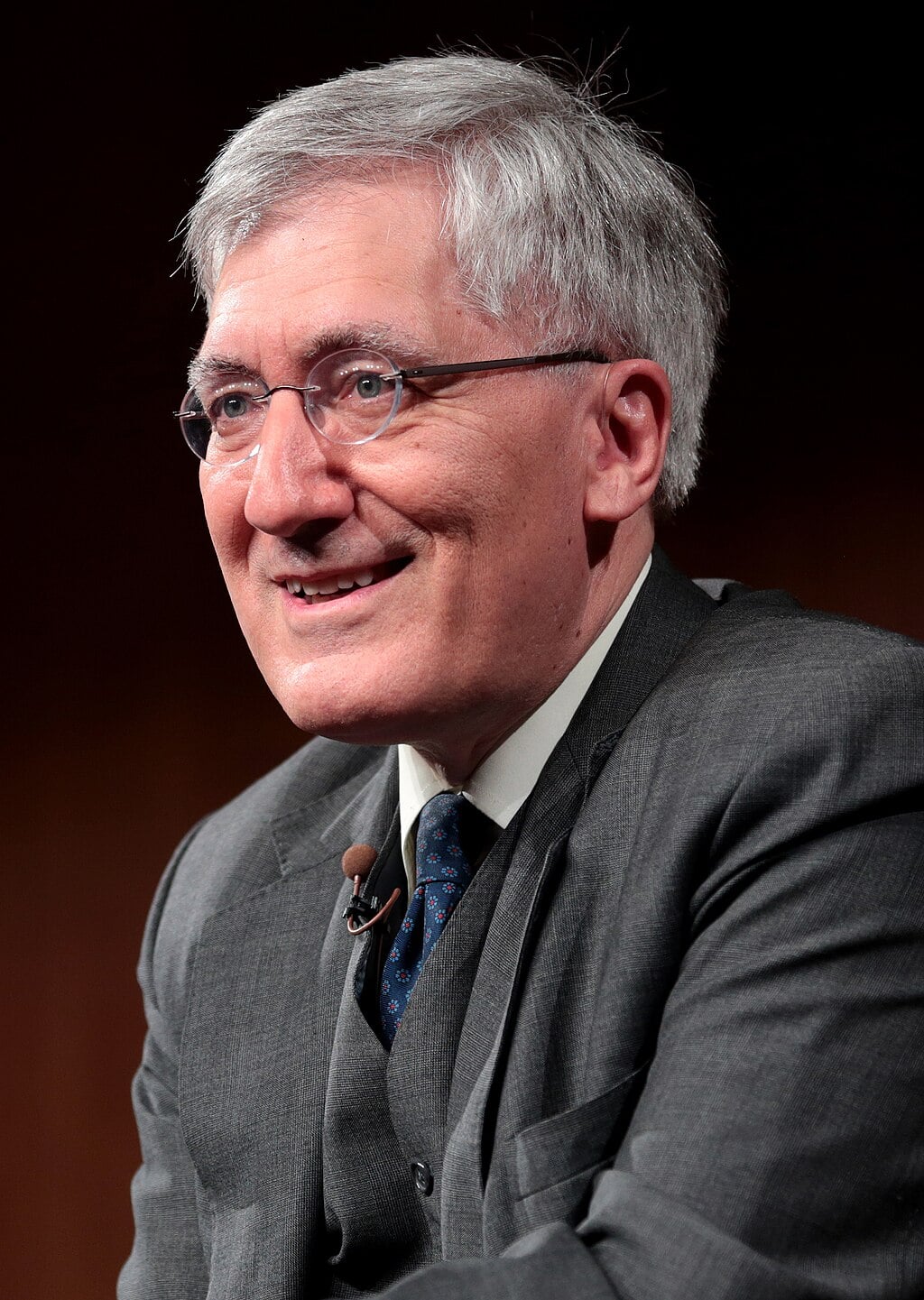
So says Princeton professor Robert P. George, one of today’s most distinguished conservative thinkers, and he backs up his claim in his new book, Seeking Truth and Speaking Truth, a model in the application of natural law.
That term does not refer to scientific laws. Nor does this use of “nature” refer to mountains, forests, and wildlife. As an approach to moral reasoning, it does not mean emulating behavior we see in nature. (I’ve read arguments claiming that homosexuality is in accord with the natural law based on descriptions of what dogs and chimps sometimes do.)
Rather, in this context, “nature” refers to something’s essential properties, as in “human nature” or “by its very nature.” Understanding “the nature of the job” helps us know how to do that job well. Understanding “human nature” or “the nature of society” helps us know how we should live and how society should function. Such knowledge constitutes natural law.
This way of thinking derives from Aristotle as mediated by Thomas Aquinas, and it is foundational to Western thought. Natural law is the basis of Catholic moral theology, though Protestants too—such as the Anglican Richard Hooker, the Lutheran Samuel von Pufendorf, and the Reformed Hugo Grotius—were also important natural law theorists.
And yet, natural law thinking does not rest on religion. Though George is a Catholic, his arguments are based on reason, not revelation. Natural law works with concepts such as ends and means (that is, purpose and how we achieve that purpose) and intrinsic and instrumental goods (that is, things that are good in themselves and things that are good because they lead to other good things).
When I would teach Aristotle’s Nichomachean Ethics, we made a game of it. Name something that would be good to have. “Money!” Is money good in itself or because it can lead to other good things? “Lead to other good things!” Like what? “A new car!” Is a car good in itself or because it can lead to other good things? “Other good things!” Like what? “Going on vacation!” Is a vacation good in itself or because it can lead to other good things? “Other good things!” Like what? “Spending time with my family.” Is family good in itself or because it leads to other good things? [Pause.] “Good in itself!”
Making money an intrinsic good, as in pursuing money at the expense of your family, creates moral problems. So does instrumentalizing an intrinsic good, such as using one’s family members to extract their money. In the natural law tradition, human life is considered an intrinsic good. While we may sometimes “use” people instrumentally—as in doctors to heal our illnesses or carpenters to build our houses—we must respect their lives and their intrinsic value.
George quotes Kant: “Man, however, is not a thing and hence is not something to be used merely as a means. He must in all his actions always be regarded as an end in himself.” Such regard has consequences for how we treat others. “Therefore,” Kant continues, “I cannot dispose of man in my own person by mutilating, damaging, or killing him.”
Such a high view of human beings and their innate value is at the heart of all of George’s arguments as he works through today’s moral, political, and legal controversies.
Let me give you some samples, both of my review and of what George does with Natural Law.
On abortion:
If we only value human beings according to their development, their characteristics, or what they can do, human equality and human rights become impossible.
Furthermore, the morality of abortion does not depend on speculations about when life begins. Medieval medicine considered the quickening of the child—when the mother can feel the baby’s movement—is the moment of “ensoulment,” when the fetus acquired an immortal soul (an argument I have heard from modern pro-abortion theologians). But the notion that the body is only a vessel for the soul was a tenet of the Gnostic heresy repudiated by orthodox theology. The notion that a fetus becomes a human only when it attains consciousness, or feels pain, or has brain waves, or can think for itself is simply more dualism. George, who calls such thinking “liberal Gnosticism” and “body-self dualism,” refutes such views. We are a union of body and soul.
Human dignity comes from what we are, he says, not the qualities that we have or do not have.
On euthanasia:
Some arguments for killing the sick are not really euthanasia at all. “Euthanasia is the killing of someone for the benefit of that person. There is also the killing of someone for the benefit of someone else—the caregiver, someone who wants to save money, someone who needs their organs, etc. That is not euthanasia.” That is ordinary murder.
But can we kill someone for their benefit? It all comes down to the question, “Is [death] something good or evil for a human being?” Killing someone can only harm them, not benefit them. It isn’t making their life better, but ending their life. This is because “life is intrinsically good for a human being.”
He goes on to offer such rigorous, objective, yet morally sensitive thinking on issue after issue, including contentions about law, economics, and politics. To quote myself and George:
When it comes to political and economic issues, natural law applies another kind of “good”: the common good. “The common good of political society is fundamentally an instrumental good,” he says, “ and … this entails moral limits on justified governmental power.”
The book’s arguments are clarifying and persuasive, revealing contrary positions to be based on sheer subjectivity. The book also models a way of thinking that can be used to sort through issues that he doesn’t even address, thus teaching the reader how to think– and argue–in terms of the Natural Law.
[This is a free post to share with others.]
Photo: Robert P. George by Gage Skidmore, CC BY-SA 3.0 <https://creativecommons.org/licenses/by-sa/3.0>, via Wikimedia Commons

Previous Post

August 29, 2025
DISCUSS: Completely Realigning Baseball
Next Post

September 1, 2025 Vocation Day Miscellany, 9/1/25
Recent Comments
"And all tools are made of media, thus making language and literature a tool (see, ..."
"You all are real tools."
"That is my main reason as well. But I also think there are other problems ..."
On Trump’s Political Ads That You ..."
"That explains why I have not received one either."
On Trump’s Political Ads That You ..."
Browse Our Archives
Select a Category America Apologetics Art baseball Bible Blog Christ Church crime Culture Economics Education Ethics Family Food Football Government History Holidays Holy Week Humor International Islam Language Law Life Issues Literature Media Medicine Movies Music Nature News Personal Philosophy Politics psychology Reformation Religions Sacraments Science sex Social Science Sports technology television terrorism Theology Uncategorized Vocation war
Select a Month October 2026 September 2026 August 2026 July 2026 June 2026 May 2026 April 2026 March 2026 February 2026 January 2026 December 2025 November 2025 October 2025 September 2025 August 2025 July 2025 June 2025 May 2025 April 2025 March 2025 February 2025 January 2025 December 2024 November 2024 October 2024 September 2024 August 2024 July 2024 June 2024 May 2024 April 2024 March 2024 February 2024 January 2024 December 2023 November 2023 October 2023 September 2023 August 2023 July 2023 June 2023 May 2023 April 2023 March 2023 February 2023 January 2023 December 2022 November 2022 October 2022 September 2022 August 2022 July 2022 June 2022 May 2022 April 2022 March 2022 February 2022 January 2022 December 2021 November 2021 October 2021 September 2021 August 2021 July 2021 June 2021 May 2021 April 2021 March 2021 February 2021 January 2021 December 2020 November 2020 October 2020 September 2020 August 2020 July 2020 June 2020 May 2020 April 2020 March 2020 February 2020 January 2020 December 2019 November 2019 October 2019 September 2019 August 2019 July 2019 June 2019 May 2019 April 2019 March 2019 February 2019 January 2019 December 2018 November 2018 October 2018 September 2018 August 2018 July 2018 June 2018 May 2018 April 2018 March 2018 February 2018 January 2018 December 2017 November 2017 October 2017 September 2017 August 2017 July 2017 June 2017 May 2017 April 2017 March 2017 February 2017 January 2017 December 2016 November 2016 October 2016 September 2016 August 2016 July 2016 June 2016 May 2016 April 2016 March 2016 February 2016 January 2016 December 2015 November 2015 October 2015 September 2015 August 2015 July 2015 June 2015 May 2015 April 2015 March 2015 February 2015 January 2015 December 2014 November 2014 October 2014 September 2014 August 2014 July 2014 June 2014 May 2014 April 2014 March 2014 February 2014 January 2014 December 2013 November 2013 October 2013 September 2013 August 2013 July 2013 June 2013 May 2013 April 2013 March 2013 February 2013 January 2013 December 2012 November 2012 October 2012 September 2012 August 2012 July 2012 June 2012 May 2012 April 2012 March 2012 February 2012 January 2012 December 2011 November 2011 October 2011 September 2011 August 2011 July 2011 June 2011 May 2011 April 2011 March 2011 February 2011 January 2011 December 2010 November 2010 October 2010 September 2010 August 2010 July 2010 June 2010 May 2010 April 2010 March 2010 February 2010 January 2010 December 2009 November 2009 October 2009 September 2009 August 2009 July 2009 June 2009 May 2009 April 2009 March 2009 February 2009 January 2009 December 2008 November 2008 October 2008 September 2008 August 2008 July 2008 June 2008 May 2008 April 2008 March 2008 February 2008 January 2008 December 2007 November 2007 October 2007
Follow Us!
TAKE THE
Religious Wisdom Quiz
True or False: James states that the tongue is a fire, a world of iniquity.
Select your answer to see how you score.
FALSE TRUE
Books by This Author Books by Gene Veith
Related posts from Cranach


Our New Book on Technology & Vocation

Gen Z Wants Evildoers to Be Punished, Not...

On Trump's Political Ads That You Paid For
TRENDING AT PATHEOS Evangelical

The Sermon on the Mount, Part I: Matthew...
The Sermon on the Mount, Part I (Matthew 4:12-5:12) St. Matthew moves...

What's up from Crossway: Reviewing some of their latest A few weeks...

Janie Learns the Way of the Cross: A...
Teaching children about Jesus' Passion can be challenging. Many parents and educators...

Looking For Good Catholic Writing - October 2026
He alone extends the heavens, and he walks upon the waves of...

In "Irreplaceable," our book on vocation and technology, Trevor Sutton and I...

I was strolling through the top floor of the brand new Parthenon...
view all Evangelical blogs
What Are Your Thoughts?leave a comment
Ad-Free & Subscriber Log-In Subscription Support
- About Us
- 2026 Calendar
- Videos
- Podcasts
- Library of World Religions
- Faith In Media Tracker
- Advertise With Us
- Write for Us
- Privacy Policy
- Terms of Service
- Do Not Sell My Data
- Contact Us
- Radiant Digital
- Manage Newsletter Subscriptions
- Unsubscribe From Notifications
- Sitemap
Copyright 2008-2026, Patheos. All rights reserved.
Subscription Support Ad-Free & Subscriber Log-In
Follow Patheos