
BuddhistCatholicContemplativeEvangelicalGeneral ChristianHinduJewishLatter-day SaintMuslimNew VisionsProgressive Christian
Beliefs
- Buddhist
- Catholic
- Contemplative
- Evangelical
- General Christian
- Hindu
- Jewish
- Latter-day Saint
- More Voices
- Muslim
- New Visions
- Pagan
- Progressive Christian
Topics
- Religion News
- Food and Religion
- Sports and Religion
- Religious Art
- Religious Music and Entertainment
- Religious Events
- History and Religion
- Style and Religion
- Politics and Religion
- Women in Religion
- Recreation Outdoors and Religion
- Business Finance and Religion
- Careers Workplace and Religion
- Education and Religion
- Family Parenting and Religion
- Health Fitness and Religion
- Home and Religion
- Relationships and Religion
- Technology and Religion
- Travel and Religion
Columnists
- Buddhist Columnists
- Business Finance and Religion Columnists
- Careers Workplace and Religion Columnists
- Catholic Columnists
- Contemplative Columnists
- Education and Religion Columnists
- Evangelists Columnists
- Family Parenting and Religion Columnists
- General Christian Columnists
- Health Fitness and Religion Columnists
- Hindu Columnists
- History and Religion Columnists
- Home and Religion Columnists
- Jewish Columnists
- More Voices Columnists
- Latter Day Columnists
- Muslim Columnists
- New Visions Columnists
- Nonreligious Columnists
- Pagan Columnists
- Politics and Religion Columnists
- Progressive Columnists
- Recreation Outdoors and Religion Columnists
- Relationships and Religion Columnists
- Religion News Columnists
- Religious Art Columnists
- Religious Events Columnists
- Religious Music and Entertainment Columnists
- Sports and Religion Columnists
- Style and Religion Columnists
- Technology and Religion Columnists
- Travel and Religion Columnists
- Women in Religion Columnists
Resource Library
- 2026 Calendar
- Library of World Religions
- The 100 Most Holy Places on Earth
- Patheos Answers
- Podcasts
- Videos
- Faith Leaders Database
- Anglican Episcopalian
- Bahai
- Baptist
- Buddhism
- Christianity
- Confucianism
- Eastern Orthodoxy
- Hinduism
- Holiness and Pentecostal
- ISKCON
- Islam
- Judaism
- Lutheran
- Methodist
- The Church of Jesus Christ of Latter-day Saints
- New Age
- Paganism
- Presbytarian and Reformed
- Protestantism
- Religion Behind the Scenes
- Roman Catholic
- Scientology
- Shia Islam
- Sikhism
- Sufism
- Sunni Islam
- Taoism
- Zen
- See all religions
Research Tools
 Ad-Free & Subscriber Log-In Subscription Support
Ad-Free & Subscriber Log-In Subscription Support
Follow Patheos 

- Trending:
- Forgiveness
- |
- Marriage
- |
- Consciousness
- |
- Death Penalty
- |
- Election
- |
- Halloween

- Home
- Evangelical
- Politics and Religion
- The Three Modes of Religion (and What May Come Next)
The Three Modes of Religion (and What May Come Next)
Last updated on: May 9, 2025 at 6:00 am by Gene Veith
The Three Modes of Religion (and What May Come Next) 2025-05-04T17:39:12-04:00 Gene Veith
Patheos Explore the world's faith through different perspectives on religion and spirituality! Patheos has the views of the prevalent religions and spiritualities of the world.
If we are moving into a post-secular era, a broad-based recovery of religion in society, we mustn’t assume that this will necessarily be Christian, as such. We can hope that it will be, but if it isn’t, what kind of religion might it be?
My fellow Patheos blogger Anthony Costello had an interesting post a few months ago that can help us think through the different kinds of religious expression:
Ever since Panaetius of Rhodes (185-110/109 BC) philosophers have recognized three modes of theological expression. These are: the poetic, the philosophic and the political. I have written in detail about each here. In brief, the poetic relates to the imaginative aspect of man’s thoughts about god, those that speak most powerfully to man’s existential concerns: meaning, purpose, and value. Consider Jordan Peterson as an example of someone who thinks about God, or god, in this mode. The philosophic mode deals primarily with our metaphysical and epistemic concerns. It considers what is or is not real, what can be shown or demonstrated to be true, and what are our moral obligations given those realities and truths. William Lane Craig or Richard Swinburne would be good examples of this kind of thinker.
Finally, there is the political, or civic, mode of theology, that “which maintains the traditional cult and is indispensable for public education.” (Copleston, A History of Philosophy Vol 1., 422). The political expression of theological ideas does not discount either of the other forms. But its chief aim is to organize society and see that it functions properly. This is given the societal fact that man is an inherently religious creature. Man is homo religiosus, or*, homo credens*, who knows intuitively that his social dealings must be grounded in something divine, something god-like.
Panaetius, of course, was thinking in terms of Greco-Roman paganism. There were the myths, the wonderful tales of gods and goddesses that sometimes conveyed profound meanings. They address the imagination, which can often resonate deeply into the human heart. That would be the poetic approach to religion.
Then there were the philosophers who reflected on the universe and what it means, including the reality of God. Socrates argued that the myths about the gods could not be true because they often act worse than mortals do. The true God must be righteous. Aristotle argued that there must only be one God who transcends this physical realm, though since he must be complete in himself, he would take no interest and have no involvement with mortals. These thinkers address the reason. This is the philosophic approach to religion.
Then there was the public cult, the rituals of supplication and sacrifice to the gods that were an important, unifying function to Greco-Roman society. This civil religion held the nations and city states together, sanctifying the culture, giving divine sanction to the political order, and promoting good citizenship. The priests of the official cult addressed the social good.
If we accept this classification, even though it comes out of pre-Christian religion, we can see that Christianity can contain them all. The narratives of Scripture, the experience of the saints of yesterday and today, the rich heritage of Christian art, literature, and music, all these exemplify the poetic mode. Christianity also has its theologians, apologists, scholars, and thinkers all of whom employ the philosophic mode. And Christianity has always influenced the culture and promoted social morality. This would be the political mode.
But Panaetius was not finished. He believed that the political is the only mode of religion that has any relevance. This is because he was a Stoic. Consider today’s topic a sequel to our recent post The Stoic Revival.
In Costello’s more extensive Substack essay that he links to here, Three Kinds of Theology: The Poetic, The Philosophic, and The Political, he quotes the great historian of philosophy Frederick Copleston on the position of Panaetius and his fellow Stoics: “The theology of the poets,” he says, “is anthropomorphic and false.” “The theology of the philosophers,” on the other hand, “is rational and true, but unfitted for popular use.” “The theology of the statesmen,” however, is valuable because it “maintains the traditional cult and is indispensable for public education.”
Today, as we saw in yesterday’s post, social scientists are rediscovering the social and psychological benefits of religion. Progressive Christians have long been preaching a “social gospel” of the left. Now, many conservative Christians are preaching a “social gospel” of the right. We might see the “prosperity gospel” of many Pentecostals as a variation of that.
Again, Christianity can have a “political” mode in the sense of a social conscience, one which opposes the evils of society, such as abortion and other kinds of child abuse. And in their vocations as citizens in the civil estate, they can take political action against such injustices. But the “political” must not displace the personal salvation offered by God’s Word (Panaetius’s term “poetic” is too weak of a term for this), nor the truths of Christian doctrine (“theological” is a better term than “philosophic”).
In fact, we might say that truth is what can tie all of these modes together for Christians: God’s Word is not just a collection of psychologically helpful stories as Jordan Peterson sometimes reduces them to; rather, God’s Word is true. Christian theology is not just metaphysical speculation or reasoning about abstractions; rather, insofar as it is based on God’s Word, theology is true. Christian social influence is not about acquiring political power or social prestige; rather, Christian social influence grows out of the truth of God’s Word and the truth of Christian theology, which reveals transcendent moral absolutes that are true.
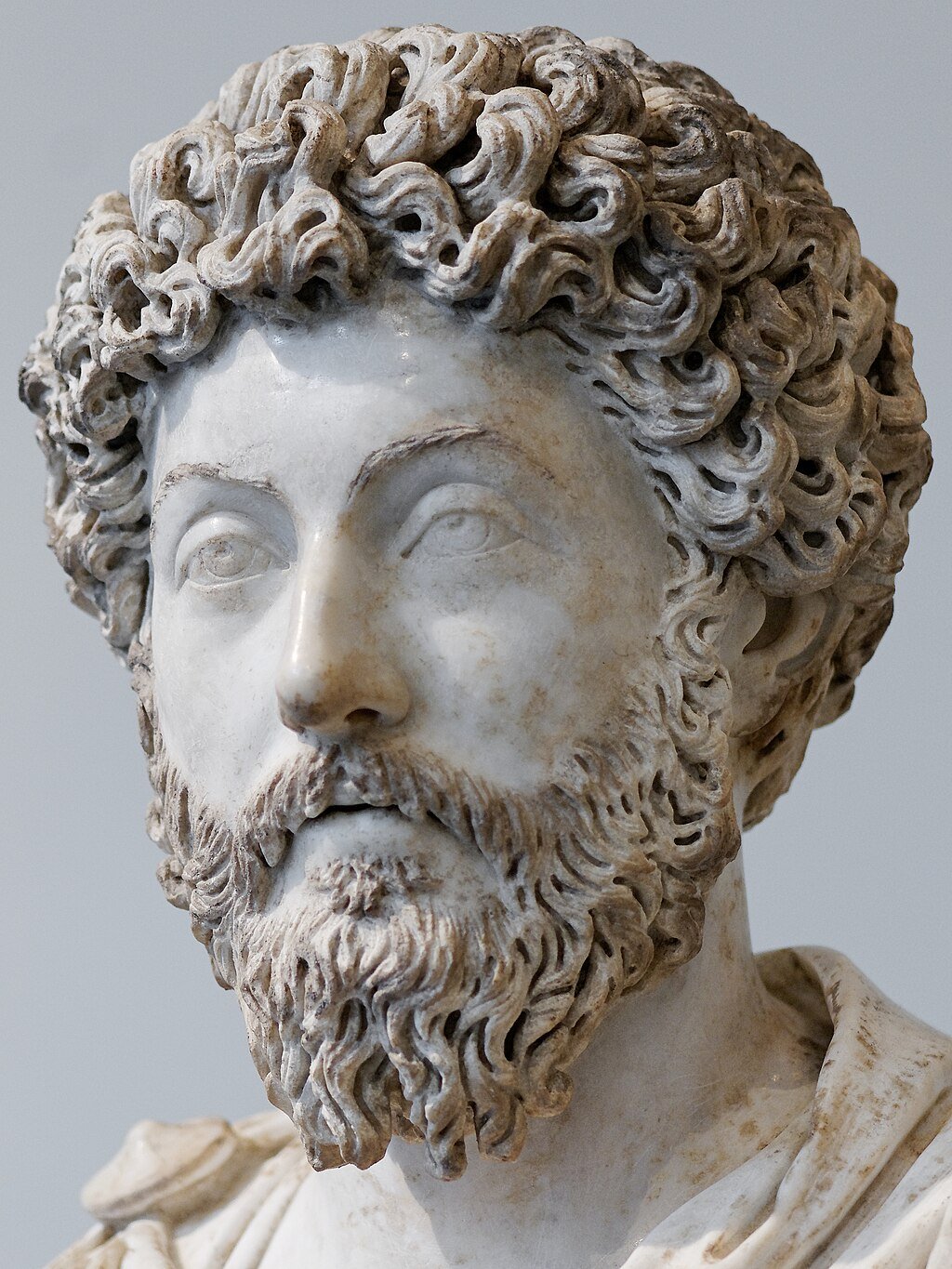
But if are seeing a revival of Stoicism, as our post on the subject suggested, a religion in the “political” mode may be in our future. Just remember that the last time Stoicism was in vogue, in ancient Rome, its vaunted religious toleration, since it required belief in no particular god, did not extend to Christians. That is because Christians refused to take part in “the traditional cult” of the civil religion. Not burning the incense to Caesar was a rejection of the one dimension of religion that the Stoics thought was important. Remember too that the great Stoic sage, the emperor Marcus Aurelius, author of the still-popular Meditations, presided over one of the most intense periods of Christian persecution for this very reason.
Photo: Bust of Marcus Aurelius (ca. 161–169 A.D.), Louvre Museum, CC BY 2.5 <https://creativecommons.org/licenses/by/2.5>, via Wikimedia Commons

Roman persecution of Christians
Previous Post

May 9, 2025
DISCUSS: Should We Attack Iran?
Next Post

May 12, 2025 Monday Miscellany, 5/12/25
Recent Comments
Browse Our Archives
Select a Category America Apologetics Art baseball Bible Blog Christ Church crime Culture Economics Education Ethics Family Food Football Government History Holidays Holy Week Humor International Islam Language Law Life Issues Literature Media Medicine Movies Music Nature News Personal Philosophy Politics psychology Reformation Religions Sacraments Science sex Social Science Sports technology television terrorism Theology Uncategorized Vocation war
Select a Month October 2026 September 2026 August 2026 July 2026 June 2026 May 2026 April 2026 March 2026 February 2026 January 2026 December 2025 November 2025 October 2025 September 2025 August 2025 July 2025 June 2025 May 2025 April 2025 March 2025 February 2025 January 2025 December 2024 November 2024 October 2024 September 2024 August 2024 July 2024 June 2024 May 2024 April 2024 March 2024 February 2024 January 2024 December 2023 November 2023 October 2023 September 2023 August 2023 July 2023 June 2023 May 2023 April 2023 March 2023 February 2023 January 2023 December 2022 November 2022 October 2022 September 2022 August 2022 July 2022 June 2022 May 2022 April 2022 March 2022 February 2022 January 2022 December 2021 November 2021 October 2021 September 2021 August 2021 July 2021 June 2021 May 2021 April 2021 March 2021 February 2021 January 2021 December 2020 November 2020 October 2020 September 2020 August 2020 July 2020 June 2020 May 2020 April 2020 March 2020 February 2020 January 2020 December 2019 November 2019 October 2019 September 2019 August 2019 July 2019 June 2019 May 2019 April 2019 March 2019 February 2019 January 2019 December 2018 November 2018 October 2018 September 2018 August 2018 July 2018 June 2018 May 2018 April 2018 March 2018 February 2018 January 2018 December 2017 November 2017 October 2017 September 2017 August 2017 July 2017 June 2017 May 2017 April 2017 March 2017 February 2017 January 2017 December 2016 November 2016 October 2016 September 2016 August 2016 July 2016 June 2016 May 2016 April 2016 March 2016 February 2016 January 2016 December 2015 November 2015 October 2015 September 2015 August 2015 July 2015 June 2015 May 2015 April 2015 March 2015 February 2015 January 2015 December 2014 November 2014 October 2014 September 2014 August 2014 July 2014 June 2014 May 2014 April 2014 March 2014 February 2014 January 2014 December 2013 November 2013 October 2013 September 2013 August 2013 July 2013 June 2013 May 2013 April 2013 March 2013 February 2013 January 2013 December 2012 November 2012 October 2012 September 2012 August 2012 July 2012 June 2012 May 2012 April 2012 March 2012 February 2012 January 2012 December 2011 November 2011 October 2011 September 2011 August 2011 July 2011 June 2011 May 2011 April 2011 March 2011 February 2011 January 2011 December 2010 November 2010 October 2010 September 2010 August 2010 July 2010 June 2010 May 2010 April 2010 March 2010 February 2010 January 2010 December 2009 November 2009 October 2009 September 2009 August 2009 July 2009 June 2009 May 2009 April 2009 March 2009 February 2009 January 2009 December 2008 November 2008 October 2008 September 2008 August 2008 July 2008 June 2008 May 2008 April 2008 March 2008 February 2008 January 2008 December 2007 November 2007 October 2007
Follow Us!
TAKE THE
Religious Wisdom Quiz
Dry bones in a valley came together, received sinews and flesh, then breath entered them. What did this valley represent?
Select your answer to see how you score.
God's army The house of Israel The resurrection The dead
Books by This Author Books by Gene Veith
Related posts from Cranach



Gen Z Wants Evildoers to Be Punished, Not...

On Trump's Political Ads That You Paid For
TRENDING AT PATHEOS Evangelical

Pope Leo Celebrates Mass for Nurses & Docs...
I don't have any idea how he did it, but Pope Leo...

The Sermon on the Mount, Part I: Matthew...
The Sermon on the Mount, Part I (Matthew 4:12-5:12) St. Matthew moves...

What's up from Crossway: Reviewing some of their latest A few weeks...

Janie Learns the Way of the Cross: A...
Teaching children about Jesus' Passion can be challenging. Many parents and educators...

Looking For Good Catholic Writing - October 2026
He alone extends the heavens, and he walks upon the waves of...

In "Irreplaceable," our book on vocation and technology, Trevor Sutton and I...
view all Evangelical blogs
What Are Your Thoughts?leave a comment
Ad-Free & Subscriber Log-In Subscription Support
- About Us
- 2026 Calendar
- Videos
- Podcasts
- Library of World Religions
- Faith In Media Tracker
- Advertise With Us
- Write for Us
- Privacy Policy
- Terms of Service
- Do Not Sell My Data
- Contact Us
- Radiant Digital
- Manage Newsletter Subscriptions
- Unsubscribe From Notifications
- Sitemap
Copyright 2008-2026, Patheos. All rights reserved.
Subscription Support Ad-Free & Subscriber Log-In
Follow Patheos