
BuddhistCatholicContemplativeEvangelicalGeneral ChristianHinduJewishLatter-day SaintMuslimNew VisionsProgressive Christian
Beliefs
- Buddhist
- Catholic
- Contemplative
- Evangelical
- General Christian
- Hindu
- Jewish
- Latter-day Saint
- More Voices
- Muslim
- New Visions
- Pagan
- Progressive Christian
Topics
- Religion News
- Food and Religion
- Sports and Religion
- Religious Art
- Religious Music and Entertainment
- Religious Events
- History and Religion
- Style and Religion
- Politics and Religion
- Women in Religion
- Recreation Outdoors and Religion
- Business Finance and Religion
- Careers Workplace and Religion
- Education and Religion
- Family Parenting and Religion
- Health Fitness and Religion
- Home and Religion
- Relationships and Religion
- Technology and Religion
- Travel and Religion
Columnists
- Buddhist Columnists
- Business Finance and Religion Columnists
- Careers Workplace and Religion Columnists
- Catholic Columnists
- Contemplative Columnists
- Education and Religion Columnists
- Evangelists Columnists
- Family Parenting and Religion Columnists
- General Christian Columnists
- Health Fitness and Religion Columnists
- Hindu Columnists
- History and Religion Columnists
- Home and Religion Columnists
- Jewish Columnists
- More Voices Columnists
- Latter Day Columnists
- Muslim Columnists
- New Visions Columnists
- Nonreligious Columnists
- Pagan Columnists
- Politics and Religion Columnists
- Progressive Columnists
- Recreation Outdoors and Religion Columnists
- Relationships and Religion Columnists
- Religion News Columnists
- Religious Art Columnists
- Religious Events Columnists
- Religious Music and Entertainment Columnists
- Sports and Religion Columnists
- Style and Religion Columnists
- Technology and Religion Columnists
- Travel and Religion Columnists
- Women in Religion Columnists
Resource Library
- 2026 Calendar
- Library of World Religions
- The 100 Most Holy Places on Earth
- Patheos Answers
- Podcasts
- Videos
- Faith Leaders Database
- Anglican Episcopalian
- Bahai
- Baptist
- Buddhism
- Christianity
- Confucianism
- Eastern Orthodoxy
- Hinduism
- Holiness and Pentecostal
- ISKCON
- Islam
- Judaism
- Lutheran
- Methodist
- The Church of Jesus Christ of Latter-day Saints
- New Age
- Paganism
- Presbytarian and Reformed
- Protestantism
- Religion Behind the Scenes
- Roman Catholic
- Scientology
- Shia Islam
- Sikhism
- Sufism
- Sunni Islam
- Taoism
- Zen
- See all religions
Research Tools
 Ad-Free & Subscriber Log-In Subscription Support
Ad-Free & Subscriber Log-In Subscription Support
Follow Patheos 

- Trending:
- Forgiveness
- |
- Marriage
- |
- Consciousness
- |
- Death Penalty
- |
- Election
- |
- Halloween

- Home
- Evangelical
- Politics and Religion
- The Order of Love
The Order of Love
Last updated on: February 12, 2025 at 6:00 am by Gene Veith
The Order of Love 2025-02-10T13:13:26-05:00 Gene Veith
Patheos Explore the world's faith through different perspectives on religion and spirituality! Patheos has the views of the prevalent religions and spiritualities of the world.
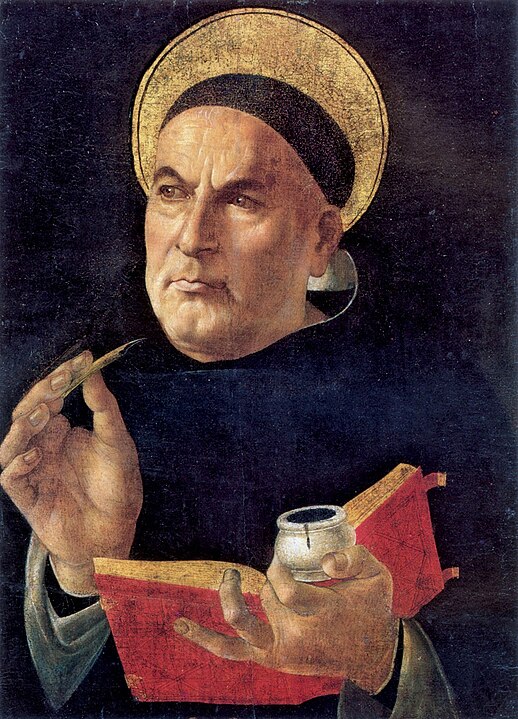
Scripture tells us to love our neighbors. But how do we prioritize all of the neighbors that we have? This theological question has been raised by Vice President J. D. Vance, no less, who answers it in a distinctly Catholic way by drawing on the theology of St. Thomas Aquinas. But is that answer correct?
In a discussion about the administration’s crackdown on illegal immigration, Vice President Vance said this in a Fox News interview:
There is a Christian concept that you love your family and then you love your neighbor, and then you love your community, and then you love your fellow citizens, and then after that, prioritize the rest of the world. A lot of the far left has completely inverted that.
When he was challenged about that, he replied in a tweet: “Just google ‘ordo amoris.'” I’ve done that, so let’s discuss it. The term means “the order of love.” It derives originally from St. Augustine, but was developed further by Aquinas, who, I think, changed Augustine’s original meaning. I’d like to add a Lutheran perspective.
The Catholic editor of First Things, R. R. Reno, argues in a Compact article of this title that “J. D. Vance Is Right about the ‘Ordo Amoris.’” He explains the scholastic notion: Yes, we are supposed to love everyone. “But Aquinas refines the conclusion, concluding that we should not love all things in the same way and to the same degree. . . .We need to love the right things in the right way.”
Aquinas applies the notion of ordo amoris to our love of other people. There is no question that all persons are equally worthy of our love. We are created in the image and likeness of God. But each of us is cast into a world of already existing relationships. These relationships bring with them duties and responsibilities.
Aquinas lays down a basic principle: “One’s obligation to love a person is proportionate to the gravity of the sin one commits in acting against this love.” Put differently, we’re to love with greater devotion those for whom we have greater responsibility.
Aquinas gives our relation to our parents as an example. We are obligated to honor our mother and father. It’s right there in the Ten Commandments. It follows, therefore, that a love of others that impedes or contradicts our proper love of our parents is misguided, even wrong. The same holds for children. Do we imagine that God calls us to love others in a fashion that leads us to neglect our obligations as parents? In Bleak House, Charles Dickens creates a character, Mrs. Jellyby, who exemplifies the perversion of love. She is devoted to philanthropic endeavors abroad while neglecting her own children.
You get the idea. He goes on, developing the notion “that we are to love those near with a greater fervor than those far away.”
This makes sense, and yet the Bible complicates the issue. Jesus clearly extends our obligation to love our neighbors beyond those who are “close” to us:
“You have heard that it was said, ‘You shall love your neighbor and hate your enemy.’ But I say to you, Love your enemies and pray for those who persecute you, so that you may be sons of your Father who is in heaven. For he makes his sun rise on the evil and on the good, and sends rain on the just and on the unjust. For if you love those who love you, what reward do you have? Do not even the tax collectors do the same? And if you greet only your brothers, what more are you doing than others? Do not even the Gentiles do the same?” (Matthew 5:43-47)
When Augustine introduced the concept of the ordo amoris, he was not thinking of a hierarchy of love, much less a sequence of first love these people, and then love these others. He was speaking of “ordering” our loves, and he told us how to do it.
Augustine was not just talking about how we “should” love; rather, he recognized that we do love all kinds of things. We love sex, we love pleasure, we love money, we love possessions, we love our friends, we love our family, we love our pets, we love our hobbies, we love our country, and on and on.
Because of our sinful condition, though, we often love things we shouldn’t, we love what we should love in sinful ways, and our loves are in conflict with each other. That is to say, our loves are disordered.
The love of God, though, puts our other loves in order. When we love God above all things, the other loves fall into place: Our sexual love is ordered in marriage. Our love for our children is ordered by our desire to bring them up in the nurture and admonition of the Lord. Our love for possessions is ordered by gratitude and generosity. Our love of pleasure is ordered by temperance and self-control, etc., etc.
Augustine discusses all of this in his great treatise City of God. His distinction between the City of God and the City of Man is based on the predominant object of love. The City of Man is based on the love of self. The City of God is based on the love of God.
When our loves are properly ordered by love of God, we can even love our selves in the right way, ordering our self-love in terms of God’s love for us and the physical and spiritual gifts He continually pours out upon us, above all, the gift of salvation through Jesus Christ.
There is one more piece of the puzzle as to the ordering and prioritizing of our loves, one that Luther in particular can help us with. Let’s discuss that tomorrow.
Illustration: St. Thomas Aquinas by Sandro Botticelli – Transferred from de.wikipedia to Commons by Boteas using CommonsHelper.Original uploader was Aquinat, Public Domain, https://commons.wikimedia.org/w/index.php?curid=14842363

Previous Post

February 11, 2025
Reading the Bible vs. Reading Anything Else
Next Post

February 13, 2025 Vocation and the Order of Love
Recent Comments
"While she worked for Trump she was a tool's tool!"
"I know wired earbuds are making a comeback (I never stopped using them as I ..."
"VCRs, tape decks, and cassette players are all having a revival among a segment of ..."
"As a (retired) lawyer I see potential liability from sharing things like power or sharp ..."
Browse Our Archives
Select a Category America Apologetics Art baseball Bible Blog Christ Church crime Culture Economics Education Ethics Family Food Football Government History Holidays Holy Week Humor International Islam Language Law Life Issues Literature Media Medicine Movies Music Nature News Personal Philosophy Politics psychology Reformation Religions Sacraments Science sex Social Science Sports technology television terrorism Theology Uncategorized Vocation war
Select a Month October 2026 September 2026 August 2026 July 2026 June 2026 May 2026 April 2026 March 2026 February 2026 January 2026 December 2025 November 2025 October 2025 September 2025 August 2025 July 2025 June 2025 May 2025 April 2025 March 2025 February 2025 January 2025 December 2024 November 2024 October 2024 September 2024 August 2024 July 2024 June 2024 May 2024 April 2024 March 2024 February 2024 January 2024 December 2023 November 2023 October 2023 September 2023 August 2023 July 2023 June 2023 May 2023 April 2023 March 2023 February 2023 January 2023 December 2022 November 2022 October 2022 September 2022 August 2022 July 2022 June 2022 May 2022 April 2022 March 2022 February 2022 January 2022 December 2021 November 2021 October 2021 September 2021 August 2021 July 2021 June 2021 May 2021 April 2021 March 2021 February 2021 January 2021 December 2020 November 2020 October 2020 September 2020 August 2020 July 2020 June 2020 May 2020 April 2020 March 2020 February 2020 January 2020 December 2019 November 2019 October 2019 September 2019 August 2019 July 2019 June 2019 May 2019 April 2019 March 2019 February 2019 January 2019 December 2018 November 2018 October 2018 September 2018 August 2018 July 2018 June 2018 May 2018 April 2018 March 2018 February 2018 January 2018 December 2017 November 2017 October 2017 September 2017 August 2017 July 2017 June 2017 May 2017 April 2017 March 2017 February 2017 January 2017 December 2016 November 2016 October 2016 September 2016 August 2016 July 2016 June 2016 May 2016 April 2016 March 2016 February 2016 January 2016 December 2015 November 2015 October 2015 September 2015 August 2015 July 2015 June 2015 May 2015 April 2015 March 2015 February 2015 January 2015 December 2014 November 2014 October 2014 September 2014 August 2014 July 2014 June 2014 May 2014 April 2014 March 2014 February 2014 January 2014 December 2013 November 2013 October 2013 September 2013 August 2013 July 2013 June 2013 May 2013 April 2013 March 2013 February 2013 January 2013 December 2012 November 2012 October 2012 September 2012 August 2012 July 2012 June 2012 May 2012 April 2012 March 2012 February 2012 January 2012 December 2011 November 2011 October 2011 September 2011 August 2011 July 2011 June 2011 May 2011 April 2011 March 2011 February 2011 January 2011 December 2010 November 2010 October 2010 September 2010 August 2010 July 2010 June 2010 May 2010 April 2010 March 2010 February 2010 January 2010 December 2009 November 2009 October 2009 September 2009 August 2009 July 2009 June 2009 May 2009 April 2009 March 2009 February 2009 January 2009 December 2008 November 2008 October 2008 September 2008 August 2008 July 2008 June 2008 May 2008 April 2008 March 2008 February 2008 January 2008 December 2007 November 2007 October 2007
Follow Us!
TAKE THE
Religious Wisdom Quiz
Who did Jesus raise from the dead after four days?
Select your answer to see how you score.
Lazarus Widow's son Jairus’ daughter Himself
Books by This Author Books by Gene Veith
Related posts from Cranach


Gen Z Wants Evildoers to Be Punished, Not...


The Family Estrangement Epidemic
TRENDING AT PATHEOS Evangelical

Emotion in Early Christianity by Andrew Crislip
Andrew Crislip’s Emotion in Early Christianity examines an often overlooked dimension of...

16 Spiritual Touchstones for a More Grounded Life
After decades of spiritual study, here are 16 principles I try...

Catholic Evangelization: Sharing Your Faith Every Day
Welcome back to the Graceful Awakening mini-series called, “From Faith to Mission.” ...

The Pillar of the Boatmen: the Ancient Monument...
The Pillar of the Boatmen is a Romano-Gaulish sculpture that dates from...

In one sense walking into Westminster Abbey is like walking down the...

'Super Scam Me' Exposes AI Jon Bon Jovi...
Leslie Pickett believed she was in a relationship with Jon Bon Jovi....
view all Evangelical blogs
What Are Your Thoughts?leave a comment
Ad-Free & Subscriber Log-In Subscription Support
- About Us
- 2026 Calendar
- Videos
- Podcasts
- Library of World Religions
- Faith In Media Tracker
- Advertise With Us
- Write for Us
- Privacy Policy
- Terms of Service
- Do Not Sell My Data
- Contact Us
- Radiant Digital
- Manage Newsletter Subscriptions
- Unsubscribe From Notifications
- Sitemap
Copyright 2008-2026, Patheos. All rights reserved.
Subscription Support Ad-Free & Subscriber Log-In
Follow Patheos