
BuddhistCatholicContemplativeEvangelicalGeneral ChristianHinduJewishLatter-day SaintMuslimNew VisionsProgressive Christian
Beliefs
- Buddhist
- Catholic
- Contemplative
- Evangelical
- General Christian
- Hindu
- Jewish
- Latter-day Saint
- More Voices
- Muslim
- New Visions
- Pagan
- Progressive Christian
Topics
- Religion News
- Food and Religion
- Sports and Religion
- Religious Art
- Religious Music and Entertainment
- Religious Events
- History and Religion
- Style and Religion
- Politics and Religion
- Women in Religion
- Recreation Outdoors and Religion
- Business Finance and Religion
- Careers Workplace and Religion
- Education and Religion
- Family Parenting and Religion
- Health Fitness and Religion
- Home and Religion
- Relationships and Religion
- Technology and Religion
- Travel and Religion
Columnists
- Buddhist Columnists
- Business Finance and Religion Columnists
- Careers Workplace and Religion Columnists
- Catholic Columnists
- Contemplative Columnists
- Education and Religion Columnists
- Evangelists Columnists
- Family Parenting and Religion Columnists
- General Christian Columnists
- Health Fitness and Religion Columnists
- Hindu Columnists
- History and Religion Columnists
- Home and Religion Columnists
- Jewish Columnists
- More Voices Columnists
- Latter Day Columnists
- Muslim Columnists
- New Visions Columnists
- Nonreligious Columnists
- Pagan Columnists
- Politics and Religion Columnists
- Progressive Columnists
- Recreation Outdoors and Religion Columnists
- Relationships and Religion Columnists
- Religion News Columnists
- Religious Art Columnists
- Religious Events Columnists
- Religious Music and Entertainment Columnists
- Sports and Religion Columnists
- Style and Religion Columnists
- Technology and Religion Columnists
- Travel and Religion Columnists
- Women in Religion Columnists
Resource Library
- 2026 Calendar
- Library of World Religions
- The 100 Most Holy Places on Earth
- Patheos Answers
- Podcasts
- Videos
- Faith Leaders Database
- Anglican Episcopalian
- Bahai
- Baptist
- Buddhism
- Christianity
- Confucianism
- Eastern Orthodoxy
- Hinduism
- Holiness and Pentecostal
- ISKCON
- Islam
- Judaism
- Lutheran
- Methodist
- The Church of Jesus Christ of Latter-day Saints
- New Age
- Paganism
- Presbytarian and Reformed
- Protestantism
- Religion Behind the Scenes
- Roman Catholic
- Scientology
- Shia Islam
- Sikhism
- Sufism
- Sunni Islam
- Taoism
- Zen
- See all religions
Research Tools
 Ad-Free & Subscriber Log-In Subscription Support
Ad-Free & Subscriber Log-In Subscription Support
Follow Patheos 

- Trending:
- Forgiveness
- |
- Marriage
- |
- Consciousness
- |
- Death Penalty
- |
- Election
- |
- Halloween

- Home
- Evangelical
- Politics and Religion
- The Anti-Revolutionary Party
The Anti-Revolutionary Party
Last updated on: October 8, 2024 at 8:54 am by Gene Veith
The Anti-Revolutionary Party 2024-10-08T08:54:15-04:00 Gene Veith
Patheos Explore the world's faith through different perspectives on religion and spirituality! Patheos has the views of the prevalent religions and spiritualities of the world.
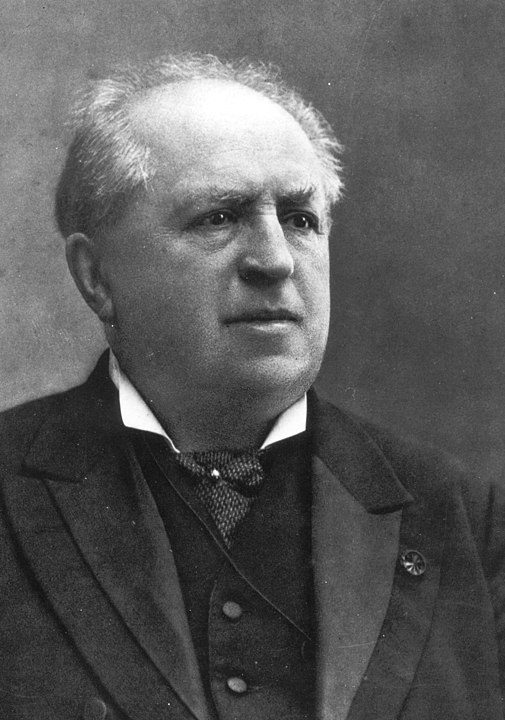
As Christians are trying to figure out how they should pursue politics and cultural influence in our secularist world, it is helpful to consider models from the past.
Jordan Ballor does that in his Religion & Liberty article The Faithful Christian and the Politics of the Tao. In it, he looks at the political activities of the Reformed theologian Abraham Kuyper (1837–1920), who not only started a successful Christian political movement in the Netherlands but actually rose to the position of Prime Minister.
In 1879, he founded the Anti-Revolutionary Party. An odd name for a political party, perhaps, describing what it was against rather than what it was for, but its focus was to oppose the legacy of the French Revolution, which continued to manifest itself in ever-more radical but mostly unsuccessful revolutions in Europe throughout the 19th century, from the widespread liberal revolutions of 1848 to socialist riots that in the next century would culminate in the Russian Revolution.
I was somewhat familiar with Kuyper, mainly from back when I was influenced by Francis Schaeffer, especially with his emphasis on “world views.” His political efforts I chalked up to the Calvinist “one-kingdom theology” that stresses the rule of the saints on earth, with the theocratic goal of ruling earthly societies with God’s law, which even Christians–let alone non-believers–are unable to keep.
But Ballor’s article showed me that I had misjudged Kuyper’s project. He didn’t start a “Christian Party,” much less a “Calvinist Party” designed to set up a millennial Christian utopia. Rather, his “Anti-Revolutionary Party” was oriented around a negative goal of opposing the anti-clericalism, the attacks on the family, and the undermining of other institutions that the spirit of revolution encouraged. At the same time, the “Anti-Revolutionaries” sought to offer more positive alternatives to the genuine problems–the exploitation of labor, poverty, inequality, etc.–that the revolutionaries were trying to address.
You couldn’t say that the “Anti-Revolutionary” party was conservative, at least in the old European sense of trying to build up the power of the monarchies, restoring the aristocracy, and imposing controls on the lower classes. Rather, Kuyper presided over what was, in effect, a populist movement. Says Ballor,
A distinctive feature of Kuyper’s emphasis was on the importance and dignity of the kleine luyden, the “little people.” In this way the ARP was fiercely and deeply democratic, grounding its principles in the dignity of all human beings, each with a vocation before God and a service to provide for others. “Everything can be a spiritual calling,” wrote Kuyper, and everyone should be respected and represented in the political order. This meant a focus on expanding the franchise more broadly (although not universally in a revolutionary fashion), even as it also meant focusing on the family as the basic unit of society.
Central to Kuyper’s political and theological convictions was the concept of “sphere sovereignty,” the notion, in Ballor’s words, that “God has given direct authorization to various social institutions, or ‘spheres,’ which operate according to their own logic and laws and ultimately are accountable to God.” The state has its sphere of sovereignty, but so does each family. Also the church, local governments, schools, businesses, workshops, and many more.
It follows that Kuyper believed in limited government and the decentralization of authority. So what is the role of government in all of these spheres? Ballor explains (my bolds):
While authority and legitimacy were not delegated by the state or through the government to the various spheres, the state did have a unique responsibility to be the forum of last resort for public justice. When conflict arises between the spheres, or there is corruption within an institution such that it needs aid to restore its proper functioning, the state can act in a remedial capacity. The purpose of state intervention, however, is always to restore spheres and institutions to health and self-sufficiency.
The purpose of the state is to protect and build up the other spheres–the family, the schools, economic institutions, local governments, private organizations, and, yes, the church–which strikes me as a principle that Christians interested in politics could apply today. This is a Christian model that is not Catholic “integralism,” with its dreams of papal and imperial rule, nor is it a “post-liberal” model that downplays democracy and individual rights. Rather, it is a Christian kind of liberalism as an alternative to the revolutionary kinds of liberalism.
Kuyper saw that his concept of sphere sovereignty was similar to the Catholic teaching about “subsidiarity,” defined as “the principle that a central authority should have a subsidiary function, performing only those tasks which cannot be performed at a more local level.” In 1891, Pope Leo issued the encyclical Rerum Novarum, which applied that principle in many ways, including affirming the dignity and rights of workers while rejecting socialism. The arch-Calvinist Kuyper loved that proclamation from the Pope, to the point that his Anti-Revolutionary Party allied with its Catholic counterparts. According to the politics of this unlikely alliance, the Calvinists and the Catholics would vote for each other’s candidates on second and subsequent ballots in jurisdictions where their party would fall short. This tactic, which would work better in a multi-party parliamentary system rather than a two-party system like ours, led to a coalition that would enact many of the ARP’s policies and make Kuyper Prime minister.
And yet, Kuyper was voted out of office in 1905, and his political program did not survive the two World Wars. The Anti-Revolutionary Party did persist until it merged with other Christian-related parties in 1974 to become part of the Christian Democratic movement, which is another but related approach to Christianity and politics. (See my posts from years ago: Conservative Theologically, but Liberal Politically and Kuyper and Christian Democracy; and my posts on the American Christian Democratic party that may be on your ballot, the Solidarity Party. Check out the party’s website to learn about its presidential candidates, Peter Sonski and Lauren Onak, the thoroughly pro-life alternatives.)
My impression is that “sphere sovereignty” and “subsidiarity” accord well with the Lutheran doctrine of the Estates and the doctrine of vocation. And yet the Anti-Revolutionary Party’s ultimate demise is also confirmation of the Lutheran pessimism about the ability of sinful human beings to establish a consistently moral and Godly society on earth. Christianity is not a political program but the good news of our salvation through Christ. Still, though, God reigns in a hidden way in His temporal kingdom, so we must never reject that temporal kingdom, but rather do what we can in our various vocations, including that of citizenship, to love and serve each other.
So what can we learn from Kuyper?
Photo: Abraham Kuyper by Unknown author – https://josdouma.files.wordpress.com/2015/09/kuyper-75.jpg, Public Domain, https://commons.wikimedia.org/w/index.php?curid=43933631


Previous Post

October 7, 2024
Monday Miscellany, 10/7/24
Next Post

October 9, 2024 "Reformation Begins with Ourselves"
Recent Comments
"I know wired earbuds are making a comeback (I never stopped using them as I ..."
"VCRs, tape decks, and cassette players are all having a revival among a segment of ..."
"As a (retired) lawyer I see potential liability from sharing things like power or sharp ..."
"I am not sure the items you mentioned, though disused, discontinued, discarded, could be considered ..."
Browse Our Archives
Select a Category America Apologetics Art baseball Bible Blog Christ Church crime Culture Economics Education Ethics Family Food Football Government History Holidays Holy Week Humor International Islam Language Law Life Issues Literature Media Medicine Movies Music Nature News Personal Philosophy Politics psychology Reformation Religions Sacraments Science sex Social Science Sports technology television terrorism Theology Uncategorized Vocation war
Select a Month October 2026 September 2026 August 2026 July 2026 June 2026 May 2026 April 2026 March 2026 February 2026 January 2026 December 2025 November 2025 October 2025 September 2025 August 2025 July 2025 June 2025 May 2025 April 2025 March 2025 February 2025 January 2025 December 2024 November 2024 October 2024 September 2024 August 2024 July 2024 June 2024 May 2024 April 2024 March 2024 February 2024 January 2024 December 2023 November 2023 October 2023 September 2023 August 2023 July 2023 June 2023 May 2023 April 2023 March 2023 February 2023 January 2023 December 2022 November 2022 October 2022 September 2022 August 2022 July 2022 June 2022 May 2022 April 2022 March 2022 February 2022 January 2022 December 2021 November 2021 October 2021 September 2021 August 2021 July 2021 June 2021 May 2021 April 2021 March 2021 February 2021 January 2021 December 2020 November 2020 October 2020 September 2020 August 2020 July 2020 June 2020 May 2020 April 2020 March 2020 February 2020 January 2020 December 2019 November 2019 October 2019 September 2019 August 2019 July 2019 June 2019 May 2019 April 2019 March 2019 February 2019 January 2019 December 2018 November 2018 October 2018 September 2018 August 2018 July 2018 June 2018 May 2018 April 2018 March 2018 February 2018 January 2018 December 2017 November 2017 October 2017 September 2017 August 2017 July 2017 June 2017 May 2017 April 2017 March 2017 February 2017 January 2017 December 2016 November 2016 October 2016 September 2016 August 2016 July 2016 June 2016 May 2016 April 2016 March 2016 February 2016 January 2016 December 2015 November 2015 October 2015 September 2015 August 2015 July 2015 June 2015 May 2015 April 2015 March 2015 February 2015 January 2015 December 2014 November 2014 October 2014 September 2014 August 2014 July 2014 June 2014 May 2014 April 2014 March 2014 February 2014 January 2014 December 2013 November 2013 October 2013 September 2013 August 2013 July 2013 June 2013 May 2013 April 2013 March 2013 February 2013 January 2013 December 2012 November 2012 October 2012 September 2012 August 2012 July 2012 June 2012 May 2012 April 2012 March 2012 February 2012 January 2012 December 2011 November 2011 October 2011 September 2011 August 2011 July 2011 June 2011 May 2011 April 2011 March 2011 February 2011 January 2011 December 2010 November 2010 October 2010 September 2010 August 2010 July 2010 June 2010 May 2010 April 2010 March 2010 February 2010 January 2010 December 2009 November 2009 October 2009 September 2009 August 2009 July 2009 June 2009 May 2009 April 2009 March 2009 February 2009 January 2009 December 2008 November 2008 October 2008 September 2008 August 2008 July 2008 June 2008 May 2008 April 2008 March 2008 February 2008 January 2008 December 2007 November 2007 October 2007
Follow Us!
TAKE THE
Religious Wisdom Quiz
"______ is the same yesterday and today and forever."
Select your answer to see how you score.
Our Calling God's Plan Jesus Christ The Universe
Books by This Author Books by Gene Veith
Related posts from Cranach



Gen Z Wants Evildoers to Be Punished, Not...

On Trump's Political Ads That You Paid For
TRENDING AT PATHEOS Evangelical

When Halloween Unmasks Married Hearts
Written by Dr. David K. Ewen from Eternal Truth Bible College Behind...

Aristotle. He’s been called the father of logic, the father of the...

Methodist Central Hall and Westminster Abbey
Situated on the same square is Methodist Central Hall and Westminster Abbey. ...

57th Dove Awards Honor Dolly Parton, Crown New...
On gospel music’s biggest night, the 57th annual GMA Dove Awards honored...

The First Eucharistic Controversy: Christ’s Real Presence
For Catholics, the Eucharist is the source and summit of the Christian...

What a Stop Sign Can Teach Us About...
How to Make a Decision When You Can't Hear God Main point:...
view all Evangelical blogs
What Are Your Thoughts?leave a comment
Ad-Free & Subscriber Log-In Subscription Support
- About Us
- 2026 Calendar
- Videos
- Podcasts
- Library of World Religions
- Faith In Media Tracker
- Advertise With Us
- Write for Us
- Privacy Policy
- Terms of Service
- Do Not Sell My Data
- Contact Us
- Radiant Digital
- Manage Newsletter Subscriptions
- Unsubscribe From Notifications
- Sitemap
Copyright 2008-2026, Patheos. All rights reserved.
Subscription Support Ad-Free & Subscriber Log-In
Follow Patheos