
BuddhistCatholicContemplativeEvangelicalGeneral ChristianHinduJewishLatter-day SaintMuslimNew VisionsProgressive Christian
Beliefs
- Buddhist
- Catholic
- Contemplative
- Evangelical
- General Christian
- Hindu
- Jewish
- Latter-day Saint
- More Voices
- Muslim
- New Visions
- Pagan
- Progressive Christian
Topics
- Religion News
- Food and Religion
- Sports and Religion
- Religious Art
- Religious Music and Entertainment
- Religious Events
- History and Religion
- Style and Religion
- Politics and Religion
- Women in Religion
- Recreation Outdoors and Religion
- Business Finance and Religion
- Careers Workplace and Religion
- Education and Religion
- Family Parenting and Religion
- Health Fitness and Religion
- Home and Religion
- Relationships and Religion
- Technology and Religion
- Travel and Religion
Columnists
- Buddhist Columnists
- Business Finance and Religion Columnists
- Careers Workplace and Religion Columnists
- Catholic Columnists
- Contemplative Columnists
- Education and Religion Columnists
- Evangelists Columnists
- Family Parenting and Religion Columnists
- General Christian Columnists
- Health Fitness and Religion Columnists
- Hindu Columnists
- History and Religion Columnists
- Home and Religion Columnists
- Jewish Columnists
- More Voices Columnists
- Latter Day Columnists
- Muslim Columnists
- New Visions Columnists
- Nonreligious Columnists
- Pagan Columnists
- Politics and Religion Columnists
- Progressive Columnists
- Recreation Outdoors and Religion Columnists
- Relationships and Religion Columnists
- Religion News Columnists
- Religious Art Columnists
- Religious Events Columnists
- Religious Music and Entertainment Columnists
- Sports and Religion Columnists
- Style and Religion Columnists
- Technology and Religion Columnists
- Travel and Religion Columnists
- Women in Religion Columnists
Resource Library
- 2026 Calendar
- Library of World Religions
- The 100 Most Holy Places on Earth
- Patheos Answers
- Podcasts
- Videos
- Faith Leaders Database
- Anglican Episcopalian
- Bahai
- Baptist
- Buddhism
- Christianity
- Confucianism
- Eastern Orthodoxy
- Hinduism
- Holiness and Pentecostal
- ISKCON
- Islam
- Judaism
- Lutheran
- Methodist
- The Church of Jesus Christ of Latter-day Saints
- New Age
- Paganism
- Presbytarian and Reformed
- Protestantism
- Religion Behind the Scenes
- Roman Catholic
- Scientology
- Shia Islam
- Sikhism
- Sufism
- Sunni Islam
- Taoism
- Zen
- See all religions
Research Tools
 Ad-Free & Subscriber Log-In Subscription Support
Ad-Free & Subscriber Log-In Subscription Support
Follow Patheos 

- Trending:
- Forgiveness
- |
- Marriage
- |
- Consciousness
- |
- Death Penalty
- |
- Election
- |
- Halloween

- Home
- Evangelical
- Politics and Religion
- From Discordia to Concordia
From Discordia to Concordia
Last updated on: October 24, 2024 at 6:00 am by Gene Veith
From Discordia to Concordia 2024-10-19T19:18:12-04:00 Gene Veith
Patheos Explore the world's faith through different perspectives on religion and spirituality! Patheos has the views of the prevalent religions and spiritualities of the world.
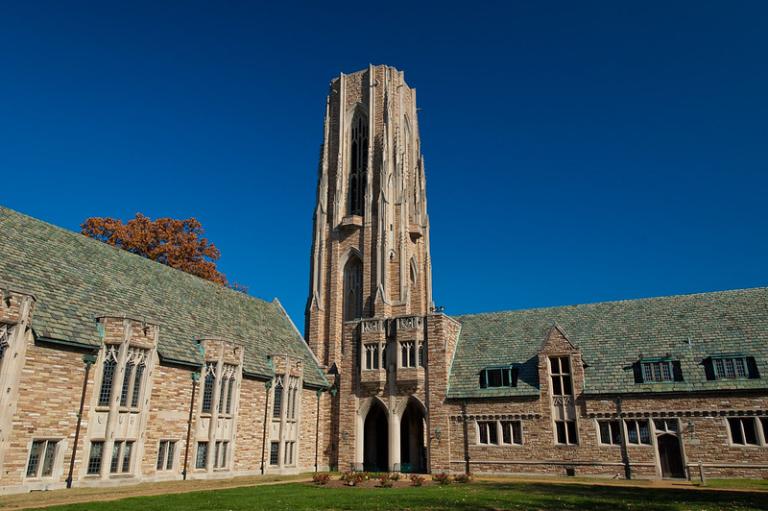
This year marks the 50th anniversary of when the advocates of theological liberalism walked out of the Lutheran Church Missouri Synod, leaving it in orthodox hands. We blogged about this before, drawing on an article in the American Spectator by Tom Raabe about the SEMINEX walkout from Concordia Seminary in St. Louis on February 19, 1974.
Now Religion & Liberty has published another account of the schism, in which the LCMS became pretty much the only large mainline Protestant denomination in which the liberals left and the conservatives retained control. As opposed to what happened with the Presbyterians, Episcopalians, and now the Methodists, in which the conservatives left to form their own smaller denomination, leaving the liberals in charge and in possession of the denominational infrastructure (the seminaries, colleges, publishing houses, etc.).
Hillsdale College professor of history and LCMS member Korey D. Maas has written Discordia: A Lutheran Seminary Wrecked and Reborn. He gives a blow by blow account of the controversies that arose in the denomination between 1969 and 1974, a church spat that was covered by the New York Times and Walter Cronkite, culminating in the dramatic walkout, which the media described as the “climax to the top religious news story of the past few years.”
Maas notes that some people interpret what happened as the theological victory of orthodoxy over theological liberalism, while others view it as primarily a political struggle. Maas acknowledges that it was actually both, and he details the political tactics practiced by both sides. Not just the conservatives, as has often been charged. I was glad to learn about what was happening in the trenches, and Maas’s account taught me a great deal that I was glad to know.
For example, the mystery of Martin Scharlemann. In 1958, the New Testament professor presented a paper to the faculty in which he advocated the higher critical approach to the Scriptures and stated “The book of God’s truth contains errors.” When this became known outside the seminary, thanks to a dissident seminary student named Herman Otten, the theological “Battle for the Bible” that would lead to the walkout was ignited. And yet, in 1962, when the denominational convention was considering a resolution to oust Scharlemann, the scholar appeared before the assembly and renounced everything he said earlier. Was this just a craven collapse to save his job? Not necessarily. After that, Scharlemann became one of the synod’s most outspoken defenders of Biblical inerrancy, a scholarly opponent of the historical critical method, and a leader of the orthodox remnant on the faculty.
Maas also gives support to the notion, which I had heard but hadn’t really grasped, that it was the laypeople who kept the LCMS orthodox. As theologians equivocated and pastors took sides, it was the lay men and women of the church who rose up in outrage about what they were hearing about the seminary and consistently, over this entire period, kept electing conservatives to the conventions, the boards, and the synodical offices, eventually forcing the issue.
And when the schism finally happened, when the seminary president was fired and 90% of the faculty and 85% of the students walked out in ecclesiastical procession in his support to form a Seminary In Exile (hence, “SEMINEX”) and later started their own church body, to their surprise only 4% of LCMS congregations voted to join it, with 96% staying with the now theologically strengthened LCMS.
The small denomination they started, the American Evangelical Lutheran Church (AELC) did, however, serve as a catalyst for the union of the other more liberal Lutheran denominations, the American Lutheran Church and the Lutheran Church in America. The three church bodies formed the Evangelical Lutheran Church in America (ELCA). Today the ELCA is one of the most progressive of all American denominations, with its early embrace of same-sex marriage and its transgender bishop.
Though some continue to insist that those who departed were orthodox Christians who were the victims of an ultra-conservative purge, Maas points out that those who left the LCMS were some of the prime instigators of the radical theologies later embraced by the ELCA:
Would such have been the fate of the LCMS if Concordia’s faculty majority and student acolytes had remained? Offering confident answers to counterfactual questions is a fool’s errand, but two things might at least be noted about the Seminex trajectory. The first is that many of the former LCMS pastors and professors who entered the ELCA were not simply passive observers of that denomination’s moral and theological radicalization. More often they spearheaded it. As their new colleagues observed already in the 1980s, “they became advocates of progressive agendas in their new ecclesial setting,” and “when the umbilical cord was cut those dissidents tended to run amok.”
He quotes one departing Concordia faculty member who said, “I have problems with the virgin birth, real presence [of Christ in the Sacrament of the Altar], bodily resurrection.”
Not only did the LCMS come out stronger and more unified than before, so did Concordia Seminary.
Whether the ELCA’s trajectory would have been the LCMS’s if the faculty majority had gotten its way, it can at least be said that their departure made possible the maintenance of—or return to—traditional Missouri Synod orthodoxy. When the formation of the AELC provided congregations the opportunity to vote with their feet, 96% remained with the LCMS. A similar vote of confidence for Concordia itself proved the seminary’s mock funeral premature. Accreditation was maintained, the faculty was quickly rebuilt, and already by the 1980–81 academic year, enrollment was back up to more than 700 students.
The seminary went from Discordia to Concordia.
Actually, Maas points out, the walkout did the church a favor. If the professors had stayed, they would have been almost impossible to dislodge. He concludes,
Given the typical pattern of American church schisms, in which the liberal party gains control of denominational institutions and conservatives split off to form new ones, one might assume there are some practical lessons that might be learned from the contrary LCMS experience. Frankly, though, it’s not at all clear what these might be. Though a theology of glory might still tempt some to speak proudly of routing the forces of liberalization and saving orthodoxy, LCMS traditionalists did not in the final analysis maintain control of Concordia because they had the better arguments, because their messaging was more effective, or even because their politics were more Machiavellian. They “won” because their opponents simply walked away.
Photo: Concordia Seminary by Eric Allix Rogers via Flickr, CC BY-NC-ND 2.0
Lutheran Church Missouri Synod
Schism in Lutheran Church Missouri Synod
Previous Post

October 23, 2024
Convicted for the Crime of Silent Prayer
Next Post

October 25, 2024 DISCUSS: Your Must Reads
Recent Comments
"I know wired earbuds are making a comeback (I never stopped using them as I ..."
"VCRs, tape decks, and cassette players are all having a revival among a segment of ..."
"As a (retired) lawyer I see potential liability from sharing things like power or sharp ..."
"I am not sure the items you mentioned, though disused, discontinued, discarded, could be considered ..."
Browse Our Archives
Select a Category America Apologetics Art baseball Bible Blog Christ Church crime Culture Economics Education Ethics Family Food Football Government History Holidays Holy Week Humor International Islam Language Law Life Issues Literature Media Medicine Movies Music Nature News Personal Philosophy Politics psychology Reformation Religions Sacraments Science sex Social Science Sports technology television terrorism Theology Uncategorized Vocation war
Select a Month October 2026 September 2026 August 2026 July 2026 June 2026 May 2026 April 2026 March 2026 February 2026 January 2026 December 2025 November 2025 October 2025 September 2025 August 2025 July 2025 June 2025 May 2025 April 2025 March 2025 February 2025 January 2025 December 2024 November 2024 October 2024 September 2024 August 2024 July 2024 June 2024 May 2024 April 2024 March 2024 February 2024 January 2024 December 2023 November 2023 October 2023 September 2023 August 2023 July 2023 June 2023 May 2023 April 2023 March 2023 February 2023 January 2023 December 2022 November 2022 October 2022 September 2022 August 2022 July 2022 June 2022 May 2022 April 2022 March 2022 February 2022 January 2022 December 2021 November 2021 October 2021 September 2021 August 2021 July 2021 June 2021 May 2021 April 2021 March 2021 February 2021 January 2021 December 2020 November 2020 October 2020 September 2020 August 2020 July 2020 June 2020 May 2020 April 2020 March 2020 February 2020 January 2020 December 2019 November 2019 October 2019 September 2019 August 2019 July 2019 June 2019 May 2019 April 2019 March 2019 February 2019 January 2019 December 2018 November 2018 October 2018 September 2018 August 2018 July 2018 June 2018 May 2018 April 2018 March 2018 February 2018 January 2018 December 2017 November 2017 October 2017 September 2017 August 2017 July 2017 June 2017 May 2017 April 2017 March 2017 February 2017 January 2017 December 2016 November 2016 October 2016 September 2016 August 2016 July 2016 June 2016 May 2016 April 2016 March 2016 February 2016 January 2016 December 2015 November 2015 October 2015 September 2015 August 2015 July 2015 June 2015 May 2015 April 2015 March 2015 February 2015 January 2015 December 2014 November 2014 October 2014 September 2014 August 2014 July 2014 June 2014 May 2014 April 2014 March 2014 February 2014 January 2014 December 2013 November 2013 October 2013 September 2013 August 2013 July 2013 June 2013 May 2013 April 2013 March 2013 February 2013 January 2013 December 2012 November 2012 October 2012 September 2012 August 2012 July 2012 June 2012 May 2012 April 2012 March 2012 February 2012 January 2012 December 2011 November 2011 October 2011 September 2011 August 2011 July 2011 June 2011 May 2011 April 2011 March 2011 February 2011 January 2011 December 2010 November 2010 October 2010 September 2010 August 2010 July 2010 June 2010 May 2010 April 2010 March 2010 February 2010 January 2010 December 2009 November 2009 October 2009 September 2009 August 2009 July 2009 June 2009 May 2009 April 2009 March 2009 February 2009 January 2009 December 2008 November 2008 October 2008 September 2008 August 2008 July 2008 June 2008 May 2008 April 2008 March 2008 February 2008 January 2008 December 2007 November 2007 October 2007
Follow Us!
TAKE THE
Religious Wisdom Quiz
I wept and prayed at the temple, vowing to dedicate my son to the Lord's service. Who am I?
Select your answer to see how you score.
Hannah Rebekah Sarah Rachel
Books by This Author Books by Gene Veith
Related posts from Cranach


Gen Z Wants Evildoers to Be Punished, Not...

TRENDING AT PATHEOS Evangelical

Methodist Central Hall and Westminster Abbey
Situated on the same square is Methodist Central Hall and Westminster Abbey. ...

57th Dove Awards Honor Dolly Parton, Crown New...
On gospel music’s biggest night, the 57th annual GMA Dove Awards honored...

The First Eucharistic Controversy: Christ’s Real Presence
For Catholics, the Eucharist is the source and summit of the Christian...

What a Stop Sign Can Teach Us About...
How to Make a Decision When You Can't Hear God Main point:...

Archdiocese Hosts Military Marriage Retreat in Germany
RASTATT, Germany — The transient military lifestyle, with its frequent deployments and...

Nearly every morning, I make the drive to Detroit with my high-school-age...
view all Evangelical blogs
What Are Your Thoughts?leave a comment
Ad-Free & Subscriber Log-In Subscription Support
- About Us
- 2026 Calendar
- Videos
- Podcasts
- Library of World Religions
- Faith In Media Tracker
- Advertise With Us
- Write for Us
- Privacy Policy
- Terms of Service
- Do Not Sell My Data
- Contact Us
- Radiant Digital
- Manage Newsletter Subscriptions
- Unsubscribe From Notifications
- Sitemap
Copyright 2008-2026, Patheos. All rights reserved.
Subscription Support Ad-Free & Subscriber Log-In
Follow Patheos