
BuddhistCatholicContemplativeEvangelicalGeneral ChristianHinduJewishLatter-day SaintMuslimNew VisionsProgressive Christian
Beliefs
- Buddhist
- Catholic
- Contemplative
- Evangelical
- General Christian
- Hindu
- Jewish
- Latter-day Saint
- More Voices
- Muslim
- New Visions
- Pagan
- Progressive Christian
Topics
- Religion News
- Food and Religion
- Sports and Religion
- Religious Art
- Religious Music and Entertainment
- Religious Events
- History and Religion
- Style and Religion
- Politics and Religion
- Women in Religion
- Recreation Outdoors and Religion
- Business Finance and Religion
- Careers Workplace and Religion
- Education and Religion
- Family Parenting and Religion
- Health Fitness and Religion
- Home and Religion
- Relationships and Religion
- Technology and Religion
- Travel and Religion
Columnists
- Buddhist Columnists
- Business Finance and Religion Columnists
- Careers Workplace and Religion Columnists
- Catholic Columnists
- Contemplative Columnists
- Education and Religion Columnists
- Evangelists Columnists
- Family Parenting and Religion Columnists
- General Christian Columnists
- Health Fitness and Religion Columnists
- Hindu Columnists
- History and Religion Columnists
- Home and Religion Columnists
- Jewish Columnists
- More Voices Columnists
- Latter Day Columnists
- Muslim Columnists
- New Visions Columnists
- Nonreligious Columnists
- Pagan Columnists
- Politics and Religion Columnists
- Progressive Columnists
- Recreation Outdoors and Religion Columnists
- Relationships and Religion Columnists
- Religion News Columnists
- Religious Art Columnists
- Religious Events Columnists
- Religious Music and Entertainment Columnists
- Sports and Religion Columnists
- Style and Religion Columnists
- Technology and Religion Columnists
- Travel and Religion Columnists
- Women in Religion Columnists
Resource Library
- 2026 Calendar
- Library of World Religions
- The 100 Most Holy Places on Earth
- Patheos Answers
- Podcasts
- Videos
- Faith Leaders Database
- Anglican Episcopalian
- Bahai
- Baptist
- Buddhism
- Christianity
- Confucianism
- Eastern Orthodoxy
- Hinduism
- Holiness and Pentecostal
- ISKCON
- Islam
- Judaism
- Lutheran
- Methodist
- The Church of Jesus Christ of Latter-day Saints
- New Age
- Paganism
- Presbytarian and Reformed
- Protestantism
- Religion Behind the Scenes
- Roman Catholic
- Scientology
- Shia Islam
- Sikhism
- Sufism
- Sunni Islam
- Taoism
- Zen
- See all religions
Research Tools
 Ad-Free & Subscriber Log-In Subscription Support
Ad-Free & Subscriber Log-In Subscription Support
Follow Patheos 

- Trending:
- Forgiveness
- |
- Marriage
- |
- Consciousness
- |
- Death Penalty
- |
- Election
- |
- Halloween

- Home
- Evangelical
- Politics and Religion
- The Constitution Is About Managing Disagreements
The Constitution Is About Managing Disagreements
Last updated on: June 27, 2024 at 6:00 am by Gene Veith
The Constitution Is About Managing Disagreements 2024-06-21T17:49:35-04:00 Gene Veith
Patheos Explore the world's faith through different perspectives on religion and spirituality! Patheos has the views of the prevalent religions and spiritualities of the world.
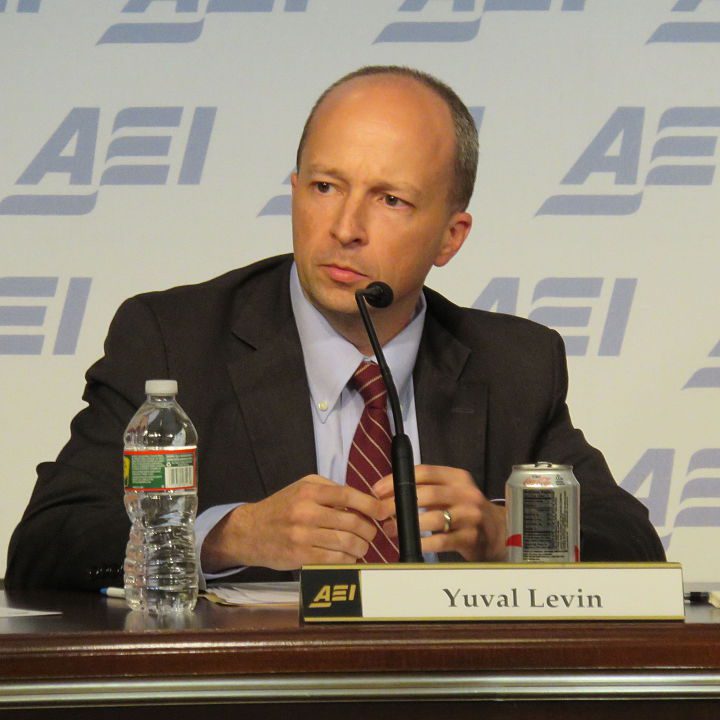
As a reaction to our political polarization and associated dysfunctions, all sides are expressing a yearning for national unity. If we could only all agree! But Yuval Levin says that our problem is not that we can’t agree, but that we can’t disagree constructively. The solution, he says, can be found in the Constitution, which was designed precisely to manage the disagreements in a diverse nation.
He has written a new book entitled American Covenant: How the Constitution Unified Our Nation—and Could Again. Barton Swaim in his review in the Wall Street Journal (behind a paywall) summarizes Levin’s argument this way: “The U.S. Constitution was written to bring together a fractious and disunited nation, so if we’re looking for ways to bring together a fractious and disunited nation, maybe we should consider the U.S. Constitution.”
“The breakdown of political culture in our day,” [Levin] observes in the book, “is not a function of our having forgotten how to agree with each other but of our having forgotten how to disagree constructively.” The framers of the Constitution, he argues, were aware of the dangers both of centralized power and of democracy: They had fought an imperious king a decade before, and in the intervening years they had lived through a democracy so disunited that it fell apart. What they fashioned in 1787 was neither a monarchy nor a libertarian compact but a system whose stability and cohesion arose precisely from the guarantee that its citizens would be forced to deal with each other constantly—always negotiating, competing and forming coalitions.
Swaim went to the American Enterprise Institute in Washington, where Levin is a Senior Fellow, and interviewed him. Levin talked about the difference between politics in most of American history and the way it is today:
“Throughout most of American history,” he says, “there’s a majority party holding a really complicated coalition together. And there’s a minority party trying to build a coalition. They’re both involved in coalition building.” . . .
“Since about the 1990s we’ve had two minority parties, and they don’t actually do a lot of coalition building,” he says. “Mainly they try to get their people out, as if they hold a big majority already and only need turnout. They don’t do much thinking about how they might bring new people to their side. They don’t ask: What can we offer them? What can we do that would bring them in?”
Both liberals and conservatives assume that they are the majority! So that the party that wins in a 51%-49% election governs as if it had a mandate from the people! Only to be indignant that they can’t get their agenda through!
America is actually much more complex and Americans have more nuanced positions than the binary of left and right would account for. The checks and balances of the Constitution and the representative form of government it sets up make it difficult for any one faction to take control and steamroll all of the others. We have to compromise, horse trade, and form shifting coalitions with each other, with everyone respecting the process and following the rule of law. All of this has the effect of moderating the extremes. Thus, our Constitution makes possible, in the words of our national motto, E Pluribus Unum, out of many one. That is to say, a unity of differences. These are real differences, including political differences. But our Constitution holds us together while preserving the dynamism that comes from the clash of ideas.
The Constitution is deliberately not “majoritarian,” in which the majority always rules. Rather, it deliberately thwarts that principle of pure democracy so that minorities and minority positions are protected. Thus, Levin praises the Electoral college:
“Our way of electing chief executives is actually more democratic, not less so, than the parliamentary systems of Europe,” Mr. Levin argues. “The British have had three prime ministers since the last election. Who chose those people? A majority of the majority party in Parliament, like 250 people who all have the same political interest and who all went to the same two universities. That’s not better than the Electoral College.”
Hard as it may be to imagine, Mr. Levin contends, our presidential elections would be more acrimonious and polarized without the Electoral College. “It forces us to fight our political battles in the middle,” he says. Without it, “the Democrats would just focus on California, because there are a lot of people in California, the Republicans would just focus on the South. They would talk only to their own voters. They would not have to talk to each other and they would not have to appeal to the same voters.”
The Electoral College, in other words, “means you can run up your numbers as much as you want in California and the South. If you didn’t win states in the middle—Michigan, say—you didn’t win the election. To win Michigan, you have to speak to the middle of the country. You have to speak about the issues that you are uncomfortable with as a Republican or a Democrat.”
Photo: Yuval Levin by Taylordw – Own work, CC BY-SA 4.0, https://commons.wikimedia.org/w/index.php?curid=43925637
Previous Post

June 26, 2024
What Does "Establishment of Religion" Actually Mean?
Next Post

June 28, 2024 DISCUSSION: From Bitter to Sweet
Recent Comments
"I am told one only gets the $90 if one is on a Supplemental Medicare ..."
On Trump’s Political Ads That You ..."
"I too don't think the $5,000 giveaway will happen, but only because the Trumpublicans won't ..."
On Trump’s Political Ads That You ..."
"Well, large cash give-aways are generally bad policy, but really bad in any of the ..."
On Trump’s Political Ads That You ..."
"Well, we think it pretty much fits my thesis, except I'm not sure whether all ..."
On Trump’s Political Ads That You ..."
Browse Our Archives
Select a Category America Apologetics Art baseball Bible Blog Christ Church crime Culture Economics Education Ethics Family Food Football Government History Holidays Holy Week Humor International Islam Language Law Life Issues Literature Media Medicine Movies Music Nature News Personal Philosophy Politics psychology Reformation Religions Sacraments Science sex Social Science Sports technology television terrorism Theology Uncategorized Vocation war
Select a Month October 2026 September 2026 August 2026 July 2026 June 2026 May 2026 April 2026 March 2026 February 2026 January 2026 December 2025 November 2025 October 2025 September 2025 August 2025 July 2025 June 2025 May 2025 April 2025 March 2025 February 2025 January 2025 December 2024 November 2024 October 2024 September 2024 August 2024 July 2024 June 2024 May 2024 April 2024 March 2024 February 2024 January 2024 December 2023 November 2023 October 2023 September 2023 August 2023 July 2023 June 2023 May 2023 April 2023 March 2023 February 2023 January 2023 December 2022 November 2022 October 2022 September 2022 August 2022 July 2022 June 2022 May 2022 April 2022 March 2022 February 2022 January 2022 December 2021 November 2021 October 2021 September 2021 August 2021 July 2021 June 2021 May 2021 April 2021 March 2021 February 2021 January 2021 December 2020 November 2020 October 2020 September 2020 August 2020 July 2020 June 2020 May 2020 April 2020 March 2020 February 2020 January 2020 December 2019 November 2019 October 2019 September 2019 August 2019 July 2019 June 2019 May 2019 April 2019 March 2019 February 2019 January 2019 December 2018 November 2018 October 2018 September 2018 August 2018 July 2018 June 2018 May 2018 April 2018 March 2018 February 2018 January 2018 December 2017 November 2017 October 2017 September 2017 August 2017 July 2017 June 2017 May 2017 April 2017 March 2017 February 2017 January 2017 December 2016 November 2016 October 2016 September 2016 August 2016 July 2016 June 2016 May 2016 April 2016 March 2016 February 2016 January 2016 December 2015 November 2015 October 2015 September 2015 August 2015 July 2015 June 2015 May 2015 April 2015 March 2015 February 2015 January 2015 December 2014 November 2014 October 2014 September 2014 August 2014 July 2014 June 2014 May 2014 April 2014 March 2014 February 2014 January 2014 December 2013 November 2013 October 2013 September 2013 August 2013 July 2013 June 2013 May 2013 April 2013 March 2013 February 2013 January 2013 December 2012 November 2012 October 2012 September 2012 August 2012 July 2012 June 2012 May 2012 April 2012 March 2012 February 2012 January 2012 December 2011 November 2011 October 2011 September 2011 August 2011 July 2011 June 2011 May 2011 April 2011 March 2011 February 2011 January 2011 December 2010 November 2010 October 2010 September 2010 August 2010 July 2010 June 2010 May 2010 April 2010 March 2010 February 2010 January 2010 December 2009 November 2009 October 2009 September 2009 August 2009 July 2009 June 2009 May 2009 April 2009 March 2009 February 2009 January 2009 December 2008 November 2008 October 2008 September 2008 August 2008 July 2008 June 2008 May 2008 April 2008 March 2008 February 2008 January 2008 December 2007 November 2007 October 2007
Follow Us!
TAKE THE
Religious Wisdom Quiz
Who was the major prophet during King Hezekiah's reign in Judah?
Select your answer to see how you score.
Daniel Ezekiel Jeremiah Isaiah
Books by This Author Books by Gene Veith
Related posts from Cranach


On Trump's Political Ads That You Paid For

As Fulton Sheen Is Beatified, Don't Forget Walter...
TRENDING AT PATHEOS Evangelical

Janie Learns the Way of the Cross: A...
Teaching children about Jesus' Passion can be challenging. Many parents and educators...

Looking For Good Catholic Writing - October 2026
He alone extends the heavens, and he walks upon the waves of...

In "Irreplaceable," our book on vocation and technology, Trevor Sutton and I...

I was strolling through the top floor of the brand new Parthenon...

What Does Gêvâh Mean For Kimberley Guifoyle &...
This week, a lot of the news is focused on Kimberly Guilfoyle....

INNER CIRCLE: Profound Mystery (Of Christ In All...
Ephesians 5:31-32 “For this reason, a man will leave his father and...
view all Evangelical blogs
What Are Your Thoughts?leave a comment
Ad-Free & Subscriber Log-In Subscription Support
- About Us
- 2026 Calendar
- Videos
- Podcasts
- Library of World Religions
- Faith In Media Tracker
- Advertise With Us
- Write for Us
- Privacy Policy
- Terms of Service
- Do Not Sell My Data
- Contact Us
- Radiant Digital
- Manage Newsletter Subscriptions
- Unsubscribe From Notifications
- Sitemap
Copyright 2008-2026, Patheos. All rights reserved.
Subscription Support Ad-Free & Subscriber Log-In
Follow Patheos