
BuddhistCatholicContemplativeEvangelicalGeneral ChristianHinduJewishLatter-day SaintMuslimNew VisionsProgressive Christian
Beliefs
- Buddhist
- Catholic
- Contemplative
- Evangelical
- General Christian
- Hindu
- Jewish
- Latter-day Saint
- More Voices
- Muslim
- New Visions
- Pagan
- Progressive Christian
Topics
- Religion News
- Food and Religion
- Sports and Religion
- Religious Art
- Religious Music and Entertainment
- Religious Events
- History and Religion
- Style and Religion
- Politics and Religion
- Women in Religion
- Recreation Outdoors and Religion
- Business Finance and Religion
- Careers Workplace and Religion
- Education and Religion
- Family Parenting and Religion
- Health Fitness and Religion
- Home and Religion
- Relationships and Religion
- Technology and Religion
- Travel and Religion
Columnists
- Buddhist Columnists
- Business Finance and Religion Columnists
- Careers Workplace and Religion Columnists
- Catholic Columnists
- Contemplative Columnists
- Education and Religion Columnists
- Evangelists Columnists
- Family Parenting and Religion Columnists
- General Christian Columnists
- Health Fitness and Religion Columnists
- Hindu Columnists
- History and Religion Columnists
- Home and Religion Columnists
- Jewish Columnists
- More Voices Columnists
- Latter Day Columnists
- Muslim Columnists
- New Visions Columnists
- Nonreligious Columnists
- Pagan Columnists
- Politics and Religion Columnists
- Progressive Columnists
- Recreation Outdoors and Religion Columnists
- Relationships and Religion Columnists
- Religion News Columnists
- Religious Art Columnists
- Religious Events Columnists
- Religious Music and Entertainment Columnists
- Sports and Religion Columnists
- Style and Religion Columnists
- Technology and Religion Columnists
- Travel and Religion Columnists
- Women in Religion Columnists
Resource Library
- 2026 Calendar
- Library of World Religions
- The 100 Most Holy Places on Earth
- Patheos Answers
- Podcasts
- Videos
- Faith Leaders Database
- Anglican Episcopalian
- Bahai
- Baptist
- Buddhism
- Christianity
- Confucianism
- Eastern Orthodoxy
- Hinduism
- Holiness and Pentecostal
- ISKCON
- Islam
- Judaism
- Lutheran
- Methodist
- The Church of Jesus Christ of Latter-day Saints
- New Age
- Paganism
- Presbytarian and Reformed
- Protestantism
- Religion Behind the Scenes
- Roman Catholic
- Scientology
- Shia Islam
- Sikhism
- Sufism
- Sunni Islam
- Taoism
- Zen
- See all religions
Research Tools
 Ad-Free & Subscriber Log-In Subscription Support
Follow Patheos 

- Trending:
- Advent
- |
- Forgiveness
- |
- Thanksgiving
- |
- Election
- |
- Seasonal Holidays
- |
- Marriage

- Home
- Evangelical
- Politics and Religion
- Christian Atheism
Christian Atheism
Last updated on: May 22, 2024 at 6:00 am by Gene Veith
Christian Atheism 2024-05-15T22:27:26-04:00 Gene Veith
Patheos Explore the world's faith through different perspectives on religion and spirituality! Patheos has the views of the prevalent religions and spiritualities of the world.
Yesterday we posted about people who do not believe in God but are not atheists. Today we are posting about atheists who (sort of) believe in Christianity.
Many intellectuals are taking to heart the scholarship of Tom Holland, whose book Dominion: How the Christian Revolution Remade the World shows how the humane and democratic values that we take for granted today and that virtually all sides agree on–such as human equality, the value of peace over war, compassion for the weak, etc.–derive from Christianity alone and cannot be found in classical paganism or anywhere else. Those intellectuals typically do not believe in God, but they recognize the importance of that Christian legacy, especially as it is currently being threatened by radical Islam and the new illiberal authoritarianism.
So they are claiming that, while they are atheists, they are “cultural Christians.” Even Richard Dawkins, one of the most prominent of the “New Atheists” of a few years ago, recently said, “I call myself a cultural Christian. I’m not a believer, but there’s a distinction between being a believing Christian and being a cultural Christian.” He went on to say that “If I had to choose between Christianity and Islam, I’d choose Christianity every single time. It seems to me to be a fundamentally decent religion in a way that I think Islam is not.”
I like the rejoinders quoted at Breakpoint: “Rod Dreher pointed out that for Dawkins to claim he likes cathedrals and Christmas carols but is glad church attendance is declining is like saying he enjoys eating but is glad his country’s farms are closing.” And Tom Holland said, “Secularism & Dawkins’ own brand of evangelical atheism are both expressions of a specifically Christian culture—as Dawkins himself, sitting on the branch he’s been sawing through and gazing nervously at the ground far below, seems to have begun to realise.”
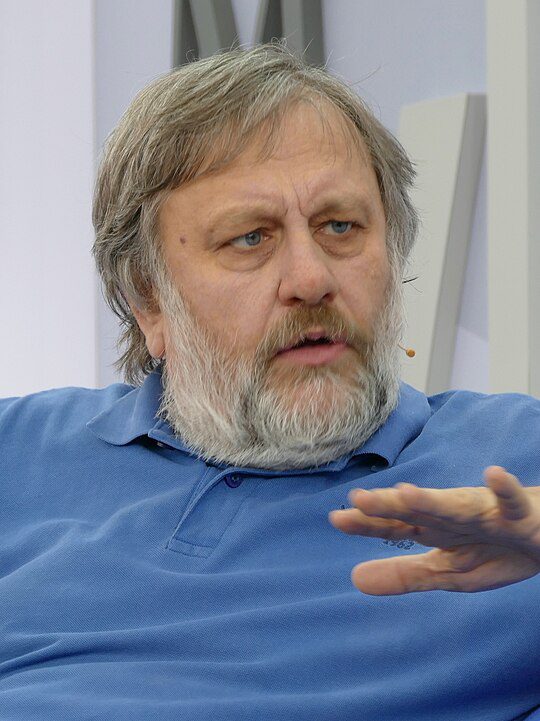
My fellow Patheos blogger Michael Jimenez, in the post I referenced in our Friday discussion “Then I Prefer My Mother” put me onto another “Christian atheist” whose concerns are actually philosophical, even (sort of) theological, the Slovenian philosopher Slavoj Žižek. He is a true atheist, a dialectical materialist and a Communist, no less. But he also draws on what he sees as the philosophy of the Apostle Paul and emphasizes the doctrine of God’s incarnation in Jesus Christ.
Let’s let Wikipedia explain his tortured thinking:
Žižek has asserted that “Atheism is a legacy worth fighting for” in The New York Times. However, he nonetheless finds extensive conceptual value in Christianity, particularly Protestantism: the subtitle of his 2000 book The Fragile Absolute is “Or, Why Is the Christian Legacy Worth Fighting For?”. Hence, he labels his position ‘Christian Atheism‘, and has written about theology at length.
In The Pervert’s Guide to Ideology, Žižek suggests that “the only way to be an Atheist is through Christianity”, since, he claims, atheism often fails to escape the religious paradigm by remaining faithful to an external guarantor of meaning, simply switching God for natural necessity or evolution. Christianity, on the other hand, in the doctrine of the incarnation, brings God down from the ‘beyond’ and onto earth, into human affairs; for Žižek, this paradigm is more authentically godless, since the external guarantee is abolished.
So only through Christ can anyone be “authentically godless”!
Žižek has just published a book to this effect: Christian Atheism: How to Be a Real Materialist. Here is the editorial description from Amazon:
Slavoj Žižek has long been a commentator on, and critic of, Christian theology. His preoccupation with Badiou’s concept of ‘the event’ alongside the Pauline thought of the New Testament has led to a decidedly theological turn in his thinking. Drawing on traditions and subjects as broad as Buddhist thought, dialectical materialism, political subjectivity, quantum physics, AI and chatbots, this book articulates Žižek’s idea of a religious life for the first time.
Christian Atheism is a unique insight into Žižek’s theological project and the first book-length exploration of his religious thinking. In his own words, “to become a true dialectical materialist, one should go through the Christian experience.” Crucial to his whole conception of ‘experience’ is not some kind of spiritual revelation but rather the logic of materialistic thought. This affirmation of Christian theology whilst simultaneously deconstructing it is a familiar Žižekian move, but one that holds deep-seated political, philosophical and, in the end, personal import for him. Here is Žižek’s most extensive treatment of theology and religion to date.
And here is the table of contents from the publisher:
Introduction: Why True Atheism HAS to be Indirect
- Let a Religion Deplete Itself
- Why Lacan is not a Buddhist
- From Superpositions to Athings
- The Sacred, The Obscene, and the Undead
- Neque Homo Neque Deus Neque Natura
- Why Politics is Immanently Theological
Conclusion: The Need for Psychoanalysis
What strikes me from this odd melange is his Chapter 5, with the Latin saying “Neither man, nor God, nor nature.” As I understand him, Žižek seeks an atheism and a materialism completely ungrounded by anything, with no “external guarantor of meaning.” We ought to ground ourselves neither on man (as the humanists do), on God (as religious people do), nor on nature (as the scientific rationalists do). Presumably, this is the atheist version of walking by faith.
The problem, though, is that Žižek here cuts off the quotation. “Neither man, nor God, nor nature” is a partial quote from Tertullian (c. 155 – c. 220 AD), who for all his faults was the first major Christian apologist. The full quotation is “Neither man, nor God, nor nature lie” (neque deus neque natura mentitur).
Tertullian was arguing that if you honestly consider “man,” specifically, your own human soul, you will come to the truth of Christianity. If you honestly consider “God,” you will come to the truth of Christianity. If you honestly consider nature, you will come to the truth of Christianity.
Listen to him, from On the Testimony of the Soul (De testimonio animae). He argues that whatever you believe about the soul–whether you think it’s divine and eternal, or just a product of material atoms (sound familiar?)–it will not lie, but rather will lead you to the truth:
Now I invoke a new witness better known than any literature, more compelling than any theory, more widely circulated than any publication, greater than the fullness of man – which is to say the very sum of man. O soul, step forth into our midst whether you are divine and eternal as many philosophers attest. All the more would you not lie! Or whether you are not divine, since you are material as only Epicurus suggests. All the more you ought not to lie. Whether you are received from heaven or conceived from the earth; whether you are assembled from numbers or atoms; whether you originate with the body; whether you are introduced into the body after birth. However you originate, you make of mankind a rational animal, supremely receptive to awareness and knowledge.
Tertullian goes on, exploring the relationship between the soul, nature, and God:
Go ahead and believe in your literary sources; even more believe in our divine sources. But as for the insight of the soul, believe in Nature. Select whichever of these you believe to be the faithful sister of the truth. If you have doubts as to your own sources, be assured that neither God nor Nature lie [neque deus neque natura mentitur]. In order that you may believe in both Nature and in God, believe in the soul. So it shall come to pass that you will believe in yourself. It is the soul you value as having made you as great as you are. . . .
God is everywhere and the goodness of God is everywhere. . . ..The awareness of death is everywhere. . . and the testimony of the soul is everywhere . . . .Rightly then, every soul is both defendant and witness – as much a defendant against the charge of error as a witness to the truth. And she will stand before the court of God on the day of judgment with nothing to say.
Bracing, is it not? And far less tortured than the Christian atheist. Žižek is saying that man, God, and the self do lie, so that we should never ground our lives on them. Tertullian is saying they do not lie. Tertullian is affirming all of existence because it points to God. Žižek is repudiating all of existence because it points to God.
Photo: Slavoj Žižek by Amrei-Marie – Own work, CC BY-SA 4.0, https://commons.wikimedia.org/w/index.php?curid=119893485
Previous Post

May 21, 2024
Why Are So Few "Nones" Atheists?
Next Post

May 23, 2024 Conservatives Conserving a Liberal Status Quo
Recent Comments
"Can we teach the AI to play tic-tac-toe and develop a winning strategy?"
"Yes, people are saying......"
"Not that I'm aware of. I'm simply sharing the cryptic comments of those who know ..."
"David, as you, I have been involved with computer program development for a very long ..."
Browse Our Archives
Select a Category America Apologetics Art baseball Bible Blog Christ Church crime Culture Economics Education Ethics Family Food Football Government History Holidays Holy Week Humor International Islam Language Law Life Issues Literature Media Medicine Movies Music Nature News Personal Philosophy Politics psychology Reformation Religions Sacraments Science sex Social Science Sports technology television terrorism Theology Uncategorized Vocation war
Select a Month November 2026 October 2026 September 2026 August 2026 July 2026 June 2026 May 2026 April 2026 March 2026 February 2026 January 2026 December 2025 November 2025 October 2025 September 2025 August 2025 July 2025 June 2025 May 2025 April 2025 March 2025 February 2025 January 2025 December 2024 November 2024 October 2024 September 2024 August 2024 July 2024 June 2024 May 2024 April 2024 March 2024 February 2024 January 2024 December 2023 November 2023 October 2023 September 2023 August 2023 July 2023 June 2023 May 2023 April 2023 March 2023 February 2023 January 2023 December 2022 November 2022 October 2022 September 2022 August 2022 July 2022 June 2022 May 2022 April 2022 March 2022 February 2022 January 2022 December 2021 November 2021 October 2021 September 2021 August 2021 July 2021 June 2021 May 2021 April 2021 March 2021 February 2021 January 2021 December 2020 November 2020 October 2020 September 2020 August 2020 July 2020 June 2020 May 2020 April 2020 March 2020 February 2020 January 2020 December 2019 November 2019 October 2019 September 2019 August 2019 July 2019 June 2019 May 2019 April 2019 March 2019 February 2019 January 2019 December 2018 November 2018 October 2018 September 2018 August 2018 July 2018 June 2018 May 2018 April 2018 March 2018 February 2018 January 2018 December 2017 November 2017 October 2017 September 2017 August 2017 July 2017 June 2017 May 2017 April 2017 March 2017 February 2017 January 2017 December 2016 November 2016 October 2016 September 2016 August 2016 July 2016 June 2016 May 2016 April 2016 March 2016 February 2016 January 2016 December 2015 November 2015 October 2015 September 2015 August 2015 July 2015 June 2015 May 2015 April 2015 March 2015 February 2015 January 2015 December 2014 November 2014 October 2014 September 2014 August 2014 July 2014 June 2014 May 2014 April 2014 March 2014 February 2014 January 2014 December 2013 November 2013 October 2013 September 2013 August 2013 July 2013 June 2013 May 2013 April 2013 March 2013 February 2013 January 2013 December 2012 November 2012 October 2012 September 2012 August 2012 July 2012 June 2012 May 2012 April 2012 March 2012 February 2012 January 2012 December 2011 November 2011 October 2011 September 2011 August 2011 July 2011 June 2011 May 2011 April 2011 March 2011 February 2011 January 2011 December 2010 November 2010 October 2010 September 2010 August 2010 July 2010 June 2010 May 2010 April 2010 March 2010 February 2010 January 2010 December 2009 November 2009 October 2009 September 2009 August 2009 July 2009 June 2009 May 2009 April 2009 March 2009 February 2009 January 2009 December 2008 November 2008 October 2008 September 2008 August 2008 July 2008 June 2008 May 2008 April 2008 March 2008 February 2008 January 2008 December 2007 November 2007 October 2007
Give A Subscription
Follow Us!
TAKE THE
Religious Wisdom Quiz
How many days was Jesus tempted in the wilderness?
Select your answer to see how you score.
40 days 30 days 50 days 60 days
Books by This Author Books by Gene Veith
Related posts from Cranach

The Contingency of Our Technology
A Scientist on the Location of Heaven
A Catholic Century or an Evangelical Century?
TRENDING AT PATHEOS Evangelical

Smart people saying smart things (11.24.26)
Please take time to listen to Perry Bacon, Sarah Posner, Adam Serwer,...

The Contingency of Our Technology
Last week we were hit with a raft of massive technology outages....

In 1939, President Franklin D. Roosevelt moved Thanksgiving from November 30 to...

Reasons for Restraint: Ricardo Gonzalez, Florida and Dec...
The Morning of January 3 I begin with the dead. On the...

I published this column for Thanksgiving 2012 in the Deseret News....

For many years, Catholicism has been caught up in division over the...
view all Evangelical blogs
What Are Your Thoughts?leave a comment
Ad-Free & Subscriber Log-In Subscription Support
- About Us
- 2026 Calendar
- Videos
- Podcasts
- Library of World Religions
- Faith In Media Tracker
- Advertise With Us
- Write for Us
- Privacy Policy
- Terms of Service
- Do Not Sell My Data
- Contact Us
- Radiant Digital
- Manage Newsletter Subscriptions
- Unsubscribe From Notifications
- Sitemap
Copyright 2008-2026, Patheos, part of the Radiant Digital network of media brands. All rights reserved.
Subscription Support Ad-Free & Subscriber Log-In
Follow Patheos