
BuddhistCatholicContemplativeEvangelicalGeneral ChristianHinduJewishLatter-day SaintMuslimNew VisionsProgressive Christian
Beliefs
- Buddhist
- Catholic
- Contemplative
- Evangelical
- General Christian
- Hindu
- Jewish
- Latter-day Saint
- More Voices
- Muslim
- New Visions
- Pagan
- Progressive Christian
Topics
- Religion News
- Food and Religion
- Sports and Religion
- Religious Art
- Religious Music and Entertainment
- Religious Events
- History and Religion
- Style and Religion
- Politics and Religion
- Women in Religion
- Recreation Outdoors and Religion
- Business Finance and Religion
- Careers Workplace and Religion
- Education and Religion
- Family Parenting and Religion
- Health Fitness and Religion
- Home and Religion
- Relationships and Religion
- Technology and Religion
- Travel and Religion
Columnists
- Buddhist Columnists
- Business Finance and Religion Columnists
- Careers Workplace and Religion Columnists
- Catholic Columnists
- Contemplative Columnists
- Education and Religion Columnists
- Evangelists Columnists
- Family Parenting and Religion Columnists
- General Christian Columnists
- Health Fitness and Religion Columnists
- Hindu Columnists
- History and Religion Columnists
- Home and Religion Columnists
- Jewish Columnists
- More Voices Columnists
- Latter Day Columnists
- Muslim Columnists
- New Visions Columnists
- Nonreligious Columnists
- Pagan Columnists
- Politics and Religion Columnists
- Progressive Columnists
- Recreation Outdoors and Religion Columnists
- Relationships and Religion Columnists
- Religion News Columnists
- Religious Art Columnists
- Religious Events Columnists
- Religious Music and Entertainment Columnists
- Sports and Religion Columnists
- Style and Religion Columnists
- Technology and Religion Columnists
- Travel and Religion Columnists
- Women in Religion Columnists
Resource Library
- 2026 Calendar
- Library of World Religions
- The 100 Most Holy Places on Earth
- Patheos Answers
- Podcasts
- Videos
- Faith Leaders Database
- Anglican Episcopalian
- Bahai
- Baptist
- Buddhism
- Christianity
- Confucianism
- Eastern Orthodoxy
- Hinduism
- Holiness and Pentecostal
- ISKCON
- Islam
- Judaism
- Lutheran
- Methodist
- The Church of Jesus Christ of Latter-day Saints
- New Age
- Paganism
- Presbytarian and Reformed
- Protestantism
- Religion Behind the Scenes
- Roman Catholic
- Scientology
- Shia Islam
- Sikhism
- Sufism
- Sunni Islam
- Taoism
- Zen
- See all religions
Research Tools
 Ad-Free & Subscriber Log-In Subscription Support
Ad-Free & Subscriber Log-In Subscription Support
Follow Patheos 

- Trending:
- Forgiveness
- |
- Marriage
- |
- Consciousness
- |
- Death Penalty
- |
- Election
- |
- Halloween

- Home
- Evangelical
- Politics and Religion
- The Man Who Predicted Our Technology and Its Impact
The Man Who Predicted Our Technology and Its Impact
Last updated on: March 8, 2024 at 6:00 am by Gene Veith
The Man Who Predicted Our Technology and Its Impact 2024-03-06T13:11:37-05:00 Gene Veith
Patheos Explore the world's faith through different perspectives on religion and spirituality! Patheos has the views of the prevalent religions and spiritualities of the world.
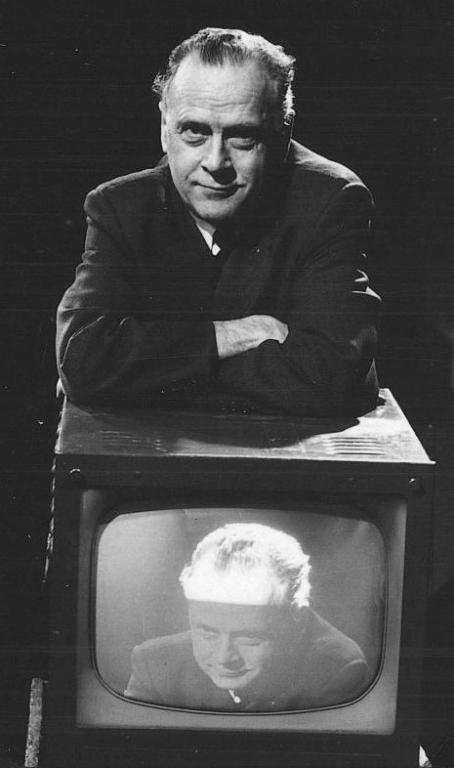
Here at the Cranach blog we like to not only predict things but check our predictions, as in our New Year’s custom. The contrarian site The Free Press has started a custom of its own by highlighting every week a “prophet” whose predictions have come true. It starts off with a fascinating article by Benjamin Carlson on Marshall McLuhan.
As I remember well, back in the Sixties, McLuhan (1911-1980) became one of those “new thinkers” who created the impression that this is the dawning of the Age of Aquarius. His analysis of “media,” in particular the emergent electronic media, was so “mind-blowing” it was nearly psychedelic. It heralded a utopian future of a “global village” in which all humanity is connected, thanks to technology.
Never mind that McLuhan, a Canadian who taught for awhile at St. Louis University, was a devout conservative Catholic who wrote his dissertation on the Classical Trivium (available at the link) and decried many of the changes he saw coming.
I’d like to show you some of the passages that Carlson discusses. Keep in mind that when McLuhan analyzed electronic media he was mainly thinking of television and the telephone. He died in 1980, long before the internet and artificial intelligence were gleams in anyone’s eye. And yet he was saying things like this, from a television interview:
Everybody has become porous. They’ve got the light and the messages go right through us. By the way, at this moment we are on the air, and on the air we do not have any physical body. When you’re on the telephone, or on radio, or on TV, you don’t have a physical body. You’re just an image on the air. When you don’t have a physical body you’re a discarnate being. You have a very different relation to the world around you. And this, I think, has been one of the big effects of the electric age. It has deprived people, really, of their private identity. Everybody tends to merge his identity with other people at the speed of light. It’s called being mass man.
And now we have social media, virtual reality, and avatars! No wonder people are confused about their identity! No wonder the body doesn’t matter anymore for the transgendered, those for whom pornography replaces sex, and the spiritual-but-not-religious!
He also said this, underscoring that the “global village,” a term he coined, is not necessarily going to be a happy place:
Global village is not created by the motor car or even by the airplane. It’s created by instant electronic information movement. The global village is at once as wide as the planet and as small as a little town where everybody is maliciously engaged and poking his nose into everybody else’s business. The global village is a world in which you don’t necessarily have harmony. You have extreme concern with everybody else’s business. And much involvement in everybody else’s life.
Is there a better description of Facebook, Twitter [a.k.a., X], Instagram, TikTok, and the social media world in general?
And this, from his ground-breaking book Understanding Media:
Today, after more than a century of electric technology, we have extended our central nervous system itself in a global embrace, abolishing both space and time as far as our planet is concerned. Rapidly, we approach the final phase of the extensions of man—the technological simulation of consciousness, when the creative process of knowing will be collectively and corporately extended to the whole of human society, much as we have already extended our senses and our nerves by the various media.
This was first published in 1964! Sixty years ago, thirty years before the worldwide web, McLuhan foresaw “the final phase of the extensions of man” (cf. the singularity): “the technological simulation of consciousness.” That is to say, Artificial Intelligence (which McLuhan is careful to say is not consciousness but the “simulation of consciousness.”)
Carlson summarizes other prescient sections of Understanding Media:
In Chapter 32, “Weapons: War of the Icons,” he anticipates a form of meme warfare, where a battle of information and images take the place of most “hot” wars.
And in the last chapter, “Automation: Learning a Living,”he foresees that in a time of automation, “it is not only jobs that disappear, and complex roles that reappear,” but also whole specialized fields in education that vanish. The result, he writes with uncanny prescience, is a blending of work and leisure, the globalization of manufacturing, the monetization of information, a rise in self-employment, and a necessity to repeatedly retrain for skills in a career.
“It is a principal aspect of the electric age that it establishes a global network that has much of the character of our central nervous system,” he writes, thereby “enabling us to react to the world as a whole.”
That last part has me worried lest this be a prediction with a fulfillment yet to come. A central nervous system also has a controlling brain.
The global village in many ways, McLuhan suggested, will involve a reversion to a pre-literate culture and thus to different kinds of primitivism. So will the global village that is the entire world connected into a central nervous system of electronic media be ruled by a global monarch? Or an authoritarian technological collective that controls the world and does everyone’s thinking for them?
Photo by Gotfryd, Bernard, photographer – Marshall McLuhan, half-length portrait, standing, leaning on television set on which his image appears, Public Domain, https://commons.wikimedia.org/w/index.php?curid=119903792
Previous Post

March 8, 2024
DISCUSSION: We Now Have a Ticket
Next Post

March 11, 2024 Monday Miscellany 3/11/24
Recent Comments
"As a (retired) lawyer I see potential liability from sharing things like power or sharp ..."
"I am not sure the items you mentioned, though disused, discontinued, discarded, could be considered ..."
"“Friend, use me in your relations with your neighbor just as you would want your ..."
"Archaeology: It's the case that we don't have to go back very far to discover ..."
Browse Our Archives
Select a Category America Apologetics Art baseball Bible Blog Christ Church crime Culture Economics Education Ethics Family Food Football Government History Holidays Holy Week Humor International Islam Language Law Life Issues Literature Media Medicine Movies Music Nature News Personal Philosophy Politics psychology Reformation Religions Sacraments Science sex Social Science Sports technology television terrorism Theology Uncategorized Vocation war
Select a Month October 2026 September 2026 August 2026 July 2026 June 2026 May 2026 April 2026 March 2026 February 2026 January 2026 December 2025 November 2025 October 2025 September 2025 August 2025 July 2025 June 2025 May 2025 April 2025 March 2025 February 2025 January 2025 December 2024 November 2024 October 2024 September 2024 August 2024 July 2024 June 2024 May 2024 April 2024 March 2024 February 2024 January 2024 December 2023 November 2023 October 2023 September 2023 August 2023 July 2023 June 2023 May 2023 April 2023 March 2023 February 2023 January 2023 December 2022 November 2022 October 2022 September 2022 August 2022 July 2022 June 2022 May 2022 April 2022 March 2022 February 2022 January 2022 December 2021 November 2021 October 2021 September 2021 August 2021 July 2021 June 2021 May 2021 April 2021 March 2021 February 2021 January 2021 December 2020 November 2020 October 2020 September 2020 August 2020 July 2020 June 2020 May 2020 April 2020 March 2020 February 2020 January 2020 December 2019 November 2019 October 2019 September 2019 August 2019 July 2019 June 2019 May 2019 April 2019 March 2019 February 2019 January 2019 December 2018 November 2018 October 2018 September 2018 August 2018 July 2018 June 2018 May 2018 April 2018 March 2018 February 2018 January 2018 December 2017 November 2017 October 2017 September 2017 August 2017 July 2017 June 2017 May 2017 April 2017 March 2017 February 2017 January 2017 December 2016 November 2016 October 2016 September 2016 August 2016 July 2016 June 2016 May 2016 April 2016 March 2016 February 2016 January 2016 December 2015 November 2015 October 2015 September 2015 August 2015 July 2015 June 2015 May 2015 April 2015 March 2015 February 2015 January 2015 December 2014 November 2014 October 2014 September 2014 August 2014 July 2014 June 2014 May 2014 April 2014 March 2014 February 2014 January 2014 December 2013 November 2013 October 2013 September 2013 August 2013 July 2013 June 2013 May 2013 April 2013 March 2013 February 2013 January 2013 December 2012 November 2012 October 2012 September 2012 August 2012 July 2012 June 2012 May 2012 April 2012 March 2012 February 2012 January 2012 December 2011 November 2011 October 2011 September 2011 August 2011 July 2011 June 2011 May 2011 April 2011 March 2011 February 2011 January 2011 December 2010 November 2010 October 2010 September 2010 August 2010 July 2010 June 2010 May 2010 April 2010 March 2010 February 2010 January 2010 December 2009 November 2009 October 2009 September 2009 August 2009 July 2009 June 2009 May 2009 April 2009 March 2009 February 2009 January 2009 December 2008 November 2008 October 2008 September 2008 August 2008 July 2008 June 2008 May 2008 April 2008 March 2008 February 2008 January 2008 December 2007 November 2007 October 2007
Follow Us!
TAKE THE
Religious Wisdom Quiz
What did Esther risk by approaching the king without being summoned?
Select your answer to see how you score.
Her fortune Her reputation Her citizenship Her life
Books by This Author Books by Gene Veith
Related posts from Cranach



Our New Book on Technology & Vocation

Gen Z Wants Evildoers to Be Punished, Not...
TRENDING AT PATHEOS Evangelical

How to Make a Decision When You Can't...
Main point: It’s much more valuable to stay close to God so...

Archdiocese Hosts Military Marriage Retreat in Germany
RASTATT, Germany — The transient military lifestyle, with its frequent deployments and...

Nearly every morning, I make the drive to Detroit with my high-school-age...

The Real AI Story Is Adoption Without Trust
Artificial intelligence has crossed a political threshold. It is no longer a...

A new article, written by Jeff Lindsay and Gale L. Pooley,...

Swimfan: Forgotten Aughts Pleasures
This is a recovery effort. In 2002, My Big Fat Greek Wedding...
view all Evangelical blogs
What Are Your Thoughts?leave a comment
Ad-Free & Subscriber Log-In Subscription Support
- About Us
- 2026 Calendar
- Videos
- Podcasts
- Library of World Religions
- Faith In Media Tracker
- Advertise With Us
- Write for Us
- Privacy Policy
- Terms of Service
- Do Not Sell My Data
- Contact Us
- Radiant Digital
- Manage Newsletter Subscriptions
- Unsubscribe From Notifications
- Sitemap
Copyright 2008-2026, Patheos. All rights reserved.
Subscription Support Ad-Free & Subscriber Log-In
Follow Patheos