
BuddhistCatholicContemplativeEvangelicalGeneral ChristianHinduJewishLatter-day SaintMuslimNew VisionsProgressive Christian
Beliefs
- Buddhist
- Catholic
- Contemplative
- Evangelical
- General Christian
- Hindu
- Jewish
- Latter-day Saint
- More Voices
- Muslim
- New Visions
- Pagan
- Progressive Christian
Topics
- Religion News
- Food and Religion
- Sports and Religion
- Religious Art
- Religious Music and Entertainment
- Religious Events
- History and Religion
- Style and Religion
- Politics and Religion
- Women in Religion
- Recreation Outdoors and Religion
- Business Finance and Religion
- Careers Workplace and Religion
- Education and Religion
- Family Parenting and Religion
- Health Fitness and Religion
- Home and Religion
- Relationships and Religion
- Technology and Religion
- Travel and Religion
Columnists
- Buddhist Columnists
- Business Finance and Religion Columnists
- Careers Workplace and Religion Columnists
- Catholic Columnists
- Contemplative Columnists
- Education and Religion Columnists
- Evangelists Columnists
- Family Parenting and Religion Columnists
- General Christian Columnists
- Health Fitness and Religion Columnists
- Hindu Columnists
- History and Religion Columnists
- Home and Religion Columnists
- Jewish Columnists
- More Voices Columnists
- Latter Day Columnists
- Muslim Columnists
- New Visions Columnists
- Nonreligious Columnists
- Pagan Columnists
- Politics and Religion Columnists
- Progressive Columnists
- Recreation Outdoors and Religion Columnists
- Relationships and Religion Columnists
- Religion News Columnists
- Religious Art Columnists
- Religious Events Columnists
- Religious Music and Entertainment Columnists
- Sports and Religion Columnists
- Style and Religion Columnists
- Technology and Religion Columnists
- Travel and Religion Columnists
- Women in Religion Columnists
Resource Library
- 2026 Calendar
- Library of World Religions
- The 100 Most Holy Places on Earth
- Patheos Answers
- Podcasts
- Videos
- Faith Leaders Database
- Anglican Episcopalian
- Bahai
- Baptist
- Buddhism
- Christianity
- Confucianism
- Eastern Orthodoxy
- Hinduism
- Holiness and Pentecostal
- ISKCON
- Islam
- Judaism
- Lutheran
- Methodist
- The Church of Jesus Christ of Latter-day Saints
- New Age
- Paganism
- Presbytarian and Reformed
- Protestantism
- Religion Behind the Scenes
- Roman Catholic
- Scientology
- Shia Islam
- Sikhism
- Sufism
- Sunni Islam
- Taoism
- Zen
- See all religions
Research Tools
 Ad-Free & Subscriber Log-In Subscription Support
Ad-Free & Subscriber Log-In Subscription Support
Follow Patheos 

- Trending:
- Forgiveness
- |
- Marriage
- |
- Consciousness
- |
- Death Penalty
- |
- Election
- |
- Halloween

- Home
- Evangelical
- Politics and Religion
- Sasse’s “This Is My Body”
Sasse’s “This Is My Body”
Last updated on: March 28, 2024 at 8:50 am by Gene Veith
Sasse’s “This Is My Body” 2024-03-28T08:50:01-04:00 Gene Veith
Patheos Explore the world's faith through different perspectives on religion and spirituality! Patheos has the views of the prevalent religions and spiritualities of the world.
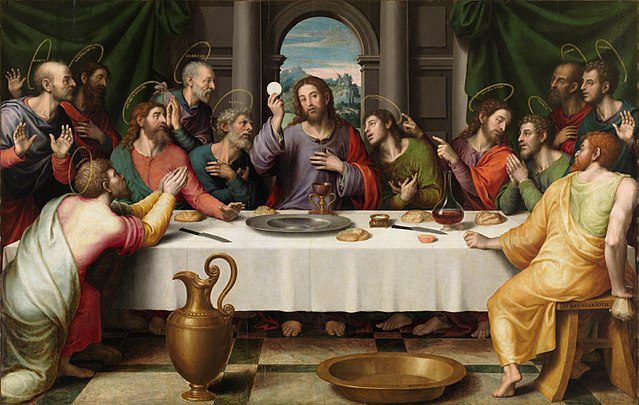
One of my Lenten disciplines, which I’ve practiced for years, is to read a book of heavy-duty theology. Sometimes this has amounted to a mortification of the flesh (sorry, St. Thomas Aquinas!). But the exercise this year has been an education, a stimulation, and a joy. I read Hermann Sasse’s This Is My Body: Luther’s Contention for the Real Presence in the Sacrament of the Altar. I could hardly put it down.
Hermann Sasse (1885-1976) is described in his Wikipedia entry as “one of the foremost confessional Lutheran theologians of the 20th century.” A theology professor at the University of Erlangen in Germany, Sasse vocally opposed Hitler, the Nazis, and the “German Christian” movement that sought to synthesize Nazi paganism with Christianity–to the point of wanting to remove the Old Testament from the Bible because it was “Jewish”–which took over the state church. Sasse became a leader in the “confessing church” and he authored with Dietrich Bonhoeffer the Bethel Confession, which, among various doctrinal affirmations, attacked the Nazi mistreatment of the Jews. (He did not, however, sign the later Barmen Declaration because it was being used as the basis for church union, despite the differences between the Lutheran and the Reformed confessions.) He broke completely with the state church and joined the the Free Lutherans, a small, independent, confessional church body connected with the “Old Lutherans.” The Wikipedia article says that he survived the Nazi regime because of his popularity with students and because he was protected by the Erlangen dean.
After the war, he accepted a call to teach at the Lutheran seminary in Adelaide, Australia. (The day after he accepted that call, he received another call from Concordia Seminary in St. Louis.)
Sasse wrote This Is My Body in English and it was published by Augsburg Publishing House in 1959. It focuses on Luther’s belief in the Real Presence of Christ in Holy Communion and his controversy with Zwingli. But its scope is much greater than that. Sasse explores what Christians have believed about the Sacrament from the time of the early church, through the Middle Ages, during the Reformation, and on into the modern world.
He notes that “No theologian of the Ancient Church ever doubted that, according to the words of institution, the consecrated bread is the body and the consecrated wine is the blood of Christ.” There was no consensus, though, in the early church about how that was to be explained. Ambrose taught that the bread and wine were changed into the body and blood of Christ, foreshadowing the later Roman Catholic teaching of transubstantiation. Augustine, while affirming the Real Presence, stressed that the sacraments were signs, foreshadowing the beliefs of Zwingli and later Protestants that the sacraments are merely symbols.
In the Middle Ages, according to Sasse, many views were put forth–including Berengar’s symbolic interpretation–until transubstantiation and the sacrificial view of the mass were made official dogma in 1215 and received their definitive explanation by Thomas Aquinas. Ironically, says Sasse, this would lead to a decline in sacramental piety during the late Middle Ages. Lay people and even monks and nuns would only receive Communion twice or four times a year, such were the fears of receiving it unworthily. Priests whispered the words of institution so they weren’t even audible to the congregation, which began to consider the elevation of the Host–whereby they could see Christ–became the high point of their worship. Because Aquinas taught that the bread becomes the whole Christ, the laity were not allowed to receive Christ’s blood in the wine, which was considered unnecessary.
Luther, though, in Sasse’s telling, revived sacramental piety. He affirmed the Real Presence of Christ on the basis of Scripture–“This is my body”–and rejected the attempts to explain this miracle by human reason. In this he was like the early church and also, says Sasse, the eastern church. Luther was actually willing to accept Christians who believed in transubstantiation–as he did not–as long as they believed in the Real Presence, or, to put it more strongly, that the bread is Christ’s body and the wine is Christ’s blood. And yet for Luther, Christ’s presence was not the only issue. Luther believed that the sacrament is the Gospel–Christ’s body broken for sinners; Christ’s blood poured out for the remission of our sins–and thus an instrument of God’s grace and His gift of salvation.
Other Reformers, though, would disagree, particularly the Swiss humanist Ulrich Zwingli, who with others stressed the chasm between the physical and the material, arguing that the sacraments signify Christ’s body and blood, that they are nothing more than symbols.
As the pope and the Emperor were gathering their military forces to exterminate the Reformation, many Protestant rulers–especially Philip of Hesse–were trying to organize a Protestant resistance. They felt that it was imperative for the various brands of Protestantism to come together. And the main issue dividing them was what to think of the Lord’s Supper. So Philip convened a “colloquy” at Marburg, in which the leading theologians and representatives of the various church bodies could thrash it out in the hopes of coming to an agreement. The two leading figures who would debate the issue would be Luther and Zwingli.
Here Sasse the writer is at his most brilliant. He includes a partial transcript of the Marburg Colloquy, reconstructed from notes taken by some of the participants and the observers! It reads like a play, consisting not only of dialogue but of vivid characters and intense conflict.
Both antagonists were strong debaters. Zwingli’s main argument is that, since His Ascension, Christ’s body is in Heaven. Therefore, it cannot be on the altars of churches on earth. Zwingli was working from the old three-story spatial worldview of hell below, earth in the middle, and heaven above. Luther contended that there are different kinds and modes of presence. God is omnipresent, so it is possible for Him to be present where something else is also present. That applies also to God the Son. Yes, retorted Zwingli, but God is a spirit. Christ’s spirit might be everywhere, but you are claiming that this is true of His body. Christ’s divine nature might be omnipresent, but His human nature cannot. Luther came back by insisting that since the Incarnation, Christ’s divine and human natures are united in His person. That sort of thing back and forth.
I wanted to yell out to Zwingli,”Ephesians 2:6! God “raised us up with him and seated us with him in the heavenly places in Christ Jesus”! If we are with the ascended Christ in the heavenly places and He can’t be on earth since He is in the heavenly places, then neither can we! That means you can’t be on earth either, Zwingli!
Luther had written “This is my body” with chalk on a table, covering it with a table cloth. When Zwingli would get off on arguments that “the bread signifies His body,” Luther would sweep off the table cloth and point to the words that Jesus said: “This is my body.” He didn’t say, “This signifies my body.”
Luther is usually depicted as the stubborn, intractable one, but Sasse says that Zwingli says that was a better description of Zwingli. Luther was the one who composed the Marburg Articles (quoted in full in the book), which said what areas they did agree on, such as justification by faith in Christ. These included an article on what they did agree on about the sacrament, clearing up the false accusations from both sides (e.g., the sacrament is not a work that we do; that there is a spiritual feeding on Christ by faith). It concludes, “And although at present we are not agreed as to whether the true body and blood are bodily present in the bread and wine, nevertheless each party should show Christian love to the other, as far as conscience can permit, and both should fervently pray Almighty God that He, by His Spirit, would confirm us in the right understanding. Amen.” So wrote Luther, who always said that while he could be harsh in his writing, he was usually gentle in person.
Zwingli agreed to the Marburg Articles but denied them later. And despite this incomplete agreement, they were sufficient to serve the political purpose of allowing the Protestants to form a united front against the pope and the Emperor.
What about Luther’s refusal to acknowledge Zwingli as a “brother” because “we have a different spirit”? Well, first of all, it wasn’t Zwingli he said that to, it was Martin Bucer. And Sasse cites Bucer’s claim that Luther told him that his withholding fellowship was due to Melanchthon, who wanted not so much a unity of Protestants but who held out hope for a unity with Rome.
Sasse goes on to discuss the understanding of the Lord’s Supper after Marburg. John Calvin, developing an idea from Bucer, worked to develop a middle ground, arguing that while the elements remain only bread and wine there is a real spiritual presence, in which we on earth feast by faith on the body of the ascended Christ which is in heaven. Sasse explains why that solution wouldn’t suffice for Lutherans. A key test case is whether unbelievers receive Christ’s body and blood if they partake of the sacrament. Calvin said no, since they don’t have faith. But the Word of God says, “Whoever, therefore, eats the bread or drinks the cup of the Lord in an unworthy manner will be guilty concerning the body and blood of the Lord. . . . For anyone who eats and drinks without discerning the body eats and drinks judgment on himself” (1 Corinthians 11:27, 29). Again, for Luther, the issue was not understanding, not figuring out an explanation that satisfies human reason, but simply having faith in the Word of God.
Sasse traces the formulation of the doctrine of the Real Presence in the Formula of Concord and the status of the question in the centuries since. In the course of all of this, I learned some concepts that I had never thought of before but that greatly enrich my perception of the Lord’s Supper.
Some who argue against the Real Presence say that the body of Christ which we must discern (1 Corinthians 11:27) is the church. St. Paul in these passages, they say, is referring to the problem in the church at Corinth of turning the Lord’s Supper into a meal with feasting, drunkenness, status seeking, and humiliating the poor, thus despising the church of God (1 Corinthians 11:17-22).
Sasse discusses one of these passages, 1 Corinthians 10:16-17, in depth: “The cup of blessing that we bless, is it not a participation in the blood of Christ? The bread that we break, is it not a participation in the body of Christ? Because there is one bread, we who are many are one body, for we all partake of the one bread.” The word translated “participation” is koinonia, meaning communion or community. Sasse shows that this passage has to refer to “the cup” as a communion in the blood of Christ, and “the bread that we break” is a communion with Christ’s body. This clearly speaks to Christ’s presence in the supper. But Sasse acknowledges the importance to this passage of the church and the communion that Christians are to have with each other. Then he brings those senses together: “Because the bread is the body, we who partake of this body are the ‘body of Christ.'”
Sasse also discusses the Apostle’s Creed, with its confession that “I believe in. . .the communion of the saints.” I have heard some Christians say, naively I thought, that this refers to believing in “communion.” Clearly, I had assumed, it refers to the church and the unity that all Christians have with each other. Sasse says that the Latin is ambiguous, so that it could refer to communion with holy people, or with holy things. In Greek, we have koinonia again. Sasse points out that the Apostle’s Creed, unlike the Nicene Creed, doesn’t repeat itself, referring to something different with each article. We have just said, “I believe in the holy Christian church,” before adding, “the communion of the saints.” Sasse cites the Orthodox liturgy, which brings those two senses together: “the holy things for the holy people.” Again, Sasse sees the communion of Christians with each other in one Body as being connected with our common participation in the Body of Christ in the Sacrament.
Sasse also discusses the eschatological dimension of the Lord’s Supper. It is indeed a “remembrance” that also looks forward to the End Times, “when I drink it new with you in my Father’s kingdom” (Matthew 26:29). He comments that the church through the ages has looked for His coming again in glory. But His coming in the Sacrament is a foretaste of that great event, which culminates in the Wedding Feast of the Lamb. In the meantime, “it is this sacrament that made it possible for the Church to survive what in the eyes of the world must have been the greatest disappointment, the delay of his parousia.” Because He does come, in His supper!
One of the oldest of the church’s prayers that has been preserved for us, both in Scripture (as in the last words of Revelation and of the Bible) and in the most ancient eucharistic liturgies is “Come, Lord Jesus!” That petition, says Sasse, “is already fulfilled in His Real Presence in the sacrament.” I would add that this layer of meaning is also what makes the “common table prayer” so Lutheran!
But even in the Lutheran tradition, as Sasse shows, some have wandered away from this teaching and practice, especially in the modern world. “The decay of the sacrament in the modern world was bound to end in the decay of the Church,” he concludes. “And any rediscovery of the Church will begin with a rediscovery of the Sacrament of the Altar.”
Illustration: Last Supper (1562) by Juan de Juanes – [2], Public Domain, https://commons.wikimedia.org/w/index.php?curid=23065137

Previous Post
March 27, 2024
The Martin Luther Chatbot
Next Post

March 29, 2024 DISCUSSION: Easter
Recent Comments
"I know wired earbuds are making a comeback (I never stopped using them as I ..."
"VCRs, tape decks, and cassette players are all having a revival among a segment of ..."
"As a (retired) lawyer I see potential liability from sharing things like power or sharp ..."
"I am not sure the items you mentioned, though disused, discontinued, discarded, could be considered ..."
Browse Our Archives
Select a Category America Apologetics Art baseball Bible Blog Christ Church crime Culture Economics Education Ethics Family Food Football Government History Holidays Holy Week Humor International Islam Language Law Life Issues Literature Media Medicine Movies Music Nature News Personal Philosophy Politics psychology Reformation Religions Sacraments Science sex Social Science Sports technology television terrorism Theology Uncategorized Vocation war
Select a Month October 2026 September 2026 August 2026 July 2026 June 2026 May 2026 April 2026 March 2026 February 2026 January 2026 December 2025 November 2025 October 2025 September 2025 August 2025 July 2025 June 2025 May 2025 April 2025 March 2025 February 2025 January 2025 December 2024 November 2024 October 2024 September 2024 August 2024 July 2024 June 2024 May 2024 April 2024 March 2024 February 2024 January 2024 December 2023 November 2023 October 2023 September 2023 August 2023 July 2023 June 2023 May 2023 April 2023 March 2023 February 2023 January 2023 December 2022 November 2022 October 2022 September 2022 August 2022 July 2022 June 2022 May 2022 April 2022 March 2022 February 2022 January 2022 December 2021 November 2021 October 2021 September 2021 August 2021 July 2021 June 2021 May 2021 April 2021 March 2021 February 2021 January 2021 December 2020 November 2020 October 2020 September 2020 August 2020 July 2020 June 2020 May 2020 April 2020 March 2020 February 2020 January 2020 December 2019 November 2019 October 2019 September 2019 August 2019 July 2019 June 2019 May 2019 April 2019 March 2019 February 2019 January 2019 December 2018 November 2018 October 2018 September 2018 August 2018 July 2018 June 2018 May 2018 April 2018 March 2018 February 2018 January 2018 December 2017 November 2017 October 2017 September 2017 August 2017 July 2017 June 2017 May 2017 April 2017 March 2017 February 2017 January 2017 December 2016 November 2016 October 2016 September 2016 August 2016 July 2016 June 2016 May 2016 April 2016 March 2016 February 2016 January 2016 December 2015 November 2015 October 2015 September 2015 August 2015 July 2015 June 2015 May 2015 April 2015 March 2015 February 2015 January 2015 December 2014 November 2014 October 2014 September 2014 August 2014 July 2014 June 2014 May 2014 April 2014 March 2014 February 2014 January 2014 December 2013 November 2013 October 2013 September 2013 August 2013 July 2013 June 2013 May 2013 April 2013 March 2013 February 2013 January 2013 December 2012 November 2012 October 2012 September 2012 August 2012 July 2012 June 2012 May 2012 April 2012 March 2012 February 2012 January 2012 December 2011 November 2011 October 2011 September 2011 August 2011 July 2011 June 2011 May 2011 April 2011 March 2011 February 2011 January 2011 December 2010 November 2010 October 2010 September 2010 August 2010 July 2010 June 2010 May 2010 April 2010 March 2010 February 2010 January 2010 December 2009 November 2009 October 2009 September 2009 August 2009 July 2009 June 2009 May 2009 April 2009 March 2009 February 2009 January 2009 December 2008 November 2008 October 2008 September 2008 August 2008 July 2008 June 2008 May 2008 April 2008 March 2008 February 2008 January 2008 December 2007 November 2007 October 2007
Follow Us!
TAKE THE
Religious Wisdom Quiz
What did God place on Jeremiah’s mouth as a sign of his calling?
Select your answer to see how you score.
Burning coal His words A scroll A staff
Books by This Author Books by Gene Veith
Related posts from Cranach


Gen Z Wants Evildoers to Be Punished, Not...

TRENDING AT PATHEOS Evangelical

57th Dove Awards Honor Dolly Parton, Crown New...
On gospel music’s biggest night, the 57th annual GMA Dove Awards honored...

The First Eucharistic Controversy: Christ’s Real Presence
For Catholics, the Eucharist is the source and summit of the Christian...

What a Stop Sign Can Teach Us About...
How to Make a Decision When You Can't Hear God Main point:...

Archdiocese Hosts Military Marriage Retreat in Germany
RASTATT, Germany — The transient military lifestyle, with its frequent deployments and...

Nearly every morning, I make the drive to Detroit with my high-school-age...

The Real AI Story Is Adoption Without Trust
Artificial intelligence has crossed a political threshold. It is no longer a...
view all Evangelical blogs
What Are Your Thoughts?leave a comment
Ad-Free & Subscriber Log-In Subscription Support
- About Us
- 2026 Calendar
- Videos
- Podcasts
- Library of World Religions
- Faith In Media Tracker
- Advertise With Us
- Write for Us
- Privacy Policy
- Terms of Service
- Do Not Sell My Data
- Contact Us
- Radiant Digital
- Manage Newsletter Subscriptions
- Unsubscribe From Notifications
- Sitemap
Copyright 2008-2026, Patheos. All rights reserved.
Subscription Support Ad-Free & Subscriber Log-In
Follow Patheos