
BuddhistCatholicContemplativeEvangelicalGeneral ChristianHinduJewishLatter-day SaintMuslimNew VisionsProgressive Christian
Beliefs
- Buddhist
- Catholic
- Contemplative
- Evangelical
- General Christian
- Hindu
- Jewish
- Latter-day Saint
- More Voices
- Muslim
- New Visions
- Pagan
- Progressive Christian
Topics
- Religion News
- Food and Religion
- Sports and Religion
- Religious Art
- Religious Music and Entertainment
- Religious Events
- History and Religion
- Style and Religion
- Politics and Religion
- Women in Religion
- Recreation Outdoors and Religion
- Business Finance and Religion
- Careers Workplace and Religion
- Education and Religion
- Family Parenting and Religion
- Health Fitness and Religion
- Home and Religion
- Relationships and Religion
- Technology and Religion
- Travel and Religion
Columnists
- Buddhist Columnists
- Business Finance and Religion Columnists
- Careers Workplace and Religion Columnists
- Catholic Columnists
- Contemplative Columnists
- Education and Religion Columnists
- Evangelists Columnists
- Family Parenting and Religion Columnists
- General Christian Columnists
- Health Fitness and Religion Columnists
- Hindu Columnists
- History and Religion Columnists
- Home and Religion Columnists
- Jewish Columnists
- More Voices Columnists
- Latter Day Columnists
- Muslim Columnists
- New Visions Columnists
- Nonreligious Columnists
- Pagan Columnists
- Politics and Religion Columnists
- Progressive Columnists
- Recreation Outdoors and Religion Columnists
- Relationships and Religion Columnists
- Religion News Columnists
- Religious Art Columnists
- Religious Events Columnists
- Religious Music and Entertainment Columnists
- Sports and Religion Columnists
- Style and Religion Columnists
- Technology and Religion Columnists
- Travel and Religion Columnists
- Women in Religion Columnists
Resource Library
- 2026 Calendar
- Library of World Religions
- The 100 Most Holy Places on Earth
- Patheos Answers
- Podcasts
- Videos
- Faith Leaders Database
- Anglican Episcopalian
- Bahai
- Baptist
- Buddhism
- Christianity
- Confucianism
- Eastern Orthodoxy
- Hinduism
- Holiness and Pentecostal
- ISKCON
- Islam
- Judaism
- Lutheran
- Methodist
- The Church of Jesus Christ of Latter-day Saints
- New Age
- Paganism
- Presbytarian and Reformed
- Protestantism
- Religion Behind the Scenes
- Roman Catholic
- Scientology
- Shia Islam
- Sikhism
- Sufism
- Sunni Islam
- Taoism
- Zen
- See all religions
Research Tools
 Ad-Free & Subscriber Log-In Subscription Support
Ad-Free & Subscriber Log-In Subscription Support
Follow Patheos 

- Trending:
- Forgiveness
- |
- Marriage
- |
- Consciousness
- |
- Death Penalty
- |
- Election
- |
- Halloween

- Home
- Evangelical
- Politics and Religion
- Napoleon Complex
Napoleon Complex
Last updated on: December 13, 2023 at 8:24 am by Gene Veith
Napoleon Complex 2023-12-13T08:24:58-05:00 Gene Veith
Patheos Explore the world's faith through different perspectives on religion and spirituality! Patheos has the views of the prevalent religions and spiritualities of the world.
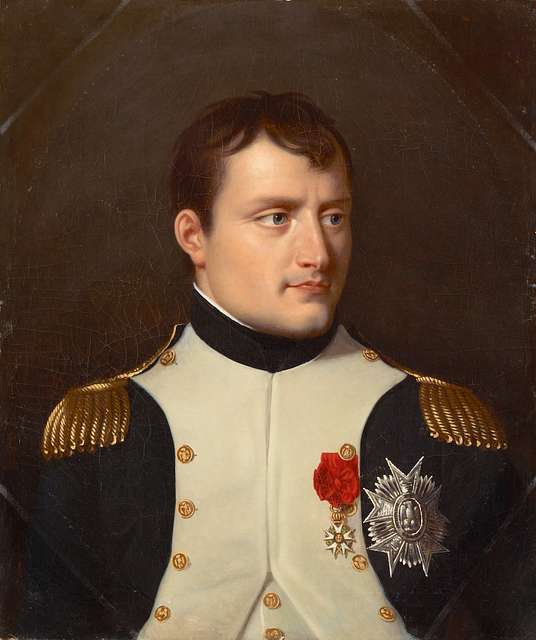
I’ve been reading about Napoleon, so I had to see the movie directed by Ridley Scott. What a disappointment!
As other critics have noted, the movie’s portrayal showed no reason why the people of France–or even Josephine–found him so compelling. There is no trace of his vaunted charisma or his powerful and persuasive personality. Joaquin Phoenix is a good actor and he could have chewed up the scenery with a role like that, but his director must have held him back, wanting to portray the Emperor of France and much of Europe as a petulant, sulking bore.
Critics have praised the battle scenes, but I was disappointed even with those. I have never yet seen a film that portrayed 19th century battles with the massed formations and troop movements that were central to early warfare. Instead, we get individuals sword fighting or shooting at each other, which happened, of course, but with no sense of the bigger picture.
The movie’s depiction of the Battle of Austerlitz focused on cannonballs breaking the ice on a vast frozen lake that the Russians and Austrians were standing on, plunging them into the icy waters to drown. That was a cool visual effect, to be sure, that did convey how grisly war can be. Something of that happened at Austerlitz, with troops that were standing on frozen ponds, but it was on a far smaller scale than the movie showed.
But the way Napoleon used his military genius to win the battle despite being outnumbered by two other emperors, was to have the middle of his lines fall back under the allied attack as if they were defeated. Whereupon his two flanks moved to encircle the attackers as the middle turned around to counterattack, resulting in a total defeat of two armies. Showing that would have made great cinema.
The biggest problem of the movie, though, is that it conveyed nothing about why Napoleon was so important and the impact that he had not only on France but on Europe. And we need to come to grips with that today because, in our current illiberal mood on both the right and the left, many are yearning for and opening themselves up to a Napoleonic figure to put things to rights.
The French Revolution degenerated into a chaotic Reign of Terror, but then Napoleon, a young army officer who rose through the ranks on his own merits as opposed to the previously prevailing rights of aristocracy, took power and imposed order. (No society can exist under anarchy. There must be social order.) But Napoleon still believed in the “liberty, equality, fraternity” ideals of the Revolution.
In defending France from the European powers who sought to bring back the Bourbon king, Napoleon defeated them–all pretty much but England–and in the lands that he conquered he imposed the new “liberal” ideals. With the defeat of Austria at the Battle of Austerlitz we just discussed, Napoleon abolished the Holy Roman Empire. (Lutherans should appreciate that!) He basically dismantled what remained of the feudal system throughout Europe. He abolished the privileges of the nobility, making everyone equal before the law. And he drew up a law, the Napoleonic Code, which replaced unwritten customs with a written legal system, one that protected private property, defined contract law, guaranteed civil liberties including religious freedom, provided for the prosecution of crimes, and would serve as the main alternative to England’s “common law” tradition to this very day.
When Napoleon lost much of his army in a futile attempt to conquer Russia in winter, he was deposed and went into exile on the Mediterranean island of Elba. But after nine months, he escaped, went back to France, and was embraced again by the public and by the army, sending the restored Bourbon king running off again and recommencing his wars.
When he was finally defeated by British and Prussian forces at Waterloo, Napoleon was once again sent into exile, this time to an island farther away, St. Helena, a thousand miles west of Africa in the Atlantic, this time guarded by 2000 British troops. Six years later, he died at the age of 51.
But after his death, there was little interest in restoring the Holy Roman Empire or in rebuilding the feudal system. And pretty much every country that had been put under the Napoleonic Code kept it. And still follow it to this very day.
Napoleon was complex, as is his legacy. He was a liberal dictator, an absolute ruler who promoted freedom, someone who seized power for himself and then used it to impose the rule of law. He was an individual who changed entire cultures and social systems according to his will. He was a great leader by every definition, but he led thousands of his followers into death and slaughtered thousands more. Historians estimate that he was responsible for the deaths of between three and six million people.
Napoleon embodies the deceiving dream that a strong ruler will save us, that a brief and temporary state of tyranny is all we need to solve our problems and usher in a social utopia, that we can conquer people in order to help them, that we can dominate people for their own good. He embodies the political temptation of dictatorship for a good end. Napoleon was complex, but we must beware lest we develop our own Napoleon complex.
Portrait of Napoleon by Robert LeFevre (1850) via PICRYL, Public Domain
Previous Post

December 12, 2023
On the Radicals' Takeover of Higher Education
Next Post

December 14, 2023 Instrumentalizing the Gospel
Recent Comments
"I know wired earbuds are making a comeback (I never stopped using them as I ..."
"VCRs, tape decks, and cassette players are all having a revival among a segment of ..."
"As a (retired) lawyer I see potential liability from sharing things like power or sharp ..."
"I am not sure the items you mentioned, though disused, discontinued, discarded, could be considered ..."
Browse Our Archives
Select a Category America Apologetics Art baseball Bible Blog Christ Church crime Culture Economics Education Ethics Family Food Football Government History Holidays Holy Week Humor International Islam Language Law Life Issues Literature Media Medicine Movies Music Nature News Personal Philosophy Politics psychology Reformation Religions Sacraments Science sex Social Science Sports technology television terrorism Theology Uncategorized Vocation war
Select a Month October 2026 September 2026 August 2026 July 2026 June 2026 May 2026 April 2026 March 2026 February 2026 January 2026 December 2025 November 2025 October 2025 September 2025 August 2025 July 2025 June 2025 May 2025 April 2025 March 2025 February 2025 January 2025 December 2024 November 2024 October 2024 September 2024 August 2024 July 2024 June 2024 May 2024 April 2024 March 2024 February 2024 January 2024 December 2023 November 2023 October 2023 September 2023 August 2023 July 2023 June 2023 May 2023 April 2023 March 2023 February 2023 January 2023 December 2022 November 2022 October 2022 September 2022 August 2022 July 2022 June 2022 May 2022 April 2022 March 2022 February 2022 January 2022 December 2021 November 2021 October 2021 September 2021 August 2021 July 2021 June 2021 May 2021 April 2021 March 2021 February 2021 January 2021 December 2020 November 2020 October 2020 September 2020 August 2020 July 2020 June 2020 May 2020 April 2020 March 2020 February 2020 January 2020 December 2019 November 2019 October 2019 September 2019 August 2019 July 2019 June 2019 May 2019 April 2019 March 2019 February 2019 January 2019 December 2018 November 2018 October 2018 September 2018 August 2018 July 2018 June 2018 May 2018 April 2018 March 2018 February 2018 January 2018 December 2017 November 2017 October 2017 September 2017 August 2017 July 2017 June 2017 May 2017 April 2017 March 2017 February 2017 January 2017 December 2016 November 2016 October 2016 September 2016 August 2016 July 2016 June 2016 May 2016 April 2016 March 2016 February 2016 January 2016 December 2015 November 2015 October 2015 September 2015 August 2015 July 2015 June 2015 May 2015 April 2015 March 2015 February 2015 January 2015 December 2014 November 2014 October 2014 September 2014 August 2014 July 2014 June 2014 May 2014 April 2014 March 2014 February 2014 January 2014 December 2013 November 2013 October 2013 September 2013 August 2013 July 2013 June 2013 May 2013 April 2013 March 2013 February 2013 January 2013 December 2012 November 2012 October 2012 September 2012 August 2012 July 2012 June 2012 May 2012 April 2012 March 2012 February 2012 January 2012 December 2011 November 2011 October 2011 September 2011 August 2011 July 2011 June 2011 May 2011 April 2011 March 2011 February 2011 January 2011 December 2010 November 2010 October 2010 September 2010 August 2010 July 2010 June 2010 May 2010 April 2010 March 2010 February 2010 January 2010 December 2009 November 2009 October 2009 September 2009 August 2009 July 2009 June 2009 May 2009 April 2009 March 2009 February 2009 January 2009 December 2008 November 2008 October 2008 September 2008 August 2008 July 2008 June 2008 May 2008 April 2008 March 2008 February 2008 January 2008 December 2007 November 2007 October 2007
Follow Us!
TAKE THE
Religious Wisdom Quiz
Which king of Judah burned the scroll of Jeremiah's prophecy?
Select your answer to see how you score.
Zedekiah Hezekiah Jehoiakim Josiah
Books by This Author Books by Gene Veith
Related posts from Cranach


On Trump's Political Ads That You Paid For

The Family Estrangement Epidemic
TRENDING AT PATHEOS Evangelical

When Halloween Unmasks Married Hearts
Written by Dr. David K. Ewen from Eternal Truth Bible College Behind...

Aristotle. He’s been called the father of logic, the father of the...

Methodist Central Hall and Westminster Abbey
Situated on the same square is Methodist Central Hall and Westminster Abbey. ...

57th Dove Awards Honor Dolly Parton, Crown New...
On gospel music’s biggest night, the 57th annual GMA Dove Awards honored...

The First Eucharistic Controversy: Christ’s Real Presence
For Catholics, the Eucharist is the source and summit of the Christian...

What a Stop Sign Can Teach Us About...
How to Make a Decision When You Can't Hear God Main point:...
view all Evangelical blogs
What Are Your Thoughts?leave a comment
Ad-Free & Subscriber Log-In Subscription Support
- About Us
- 2026 Calendar
- Videos
- Podcasts
- Library of World Religions
- Faith In Media Tracker
- Advertise With Us
- Write for Us
- Privacy Policy
- Terms of Service
- Do Not Sell My Data
- Contact Us
- Radiant Digital
- Manage Newsletter Subscriptions
- Unsubscribe From Notifications
- Sitemap
Copyright 2008-2026, Patheos. All rights reserved.
Subscription Support Ad-Free & Subscriber Log-In
Follow Patheos