
BuddhistCatholicContemplativeEvangelicalGeneral ChristianHinduJewishLatter-day SaintMuslimNew VisionsProgressive Christian
Beliefs
- Buddhist
- Catholic
- Contemplative
- Evangelical
- General Christian
- Hindu
- Jewish
- Latter-day Saint
- More Voices
- Muslim
- New Visions
- Pagan
- Progressive Christian
Topics
- Religion News
- Food and Religion
- Sports and Religion
- Religious Art
- Religious Music and Entertainment
- Religious Events
- History and Religion
- Style and Religion
- Politics and Religion
- Women in Religion
- Recreation Outdoors and Religion
- Business Finance and Religion
- Careers Workplace and Religion
- Education and Religion
- Family Parenting and Religion
- Health Fitness and Religion
- Home and Religion
- Relationships and Religion
- Technology and Religion
- Travel and Religion
Columnists
- Buddhist Columnists
- Business Finance and Religion Columnists
- Careers Workplace and Religion Columnists
- Catholic Columnists
- Contemplative Columnists
- Education and Religion Columnists
- Evangelists Columnists
- Family Parenting and Religion Columnists
- General Christian Columnists
- Health Fitness and Religion Columnists
- Hindu Columnists
- History and Religion Columnists
- Home and Religion Columnists
- Jewish Columnists
- More Voices Columnists
- Latter Day Columnists
- Muslim Columnists
- New Visions Columnists
- Nonreligious Columnists
- Pagan Columnists
- Politics and Religion Columnists
- Progressive Columnists
- Recreation Outdoors and Religion Columnists
- Relationships and Religion Columnists
- Religion News Columnists
- Religious Art Columnists
- Religious Events Columnists
- Religious Music and Entertainment Columnists
- Sports and Religion Columnists
- Style and Religion Columnists
- Technology and Religion Columnists
- Travel and Religion Columnists
- Women in Religion Columnists
Resource Library
- 2026 Calendar
- Library of World Religions
- The 100 Most Holy Places on Earth
- Patheos Answers
- Podcasts
- Videos
- Faith Leaders Database
- Anglican Episcopalian
- Bahai
- Baptist
- Buddhism
- Christianity
- Confucianism
- Eastern Orthodoxy
- Hinduism
- Holiness and Pentecostal
- ISKCON
- Islam
- Judaism
- Lutheran
- Methodist
- The Church of Jesus Christ of Latter-day Saints
- New Age
- Paganism
- Presbytarian and Reformed
- Protestantism
- Religion Behind the Scenes
- Roman Catholic
- Scientology
- Shia Islam
- Sikhism
- Sufism
- Sunni Islam
- Taoism
- Zen
- See all religions
Research Tools
 Ad-Free & Subscriber Log-In Subscription Support
Ad-Free & Subscriber Log-In Subscription Support
Follow Patheos 

- Trending:
- Forgiveness
- |
- Marriage
- |
- Consciousness
- |
- Death Penalty
- |
- Election
- |
- Halloween

- Home
- Evangelical
- Politics and Religion
- Is the Universe a Brain?
Is the Universe a Brain?
Last updated on: June 23, 2023 at 6:00 am by Gene Veith
Is the Universe a Brain? 2023-06-18T17:05:43-04:00 Gene Veith
Patheos Explore the world's faith through different perspectives on religion and spirituality! Patheos has the views of the prevalent religions and spiritualities of the world.

Science is used to assuming that the universe is just a collection of inert objects governed by mechanistic laws. But a new theory of cosmology argues that the universe is, in fact, a vast neural network. That is to say, a brain, which adapts and learns.
Neuroscientist Bobby Azarian explains in an article for the “Hard Science” section of Big Think entitled The case for why our Universe may be a giant neural network. Here are excepts (my bolds):
A new scientific paradigm is emerging that presents us with a radically different cosmic narrative. The big idea is that the Universe is not just an arbitrary physical system, but something more like an evolving computational or biological system — with properties strikingly similar to a complex adaptive system, like an organism or a brain. If this characterization turns out to be accurate, I do not think it is an overstatement to say that it is the most profound paradigm shift in the history of science and philosophy. If true, it raises new existential questions that will force us to completely rethink the nature of reality and ideas about whether the Universe has a function or “purpose.”. . .
In recent years, a number of highly respected theoretical physicists and scientists from various fields have published papers, articles, and books that have provided compelling technical and mathematical arguments that suggest the Universe is not just a computational or information-processing system, but a self-organizing system that evolves and learns in ways that are strikingly similar to biological systems.
For one thing, the map of the universe looks like the neural map of the brain:
Like our nervous system, the Universe has a highly interconnected, hierarchical organization. The estimated 200 billion detectable galaxies aren’t distributed randomly, but lumped together by gravity into clusters that form even larger clusters, which are connected to one another by “galactic filaments,” or long thin threads of galaxies. When one zooms out to envision the cosmos as a whole, the “cosmic web” formed by these clusters and filaments looks strikingly similar to the “connectome,” a term that refers to the complete wiring diagram of the brain, which is formed by neurons and their synaptic connections. Neurons in the brain also form clusters, which are grouped into larger clusters, and are connected by filaments called axons, which transmit electrical signals across the cognitive system.
There is some evidence of “non-local connections”–such as quantum entanglement, some of which has been observed on the galactic scale, as galaxies and objects such as black holes and Quasars seem to affect each other, despite the vast distances between them.
Azarian cites the work of Vitaly Vanchurin, who has shown that thinking of the universe as a neural network can make possible the maddeningly elusive “theory of everything” that physicists have been struggling to find, a way of reconciling general relativity and quantum mechanics (gravity on the massive scale and the “spooky” behavior of particles on the infinitesimally small quantum scale). According to Azarian, “Vanchurin has shown that using the mathematics of neural networks, you could get the quantum behavior at one limit and classical behavior at another.”
This theory could also unite physics and biology. Azarian cites the work of physicist Lee Smolin and computer scientist Jaron Lanier, who propose “that the cosmos may possess an innate ability to learn, adapt, and evolve in a manner akin to a living organism.” They “posit that the laws of the Universe might emerge sometime after its creation, and those laws might change or evolve as the cosmos develops and learns more about its own structure, dynamics, and possibilities.”
The universe being a vast mind could also solve the problems inherent in the theory of evolution:
The new book On the Origin of Time reveals that the great late Stephen Hawking believed that the reductionistic paradigm he defended for much of his life is incorrect. Ultimately, Hawking felt that the mainstream narrative failed to explain “How the Universe could have created conditions so perfectly hospitable to life.”
According to his close collaborator Thomas Hertog, the author of the book, Hawking came to the conclusion that the Universe is an evolving system that operates according to Darwinian principles that drive the world toward higher complexity, which would explain the existence of observers like you and I.
For these scientists, thinking of the universe as a mind is a way of saving Darwinian, despite the inability of random natural selection to account for the purposefulness and design that is evident in the universe. If the universe as a whole evolves, it can bring forth mini-minds like us.
Now this cosmology strikes me as a way of accommodating the arguments of Intelligent Design (a concept that is still taboo in scientific circles) without invoking a Designer (God being even more taboo). The universe becomes its own designer.
But among the “new existential questions” that Azarian foresees will surely be the re-introduction of God, but in such a way that the universe itself is seen as God.
This would be a new pantheism, but it doesn’t have to be. If the universe is a brain, like our brains, it still needs a mind. “It takes more than a certain type of structure to think thoughts,” says Azarian. “A dead brain is just as thoughtless as a rock.” Just as we have not only physical brains but a spiritual soul that animates them, a transcendent God may animate His physical creation.
In fact, thinking in these terms might help us understand better God’s omnipotence, His omniscience, His providence, and other qualities.
Azarian says that the first person to come up with the notion of the universe as some kind of mind was the ancient Greek thinker Anaxagoras, who, around 500 B.C., “proposed that an intelligent cosmic force, or ‘Nous,’ guides the development of the Universe toward a more organized and purposeful state of existence.” Nous is the Greek word for “mind.” The connection of nous/mind to the cosmos became a commonplace of Greek philosophy, addressed also by Plato and Aristotle, and, as this article shows, it was closely connected to logos, or “word,” the meaning and the order built into the universe. Which, in turn, St. John reveals to be God the Son:
In the beginning was the logos, and the logos was with God, and the logos was God. He was in the beginning with God. All things were made through him, and without him was not any thing made that was made. . . .
And the logos became flesh and dwelt among us, and we have seen his glory, glory as of the only Son from the Father, full of grace and truth. (John 1:1-3, 14)
So I think this new cosmology, if it is confirmed scientifically, would have significant apologetic potential.
At any rate, that some scientists are speculating in this direction shows the limits of their sheerly mechanistic, materialistic, sheerly random worldview that they had been operating with and that they themselves are admitting is reductionistic and inadequate.
Illustration: Neural Network, image by Gerd Altmann from Pixabay
Previous Post

June 23, 2023
DISCUSSION: Destroying the Republican Party?
Next Post

June 26, 2023 Monday Miscellany, 6/26/23
Recent Comments
"While she worked for Trump she was a tool's tool!"
"I know wired earbuds are making a comeback (I never stopped using them as I ..."
"VCRs, tape decks, and cassette players are all having a revival among a segment of ..."
"As a (retired) lawyer I see potential liability from sharing things like power or sharp ..."
Browse Our Archives
Select a Category America Apologetics Art baseball Bible Blog Christ Church crime Culture Economics Education Ethics Family Food Football Government History Holidays Holy Week Humor International Islam Language Law Life Issues Literature Media Medicine Movies Music Nature News Personal Philosophy Politics psychology Reformation Religions Sacraments Science sex Social Science Sports technology television terrorism Theology Uncategorized Vocation war
Select a Month October 2026 September 2026 August 2026 July 2026 June 2026 May 2026 April 2026 March 2026 February 2026 January 2026 December 2025 November 2025 October 2025 September 2025 August 2025 July 2025 June 2025 May 2025 April 2025 March 2025 February 2025 January 2025 December 2024 November 2024 October 2024 September 2024 August 2024 July 2024 June 2024 May 2024 April 2024 March 2024 February 2024 January 2024 December 2023 November 2023 October 2023 September 2023 August 2023 July 2023 June 2023 May 2023 April 2023 March 2023 February 2023 January 2023 December 2022 November 2022 October 2022 September 2022 August 2022 July 2022 June 2022 May 2022 April 2022 March 2022 February 2022 January 2022 December 2021 November 2021 October 2021 September 2021 August 2021 July 2021 June 2021 May 2021 April 2021 March 2021 February 2021 January 2021 December 2020 November 2020 October 2020 September 2020 August 2020 July 2020 June 2020 May 2020 April 2020 March 2020 February 2020 January 2020 December 2019 November 2019 October 2019 September 2019 August 2019 July 2019 June 2019 May 2019 April 2019 March 2019 February 2019 January 2019 December 2018 November 2018 October 2018 September 2018 August 2018 July 2018 June 2018 May 2018 April 2018 March 2018 February 2018 January 2018 December 2017 November 2017 October 2017 September 2017 August 2017 July 2017 June 2017 May 2017 April 2017 March 2017 February 2017 January 2017 December 2016 November 2016 October 2016 September 2016 August 2016 July 2016 June 2016 May 2016 April 2016 March 2016 February 2016 January 2016 December 2015 November 2015 October 2015 September 2015 August 2015 July 2015 June 2015 May 2015 April 2015 March 2015 February 2015 January 2015 December 2014 November 2014 October 2014 September 2014 August 2014 July 2014 June 2014 May 2014 April 2014 March 2014 February 2014 January 2014 December 2013 November 2013 October 2013 September 2013 August 2013 July 2013 June 2013 May 2013 April 2013 March 2013 February 2013 January 2013 December 2012 November 2012 October 2012 September 2012 August 2012 July 2012 June 2012 May 2012 April 2012 March 2012 February 2012 January 2012 December 2011 November 2011 October 2011 September 2011 August 2011 July 2011 June 2011 May 2011 April 2011 March 2011 February 2011 January 2011 December 2010 November 2010 October 2010 September 2010 August 2010 July 2010 June 2010 May 2010 April 2010 March 2010 February 2010 January 2010 December 2009 November 2009 October 2009 September 2009 August 2009 July 2009 June 2009 May 2009 April 2009 March 2009 February 2009 January 2009 December 2008 November 2008 October 2008 September 2008 August 2008 July 2008 June 2008 May 2008 April 2008 March 2008 February 2008 January 2008 December 2007 November 2007 October 2007
Follow Us!
TAKE THE
Religious Wisdom Quiz
Who saw a vision of a flying scroll with curses written on it?
Select your answer to see how you score.
Micah Zechariah Ezekiel Daniel
Books by This Author Books by Gene Veith
Related posts from Cranach

Gen Z Wants Evildoers to Be Punished, Not...
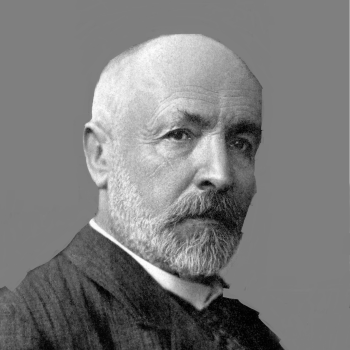
The (Lutheran) Mathematician of Infinity

William Lane Craig's Proof of God's Existence

TRENDING AT PATHEOS Evangelical

Letters on Living the Faith by C.S. Lewis
Most of us met C.S. Lewis as a public intellectual. Mere Christianity....

When Halloween Unmasks Married Hearts
Written by Dr. David K. Ewen from Eternal Truth Bible College Behind...

Aristotle. He’s been called the father of logic, the father of the...

Methodist Central Hall and Westminster Abbey
Situated on the same square is Methodist Central Hall and Westminster Abbey. ...

57th Dove Awards Honor Dolly Parton, Crown New...
On gospel music’s biggest night, the 57th annual GMA Dove Awards honored...

The First Eucharistic Controversy: Christ’s Real Presence
For Catholics, the Eucharist is the source and summit of the Christian...
view all Evangelical blogs
What Are Your Thoughts?leave a comment
Ad-Free & Subscriber Log-In Subscription Support
- About Us
- 2026 Calendar
- Videos
- Podcasts
- Library of World Religions
- Faith In Media Tracker
- Advertise With Us
- Write for Us
- Privacy Policy
- Terms of Service
- Do Not Sell My Data
- Contact Us
- Radiant Digital
- Manage Newsletter Subscriptions
- Unsubscribe From Notifications
- Sitemap
Copyright 2008-2026, Patheos. All rights reserved.
Subscription Support Ad-Free & Subscriber Log-In
Follow Patheos