
BuddhistCatholicContemplativeEvangelicalGeneral ChristianHinduJewishLatter-day SaintMuslimNew VisionsProgressive Christian
Beliefs
- Buddhist
- Catholic
- Contemplative
- Evangelical
- General Christian
- Hindu
- Jewish
- Latter-day Saint
- More Voices
- Muslim
- New Visions
- Pagan
- Progressive Christian
Topics
- Religion News
- Food and Religion
- Sports and Religion
- Religious Art
- Religious Music and Entertainment
- Religious Events
- History and Religion
- Style and Religion
- Politics and Religion
- Women in Religion
- Recreation Outdoors and Religion
- Business Finance and Religion
- Careers Workplace and Religion
- Education and Religion
- Family Parenting and Religion
- Health Fitness and Religion
- Home and Religion
- Relationships and Religion
- Technology and Religion
- Travel and Religion
Columnists
- Buddhist Columnists
- Business Finance and Religion Columnists
- Careers Workplace and Religion Columnists
- Catholic Columnists
- Contemplative Columnists
- Education and Religion Columnists
- Evangelists Columnists
- Family Parenting and Religion Columnists
- General Christian Columnists
- Health Fitness and Religion Columnists
- Hindu Columnists
- History and Religion Columnists
- Home and Religion Columnists
- Jewish Columnists
- More Voices Columnists
- Latter Day Columnists
- Muslim Columnists
- New Visions Columnists
- Nonreligious Columnists
- Pagan Columnists
- Politics and Religion Columnists
- Progressive Columnists
- Recreation Outdoors and Religion Columnists
- Relationships and Religion Columnists
- Religion News Columnists
- Religious Art Columnists
- Religious Events Columnists
- Religious Music and Entertainment Columnists
- Sports and Religion Columnists
- Style and Religion Columnists
- Technology and Religion Columnists
- Travel and Religion Columnists
- Women in Religion Columnists
Resource Library
- 2026 Calendar
- Library of World Religions
- The 100 Most Holy Places on Earth
- Patheos Answers
- Podcasts
- Videos
- Faith Leaders Database
- Anglican Episcopalian
- Bahai
- Baptist
- Buddhism
- Christianity
- Confucianism
- Eastern Orthodoxy
- Hinduism
- Holiness and Pentecostal
- ISKCON
- Islam
- Judaism
- Lutheran
- Methodist
- The Church of Jesus Christ of Latter-day Saints
- New Age
- Paganism
- Presbytarian and Reformed
- Protestantism
- Religion Behind the Scenes
- Roman Catholic
- Scientology
- Shia Islam
- Sikhism
- Sufism
- Sunni Islam
- Taoism
- Zen
- See all religions
Research Tools
 Ad-Free & Subscriber Log-In Subscription Support
Ad-Free & Subscriber Log-In Subscription Support
Follow Patheos 

- Trending:
- Forgiveness
- |
- Marriage
- |
- Consciousness
- |
- Death Penalty
- |
- Election
- |
- Halloween

- Home
- Evangelical
- Politics and Religion
- An Easter Puzzle & What ChatGBT Is Good For
An Easter Puzzle & What ChatGBT Is Good For
Last updated on: April 11, 2023 at 6:00 am by Gene Veith
An Easter Puzzle & What ChatGBT Is Good For 2023-04-07T15:42:38-04:00 Gene Veith
Patheos Explore the world's faith through different perspectives on religion and spirituality! Patheos has the views of the prevalent religions and spiritualities of the world.
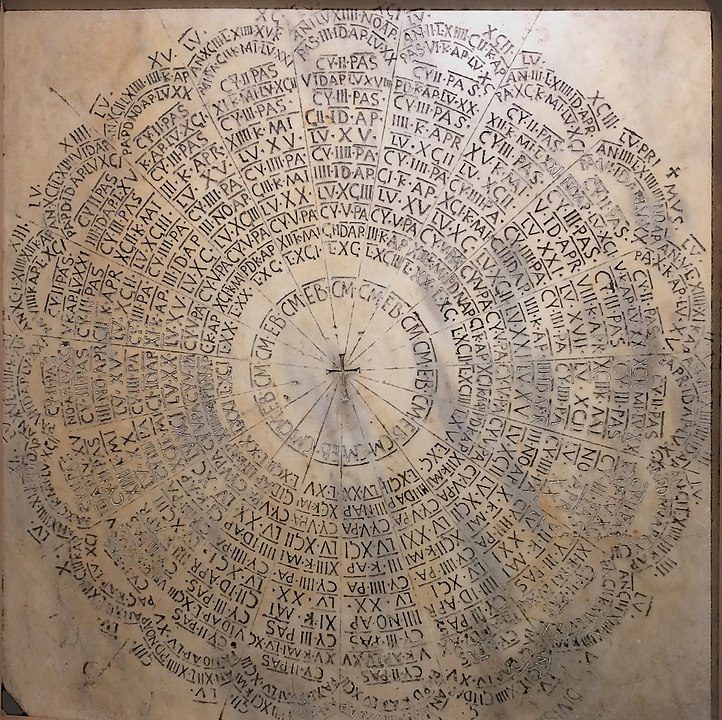
Easter is a “movable feast,” meaning it jumps around the calendar every year. Calculating what that date will be in any given year gets complicated. Easter has to be on a Sunday. It also needs to correlate somehow with the Jewish Passsover, which is determined by a lunar calendar (based on the phases of the moon), whereas we use a solar calendar (based on our planet’s position in relation to the sun).
As the Wikipedia article on the subject explains, “Easter is celebrated on the first Sunday after the Paschal full moon, which is the first full moon on or after 21 March (a fixed approximation of the March equinox). Determining this date in advance requires a correlation between the lunar months and the solar year, while also accounting for the month, date, and weekday of the Julian or Gregorian calendar.” The article goes on to discuss “the complexity of the algorithm,” giving different formulas and ways of calculating Easter math.
I bring this up because an item from Christianity Today‘s Daily Briefing e-mail newsletter, 4/4/2023 (I can’t find the issue online), had this from the magazine’s news editor Daniel Silliman:
As I prepare for Easter this week, a fragment of a 14th- or 15th-century Latin poem has been rattling around my brain: “Quaerit amor Christi multos dum regnat iniquus.” In English: “The love of Christ seeks many while injustice reigns.”. . .
The history of the Easter equations is fascinating—and if you want to buy pages of a medieval prayer book that include this poem/cipher, they are for sale—but I’m thankful for the not-cryptic part of this poem that reminds me that something is happening behind the scenes “while injustice reigns.”
That’s a great quotation, encouraging us that in evil times (like ours), Jesus is especially active in bringing people to Himself. But Silliman doesn’t explain how it helps us calculate the date of Easter. While I found the quotation online, nothing told me anything about the embedded math.
Now I was going to use this as a brief item of interest in my Monday Miscellany. But then I had an idea: Maybe ChatGPT, the internet-scouring, artificial intelligence-driven chatbot that we’ve been playing around with could help me.
So I went to the site and asked it this: “Quaerit amor Christi multos dum regnat iniquus” contains a cipher used to calculate the date of Easter. Could you explain what the cipher is?
Here is the answer:
“Quaerit amor Christi multos dum regnat iniquus” is a Latin sentence that means “The love of Christ seeks many while injustice reigns.” This sentence contains a cipher that was traditionally used to calculate the date of Easter in the Western Christian tradition.
The cipher is based on the number of letters between the first letter “Q” and the last letter “S” in the sentence, which is 23. This number is then added to the number of days in March, which is the month in which the Spring Equinox occurs. In the Western Christian tradition, Easter is celebrated on the first Sunday after the first full moon that occurs on or after the Spring Equinox.
Therefore, to calculate the date of Easter using this cipher, you would add 23 to the number of days in March and then find the first Sunday after the first full moon that occurs on or after that date. This is known as the “ecclesiastical full moon,” which is slightly different from the astronomical full moon.
While this cipher was used in the past to calculate the date of Easter, it is important to note that it is no longer used in modern times. Today, the date of Easter is determined by a set of complex rules and calculations that are based on the Gregorian calendar.
OK! The answer is a little mixed up: March has 31 days, so if you add 23 to that, you’d get 54. So “the first Sunday after the first full moon that occurs on or after” March 54 doesn’t make much sense, there being no such date as March 54. I think the chatbot means that we should go to that number of days in March–that is, March 23–and start counting from that.
And it isn’t clear why folks in the Middle Ages needed a Latin quotation if the answer is always 23. Isn’t it easier to remember a single number than to remember a seven-word line of Latin poetry. I suspect there may be other aspects to the cipher, such as clues to finding the “ecclesiastical full moon.”
Still, ChatGPT did find the basic explanation. I couldn’t find anything online about it, but something obviously exists somewhere. ChatGPT was able to sort through the whole internet very quickly, retrieve the information, and present it to me in plain English.
Which shows the true use of this technology: Not to replace human thinking as alarmists about Artificial Intelligence are worried about, but to serve as a really good search engine. ChatGPT won’t replace human beings, but it might replace Google.
Photo: A calendar of the dates of Easter, for the years 532–632, marble, in the Museum of Ravenna Cathedral, Italy.Photo by Apatak – Own work, CC BY-SA 4.0, https://commons.wikimedia.org/w/index.php?curid=55916988
Technology and Religion
Previous Post

April 10, 2023
Monday Miscellany, 4/10/23
Next Post

April 12, 2023 Should Churches Hide Their Controversial Beliefs?
Recent Comments
"I know wired earbuds are making a comeback (I never stopped using them as I ..."
"VCRs, tape decks, and cassette players are all having a revival among a segment of ..."
"As a (retired) lawyer I see potential liability from sharing things like power or sharp ..."
"I am not sure the items you mentioned, though disused, discontinued, discarded, could be considered ..."
Browse Our Archives
Select a Category America Apologetics Art baseball Bible Blog Christ Church crime Culture Economics Education Ethics Family Food Football Government History Holidays Holy Week Humor International Islam Language Law Life Issues Literature Media Medicine Movies Music Nature News Personal Philosophy Politics psychology Reformation Religions Sacraments Science sex Social Science Sports technology television terrorism Theology Uncategorized Vocation war
Select a Month October 2026 September 2026 August 2026 July 2026 June 2026 May 2026 April 2026 March 2026 February 2026 January 2026 December 2025 November 2025 October 2025 September 2025 August 2025 July 2025 June 2025 May 2025 April 2025 March 2025 February 2025 January 2025 December 2024 November 2024 October 2024 September 2024 August 2024 July 2024 June 2024 May 2024 April 2024 March 2024 February 2024 January 2024 December 2023 November 2023 October 2023 September 2023 August 2023 July 2023 June 2023 May 2023 April 2023 March 2023 February 2023 January 2023 December 2022 November 2022 October 2022 September 2022 August 2022 July 2022 June 2022 May 2022 April 2022 March 2022 February 2022 January 2022 December 2021 November 2021 October 2021 September 2021 August 2021 July 2021 June 2021 May 2021 April 2021 March 2021 February 2021 January 2021 December 2020 November 2020 October 2020 September 2020 August 2020 July 2020 June 2020 May 2020 April 2020 March 2020 February 2020 January 2020 December 2019 November 2019 October 2019 September 2019 August 2019 July 2019 June 2019 May 2019 April 2019 March 2019 February 2019 January 2019 December 2018 November 2018 October 2018 September 2018 August 2018 July 2018 June 2018 May 2018 April 2018 March 2018 February 2018 January 2018 December 2017 November 2017 October 2017 September 2017 August 2017 July 2017 June 2017 May 2017 April 2017 March 2017 February 2017 January 2017 December 2016 November 2016 October 2016 September 2016 August 2016 July 2016 June 2016 May 2016 April 2016 March 2016 February 2016 January 2016 December 2015 November 2015 October 2015 September 2015 August 2015 July 2015 June 2015 May 2015 April 2015 March 2015 February 2015 January 2015 December 2014 November 2014 October 2014 September 2014 August 2014 July 2014 June 2014 May 2014 April 2014 March 2014 February 2014 January 2014 December 2013 November 2013 October 2013 September 2013 August 2013 July 2013 June 2013 May 2013 April 2013 March 2013 February 2013 January 2013 December 2012 November 2012 October 2012 September 2012 August 2012 July 2012 June 2012 May 2012 April 2012 March 2012 February 2012 January 2012 December 2011 November 2011 October 2011 September 2011 August 2011 July 2011 June 2011 May 2011 April 2011 March 2011 February 2011 January 2011 December 2010 November 2010 October 2010 September 2010 August 2010 July 2010 June 2010 May 2010 April 2010 March 2010 February 2010 January 2010 December 2009 November 2009 October 2009 September 2009 August 2009 July 2009 June 2009 May 2009 April 2009 March 2009 February 2009 January 2009 December 2008 November 2008 October 2008 September 2008 August 2008 July 2008 June 2008 May 2008 April 2008 March 2008 February 2008 January 2008 December 2007 November 2007 October 2007
Follow Us!
TAKE THE
Religious Wisdom Quiz
Who gave birth to Isaac at a very old age?
Select your answer to see how you score.
Rebekah Sarah Rachel Leah
Books by This Author Books by Gene Veith
Related posts from Cranach



Our New Book on Technology & Vocation

Why AI Bots Don't Really Have Emotions
TRENDING AT PATHEOS Evangelical

When Halloween Unmasks Married Hearts
Written by Dr. David K. Ewen from Eternal Truth Bible College Behind...

Aristotle. He’s been called the father of logic, the father of the...

Methodist Central Hall and Westminster Abbey
Situated on the same square is Methodist Central Hall and Westminster Abbey. ...

57th Dove Awards Honor Dolly Parton, Crown New...
On gospel music’s biggest night, the 57th annual GMA Dove Awards honored...

The First Eucharistic Controversy: Christ’s Real Presence
For Catholics, the Eucharist is the source and summit of the Christian...

What a Stop Sign Can Teach Us About...
How to Make a Decision When You Can't Hear God Main point:...
view all Evangelical blogs
What Are Your Thoughts?leave a comment
Ad-Free & Subscriber Log-In Subscription Support
- About Us
- 2026 Calendar
- Videos
- Podcasts
- Library of World Religions
- Faith In Media Tracker
- Advertise With Us
- Write for Us
- Privacy Policy
- Terms of Service
- Do Not Sell My Data
- Contact Us
- Radiant Digital
- Manage Newsletter Subscriptions
- Unsubscribe From Notifications
- Sitemap
Copyright 2008-2026, Patheos. All rights reserved.
Subscription Support Ad-Free & Subscriber Log-In
Follow Patheos