
BuddhistCatholicContemplativeEvangelicalGeneral ChristianHinduJewishLatter-day SaintMuslimNew VisionsProgressive Christian
Beliefs
- Buddhist
- Catholic
- Contemplative
- Evangelical
- General Christian
- Hindu
- Jewish
- Latter-day Saint
- More Voices
- Muslim
- New Visions
- Pagan
- Progressive Christian
Topics
- Religion News
- Food and Religion
- Sports and Religion
- Religious Art
- Religious Music and Entertainment
- Religious Events
- History and Religion
- Style and Religion
- Politics and Religion
- Women in Religion
- Recreation Outdoors and Religion
- Business Finance and Religion
- Careers Workplace and Religion
- Education and Religion
- Family Parenting and Religion
- Health Fitness and Religion
- Home and Religion
- Relationships and Religion
- Technology and Religion
- Travel and Religion
Columnists
- Buddhist Columnists
- Business Finance and Religion Columnists
- Careers Workplace and Religion Columnists
- Catholic Columnists
- Contemplative Columnists
- Education and Religion Columnists
- Evangelists Columnists
- Family Parenting and Religion Columnists
- General Christian Columnists
- Health Fitness and Religion Columnists
- Hindu Columnists
- History and Religion Columnists
- Home and Religion Columnists
- Jewish Columnists
- More Voices Columnists
- Latter Day Columnists
- Muslim Columnists
- New Visions Columnists
- Nonreligious Columnists
- Pagan Columnists
- Politics and Religion Columnists
- Progressive Columnists
- Recreation Outdoors and Religion Columnists
- Relationships and Religion Columnists
- Religion News Columnists
- Religious Art Columnists
- Religious Events Columnists
- Religious Music and Entertainment Columnists
- Sports and Religion Columnists
- Style and Religion Columnists
- Technology and Religion Columnists
- Travel and Religion Columnists
- Women in Religion Columnists
Resource Library
- 2026 Calendar
- Library of World Religions
- The 100 Most Holy Places on Earth
- Patheos Answers
- Podcasts
- Videos
- Faith Leaders Database
- Anglican Episcopalian
- Bahai
- Baptist
- Buddhism
- Christianity
- Confucianism
- Eastern Orthodoxy
- Hinduism
- Holiness and Pentecostal
- ISKCON
- Islam
- Judaism
- Lutheran
- Methodist
- The Church of Jesus Christ of Latter-day Saints
- New Age
- Paganism
- Presbytarian and Reformed
- Protestantism
- Religion Behind the Scenes
- Roman Catholic
- Scientology
- Shia Islam
- Sikhism
- Sufism
- Sunni Islam
- Taoism
- Zen
- See all religions
Research Tools
 Ad-Free & Subscriber Log-In Subscription Support
Ad-Free & Subscriber Log-In Subscription Support
Follow Patheos 

- Trending:
- Forgiveness
- |
- Marriage
- |
- Consciousness
- |
- Death Penalty
- |
- Election
- |
- Halloween

- Home
- Evangelical
- Politics and Religion
- The Price of Secularism
The Price of Secularism
Last updated on: September 9, 2022 at 8:09 am by Gene Veith
The Price of Secularism 2022-09-09T08:09:46-04:00 Gene Veith
Patheos Explore the world's faith through different perspectives on religion and spirituality! Patheos has the views of the prevalent religions and spiritualities of the world.
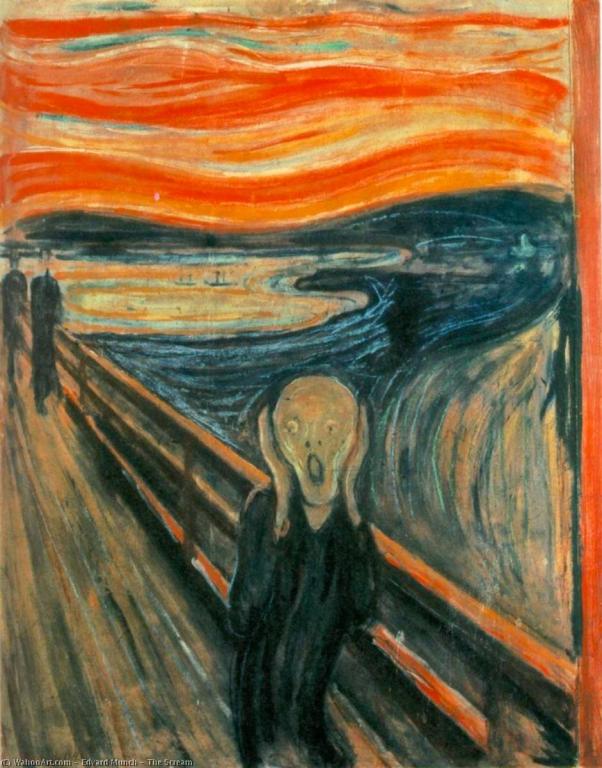
Does it seem to you that our society is mentally ill?
Unhinged leaders, senseless violence, and irrational behavior are part of every news cycle. Paranoia, delusion, projection, obsession, anti-social psychosis–these clinical terms are descriptive of our politics and government, our social media and our opinions. And, on the individual level, who hasn’t been plagued by anxiety, depression, and hopelessness?
There is a word for what happens when the society and the people in it seem to have lost their collective minds: Anomie.
The word literally means “lawlessness,” not in the sense of violating laws but of not having any. “Normlessness” may be a better synonym, trying to live in a society that has no “norms,” no accepted standards of any kind. Here is the dictionary definition of anomie: “social instability resulting from a breakdown of standards and values. . . .personal unrest, alienation, and uncertainty that comes from a lack of purpose or ideals.“
The concept derives from the work of Émile Durkheim (1858-1917), the father of the discipline of sociology. He saw anomie as a consequence of the rapid social change and economic displacement brought on by the industrial revolution of the 19th century, as populations shifted from the close communities of rural villages into depersonalized cities and their work changed from farming and skilled crafts to mechanized factories. In his study of suicide, Durkheim saw anomie as a major factor when people kill themselves.
As historian Patrick Leech explains, Durkheim saw anomie as being the result of “massive socio-cultural changes, such as industrialization and modernization. According to Durkheim, these processes stripped an individual’s life of meaning and purpose, while displacing them from traditional social support networks. Thus, societies suffering from anomie exhibited markers of personal dissatisfaction, such as high rates of suicide, divorce, and alcoholism.”
Leech has written a guest post for Patheos blog Anxious Bench entitled The Growing Crisis of Anomie in the United States: Learning from Hungary’s Cold War Past. He argues that the anomie that afflicts Western culture today can be directly related to the rise of secularism.
He begins with a thought experiment raised by another scholar: “What would be the consequence if all religious institutions in society shutdown today?” Leech says that “we know the consequences of what would happen if all religious institutions shutdown because it happened in Hungary.”
Before the war, Hungary was officially Catholic, with significant Reformed and Lutheran minorities. Churches were very influential and powerful, though charges of corruption and collaboration with unpopular governments began to alienate much of the population. When communism was imposed on the country, religious institutions of all kinds were suppressed and silenced.
In 1956, Hungarians rose up against Communism, but the revolution was brutally put down by the Soviet Union. Afterwards, though, Hungarian communists implemented reforms, including some free-market practices, designed to give citizens a higher standard of living. But the loosening up did not apply to religion, which was still restricted by the state. Comments Leech,
Although these programs succeeded economically, they coincided with drastic increases in alcoholism, drug abuse, and suicide. By the early 1960s, Hungarians experienced the world’s highest rates of suicide—including among children and adolescents—and remained atop that list for two decades, a rate which rose by 70%. During this same period, alcohol consumption and alcohol-related deaths dramatically increased, as did other indicators of social fragmentation, like divorce and drug abuse.
In 1977, after trying everything else, “the state cited these social problems as justification for readmitting religious institutions into civil society, despite the party’s persistent opposition to religion.” The state began to allow religious institutions to operate. Churches started ministries to address social problems. Evangelists, including Billy Graham, were allowed into the country. Sometimes church leaders showed up!
“These efforts did not magically fix the problems in Hungarian society,” says Leech. “Rather, they seem to have injected a slow-acting antidote: hope. While hope is hard to quantify, the plateauing rate of suicide suggests these programs blunted despair.”
After the fall of communism, churches have again assumed their influential role. Now 80% of the population considers themselves to be Christians, though only 15% go to church regularly. Though Leech doesn’t go into this, the controversial prime minister Viktor Orbán presents himself as a defender of Christian values and describes his rather illiberal and authoritarian ideology as “Christian Democracy.”
Leech concludes,
While the causes may differ from those of socialist Hungary, these symptoms sound eerily familiar. The United States is facing high rates of suicide, along with abuse of drugs and alcohol, sometimes in the toxic mix labelled “deaths of despair.” Some people exhibit the social dislocation of anomie through grievance or intolerance. The most tragic examples of this phenomenom include young men, who commit acts of mass violence, like the shootings in Buffalo and Uvalde. Additionally, many recent books anchor today’s political and social hyperpolarization to social fragmentation.
Certainly, we are enduring much social change apart from religion–such as the technology revolution, economic dislocations, and the decline of the family–that no doubt also contribute to anomie. But certainly, in Durkheim’s terms, the loss of religion, almost by definition, “stripped an individual’s life of meaning and purpose, while displacing them from traditional social support networks.”
The breakdown of the family–evident not only in divorce but in the new phenomena of people now refusing to get married and refusing to have children–is certainly a major contributor to anomie, the family being the ultimate “social support network.” But the breakdown of the family is related to the breakdown of norms regarding sexuality, which, in turn, is connected to the breakdown of the church.
Even many of those who hold to a religion see it not so much in terms of belonging to a community of fellow-believers, who constitute a support system, but as a private, interior experience. Thus, many congregations are less of a community than they used to be.
So could it be that our current anomie–that is to say, the madness rampant in our society and the dysfunctions of those who participate in it–could be the direct result of the decline of religion? Is anomie the inevitable price of secularism?
Illustration: Edvard Munch, “The Scream,” CC0, via Wikimedia Commons
Previous Post

September 6, 2022
Whatever Happened to Atheists?
Next Post

September 8, 2022 When Pastors Should--and Should Not--Be Political
Recent Comments
"While she worked for Trump she was a tool's tool!"
"I know wired earbuds are making a comeback (I never stopped using them as I ..."
"VCRs, tape decks, and cassette players are all having a revival among a segment of ..."
"As a (retired) lawyer I see potential liability from sharing things like power or sharp ..."
Browse Our Archives
Select a Category America Apologetics Art baseball Bible Blog Christ Church crime Culture Economics Education Ethics Family Food Football Government History Holidays Holy Week Humor International Islam Language Law Life Issues Literature Media Medicine Movies Music Nature News Personal Philosophy Politics psychology Reformation Religions Sacraments Science sex Social Science Sports technology television terrorism Theology Uncategorized Vocation war
Select a Month October 2026 September 2026 August 2026 July 2026 June 2026 May 2026 April 2026 March 2026 February 2026 January 2026 December 2025 November 2025 October 2025 September 2025 August 2025 July 2025 June 2025 May 2025 April 2025 March 2025 February 2025 January 2025 December 2024 November 2024 October 2024 September 2024 August 2024 July 2024 June 2024 May 2024 April 2024 March 2024 February 2024 January 2024 December 2023 November 2023 October 2023 September 2023 August 2023 July 2023 June 2023 May 2023 April 2023 March 2023 February 2023 January 2023 December 2022 November 2022 October 2022 September 2022 August 2022 July 2022 June 2022 May 2022 April 2022 March 2022 February 2022 January 2022 December 2021 November 2021 October 2021 September 2021 August 2021 July 2021 June 2021 May 2021 April 2021 March 2021 February 2021 January 2021 December 2020 November 2020 October 2020 September 2020 August 2020 July 2020 June 2020 May 2020 April 2020 March 2020 February 2020 January 2020 December 2019 November 2019 October 2019 September 2019 August 2019 July 2019 June 2019 May 2019 April 2019 March 2019 February 2019 January 2019 December 2018 November 2018 October 2018 September 2018 August 2018 July 2018 June 2018 May 2018 April 2018 March 2018 February 2018 January 2018 December 2017 November 2017 October 2017 September 2017 August 2017 July 2017 June 2017 May 2017 April 2017 March 2017 February 2017 January 2017 December 2016 November 2016 October 2016 September 2016 August 2016 July 2016 June 2016 May 2016 April 2016 March 2016 February 2016 January 2016 December 2015 November 2015 October 2015 September 2015 August 2015 July 2015 June 2015 May 2015 April 2015 March 2015 February 2015 January 2015 December 2014 November 2014 October 2014 September 2014 August 2014 July 2014 June 2014 May 2014 April 2014 March 2014 February 2014 January 2014 December 2013 November 2013 October 2013 September 2013 August 2013 July 2013 June 2013 May 2013 April 2013 March 2013 February 2013 January 2013 December 2012 November 2012 October 2012 September 2012 August 2012 July 2012 June 2012 May 2012 April 2012 March 2012 February 2012 January 2012 December 2011 November 2011 October 2011 September 2011 August 2011 July 2011 June 2011 May 2011 April 2011 March 2011 February 2011 January 2011 December 2010 November 2010 October 2010 September 2010 August 2010 July 2010 June 2010 May 2010 April 2010 March 2010 February 2010 January 2010 December 2009 November 2009 October 2009 September 2009 August 2009 July 2009 June 2009 May 2009 April 2009 March 2009 February 2009 January 2009 December 2008 November 2008 October 2008 September 2008 August 2008 July 2008 June 2008 May 2008 April 2008 March 2008 February 2008 January 2008 December 2007 November 2007 October 2007
Follow Us!
TAKE THE
Religious Wisdom Quiz
Which parable teaches about praying persistently, like a widow before a judge?
Select your answer to see how you score.
The Talents The Sower The Persistent Widow The Mustard Seed
Books by This Author Books by Gene Veith
Related posts from Cranach

Our New Book on Technology & Vocation

Gen Z Wants Evildoers to Be Punished, Not...

On Trump's Political Ads That You Paid For

TRENDING AT PATHEOS Evangelical

Catholic Evangelization: Sharing Your Faith Every Day
Welcome back to the Graceful Awakening mini-series called, “From Faith to Mission.” ...

The Pillar of the Boatmen: the Ancient Monument...
The Pillar of the Boatmen is a Romano-Gaulish sculpture that dates from...

In one sense walking into Westminster Abbey is like walking down the...

'Super Scam Me' Exposes AI Jon Bon Jovi...
Leslie Pickett believed she was in a relationship with Jon Bon Jovi....

The Brazilian Remake of Kendricks' 'Flywheel' Opens in...
“Flywheel,” the story that launched the Kendrick Brothers’ filmmaking career is getting...

The Dangers of Gradual Accommodation (Winking at Sin)
Recently, the “law of gradualness” resurfaced during the opening of a weeklong,...
view all Evangelical blogs
What Are Your Thoughts?leave a comment
Ad-Free & Subscriber Log-In Subscription Support
- About Us
- 2026 Calendar
- Videos
- Podcasts
- Library of World Religions
- Faith In Media Tracker
- Advertise With Us
- Write for Us
- Privacy Policy
- Terms of Service
- Do Not Sell My Data
- Contact Us
- Radiant Digital
- Manage Newsletter Subscriptions
- Unsubscribe From Notifications
- Sitemap
Copyright 2008-2026, Patheos. All rights reserved.
Subscription Support Ad-Free & Subscriber Log-In
Follow Patheos