
BuddhistCatholicContemplativeEvangelicalGeneral ChristianHinduJewishLatter-day SaintMuslimNew VisionsProgressive Christian
Beliefs
- Buddhist
- Catholic
- Contemplative
- Evangelical
- General Christian
- Hindu
- Jewish
- Latter-day Saint
- More Voices
- Muslim
- New Visions
- Pagan
- Progressive Christian
Topics
- Religion News
- Food and Religion
- Sports and Religion
- Religious Art
- Religious Music and Entertainment
- Religious Events
- History and Religion
- Style and Religion
- Politics and Religion
- Women in Religion
- Recreation Outdoors and Religion
- Business Finance and Religion
- Careers Workplace and Religion
- Education and Religion
- Family Parenting and Religion
- Health Fitness and Religion
- Home and Religion
- Relationships and Religion
- Technology and Religion
- Travel and Religion
Columnists
- Buddhist Columnists
- Business Finance and Religion Columnists
- Careers Workplace and Religion Columnists
- Catholic Columnists
- Contemplative Columnists
- Education and Religion Columnists
- Evangelists Columnists
- Family Parenting and Religion Columnists
- General Christian Columnists
- Health Fitness and Religion Columnists
- Hindu Columnists
- History and Religion Columnists
- Home and Religion Columnists
- Jewish Columnists
- More Voices Columnists
- Latter Day Columnists
- Muslim Columnists
- New Visions Columnists
- Nonreligious Columnists
- Pagan Columnists
- Politics and Religion Columnists
- Progressive Columnists
- Recreation Outdoors and Religion Columnists
- Relationships and Religion Columnists
- Religion News Columnists
- Religious Art Columnists
- Religious Events Columnists
- Religious Music and Entertainment Columnists
- Sports and Religion Columnists
- Style and Religion Columnists
- Technology and Religion Columnists
- Travel and Religion Columnists
- Women in Religion Columnists
Resource Library
- 2026 Calendar
- Library of World Religions
- The 100 Most Holy Places on Earth
- Patheos Answers
- Podcasts
- Videos
- Faith Leaders Database
- Anglican Episcopalian
- Bahai
- Baptist
- Buddhism
- Christianity
- Confucianism
- Eastern Orthodoxy
- Hinduism
- Holiness and Pentecostal
- ISKCON
- Islam
- Judaism
- Lutheran
- Methodist
- The Church of Jesus Christ of Latter-day Saints
- New Age
- Paganism
- Presbytarian and Reformed
- Protestantism
- Religion Behind the Scenes
- Roman Catholic
- Scientology
- Shia Islam
- Sikhism
- Sufism
- Sunni Islam
- Taoism
- Zen
- See all religions
Research Tools
 Ad-Free & Subscriber Log-In Subscription Support
Ad-Free & Subscriber Log-In Subscription Support
Follow Patheos 

- Trending:
- Forgiveness
- |
- Marriage
- |
- Consciousness
- |
- Death Penalty
- |
- Election
- |
- Halloween

- Home
- Evangelical
- Politics and Religion
- Touch This Tree and You’ll Want to Die
Touch This Tree and You’ll Want to Die
Last updated on: April 4, 2022 at 6:48 pm by Gene Veith
Touch This Tree and You’ll Want to Die 2022-04-04T18:48:08-04:00 Gene Veith
Patheos Explore the world's faith through different perspectives on religion and spirituality! Patheos has the views of the prevalent religions and spiritualities of the world.
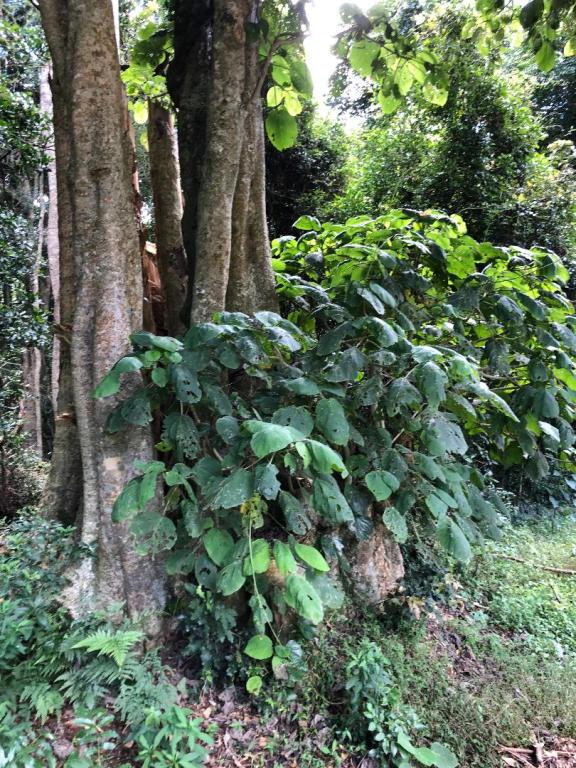
We were walking on the pathway next to the road headed for the visitors’ center in the Bunya Mountain National Park in Queensland, Australia. We walked next to a shrubby tree with large, raggedy leaves. Meg, our host, said, “You don’t want to touch that tree. It’s a gympie-gympie, an aboriginal word for ‘stinging tree.’ If you touch the leaves, the pain will be so great and so long-lasting that people have killed themselves to make it stop.”
Later, I looked up the details: A scientist studying the plant, Marina Hurley, who made the mistake of touching it, described it as “the worst kind of pain you can imagine – like being burnt with hot acid and electrocuted at the same time.” The pain begins with the slightest touch and then intensifies for 20 to 30 minutes. The initial shot of pain lasts for 4 hours or so, but the agony continues.
“Not only do you feel pain from where you are stung,” says Dr. Hurley, “if it is a really bad sting, within about 20 minutes your lymph nodes under your arms swell and throb painfully and feel like they are being slammed between two blocks of wood.”
As if this weren’t bad enough, this excruciating ago can keep recurring for years! This is because the tiny hairs on the surface of the leaf are still imbedded in the skin. If something touches the affected area or if the skin is exposed to cold water, the hairs release more venom and it all starts over again! The Wikipedia article on the gympie-gympie (dendrocnide moroides) quotes a park ranger, Ernie Rider, who was slapped in the face with the foliage:
For two or three days the pain was almost unbearable; I couldn’t work or sleep… I remember it feeling like there were giant hands trying to squash my chest… then it was pretty bad pain for another fortnight or so. The stinging persisted for two years and recurred every time I had a cold shower…There’s nothing to rival it; it’s ten times worse than anything else.
Those toxic hairs can also break off from the leaves and get into the air, which means that you can breathe them in!
Despite the horrific strength of this venom, the stinging tree won’t kill you. There has only been one fatality directly attributed to the gympie-gympie. It doesn’t even harm human tissue, as other toxins do. But there have been reports of people killing themselves to stop the pain. The gympie-gympie is sometimes called the “suicide plant.”
And yet it does not always affect people the same way. Our other host, Noel, had once touched the plant accidentally. He said the pain was bad, but not as bad as I had been reading. He was able to remove the hairs with sticky-tape and an anti-sting salve was effective in taking away the pain.
Also, one feature of the leaves, which are five to nine inches long, is that they are shot with holes. Something eats these leaves! The unfortunately stung Dr. Hurley found that the holes are caused by “a nocturnal leaf-eating chrysomelid beetle.” Not only that, red-legged pademelons, which look like a small kangaroo, eat the things, sometimes stripping off all their leaves! Other animals, though, such as dogs and horses, experience the full torments.
The photograph that illustrates this post is of the stinging tree we saw. It was right by the heavily-travelled footpath. There were no fences around it, no warning signs, no attempts to protect or even to alert the general public, as one would expect in the litigious United States. Locals just learn to recognize the gympie-gympie and know not to touch it.
But Meg, who was telling us about the plant, pointed out the venomous hairs on the leaves, her finger hovering just a centimeter away from the surface. And we were well-within the range within which, I learned later, we could have breathed them in. Australians are absolutely fearless when it comes to their dangerous flora and fauna.
The stinging tree (a.k.a., gympie-gympie; a.k.a., suicide plant) is a marvel of nature. Those who have a romanticized view of nature might wonder why such a thing exists. Christians might wonder why God created something so horrible to human beings. But I see it as a sign.
There are other things that, if we so much as touch them, can cause horrible pain, not only to ourselves but also to others, and that can lead us to hate our lives. Adultery. Heroin. Crime. Abuse. The whole array of sins that result in shame, guilt, and despair.
The stinging tree recalls not only sin but, even more directly, the primal sin.
The Bunya rainforest is a paradise. The towering trees, impenetrable vines, and lush undergrowth have an unearthly beauty, and the coolness of the air, due to the altitude, so different from the heat of tropical jungles, is exhilarating. But in this paradise is a tree that we must not touch.
This recalls our original paradise, in which “God said, ‘You shall not eat of the fruit of the tree that is in the midst of the garden, neither shall you touch it, lest you die'” (Genesis 3:2-3).
If you touch the gympie-gympie tree or eat its fruit, also covered with the little hairs, you will not die. You will just want to die.
We made that trek by the stinging tree again after I had researched it. And when we came to the tree, even though I knew what the consequences would be, I felt the impulse to reach out and touch it.
Now I know what Adam felt.
Photo: Stinging Tree in the Bunya Mountains by Jackquelyn Veith, who releases it into the Public Domain.
Previous Post

April 1, 2022
How the Blog Will Work
Next Post

April 5, 2022 When Australia Faced Invasion
Recent Comments
"While she worked for Trump she was a tool's tool!"
"I know wired earbuds are making a comeback (I never stopped using them as I ..."
"VCRs, tape decks, and cassette players are all having a revival among a segment of ..."
"As a (retired) lawyer I see potential liability from sharing things like power or sharp ..."
Browse Our Archives
Select a Category America Apologetics Art baseball Bible Blog Christ Church crime Culture Economics Education Ethics Family Food Football Government History Holidays Holy Week Humor International Islam Language Law Life Issues Literature Media Medicine Movies Music Nature News Personal Philosophy Politics psychology Reformation Religions Sacraments Science sex Social Science Sports technology television terrorism Theology Uncategorized Vocation war
Select a Month October 2026 September 2026 August 2026 July 2026 June 2026 May 2026 April 2026 March 2026 February 2026 January 2026 December 2025 November 2025 October 2025 September 2025 August 2025 July 2025 June 2025 May 2025 April 2025 March 2025 February 2025 January 2025 December 2024 November 2024 October 2024 September 2024 August 2024 July 2024 June 2024 May 2024 April 2024 March 2024 February 2024 January 2024 December 2023 November 2023 October 2023 September 2023 August 2023 July 2023 June 2023 May 2023 April 2023 March 2023 February 2023 January 2023 December 2022 November 2022 October 2022 September 2022 August 2022 July 2022 June 2022 May 2022 April 2022 March 2022 February 2022 January 2022 December 2021 November 2021 October 2021 September 2021 August 2021 July 2021 June 2021 May 2021 April 2021 March 2021 February 2021 January 2021 December 2020 November 2020 October 2020 September 2020 August 2020 July 2020 June 2020 May 2020 April 2020 March 2020 February 2020 January 2020 December 2019 November 2019 October 2019 September 2019 August 2019 July 2019 June 2019 May 2019 April 2019 March 2019 February 2019 January 2019 December 2018 November 2018 October 2018 September 2018 August 2018 July 2018 June 2018 May 2018 April 2018 March 2018 February 2018 January 2018 December 2017 November 2017 October 2017 September 2017 August 2017 July 2017 June 2017 May 2017 April 2017 March 2017 February 2017 January 2017 December 2016 November 2016 October 2016 September 2016 August 2016 July 2016 June 2016 May 2016 April 2016 March 2016 February 2016 January 2016 December 2015 November 2015 October 2015 September 2015 August 2015 July 2015 June 2015 May 2015 April 2015 March 2015 February 2015 January 2015 December 2014 November 2014 October 2014 September 2014 August 2014 July 2014 June 2014 May 2014 April 2014 March 2014 February 2014 January 2014 December 2013 November 2013 October 2013 September 2013 August 2013 July 2013 June 2013 May 2013 April 2013 March 2013 February 2013 January 2013 December 2012 November 2012 October 2012 September 2012 August 2012 July 2012 June 2012 May 2012 April 2012 March 2012 February 2012 January 2012 December 2011 November 2011 October 2011 September 2011 August 2011 July 2011 June 2011 May 2011 April 2011 March 2011 February 2011 January 2011 December 2010 November 2010 October 2010 September 2010 August 2010 July 2010 June 2010 May 2010 April 2010 March 2010 February 2010 January 2010 December 2009 November 2009 October 2009 September 2009 August 2009 July 2009 June 2009 May 2009 April 2009 March 2009 February 2009 January 2009 December 2008 November 2008 October 2008 September 2008 August 2008 July 2008 June 2008 May 2008 April 2008 March 2008 February 2008 January 2008 December 2007 November 2007 October 2007
Follow Us!
TAKE THE
Religious Wisdom Quiz
Who lamented Saul and Jonathan's death with a song?
Select your answer to see how you score.
Nathan Abiathar David Samuel
Books by This Author Books by Gene Veith
Related posts from Cranach

Our New Book on Technology & Vocation

Why AI Bots Don't Really Have Emotions


William Lane Craig's Proof of God's Existence
TRENDING AT PATHEOS Evangelical

Dolly Parton’s Last Song Wins Dove Award with...
Bluegrass band The Grascals, speaking on the red carpet at the 57th...

The Image: On the Horror of Capitalism and...
The Image Then went the Pharisees, and took counsel how they might...

We are approaching the date of our new American national holiday: October...

Letters on Living the Faith by C.S. Lewis
Most of us met C.S. Lewis as a public intellectual. Mere Christianity....

When Halloween Unmasks Married Hearts
Written by Dr. David K. Ewen from Eternal Truth Bible College Behind...

Aristotle. He’s been called the father of logic, the father of the...
view all Evangelical blogs
What Are Your Thoughts?leave a comment
Ad-Free & Subscriber Log-In Subscription Support
- About Us
- 2026 Calendar
- Videos
- Podcasts
- Library of World Religions
- Faith In Media Tracker
- Advertise With Us
- Write for Us
- Privacy Policy
- Terms of Service
- Do Not Sell My Data
- Contact Us
- Radiant Digital
- Manage Newsletter Subscriptions
- Unsubscribe From Notifications
- Sitemap
Copyright 2008-2026, Patheos. All rights reserved.
Subscription Support Ad-Free & Subscriber Log-In
Follow Patheos