
BuddhistCatholicContemplativeEvangelicalGeneral ChristianHinduJewishLatter-day SaintMuslimNew VisionsProgressive Christian
Beliefs
- Buddhist
- Catholic
- Contemplative
- Evangelical
- General Christian
- Hindu
- Jewish
- Latter-day Saint
- More Voices
- Muslim
- New Visions
- Pagan
- Progressive Christian
Topics
- Religion News
- Food and Religion
- Sports and Religion
- Religious Art
- Religious Music and Entertainment
- Religious Events
- History and Religion
- Style and Religion
- Politics and Religion
- Women in Religion
- Recreation Outdoors and Religion
- Business Finance and Religion
- Careers Workplace and Religion
- Education and Religion
- Family Parenting and Religion
- Health Fitness and Religion
- Home and Religion
- Relationships and Religion
- Technology and Religion
- Travel and Religion
Columnists
- Buddhist Columnists
- Business Finance and Religion Columnists
- Careers Workplace and Religion Columnists
- Catholic Columnists
- Contemplative Columnists
- Education and Religion Columnists
- Evangelists Columnists
- Family Parenting and Religion Columnists
- General Christian Columnists
- Health Fitness and Religion Columnists
- Hindu Columnists
- History and Religion Columnists
- Home and Religion Columnists
- Jewish Columnists
- More Voices Columnists
- Latter Day Columnists
- Muslim Columnists
- New Visions Columnists
- Nonreligious Columnists
- Pagan Columnists
- Politics and Religion Columnists
- Progressive Columnists
- Recreation Outdoors and Religion Columnists
- Relationships and Religion Columnists
- Religion News Columnists
- Religious Art Columnists
- Religious Events Columnists
- Religious Music and Entertainment Columnists
- Sports and Religion Columnists
- Style and Religion Columnists
- Technology and Religion Columnists
- Travel and Religion Columnists
- Women in Religion Columnists
Resource Library
- 2026 Calendar
- Library of World Religions
- The 100 Most Holy Places on Earth
- Patheos Answers
- Podcasts
- Videos
- Faith Leaders Database
- Anglican Episcopalian
- Bahai
- Baptist
- Buddhism
- Christianity
- Confucianism
- Eastern Orthodoxy
- Hinduism
- Holiness and Pentecostal
- ISKCON
- Islam
- Judaism
- Lutheran
- Methodist
- The Church of Jesus Christ of Latter-day Saints
- New Age
- Paganism
- Presbytarian and Reformed
- Protestantism
- Religion Behind the Scenes
- Roman Catholic
- Scientology
- Shia Islam
- Sikhism
- Sufism
- Sunni Islam
- Taoism
- Zen
- See all religions
Research Tools
 Ad-Free & Subscriber Log-In Subscription Support
Ad-Free & Subscriber Log-In Subscription Support
Follow Patheos 

- Trending:
- Forgiveness
- |
- Marriage
- |
- Consciousness
- |
- Death Penalty
- |
- Election
- |
- Halloween

- Home
- Evangelical
- Politics and Religion
- Post-Liberals vs. Right-Liberals
Post-Liberals vs. Right-Liberals
Last updated on: April 21, 2022 at 6:00 am by Gene Veith
Post-Liberals vs. Right-Liberals 2022-04-13T01:49:53-04:00 Gene Veith
Patheos Explore the world's faith through different perspectives on religion and spirituality! Patheos has the views of the prevalent religions and spiritualities of the world.
More from James M. Patterson’s article An Awkward Alliance: Neo-Integralism and National Conservatism that we blogged about yesterday. . . .
Prof. Patterson also unpacks two other terms in the current controversies within conservatism: “post-liberal” and “right-liberals.” Here is the post-liberal critique of Ronald-Reagan style, free market and personal freedom conservatives, whom the integralists and their allies insist actually practice just another kind of liberalism:
The term “liberalism” as they use it conflates progressive thought with mainstream conservatism—the latter they call “right-liberalism,” since right-liberals do nothing, in their view, but slow down progressive social change until conservative leaders ultimately cave on issues they once fought against.
The reason “right-liberals” cave, to their mind, is because their own liberalism demands it. Liberalism, according to post-liberals, defines the good at the level of the individual rather than according to church dogma or the common good. When “right-liberals” concede this approach in their opposition to progressives, they are in fact already giving the game away. Progressives understand the conflict as one of orthodoxies in a way that “right-liberals” do not; hence, “right-liberals” keep losing because they are unaware or unwilling to admit that liberalism itself is a dogma. When demanding that individuals make judgments on their own, liberals are in fact excluding Christian religious authority and substituting their own liberal authority on these matters. Hence, the language of “human rights” and “liberation” become the prevailing values that right-liberals cannot resist on liberal terms.
Patterson admits that there is some truth to this charge. But the post-liberals have baggage of their own, including their reliance on some proto-fascist political theorists. And their proposals for what government should be like should give all Americans pause:
The post-liberal regime has a centralized political authority and devalues ideas of natural rights and human dignity, the latter of which Pecknold is especially critical. Like the integralist parties of 1930s Latin America and Catholic Europe, they aim to impose Catholic orthodoxy on the laws . . . .
One might think that Xi’s totalitarian handling of religious and ethnic minorities might be cause for concern, but one should recall that post-liberals are not attached to ideas of natural rights or human dignity. Rather, they subjugate concerns for rights and dignity to the common good as they understand it, which is in a more collectivist sense of what a centralized government, duly informed by Catholic teaching, ordains for the people. Post-liberals stress the obligation for subjects to obey political authorities and leave ruling to elites. If the government deems a religious or ethnic minority, especially a Muslim one like the Chinese Uyghurs, a threat to the regime, then it has the sovereign authority to suppress it. . . .
Crean and Fimister provide the theoretical foundations and political implications for neo-integralism. Perhaps most concerning is their limited justification for slavery, the denial of women the right to vote, and the exclusion of the “unbaptized,” meaning especially Jews and Muslims, from citizenship. For neo-integralists, unbaptized populations would live at the pleasure of the regime, meaning they could not hold political office, serve in the military, or practice their faith in a way that might draw converts. Historically, to ensure that religious minorities do not convert the faithful, integralist states have segregated them into ghettoes, which Crean and Fimister say nothing to oppose. One can see the parallel in the way China has handled the Uyghurs.
Changing American in these directions sounds like a theoretical pipe-dream. But here is how the “post-liberals” think this kind of government and social order might be implemented:
Surely, a reader may insist, all this is impossible to achieve. How would a majority of Americans ever agree to this? The post-liberal answer is to reject the premise; a majority is not necessary. After all, when progressives pushed for their policy proposals, few if anyone agreed with them. Same-sex marriage was unthinkable in 1990, marginal in 2000, a progressive plank in 2010, and the law of the land in 2020. The method for achieving this policy change was the organization of a small, well-situated minority who could use political and cultural power to move elites to their own position. The broader American people were indifferent, and progressive cultural elites simply led them to a majority support for same-sex marriage with a combination of popular entertainment like Queer Eye for the Straight Guy and Will and Grace and political activism by organizations like the Human Rights Campaign. Vermeule argues that post-liberals will do the same but with neo-integralist ideas.
But surely it is possible for “right-liberals” to refuse to cave to progressives and to prevent their love of “liberty” to degenerate into license. And the track record of authoritarianism–including the theocratic authoritarianism of the Church of Rome–has seldom been supportive of the “common good.”
Christians might be expected to have more modest expectations of their government. Freedom to practice their religion, a legal system that protects law-abiding citizens from evil doers, a reliable economic superstructure, and policies to address problems that arise–those would be challenging enough to achieve. The best anyone could do would still be messy and imperfect. But a government limited to such concerns would enable Christians to concentrate their attention on the Kingdom of God, without confusing it with utopian, idolatrous, and worldly substitutes.
I would think that Americans–particularly conservatives and Christians–would want to oppose post-liberals and integralists just as they opposed Communism, Fascism, and other dictatorships, and for the same reason.
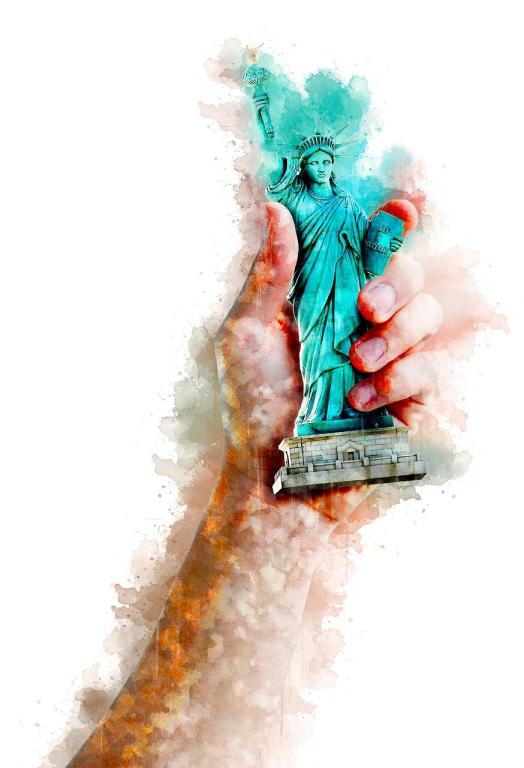
Image by Krishna Chandra from Pixabay
Previous Post

April 20, 2022
Neo-Integralists vs. National Conservatives
Next Post

April 22, 2022 The Cranach Community
Recent Comments
"I know wired earbuds are making a comeback (I never stopped using them as I ..."
"VCRs, tape decks, and cassette players are all having a revival among a segment of ..."
"As a (retired) lawyer I see potential liability from sharing things like power or sharp ..."
"I am not sure the items you mentioned, though disused, discontinued, discarded, could be considered ..."
Browse Our Archives
Select a Category America Apologetics Art baseball Bible Blog Christ Church crime Culture Economics Education Ethics Family Food Football Government History Holidays Holy Week Humor International Islam Language Law Life Issues Literature Media Medicine Movies Music Nature News Personal Philosophy Politics psychology Reformation Religions Sacraments Science sex Social Science Sports technology television terrorism Theology Uncategorized Vocation war
Select a Month October 2026 September 2026 August 2026 July 2026 June 2026 May 2026 April 2026 March 2026 February 2026 January 2026 December 2025 November 2025 October 2025 September 2025 August 2025 July 2025 June 2025 May 2025 April 2025 March 2025 February 2025 January 2025 December 2024 November 2024 October 2024 September 2024 August 2024 July 2024 June 2024 May 2024 April 2024 March 2024 February 2024 January 2024 December 2023 November 2023 October 2023 September 2023 August 2023 July 2023 June 2023 May 2023 April 2023 March 2023 February 2023 January 2023 December 2022 November 2022 October 2022 September 2022 August 2022 July 2022 June 2022 May 2022 April 2022 March 2022 February 2022 January 2022 December 2021 November 2021 October 2021 September 2021 August 2021 July 2021 June 2021 May 2021 April 2021 March 2021 February 2021 January 2021 December 2020 November 2020 October 2020 September 2020 August 2020 July 2020 June 2020 May 2020 April 2020 March 2020 February 2020 January 2020 December 2019 November 2019 October 2019 September 2019 August 2019 July 2019 June 2019 May 2019 April 2019 March 2019 February 2019 January 2019 December 2018 November 2018 October 2018 September 2018 August 2018 July 2018 June 2018 May 2018 April 2018 March 2018 February 2018 January 2018 December 2017 November 2017 October 2017 September 2017 August 2017 July 2017 June 2017 May 2017 April 2017 March 2017 February 2017 January 2017 December 2016 November 2016 October 2016 September 2016 August 2016 July 2016 June 2016 May 2016 April 2016 March 2016 February 2016 January 2016 December 2015 November 2015 October 2015 September 2015 August 2015 July 2015 June 2015 May 2015 April 2015 March 2015 February 2015 January 2015 December 2014 November 2014 October 2014 September 2014 August 2014 July 2014 June 2014 May 2014 April 2014 March 2014 February 2014 January 2014 December 2013 November 2013 October 2013 September 2013 August 2013 July 2013 June 2013 May 2013 April 2013 March 2013 February 2013 January 2013 December 2012 November 2012 October 2012 September 2012 August 2012 July 2012 June 2012 May 2012 April 2012 March 2012 February 2012 January 2012 December 2011 November 2011 October 2011 September 2011 August 2011 July 2011 June 2011 May 2011 April 2011 March 2011 February 2011 January 2011 December 2010 November 2010 October 2010 September 2010 August 2010 July 2010 June 2010 May 2010 April 2010 March 2010 February 2010 January 2010 December 2009 November 2009 October 2009 September 2009 August 2009 July 2009 June 2009 May 2009 April 2009 March 2009 February 2009 January 2009 December 2008 November 2008 October 2008 September 2008 August 2008 July 2008 June 2008 May 2008 April 2008 March 2008 February 2008 January 2008 December 2007 November 2007 October 2007
Follow Us!
TAKE THE
Religious Wisdom Quiz
In Hebrews, Abel's blood spoke, but what does Jesus' blood speak?
Select your answer to see how you score.
Words of warning The same message as Abel's A better word than the blood of Abel Words of judgment
Books by This Author Books by Gene Veith
Related posts from Cranach


Gen Z Wants Evildoers to Be Punished, Not...

On Trump's Political Ads That You Paid For
TRENDING AT PATHEOS Evangelical

57th Dove Awards Honor Dolly Parton, Crown New...
On gospel music’s biggest night, the 57th annual GMA Dove Awards honored...

The First Eucharistic Controversy: Christ’s Real Presence
For Catholics, the Eucharist is the source and summit of the Christian...

What a Stop Sign Can Teach Us About...
How to Make a Decision When You Can't Hear God Main point:...

Archdiocese Hosts Military Marriage Retreat in Germany
RASTATT, Germany — The transient military lifestyle, with its frequent deployments and...

Nearly every morning, I make the drive to Detroit with my high-school-age...

The Real AI Story Is Adoption Without Trust
Artificial intelligence has crossed a political threshold. It is no longer a...
view all Evangelical blogs
What Are Your Thoughts?leave a comment
Ad-Free & Subscriber Log-In Subscription Support
- About Us
- 2026 Calendar
- Videos
- Podcasts
- Library of World Religions
- Faith In Media Tracker
- Advertise With Us
- Write for Us
- Privacy Policy
- Terms of Service
- Do Not Sell My Data
- Contact Us
- Radiant Digital
- Manage Newsletter Subscriptions
- Unsubscribe From Notifications
- Sitemap
Copyright 2008-2026, Patheos. All rights reserved.
Subscription Support Ad-Free & Subscriber Log-In
Follow Patheos