
BuddhistCatholicContemplativeEvangelicalGeneral ChristianHinduJewishLatter-day SaintMuslimNew VisionsProgressive Christian
Beliefs
- Buddhist
- Catholic
- Contemplative
- Evangelical
- General Christian
- Hindu
- Jewish
- Latter-day Saint
- More Voices
- Muslim
- New Visions
- Pagan
- Progressive Christian
Topics
- Religion News
- Food and Religion
- Sports and Religion
- Religious Art
- Religious Music and Entertainment
- Religious Events
- History and Religion
- Style and Religion
- Politics and Religion
- Women in Religion
- Recreation Outdoors and Religion
- Business Finance and Religion
- Careers Workplace and Religion
- Education and Religion
- Family Parenting and Religion
- Health Fitness and Religion
- Home and Religion
- Relationships and Religion
- Technology and Religion
- Travel and Religion
Columnists
- Buddhist Columnists
- Business Finance and Religion Columnists
- Careers Workplace and Religion Columnists
- Catholic Columnists
- Contemplative Columnists
- Education and Religion Columnists
- Evangelists Columnists
- Family Parenting and Religion Columnists
- General Christian Columnists
- Health Fitness and Religion Columnists
- Hindu Columnists
- History and Religion Columnists
- Home and Religion Columnists
- Jewish Columnists
- More Voices Columnists
- Latter Day Columnists
- Muslim Columnists
- New Visions Columnists
- Nonreligious Columnists
- Pagan Columnists
- Politics and Religion Columnists
- Progressive Columnists
- Recreation Outdoors and Religion Columnists
- Relationships and Religion Columnists
- Religion News Columnists
- Religious Art Columnists
- Religious Events Columnists
- Religious Music and Entertainment Columnists
- Sports and Religion Columnists
- Style and Religion Columnists
- Technology and Religion Columnists
- Travel and Religion Columnists
- Women in Religion Columnists
Resource Library
- 2026 Calendar
- Library of World Religions
- The 100 Most Holy Places on Earth
- Patheos Answers
- Podcasts
- Videos
- Faith Leaders Database
- Anglican Episcopalian
- Bahai
- Baptist
- Buddhism
- Christianity
- Confucianism
- Eastern Orthodoxy
- Hinduism
- Holiness and Pentecostal
- ISKCON
- Islam
- Judaism
- Lutheran
- Methodist
- The Church of Jesus Christ of Latter-day Saints
- New Age
- Paganism
- Presbytarian and Reformed
- Protestantism
- Religion Behind the Scenes
- Roman Catholic
- Scientology
- Shia Islam
- Sikhism
- Sufism
- Sunni Islam
- Taoism
- Zen
- See all religions
Research Tools
 Ad-Free & Subscriber Log-In Subscription Support
Follow Patheos 

- Trending:
- Advent
- |
- Forgiveness
- |
- Thanksgiving
- |
- Election
- |
- Seasonal Holidays
- |
- Marriage

- Home
- Evangelical
- Politics and Religion
- Why Hamann Is Important Today
Why Hamann Is Important Today
Last updated on: April 22, 2022 at 5:04 pm by Gene Veith
Why Hamann Is Important Today 2022-04-22T17:04:42-04:00 Gene Veith
Patheos Explore the world's faith through different perspectives on religion and spirituality! Patheos has the views of the prevalent religions and spiritualities of the world.
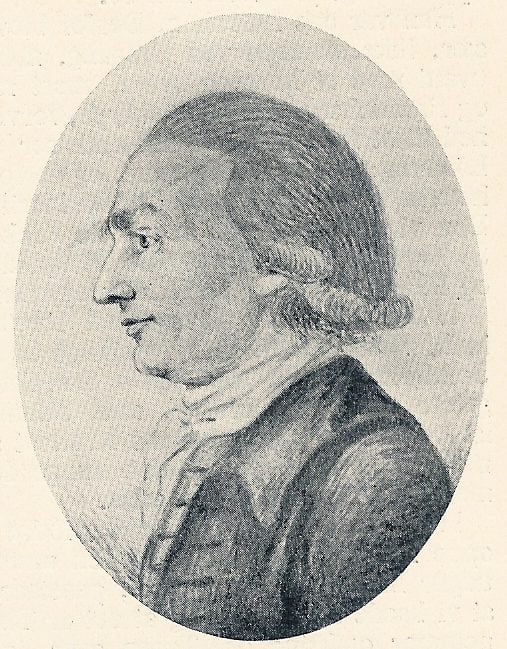
After Hamann’s conversion, he sent parts of the London Writings, now available in English for the first time, to his father, brother, and two best friends, including Johann Christoph Berens in Riga. He wanted them to know about the change that he had undergone.
Berens was appalled at this display of fanaticism and religiosity from someone whom he had considered a paragon of Enlightenment rationalism and skepticism. In the next-to-the-last section of the London Writings, Hamann tells the sad story of how Berens refused to allow his sister Katharina to marry him.
Berens then enlisted the other young men in their circle, including Immanuel Kant, to argue some sense in Hamann, to win him back from what they considered the darkness of superstition into the light of Reason and Reason Alone. Hamann said, fine. Reason did not bring to faith, so it is unlikely to take me out of it. Their efforts failed, but then, turn about is fair play. Hamann began challenging their world view. In conversations, letters, then short essays and reviews, then substantial treatises, Hamann developed a critique of the so-called “Age of Reason” that scholars of today are recognizing as definitive, applying also to the further development of Enlightenment rationalism known as Modernism.
Hamann was not opposed to reason, contrary to how he has sometimes been characterized; rather, he wanted to find a basis for reason in something other than itself. The force of his arguments came against the view that reason alone can resolve all questions with certainty. Let me explain his conclusions with what I wrote about them in my book Post-Christian, in which I support John Betz‘s view that Hamann gives us a way forward from both the deadends of modernism and the deadends of postmodernism:
Hamann’s objection to the Enlightenment view of Reason is, first of all, that it reduces reality—including tangible, physical things—to mental abstractions. Actual human beings become abstracted into a collective “humanity.” What we experience with our senses in the fields, the mountains, and the arts cannot be understood, we are led to believe, unless we can turn them into abstractions. Even God becomes a philosophical concept rather than the highly specific, highly personal Holy One of Israel. The Rationalists of the Enlightenment thus use reason, ironically, to distance themselves from existence.
Hamann also notes the Rationalists’ obsession with certainty. They are not content unless their knowledge is absolutely certain, beyond the shadow of a doubt, and they are convinced that reason can give them this assurance. We see this most explicitly with Descartes, who systematically doubted everything until he found the one thing upon which he could be absolutely certain; namely, his own existence. Note the irony: Reason’s quest for certainty tends to manifest itself in the opposite of certainty; namely, skepticism and doubt.
Then Hamann’s friend Kant came into his own, writing what is considered to be one of the most important texts in the history of philosophy, his Critique of Pure Reason (1781). Kant argued that the human mind is not a passive receiver of truth. Rather, the mind takes in a plethora of impressions by the senses and then actively shapes them into ideas and beliefs. Kant thus lays the foundation for postmodern constructivism.
Hamann dismantled that way of thinking also. In his Metacritique of the Purism of Reason, not only coined the “meta-” prefix beloved by postmodernists and social media tycoons, he showed that Kant’s analysis was faulty. Again, I quote myself in Post-Christian:
Kant took reason, including empirical reason, about as far as it could go, to the point of reasoning about reasoning and exploring how the mind makes sense of empirical sense impressions. But his project comes to the conclusion that all we can know is the “phenomena” as the mind perceives them and that we cannot know anything about the “thing in itself.” Kant’s achievement of rational certainty makes everything uncertain!
Hamann criticizes Kant for problematizing ordinary experience. We go through a day interacting with the world, including innumerable physical “things”—breaking an egg for breakfast, working with tools, talking with friends, walking through the garden, enjoying the sunset. Are you saying, Immanuel, that we are not really experiencing these things? Yes, when you reason about them so closely, simple perceptions become mind-bogglingly complex, but what good is a philosophy that makes ordinary life, in effect, disappear?
Kant and other Enlightenment figures who insisted on “reason and reason alone” neglect three things that are necessary to the way human thought works: history, experience, and language, all of which bring culture and tradition into our reasoning.
Hamann showed that, in fact, reason cannot give certainty. Even reason at its best. “The system of today, which provides the proof of your presuppositions,” he observed, “will be the fairytale of tomorrow.” One philosopher, ideology, and school of thought succeeds another. Even scientific empiricism, which Hamann would appreciate for its attention to the physical realm, cannot provide total certainty once the data is processed through an intellectual hypothesis and then a more abstract theory. One scientific theory gives way to another, as more and more data are discovered.
But this lack of absolute certainty does not mean that science, the various schools of thought, and reason itself cannot give us reliable knowledge and even truth. All knowledge, according to Hamann, including the knowledge disclosed by reason, depends on faith.
Faith has to do with trust, acceptance, and reliance. Faith gives a different kind of knowledge than the discursive process of reasoning. It is more like perception. Hamann describes faith as being similar to tasting and seeing.
Reason itself rests on assumptions that elude rational proof, but that are taken on faith. Reasoning requires accepting the validity of logic, the correspondence of thought to the world, the consistent order of the universe, the laws of mathematics, and trusting the contributions of others.
For Hamann, faith ultimately points to faith in Christ, just as language points to the Word of God, to the incarnate Logos. Thus, for Hamann, reason and language are grounded, though not for unbelievers.
This only scratches the surface of Hamann’s analysis, which contemporary thinkers are finding so exciting. He would also make provocative contributions to aesthetics–influencing the rise of German romanticism–and to social criticism, writing devastating satires against Frederick the Great, the King of Prussia, the Father of German militarism, and patron of the Enlightenment (arguing that Enlightenment rationalism leads inevitably to tyranny). Also, to theology, which we will discuss next time.
But what his thought amounted to was simply very sophisticated applications of his Lutheran theology, with its understandings of limitations of reason, the necessity of faith, the centrality of God’s Word, and the spiritual importance of the physical realm in creation, incarnation, and sacraments.
This makes Hamann a valuable model for Christians confronting such issues today.
Illustration: Portrait of J. G. Hamann (1920) by Saddhiyama – Scan from Bakkehus og Solbjerg volume 3, Public Domain, https://commons.wikimedia.org/w/index.php?curid=4731924
Previous Post

February 2, 2022
Hamann's Confession of Faith
Next Post

February 4, 2022 Hamann and Theology
Recent Comments
"What this study requires is letting Ryan Burge loose on the data. I checked and ..."
Belief and Disbelief in Christ’s Presence ..."
"That's quite a stunted conception of the power of language."
God and the Contingency of This ..."
"I wonder if the survey results would have been different if respondents had been asked ..."
Belief and Disbelief in Christ’s Presence ..."
"There must be a distinction between showing gratitude and having gratitude. It is the latter, ..."
Gratitude as the Parent of All ..."
Browse Our Archives
Select a Category America Apologetics Art baseball Bible Blog Christ Church crime Culture Economics Education Ethics Family Food Football Government History Holidays Holy Week Humor International Islam Language Law Life Issues Literature Media Medicine Movies Music Nature News Personal Philosophy Politics psychology Reformation Religions Sacraments Science sex Social Science Sports technology television terrorism Theology Uncategorized Vocation war
Select a Month November 2026 October 2026 September 2026 August 2026 July 2026 June 2026 May 2026 April 2026 March 2026 February 2026 January 2026 December 2025 November 2025 October 2025 September 2025 August 2025 July 2025 June 2025 May 2025 April 2025 March 2025 February 2025 January 2025 December 2024 November 2024 October 2024 September 2024 August 2024 July 2024 June 2024 May 2024 April 2024 March 2024 February 2024 January 2024 December 2023 November 2023 October 2023 September 2023 August 2023 July 2023 June 2023 May 2023 April 2023 March 2023 February 2023 January 2023 December 2022 November 2022 October 2022 September 2022 August 2022 July 2022 June 2022 May 2022 April 2022 March 2022 February 2022 January 2022 December 2021 November 2021 October 2021 September 2021 August 2021 July 2021 June 2021 May 2021 April 2021 March 2021 February 2021 January 2021 December 2020 November 2020 October 2020 September 2020 August 2020 July 2020 June 2020 May 2020 April 2020 March 2020 February 2020 January 2020 December 2019 November 2019 October 2019 September 2019 August 2019 July 2019 June 2019 May 2019 April 2019 March 2019 February 2019 January 2019 December 2018 November 2018 October 2018 September 2018 August 2018 July 2018 June 2018 May 2018 April 2018 March 2018 February 2018 January 2018 December 2017 November 2017 October 2017 September 2017 August 2017 July 2017 June 2017 May 2017 April 2017 March 2017 February 2017 January 2017 December 2016 November 2016 October 2016 September 2016 August 2016 July 2016 June 2016 May 2016 April 2016 March 2016 February 2016 January 2016 December 2015 November 2015 October 2015 September 2015 August 2015 July 2015 June 2015 May 2015 April 2015 March 2015 February 2015 January 2015 December 2014 November 2014 October 2014 September 2014 August 2014 July 2014 June 2014 May 2014 April 2014 March 2014 February 2014 January 2014 December 2013 November 2013 October 2013 September 2013 August 2013 July 2013 June 2013 May 2013 April 2013 March 2013 February 2013 January 2013 December 2012 November 2012 October 2012 September 2012 August 2012 July 2012 June 2012 May 2012 April 2012 March 2012 February 2012 January 2012 December 2011 November 2011 October 2011 September 2011 August 2011 July 2011 June 2011 May 2011 April 2011 March 2011 February 2011 January 2011 December 2010 November 2010 October 2010 September 2010 August 2010 July 2010 June 2010 May 2010 April 2010 March 2010 February 2010 January 2010 December 2009 November 2009 October 2009 September 2009 August 2009 July 2009 June 2009 May 2009 April 2009 March 2009 February 2009 January 2009 December 2008 November 2008 October 2008 September 2008 August 2008 July 2008 June 2008 May 2008 April 2008 March 2008 February 2008 January 2008 December 2007 November 2007 October 2007
Give A Subscription
Follow Us!
TAKE THE
Religious Wisdom Quiz
What book of the Bible tells about Jesus’ birth?
Select your answer to see how you score.
Acts Revelation Luke Hebrews
Books by This Author Books by Gene Veith
Related posts from Cranach
Gratitude as the Parent of All Virtues
God and the Contingency of This World

The Contingency of Our Technology

TRENDING AT PATHEOS Evangelical

CatholicTV Series: Six Black Catholics on Path to...
WATERTOWN, Mass., November 9, 2026 – In recognition of Black Catholic History...

New Advent Journal Invites Catholics to Be Pilgrims
Florissant, MO, November 16, 2026— What if Advent were more than a...

INNER CIRCLE: John's Quantum Gospel
INTRODUCTION In this next Inner Circle series, which I anticipate will...

"Three B's" of My Apologetics Ministry (+ VIDEO)
In early December 2026 (less than a week from the time...

James Ishmael Ford's books on Zen
James Ishmael Ford's Official Website provides the most complete annotated list of...
The Trouble with Taking Chesterton Literally
Guest writer: Pilgrim. On paradox, human nature and the art of seeing...
view all Evangelical blogs
What Are Your Thoughts?leave a comment
Ad-Free & Subscriber Log-In Subscription Support
- About Us
- 2026 Calendar
- Videos
- Podcasts
- Library of World Religions
- Faith In Media Tracker
- Advertise With Us
- Write for Us
- Privacy Policy
- Terms of Service
- Do Not Sell My Data
- Contact Us
- Radiant Digital
- Manage Newsletter Subscriptions
- Unsubscribe From Notifications
- Sitemap
Copyright 2008-2026, Patheos, part of the Radiant Digital network of media brands. All rights reserved.
Subscription Support Ad-Free & Subscriber Log-In
Follow Patheos