
BuddhistCatholicContemplativeEvangelicalGeneral ChristianHinduJewishLatter-day SaintMuslimNew VisionsProgressive Christian
Beliefs
- Buddhist
- Catholic
- Contemplative
- Evangelical
- General Christian
- Hindu
- Jewish
- Latter-day Saint
- More Voices
- Muslim
- New Visions
- Pagan
- Progressive Christian
Topics
- Religion News
- Food and Religion
- Sports and Religion
- Religious Art
- Religious Music and Entertainment
- Religious Events
- History and Religion
- Style and Religion
- Politics and Religion
- Women in Religion
- Recreation Outdoors and Religion
- Business Finance and Religion
- Careers Workplace and Religion
- Education and Religion
- Family Parenting and Religion
- Health Fitness and Religion
- Home and Religion
- Relationships and Religion
- Technology and Religion
- Travel and Religion
Columnists
- Buddhist Columnists
- Business Finance and Religion Columnists
- Careers Workplace and Religion Columnists
- Catholic Columnists
- Contemplative Columnists
- Education and Religion Columnists
- Evangelists Columnists
- Family Parenting and Religion Columnists
- General Christian Columnists
- Health Fitness and Religion Columnists
- Hindu Columnists
- History and Religion Columnists
- Home and Religion Columnists
- Jewish Columnists
- More Voices Columnists
- Latter Day Columnists
- Muslim Columnists
- New Visions Columnists
- Nonreligious Columnists
- Pagan Columnists
- Politics and Religion Columnists
- Progressive Columnists
- Recreation Outdoors and Religion Columnists
- Relationships and Religion Columnists
- Religion News Columnists
- Religious Art Columnists
- Religious Events Columnists
- Religious Music and Entertainment Columnists
- Sports and Religion Columnists
- Style and Religion Columnists
- Technology and Religion Columnists
- Travel and Religion Columnists
- Women in Religion Columnists
Resource Library
- 2026 Calendar
- Library of World Religions
- The 100 Most Holy Places on Earth
- Patheos Answers
- Podcasts
- Videos
- Faith Leaders Database
- Anglican Episcopalian
- Bahai
- Baptist
- Buddhism
- Christianity
- Confucianism
- Eastern Orthodoxy
- Hinduism
- Holiness and Pentecostal
- ISKCON
- Islam
- Judaism
- Lutheran
- Methodist
- The Church of Jesus Christ of Latter-day Saints
- New Age
- Paganism
- Presbytarian and Reformed
- Protestantism
- Religion Behind the Scenes
- Roman Catholic
- Scientology
- Shia Islam
- Sikhism
- Sufism
- Sunni Islam
- Taoism
- Zen
- See all religions
Research Tools
 Ad-Free & Subscriber Log-In Subscription Support
Follow Patheos 

- Trending:
- Advent
- |
- Forgiveness
- |
- Thanksgiving
- |
- Election
- |
- Seasonal Holidays
- |
- Marriage

- Home
- Evangelical
- Politics and Religion
- Conservative Christians Who Oppose America
Conservative Christians Who Oppose America
Last updated on: January 21, 2022 at 7:49 am by Gene Veith
Conservative Christians Who Oppose America 2022-01-21T07:49:04-05:00 Gene Veith
Patheos Explore the world's faith through different perspectives on religion and spirituality! Patheos has the views of the prevalent religions and spiritualities of the world.
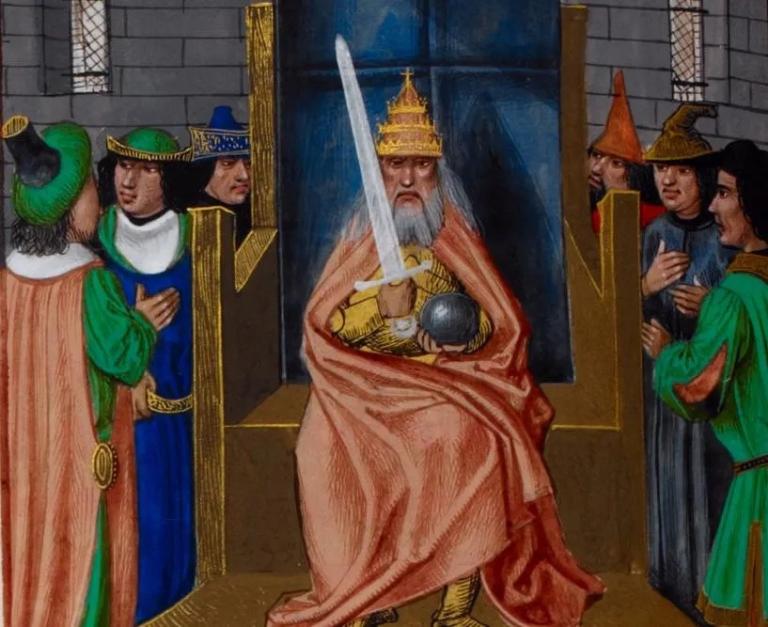
There are many kinds of conservative politics, just as there are many kinds of conservative theology. One strain of both is opposed to the American ideals of freedom, the rights of the individual, and Constitutional government. Many evangelicals who get involved in politics and who haven’t necessarily thought through their activism theologically are looking to some of these Christian political thinkers for leadership.
I am referring to the Integralists, a group of conservative Catholic intellectuals who look at American politics through a medieval Catholic lens and who would love to set up the kind of society ruled by Pope and Emperor that the Reformation strongly rejected. Their movement is named after their desire to integrate church and state, with, in the words of the Wikipedia article, the Catholic faith being “the basis of public law and public policy within civil society.” (See my posts Integralism, the Pope, and the Emperor, and Protestant Integralism.)
Mark Tooley, the president of the Institute on Religion and Democracy, explains it well in an article for World Magazine entitled Introducing Integralism, with the deck “A group of Catholic intellectuals challenge America’s democratic founding principles.” He writes:
Integralism is a growing movement popular among Catholic intellectuals who think America’s liberal democracy, with its free speech and religious liberty, was doomed from the start because its design is at odds with God’s purposes for the community and state. Liberal democracy, the integralists believe, allows for the proliferation of immorality by its denial of any sort of religious basis undergirding society. They advocate a peaceful social and political revolution against our democracy, replacing it with a new arrangement in which, as Wikipedia describes, “Catholic faith should be the basis of public law and public policy within civil society.” Some non-Catholics, despairing of our democracy, share parts of this perspective.
This cause may sound extreme and unlikely. And it’s true that very few Americans, including Catholics, are integralists. But this perspective commands zeal from a band of smart thinkers and highly educated young people whose influence exceeds their small numbers. And it reflects a shrinking confidence in our democracy, fueling increasing brands of illiberalism—forms of rejecting the idea of classical liberty. Integralism is just one example.
Tooley cites some prominent Integralists who are well known in conservative circles: Patrick Deneen of the University of Notre Dame; Sohrab Ahmari of the New York Post; Chad Pecknold of Catholic University; Gladden Pappin of the University of Dallas; Adrian Vermeule of the Harvard University School of Law; R. R. Reno, editor of First Things; and Edmund Waldstein, an Austrian Cistercian Monk Edmund Waldstein.
Now these writers offer some trenchant critiques of contemporary culture. They are impeccably pro-life, opposed to the sexual revolution, and supporters of the traditional family. As far as I can tell, they are pro-Trump. They are certainly entitled to their opinions and to their Catholic convictions.
But while evangelicals and other conservative Protestants might find them helpful allies, they can only go along with them so far. Integralism only works with Catholicism. Only a Pope with universal temporal, as well as spiritual, authority can provide the kind of rule that the Integralists are advocating. And, as Tooley points out, though the Integralists take aim at the “liberalism” of the Enlightenment and of the American Founders, their more fundamental target is Protestantism:
The Founders were Protestants, and here’s what integralists often evade in their critique. While integralists cite Enlightenment liberalism as their nemesis, it’s the Protestant political tradition that confounds them.
American democracy is suffused with an especially Protestant understanding of the public good that protects and benefits all. Society’s moral confusions do not flow from this understanding but contradict it. Social renewal doesn’t benefit from implausible theocratic theories alien to our history. Instead, evangelicals should, through civil society, help to reanimate the rich Protestant beliefs that gave birth to our liberties.
Luther and the other Reformers vigorously opposed the Pope’s claim to be sovereign over secular rulers. Listen to Melanchthon, though to be one of the more conciliatory theologians, in his “Treatise on the Power and Primacy of the Pope,” which is a binding confessional document to Lutherans. To the Pope’s insistence “that by divine right he has both swords, i.e., the authority also of bestowing kingdoms [enthroning and deposing kings, regulating secular dominions etc.],” Melanchthon writes,
Christ gave to the apostles only spiritual power, i.e., the command to teach the Gospel, to announce the forgiveness of sins, to administer the Sacraments, to excommunicate the godless without bodily force [by the Word], and that He did not give the power of the sword, or the right to establish, occupy or confer kingdoms of the world [to set up or depose kings]. . . .
From this persuasion [of the temporal authority of the Pope] horrible darkness has been brought into the Church, and after that also great commotions have arisen in Europe. For the ministry of the Gospel was neglected, the knowledge of faith and the spiritual kingdom became extinct, Christian righteousness was supposed to be that external government which the Pope had established.
35 Next, the Popes began to seize upon kingdoms for themselves; they transferred kingdoms, they vexed with unjust excommunications and wars the kings of almost all nations in Europe, but especially the German emperors, sometimes for the purpose of occupying cities of Italy, at other times for the purpose of reducing to subjection the bishops of Germany, and wresting from the emperors the conferring of episcopates. Yea, in the Clementines it is even written: When the empire is vacant, the Pope is the legitimate successor.
36 Thus the Pope has not only usurped dominion, contrary to Christ’s command, but has also tyrannically exalted himself above all kings. And in this matter the deed itself is not to be reprehended as much as it is to be detested, that he assigns as a pretext the authority of Christ; that he transfers the keys to a worldly government; that he binds salvation to these godless and execrable opinions, when he says it is necessary to salvation for men to believe that this dominion belongs to him by divine right.
Meanwhile, the Reformation stressed the importance of the individual, the freedom of the Christian, and personal rights. Many congregations and cities of the Reformation elected their own leaders. Universal education made democratic self-government possible. In England, the radical Protestants overthrew the monarchy, executed the King, and set up a republic, which, however short lived, became a powerful precedent in the American colonies.
The Integralist project seems absurd, impossible, and merely theoretical, given not only the fact of modern secularism but the nature of modern Catholicism. The current pontiff to whom they would give secular authority is Pope Francis, who is as liberal-minded as the people they generally attack, with the important exception of being pro-life and pro-sexual morality. But the current Pope’s preoccupation with leading on social and political issues, from environmentalism to opposition to capitalism, is itself a legacy of the Catholic teachings that Integralists are building on.
Not that all Catholics are this way. The conservative Catholic apologist George Weigel points out that individualism was actually invented not by the Enlightenment nor by the Reformation but by the early church, something Luther and Melanchthon–who insisted that their teachings were nothing new–would surely agree with. And the strongly Protestant D. G. Hart points out that modern Catholicism, in its formal authoritative teachings, is strongly committed to democracy.
But in their opposition to liberty, democracy, and other American values, the Integralists, for all of their ostensible conservatism, are actually in harmony with the anti-Americanism and authoritarianism of the Left.
Illustration: Pope as emperor in a 15th century manuscript – British Library MS Royal 17 F III f. 58v via Andrew Latham, Medieval Geopolitics: Giles of Rome on why the Pope should rule the entire world, Medievalists.net.
temporal authority of the Pope
Treatise on the Power and Primacy of the Pope
Previous Post

January 20, 2022
How the Loss of Family & Church Gave Us Identity Politics
Next Post

January 24, 2022 Challenge to Trump from the Right?
Recent Comments
"What this study requires is letting Ryan Burge loose on the data. I checked and ..."
Belief and Disbelief in Christ’s Presence ..."
"That's quite a stunted conception of the power of language."
God and the Contingency of This ..."
"I wonder if the survey results would have been different if respondents had been asked ..."
Belief and Disbelief in Christ’s Presence ..."
"There must be a distinction between showing gratitude and having gratitude. It is the latter, ..."
Gratitude as the Parent of All ..."
Browse Our Archives
Select a Category America Apologetics Art baseball Bible Blog Christ Church crime Culture Economics Education Ethics Family Food Football Government History Holidays Holy Week Humor International Islam Language Law Life Issues Literature Media Medicine Movies Music Nature News Personal Philosophy Politics psychology Reformation Religions Sacraments Science sex Social Science Sports technology television terrorism Theology Uncategorized Vocation war
Select a Month November 2026 October 2026 September 2026 August 2026 July 2026 June 2026 May 2026 April 2026 March 2026 February 2026 January 2026 December 2025 November 2025 October 2025 September 2025 August 2025 July 2025 June 2025 May 2025 April 2025 March 2025 February 2025 January 2025 December 2024 November 2024 October 2024 September 2024 August 2024 July 2024 June 2024 May 2024 April 2024 March 2024 February 2024 January 2024 December 2023 November 2023 October 2023 September 2023 August 2023 July 2023 June 2023 May 2023 April 2023 March 2023 February 2023 January 2023 December 2022 November 2022 October 2022 September 2022 August 2022 July 2022 June 2022 May 2022 April 2022 March 2022 February 2022 January 2022 December 2021 November 2021 October 2021 September 2021 August 2021 July 2021 June 2021 May 2021 April 2021 March 2021 February 2021 January 2021 December 2020 November 2020 October 2020 September 2020 August 2020 July 2020 June 2020 May 2020 April 2020 March 2020 February 2020 January 2020 December 2019 November 2019 October 2019 September 2019 August 2019 July 2019 June 2019 May 2019 April 2019 March 2019 February 2019 January 2019 December 2018 November 2018 October 2018 September 2018 August 2018 July 2018 June 2018 May 2018 April 2018 March 2018 February 2018 January 2018 December 2017 November 2017 October 2017 September 2017 August 2017 July 2017 June 2017 May 2017 April 2017 March 2017 February 2017 January 2017 December 2016 November 2016 October 2016 September 2016 August 2016 July 2016 June 2016 May 2016 April 2016 March 2016 February 2016 January 2016 December 2015 November 2015 October 2015 September 2015 August 2015 July 2015 June 2015 May 2015 April 2015 March 2015 February 2015 January 2015 December 2014 November 2014 October 2014 September 2014 August 2014 July 2014 June 2014 May 2014 April 2014 March 2014 February 2014 January 2014 December 2013 November 2013 October 2013 September 2013 August 2013 July 2013 June 2013 May 2013 April 2013 March 2013 February 2013 January 2013 December 2012 November 2012 October 2012 September 2012 August 2012 July 2012 June 2012 May 2012 April 2012 March 2012 February 2012 January 2012 December 2011 November 2011 October 2011 September 2011 August 2011 July 2011 June 2011 May 2011 April 2011 March 2011 February 2011 January 2011 December 2010 November 2010 October 2010 September 2010 August 2010 July 2010 June 2010 May 2010 April 2010 March 2010 February 2010 January 2010 December 2009 November 2009 October 2009 September 2009 August 2009 July 2009 June 2009 May 2009 April 2009 March 2009 February 2009 January 2009 December 2008 November 2008 October 2008 September 2008 August 2008 July 2008 June 2008 May 2008 April 2008 March 2008 February 2008 January 2008 December 2007 November 2007 October 2007
Give A Subscription
Follow Us!
TAKE THE
Religious Wisdom Quiz
How many years did Solomon's temple construction take?
Select your answer to see how you score.
5 years 6 years 10 years 7 years
Books by This Author Books by Gene Veith
Related posts from Cranach
Gratitude as the Parent of All Virtues
God and the Contingency of This World
Belief and Disbelief in Christ's Presence in Holy...

TRENDING AT PATHEOS Evangelical

The Late Francis Frangipane & the Failure Too...
I learned today that another one of my heroes has gone to...

Thomas Paine, the Smiths, the apostles in England,...
I'm pleased to announce that the Becoming Brigham Black Friday Sale,...

CatholicTV Series: Six Black Catholics on Path to...
WATERTOWN, Mass., November 9, 2026 – In recognition of Black Catholic History...

New Advent Journal Invites Catholics to Be Pilgrims
Florissant, MO, November 16, 2026— What if Advent were more than a...

INNER CIRCLE: John's Quantum Gospel
INTRODUCTION In this next Inner Circle series, which I anticipate will...

"Three B's" of My Apologetics Ministry (+ VIDEO)
In early December 2026 (less than a week from the time...
view all Evangelical blogs
What Are Your Thoughts?leave a comment
Ad-Free & Subscriber Log-In Subscription Support
- About Us
- 2026 Calendar
- Videos
- Podcasts
- Library of World Religions
- Faith In Media Tracker
- Advertise With Us
- Write for Us
- Privacy Policy
- Terms of Service
- Do Not Sell My Data
- Contact Us
- Radiant Digital
- Manage Newsletter Subscriptions
- Unsubscribe From Notifications
- Sitemap
Copyright 2008-2026, Patheos, part of the Radiant Digital network of media brands. All rights reserved.
Subscription Support Ad-Free & Subscriber Log-In
Follow Patheos