
BuddhistCatholicContemplativeEvangelicalGeneral ChristianHinduJewishLatter-day SaintMuslimNew VisionsProgressive Christian
Beliefs
- Buddhist
- Catholic
- Contemplative
- Evangelical
- General Christian
- Hindu
- Jewish
- Latter-day Saint
- More Voices
- Muslim
- New Visions
- Pagan
- Progressive Christian
Topics
- Religion News
- Food and Religion
- Sports and Religion
- Religious Art
- Religious Music and Entertainment
- Religious Events
- History and Religion
- Style and Religion
- Politics and Religion
- Women in Religion
- Recreation Outdoors and Religion
- Business Finance and Religion
- Careers Workplace and Religion
- Education and Religion
- Family Parenting and Religion
- Health Fitness and Religion
- Home and Religion
- Relationships and Religion
- Technology and Religion
- Travel and Religion
Columnists
- Buddhist Columnists
- Business Finance and Religion Columnists
- Careers Workplace and Religion Columnists
- Catholic Columnists
- Contemplative Columnists
- Education and Religion Columnists
- Evangelists Columnists
- Family Parenting and Religion Columnists
- General Christian Columnists
- Health Fitness and Religion Columnists
- Hindu Columnists
- History and Religion Columnists
- Home and Religion Columnists
- Jewish Columnists
- More Voices Columnists
- Latter Day Columnists
- Muslim Columnists
- New Visions Columnists
- Nonreligious Columnists
- Pagan Columnists
- Politics and Religion Columnists
- Progressive Columnists
- Recreation Outdoors and Religion Columnists
- Relationships and Religion Columnists
- Religion News Columnists
- Religious Art Columnists
- Religious Events Columnists
- Religious Music and Entertainment Columnists
- Sports and Religion Columnists
- Style and Religion Columnists
- Technology and Religion Columnists
- Travel and Religion Columnists
- Women in Religion Columnists
Resource Library
- 2026 Calendar
- Library of World Religions
- The 100 Most Holy Places on Earth
- Patheos Answers
- Podcasts
- Videos
- Faith Leaders Database
- Anglican Episcopalian
- Bahai
- Baptist
- Buddhism
- Christianity
- Confucianism
- Eastern Orthodoxy
- Hinduism
- Holiness and Pentecostal
- ISKCON
- Islam
- Judaism
- Lutheran
- Methodist
- The Church of Jesus Christ of Latter-day Saints
- New Age
- Paganism
- Presbytarian and Reformed
- Protestantism
- Religion Behind the Scenes
- Roman Catholic
- Scientology
- Shia Islam
- Sikhism
- Sufism
- Sunni Islam
- Taoism
- Zen
- See all religions
Research Tools
 Ad-Free & Subscriber Log-In Subscription Support
Follow Patheos 

- Trending:
- Advent
- |
- Forgiveness
- |
- Thanksgiving
- |
- Election
- |
- Seasonal Holidays
- |
- Marriage

- Home
- Evangelical
- Politics and Religion
- What Americans Believe about Suffering
What Americans Believe about Suffering
Last updated on: December 2, 2021 at 6:00 am by Gene Veith
What Americans Believe about Suffering 2021-11-30T14:02:03-05:00 Gene Veith
Patheos Explore the world's faith through different perspectives on religion and spirituality! Patheos has the views of the prevalent religions and spiritualities of the world.
I have often criticized research on American religion for lumping very different kinds of Christianity (e.g., confessional Lutheran, non-creedal Nondenominational, this-worldly prosperity gospel, etc.) into one category (evangelical); for tabulating religious memberships without taking into account churches that don’t have membership; for measuring worship attendance without taking into account religions that don’t really have worship services (Hindu; Buddhist; New Age).
So I appreciate studies that try to get at what Americans actually believe. Pew Research has conducted an illuminating survey of how Americans view suffering and what they believe about the afterlife. (See the report here.) We’ll take up the first topic today and the second topic tomorrow.
The conventional wisdom is that one of the obstacles to faith for modern and postmodern people is the problem of suffering. If there is an almighty and loving God, how can He allow so much suffering in the world? Perhaps, so goes the reasoning, God is not almighty. Or He is not merciful. Perhaps He is responsible for all of the evil and suffering in the world. Or perhaps He doesn’t exist at all.
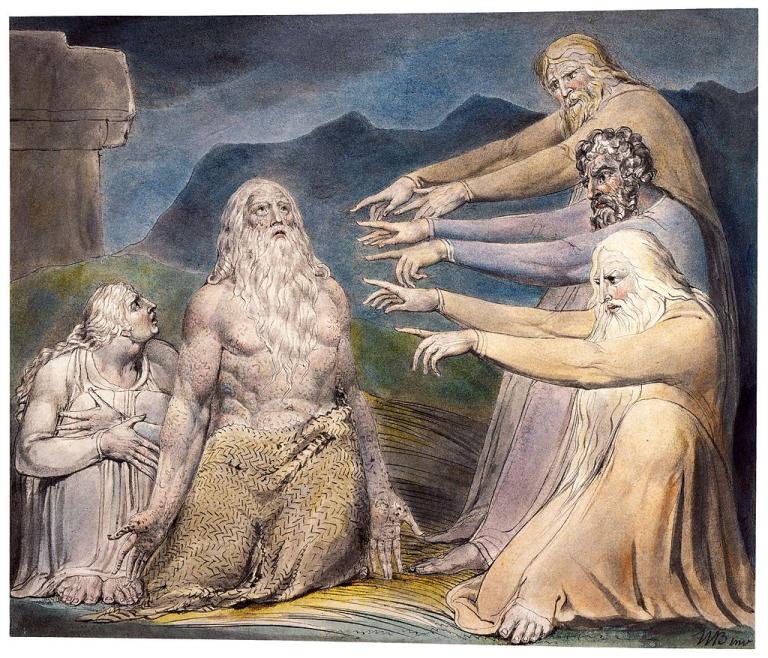
That conundrum has long haunted believers–it’s enshrined in the Bible itself in the Book of Job–and has inspired a whole field of reflection known as theodicy. (Read the unusually good article on theodicy at Wikipedia.) It’s usually resolved in terms of God’s purposes, human freedom, the effects of suffering on the soul, the consequences of the Fall, the incarnate God’s crucifixion and atonement, etc.
Ironically, this has seemed to be more of an issue in the last few centuries than it was for Christians in the ancient, medieval, and Renaissance world, despite the great suffering that was common in those eras that knew nothing of modern medicine.
Surprisingly, though, the Pew study shows that the religious problem of suffering is not a major concern for most people today after all.
Only 14% of American adults say that “sometimes I think the suffering in the world is an indication that there is no God.” A similar percentage say that suffering makes them doubt whether God is all-powerful or loving.
The fact of suffering makes very few Americans angry with God. Only 3% feel that way “often,” and only 14% feel that way sometimes. And few Americans believe suffering is a punishment from God, with only 4% saying “all or most” suffering can be accounted for in that way. Nearly one in five, 18%, say that “some” suffering is God’s punishment, with nearly half, 46%, saying that “none at all” is.
So how do Americans today account for and make sense of suffering?
Most blame human beings rather than God. Seven out of 10, 71%, agree either highly or somewhat that “suffering is mostly a consequence of a person’s own actions” with a similar proportion, 69%, also agreeing that “suffering is mostly a result of how society is structured.” (Evidently, responders could give more than one answer.)
The biggest reason, though, cited by 86% of the respondents, is that “sometimes bad things just happen.”
And yet, most Americans believe suffering has purpose and meaning. Nearly two-thirds, 62%, say that suffering “provides an opportunity for people to come out stronger.”
Their views often have a spiritual context. Over half, 56%, believe that God chooses “not to stop the suffering in the world because it is part of a larger plan.” Seven out of ten respondents seem to accept the “freedom” theodicies, believing that human beings are free to act against the plans of God. And over four out of ten Americans, 44%, believe that “Satan is responsible for most of the suffering in the world.”
Now these responses show some theological naiveté. And I’d like to see further breakdowns. For example, what are the views of people in cancer wards or who in other ways are suffering more than most people are.
But there is also some wisdom here. The 86% who believe that “sometimes bad things just happen” are right. Some measure of suffering is inevitable in this fallen world. It’s part of the cost of our existence. And, contrary to what the antinatalists say, the fact of suffering does not invalidate the pleasures, joys, and value of life.
And the whopping 44% who believe that Satan bears responsibility for the evil and suffering in the world are agreeing with historic Christian teachings on the subject, even though the role of the forces of spiritual darkness has been much neglected in much of contemporary Christianity.
Meanwhile, the small percentage who do wrestle with God over these issues deserve our respect. They may be closer to the theology of the Cross than those who hold to more optimistic theodicies. Bearing one’s cross may bring a person closer to the Cross of Jesus, who bears their suffering along with the sorrows and transgressions of the whole world:
Surely he has borne our griefs
and carried our sorrows;
yet we esteemed him stricken,
smitten by God, and afflicted.
But he was pierced for our transgressions;
he was crushed for our iniquities;
upon him was the chastisement that brought us peace,
and with his wounds we are healed. (Isaiah 53:4-5)
HT: Jeremy Weber in Christianity Today. (Read his article on the study.)
Illustration: “Job, Rebuked by His Friends,” by William Blake (1757-1827) via Wikimedia Commons, Public Domain
Previous Post

December 1, 2021
“He refused to be called the son of Pharaoh’s daughter”
Next Post

December 3, 2021 What Americans Believe about the Afterlife
Recent Comments
"There must be a distinction between showing gratitude and having gratitude. It is the latter, ..."
Gratitude as the Parent of All ..."
"Well, thanks, Setapart. I appreciate those kind words. And I appreciate all of you readers. ..."
Gratitude as the Parent of All ..."
"In keeping with the theme of this article Dr Veith, thank-you! I am very grateful ..."
Gratitude as the Parent of All ..."
"Happy Thanksgiving everyone! https://youtu.be/blbslHDgceY?si=RROkSfTWKBLXB6qh"
Gratitude as the Parent of All ..."
Browse Our Archives
Select a Category America Apologetics Art baseball Bible Blog Christ Church crime Culture Economics Education Ethics Family Food Football Government History Holidays Holy Week Humor International Islam Language Law Life Issues Literature Media Medicine Movies Music Nature News Personal Philosophy Politics psychology Reformation Religions Sacraments Science sex Social Science Sports technology television terrorism Theology Uncategorized Vocation war
Select a Month November 2026 October 2026 September 2026 August 2026 July 2026 June 2026 May 2026 April 2026 March 2026 February 2026 January 2026 December 2025 November 2025 October 2025 September 2025 August 2025 July 2025 June 2025 May 2025 April 2025 March 2025 February 2025 January 2025 December 2024 November 2024 October 2024 September 2024 August 2024 July 2024 June 2024 May 2024 April 2024 March 2024 February 2024 January 2024 December 2023 November 2023 October 2023 September 2023 August 2023 July 2023 June 2023 May 2023 April 2023 March 2023 February 2023 January 2023 December 2022 November 2022 October 2022 September 2022 August 2022 July 2022 June 2022 May 2022 April 2022 March 2022 February 2022 January 2022 December 2021 November 2021 October 2021 September 2021 August 2021 July 2021 June 2021 May 2021 April 2021 March 2021 February 2021 January 2021 December 2020 November 2020 October 2020 September 2020 August 2020 July 2020 June 2020 May 2020 April 2020 March 2020 February 2020 January 2020 December 2019 November 2019 October 2019 September 2019 August 2019 July 2019 June 2019 May 2019 April 2019 March 2019 February 2019 January 2019 December 2018 November 2018 October 2018 September 2018 August 2018 July 2018 June 2018 May 2018 April 2018 March 2018 February 2018 January 2018 December 2017 November 2017 October 2017 September 2017 August 2017 July 2017 June 2017 May 2017 April 2017 March 2017 February 2017 January 2017 December 2016 November 2016 October 2016 September 2016 August 2016 July 2016 June 2016 May 2016 April 2016 March 2016 February 2016 January 2016 December 2015 November 2015 October 2015 September 2015 August 2015 July 2015 June 2015 May 2015 April 2015 March 2015 February 2015 January 2015 December 2014 November 2014 October 2014 September 2014 August 2014 July 2014 June 2014 May 2014 April 2014 March 2014 February 2014 January 2014 December 2013 November 2013 October 2013 September 2013 August 2013 July 2013 June 2013 May 2013 April 2013 March 2013 February 2013 January 2013 December 2012 November 2012 October 2012 September 2012 August 2012 July 2012 June 2012 May 2012 April 2012 March 2012 February 2012 January 2012 December 2011 November 2011 October 2011 September 2011 August 2011 July 2011 June 2011 May 2011 April 2011 March 2011 February 2011 January 2011 December 2010 November 2010 October 2010 September 2010 August 2010 July 2010 June 2010 May 2010 April 2010 March 2010 February 2010 January 2010 December 2009 November 2009 October 2009 September 2009 August 2009 July 2009 June 2009 May 2009 April 2009 March 2009 February 2009 January 2009 December 2008 November 2008 October 2008 September 2008 August 2008 July 2008 June 2008 May 2008 April 2008 March 2008 February 2008 January 2008 December 2007 November 2007 October 2007
Give A Subscription
Follow Us!
TAKE THE
Religious Wisdom Quiz
Who wrestled with an angel and had his name changed to Israel?
Select your answer to see how you score.
Moses Esau Joseph Jacob
Books by This Author Books by Gene Veith
Related posts from Cranach
Gratitude as the Parent of All Virtues

God and the Contingency of This World


The Contingency of Our Technology
TRENDING AT PATHEOS Evangelical

Everything is worship for Quakers. The Quakers emphasize contemplation, equality, pacifism and...

Happy Thanksgiving! I published this Thanksgiving column back in 2017 in...

More Than a Meal: A Messianic Thanksgiving
A Messianic Thanksgiving What if Thanksgiving became more than a meal to...

The Darkening of the Sun, Moon, and Stars
The darkening of the sun and moon and the falling of stars...

Gratitude as the Parent of All Virtues
Giving thanks stems from gratitude. Cicero said that gratitude is the parent...

Make Thanksgiving Bring Family Closer
Written by Dr. David K. Ewen from Eternal Truth Bible College Start...
view all Evangelical blogs
What Are Your Thoughts?leave a comment
Ad-Free & Subscriber Log-In Subscription Support
- About Us
- 2026 Calendar
- Videos
- Podcasts
- Library of World Religions
- Faith In Media Tracker
- Advertise With Us
- Write for Us
- Privacy Policy
- Terms of Service
- Do Not Sell My Data
- Contact Us
- Radiant Digital
- Manage Newsletter Subscriptions
- Unsubscribe From Notifications
- Sitemap
Copyright 2008-2026, Patheos, part of the Radiant Digital network of media brands. All rights reserved.
Subscription Support Ad-Free & Subscriber Log-In
Follow Patheos