
BuddhistCatholicContemplativeEvangelicalGeneral ChristianHinduJewishLatter-day SaintMuslimNew VisionsProgressive Christian
Beliefs
- Buddhist
- Catholic
- Contemplative
- Evangelical
- General Christian
- Hindu
- Jewish
- Latter-day Saint
- More Voices
- Muslim
- New Visions
- Pagan
- Progressive Christian
Topics
- Religion News
- Food and Religion
- Sports and Religion
- Religious Art
- Religious Music and Entertainment
- Religious Events
- History and Religion
- Style and Religion
- Politics and Religion
- Women in Religion
- Recreation Outdoors and Religion
- Business Finance and Religion
- Careers Workplace and Religion
- Education and Religion
- Family Parenting and Religion
- Health Fitness and Religion
- Home and Religion
- Relationships and Religion
- Technology and Religion
- Travel and Religion
Columnists
- Buddhist Columnists
- Business Finance and Religion Columnists
- Careers Workplace and Religion Columnists
- Catholic Columnists
- Contemplative Columnists
- Education and Religion Columnists
- Evangelists Columnists
- Family Parenting and Religion Columnists
- General Christian Columnists
- Health Fitness and Religion Columnists
- Hindu Columnists
- History and Religion Columnists
- Home and Religion Columnists
- Jewish Columnists
- More Voices Columnists
- Latter Day Columnists
- Muslim Columnists
- New Visions Columnists
- Nonreligious Columnists
- Pagan Columnists
- Politics and Religion Columnists
- Progressive Columnists
- Recreation Outdoors and Religion Columnists
- Relationships and Religion Columnists
- Religion News Columnists
- Religious Art Columnists
- Religious Events Columnists
- Religious Music and Entertainment Columnists
- Sports and Religion Columnists
- Style and Religion Columnists
- Technology and Religion Columnists
- Travel and Religion Columnists
- Women in Religion Columnists
Resource Library
- 2026 Calendar
- Library of World Religions
- The 100 Most Holy Places on Earth
- Patheos Answers
- Podcasts
- Videos
- Faith Leaders Database
- Anglican Episcopalian
- Bahai
- Baptist
- Buddhism
- Christianity
- Confucianism
- Eastern Orthodoxy
- Hinduism
- Holiness and Pentecostal
- ISKCON
- Islam
- Judaism
- Lutheran
- Methodist
- The Church of Jesus Christ of Latter-day Saints
- New Age
- Paganism
- Presbytarian and Reformed
- Protestantism
- Religion Behind the Scenes
- Roman Catholic
- Scientology
- Shia Islam
- Sikhism
- Sufism
- Sunni Islam
- Taoism
- Zen
- See all religions
Research Tools
 Ad-Free & Subscriber Log-In Subscription Support
Ad-Free & Subscriber Log-In Subscription Support
Follow Patheos 

- Trending:
- Forgiveness
- |
- Marriage
- |
- Consciousness
- |
- Death Penalty
- |
- Election
- |
- Halloween

- Home
- Evangelical
- Politics and Religion
- Panpsychism and the Scientific Search for Consciousness
Panpsychism and the Scientific Search for Consciousness
Last updated on: July 30, 2021 at 6:00 am by Gene Veith
Panpsychism and the Scientific Search for Consciousness 2021-07-25T17:02:27-04:00 Gene Veith
Patheos Explore the world's faith through different perspectives on religion and spirituality! Patheos has the views of the prevalent religions and spiritualities of the world.
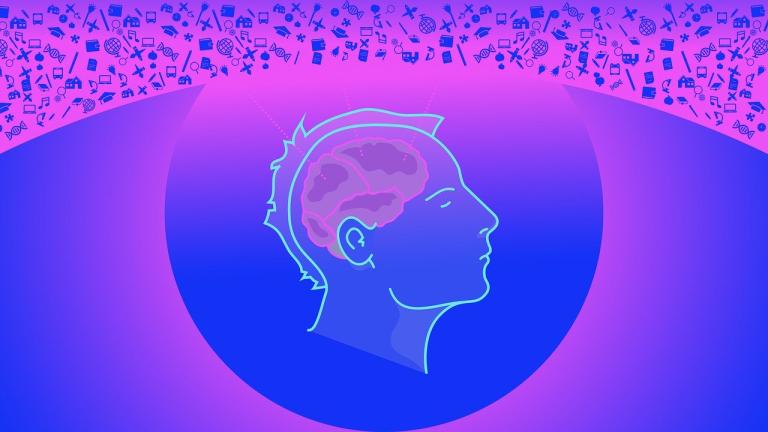
Scientists have struggled to account for the “anthropic principle,” the evidence that the universe seems to be “fine-tuned” for life, that minor differences in physical properties would make life impossible and that the convergence of all of the seemingly random characteristics that make life possible is statistically impossible. There was a time when scientists would see these cosmological facts as evidence of God’s creation.
But today, such an explanation is ruled out at the outset, on the grounds that everything must be accounted for in terms of material natural causes. So, to avoid bringing God into the picture, many scientists are trying to account for the anthropic principle by positing an infinite number of universes. If there is an infinite number of universes, one of them may happen to have everything aligned for life, and that is the universe we inhabit.
Now there is no evidence for multiple, let alone infinite, universes, and there cannot be any. Science is supposed to limit itself to what is empirically observable. But believing in infinite universes protects them from believing in God.
A similar conundrum has emerged in brain research, which is resulting in another highly implausible theory that is being put forward to avoid the religious implications.
Matthew Rozsa writes about it in his article for Salon entitled Panpsychism, the idea that inanimate objects have consciousness, gains steam in science communities, with the deck “An expanding notion of what ‘consciousness’ is could have profound repercussions.”
Scientists have hooked up electrodes to the brain and mapped out areas that govern various physical processes and emotions. But, contrary to the impression we get from the popular imagination, brain mapping has been able to account for very little of the mind and almost nothing connected to consciousness.
The author interviews David Skrbina, author of a book on the subject, who says, “accommodat[ing] mind and consciousness within a physicalist framework. . .is arguably quite difficult.” Comments Rozsa,
In other words, there is no equation, no theory that would account nor explain our conscious feelings, the everyday state of awareness and thought that constitute life and existence. There is nothing in physics or chemistry or biology that accounts what it is like to be.
That’s not to say that scientists haven’t tried to explain consciousness through science. The most obvious approach would be to find physical features that correspond to states of consciousness. For instance, if you could figure out which parts of the brain are associated with feeling happy, sad, inspired or bored, you could in theory follow that lead to ultimately learn about how the brain itself “produces” consciousness.
“It has not been successful,” Skrbina pointed out. “This has been one of the major frustrations, I think, in the scientific community, is to actually find the physical correlate of the various states of consciousness. As far as I can tell, and the latest research I’ve seen, they have been unable to do this, which suggests that consciousness is either a deeper or a more complex phenomenon than most of our scientists have thought and maybe are willing to admit.”
The problem was recognized by Descartes and, even earlier, with perhaps even more rigor, by Galileo. They concluded that the mind is not subject to the scientific scrutiny and quantifiable analysis that works for the physical world. The mind is something completely different. Actually, what the great thinker and the pioneering scientist concluded is that this is evidence for the “soul,” our supernatural and immortal identity. Rozsa’s article discusses Descartes and Galileo and what he calls their “dualist” perspective on mind and matter, but avoids talking about the soul.
Scientists, though, want to be “monists,” to bring everything under “physicalist” explanations. So many of them are saying that, in order to account for consciousness, we must see consciousness as a characteristic of physical things. This has developed into the view that everything has some degree of consciousness–hence, “panpsychism”–not just humans, not just animals (which most people would probably agree to), not just plants (which may be pushing it, but others might agree in connecting consciousness to life), but also inanimate objects: chemicals, minerals, furniture, planets, stars.
The consciousness of inanimate objects, according to this view, is generally very dim, to be sure, but they can form ever more complex relationships, resulting in higher levels of consciousness, such as human beings and living organisms enjoy.
Remarkably, Rozsa applies this view to life after death: “panpsychism allows for the possibility that your conscious ‘self’ lives on in some form,” he writes. “It does not even entirely preclude the possibility that we take some of our identity with us.” The result, he says, might be something like ghosts.
The old theologians and philosophers connected “soul” to the defining form that animates physical matter, producing life. So they had no problem saying that a dog or a plant has a characteristic soul. But those are mortal souls, ceasing at death, the moment that life–the soul–leaves the body. Human beings, though, have an “immortal soul,” our spiritual nature that survives death. Our soul is connected to our consciousness, our mind, and our identity. But it was not limited to the brain; rather, it animated our whole body.
Christianity distinguishes between the soul and the body, but it rejects the Gnostic contention that our bodies are just houses for our soul, so that the physical realm and what we do with our bodies are spiritually irrelevant. Rather, we are “embodied souls.” When we die, the immortal part of us goes to God, for judgment or bliss, but at the resurrection of the body, our immortal souls will be joined to an immortal body, and we will experience our full humanness.
Those Christian and classical thinkers surely didn’t get it all right, but aren’t their ideas at least as plausible–indeed, more so–than investing physical objects with consciousness? Panpsychism, of course, is a form of pantheism, the view that all things (pan) are God (theos). “Psyche,” of course, is the Greek word for soul, so saying that all things have a soul is much the same.
Pantheism is just as religious as regular old Theism. So scientists are not really escaping religion, as they seem to think. In fact, isn’t what they are discovering in the lab about consciousness evidence of what theistic religions such as Christianity believe? Isn’t that more plausible than positing a pantheistic religion, for which there is no evidence?
Image by Beyond Timelines from Pixabay
Previous Post

July 29, 2021
"Liberal Authoritarianism"
Next Post

August 2, 2021 Vaccination Statistics by Age
Recent Comments
"I am told one only gets the $90 if one is on a Supplemental Medicare ..."
On Trump’s Political Ads That You ..."
"I too don't think the $5,000 giveaway will happen, but only because the Trumpublicans won't ..."
On Trump’s Political Ads That You ..."
"Well, large cash give-aways are generally bad policy, but really bad in any of the ..."
On Trump’s Political Ads That You ..."
"Well, we think it pretty much fits my thesis, except I'm not sure whether all ..."
On Trump’s Political Ads That You ..."
Browse Our Archives
Select a Category America Apologetics Art baseball Bible Blog Christ Church crime Culture Economics Education Ethics Family Food Football Government History Holidays Holy Week Humor International Islam Language Law Life Issues Literature Media Medicine Movies Music Nature News Personal Philosophy Politics psychology Reformation Religions Sacraments Science sex Social Science Sports technology television terrorism Theology Uncategorized Vocation war
Select a Month October 2026 September 2026 August 2026 July 2026 June 2026 May 2026 April 2026 March 2026 February 2026 January 2026 December 2025 November 2025 October 2025 September 2025 August 2025 July 2025 June 2025 May 2025 April 2025 March 2025 February 2025 January 2025 December 2024 November 2024 October 2024 September 2024 August 2024 July 2024 June 2024 May 2024 April 2024 March 2024 February 2024 January 2024 December 2023 November 2023 October 2023 September 2023 August 2023 July 2023 June 2023 May 2023 April 2023 March 2023 February 2023 January 2023 December 2022 November 2022 October 2022 September 2022 August 2022 July 2022 June 2022 May 2022 April 2022 March 2022 February 2022 January 2022 December 2021 November 2021 October 2021 September 2021 August 2021 July 2021 June 2021 May 2021 April 2021 March 2021 February 2021 January 2021 December 2020 November 2020 October 2020 September 2020 August 2020 July 2020 June 2020 May 2020 April 2020 March 2020 February 2020 January 2020 December 2019 November 2019 October 2019 September 2019 August 2019 July 2019 June 2019 May 2019 April 2019 March 2019 February 2019 January 2019 December 2018 November 2018 October 2018 September 2018 August 2018 July 2018 June 2018 May 2018 April 2018 March 2018 February 2018 January 2018 December 2017 November 2017 October 2017 September 2017 August 2017 July 2017 June 2017 May 2017 April 2017 March 2017 February 2017 January 2017 December 2016 November 2016 October 2016 September 2016 August 2016 July 2016 June 2016 May 2016 April 2016 March 2016 February 2016 January 2016 December 2015 November 2015 October 2015 September 2015 August 2015 July 2015 June 2015 May 2015 April 2015 March 2015 February 2015 January 2015 December 2014 November 2014 October 2014 September 2014 August 2014 July 2014 June 2014 May 2014 April 2014 March 2014 February 2014 January 2014 December 2013 November 2013 October 2013 September 2013 August 2013 July 2013 June 2013 May 2013 April 2013 March 2013 February 2013 January 2013 December 2012 November 2012 October 2012 September 2012 August 2012 July 2012 June 2012 May 2012 April 2012 March 2012 February 2012 January 2012 December 2011 November 2011 October 2011 September 2011 August 2011 July 2011 June 2011 May 2011 April 2011 March 2011 February 2011 January 2011 December 2010 November 2010 October 2010 September 2010 August 2010 July 2010 June 2010 May 2010 April 2010 March 2010 February 2010 January 2010 December 2009 November 2009 October 2009 September 2009 August 2009 July 2009 June 2009 May 2009 April 2009 March 2009 February 2009 January 2009 December 2008 November 2008 October 2008 September 2008 August 2008 July 2008 June 2008 May 2008 April 2008 March 2008 February 2008 January 2008 December 2007 November 2007 October 2007
Follow Us!
TAKE THE
Religious Wisdom Quiz
Love is patient, love is kind. Love does not _____ or boast...
Select your answer to see how you score.
Brag Fail Scream Envy
Books by This Author Books by Gene Veith
Related posts from Cranach

Gen Z Wants Evildoers to Be Punished, Not...

On Trump's Political Ads That You Paid For

The Family Estrangement Epidemic

How the Integralists Are Like the Socialists
TRENDING AT PATHEOS Evangelical

I was strolling through the top floor of the brand new Parthenon...

What Does Gêvâh Mean For Kimberley Guifoyle &...
This week, a lot of the news is focused on Kimberly Guilfoyle....

INNER CIRCLE: Profound Mystery (Of Christ In All...
Ephesians 5:31-32 “For this reason, a man will leave his father and...

Do Not Rejoice When Your Enemy Falls: The...
Turning an execution into a public spectacle is a disturbing expression of...

'The Chosen' S6 Trailer: The Passion Gets Very...
Not many watching 'The Chosen' worry about spoilers, but just because they...

The purpose-driven labor priest
A labor activist reads Rick Warren and it gets me wondering about...
view all Evangelical blogs
What Are Your Thoughts?leave a comment
Ad-Free & Subscriber Log-In Subscription Support
- About Us
- 2026 Calendar
- Videos
- Podcasts
- Library of World Religions
- Faith In Media Tracker
- Advertise With Us
- Write for Us
- Privacy Policy
- Terms of Service
- Do Not Sell My Data
- Contact Us
- Radiant Digital
- Manage Newsletter Subscriptions
- Unsubscribe From Notifications
- Sitemap
Copyright 2008-2026, Patheos. All rights reserved.
Subscription Support Ad-Free & Subscriber Log-In
Follow Patheos