
BuddhistCatholicContemplativeEvangelicalGeneral ChristianHinduJewishLatter-day SaintMuslimNew VisionsProgressive Christian
Beliefs
- Buddhist
- Catholic
- Contemplative
- Evangelical
- General Christian
- Hindu
- Jewish
- Latter-day Saint
- More Voices
- Muslim
- New Visions
- Pagan
- Progressive Christian
Topics
- Religion News
- Food and Religion
- Sports and Religion
- Religious Art
- Religious Music and Entertainment
- Religious Events
- History and Religion
- Style and Religion
- Politics and Religion
- Women in Religion
- Recreation Outdoors and Religion
- Business Finance and Religion
- Careers Workplace and Religion
- Education and Religion
- Family Parenting and Religion
- Health Fitness and Religion
- Home and Religion
- Relationships and Religion
- Technology and Religion
- Travel and Religion
Columnists
- Buddhist Columnists
- Business Finance and Religion Columnists
- Careers Workplace and Religion Columnists
- Catholic Columnists
- Contemplative Columnists
- Education and Religion Columnists
- Evangelists Columnists
- Family Parenting and Religion Columnists
- General Christian Columnists
- Health Fitness and Religion Columnists
- Hindu Columnists
- History and Religion Columnists
- Home and Religion Columnists
- Jewish Columnists
- More Voices Columnists
- Latter Day Columnists
- Muslim Columnists
- New Visions Columnists
- Nonreligious Columnists
- Pagan Columnists
- Politics and Religion Columnists
- Progressive Columnists
- Recreation Outdoors and Religion Columnists
- Relationships and Religion Columnists
- Religion News Columnists
- Religious Art Columnists
- Religious Events Columnists
- Religious Music and Entertainment Columnists
- Sports and Religion Columnists
- Style and Religion Columnists
- Technology and Religion Columnists
- Travel and Religion Columnists
- Women in Religion Columnists
Resource Library
- 2026 Calendar
- Library of World Religions
- The 100 Most Holy Places on Earth
- Patheos Answers
- Podcasts
- Videos
- Faith Leaders Database
- Anglican Episcopalian
- Bahai
- Baptist
- Buddhism
- Christianity
- Confucianism
- Eastern Orthodoxy
- Hinduism
- Holiness and Pentecostal
- ISKCON
- Islam
- Judaism
- Lutheran
- Methodist
- The Church of Jesus Christ of Latter-day Saints
- New Age
- Paganism
- Presbytarian and Reformed
- Protestantism
- Religion Behind the Scenes
- Roman Catholic
- Scientology
- Shia Islam
- Sikhism
- Sufism
- Sunni Islam
- Taoism
- Zen
- See all religions
Research Tools
 Ad-Free & Subscriber Log-In Subscription Support
Ad-Free & Subscriber Log-In Subscription Support
Follow Patheos 

- Trending:
- Forgiveness
- |
- Marriage
- |
- Consciousness
- |
- Death Penalty
- |
- Election
- |
- Halloween

- Home
- Evangelical
- Politics and Religion
- Why the New Edition of “Spirituality of the Cross” Is Needed Today
Why the New Edition of “Spirituality of the Cross” Is Needed Today
Last updated on: April 22, 2021 at 6:00 am by Gene Veith
Why the New Edition of “Spirituality of the Cross” Is Needed Today 2021-04-19T16:47:46-04:00 Gene Veith
Patheos Explore the world's faith through different perspectives on religion and spirituality! Patheos has the views of the prevalent religions and spiritualities of the world.
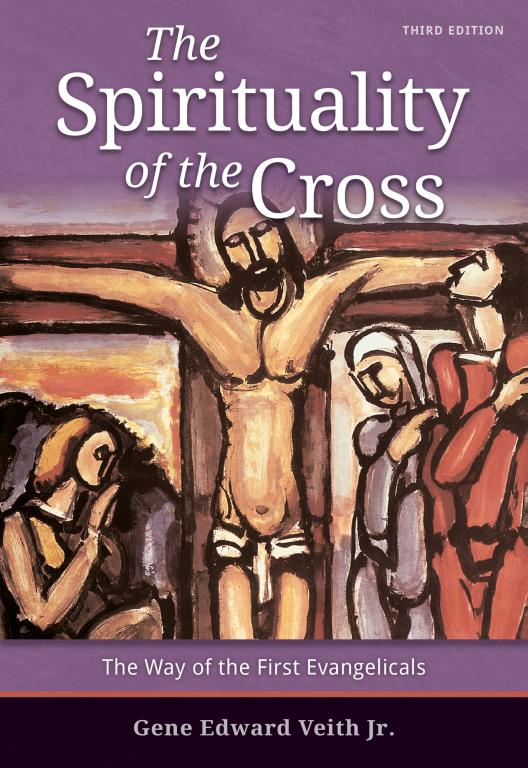
More on the release of the new, expanded edition of my book The Spirituality of the Cross: The Way of the First Evangelicals–Third Edition. . . .
To explain why I think this new version is needed today and how it addresses today’s spiritual issues, it will be easiest to just reprint the new edition’s Preface. I don’t think Concordia Publishing House will mind, since they are giving the Preface away free, along with the Introduction and the chapter on Justification.
You can buy the book from Amazon or directly from Concordia Publishing House.
Preface to the Third Edition
This book first came out in 1999. Since then, it has been translated into many languages–Chinese, Russian, Finnish, Danish, Norwegian, Latvian, Korean, Portuguese, Turkish—and, I am told, has been helpful to many readers. I keep running into people who tell me how they found the book “liberating” and “life-changing.” I continue to be astonished and gratified by such reactions, though, as I hasten to say, none of what they are so excited about came from me. I didn’t make any of this up. This emphasis on grace, atonement, forgiveness, incarnation, sacraments, and the transfiguration of ordinary life comes out of a major Christian tradition.
This so-called Lutheran Christianity started as an attempt to reform Catholicism (which didn’t want to be reformed) and gave rise to Protestantism (which soon left it far behind). As such, Lutheranism involves major elements of both Catholicism (sacraments, liturgy, creeds) and Protestantism (the gospel, the Bible, the priesthood of all believers)—making it a uniquely ecumenical form of Christianity—while also having its own distinctives (vocation, the Two Kingdoms, the theology of the Cross). All of this results in a particularly life-affirming, physical-existence-affirming, liberating version of Christianity.
I myself discovered this strain of Christianity as a complete outsider. I grew up in mainline liberal Protestantism, flirted with all kinds of “spiritualities” in college, felt the allure of Catholicism, and became broadly evangelical. But when I stumbled onto Lutheranism, everything came together for me. This, at last, was the church and the theology and the spirituality that I had been yearning for.
I wondered, though, why it had been so hard for me to find. The English-speaking world is not very familiar with Lutheranism. It would have been a different story in Scandinavia or Germany or Eastern Europe or even Africa. Remarkably, even some who go by the name “Lutheran” in the United States have chosen to emulate other American Christians—whether mainline liberal Protestants or conservative evangelicals—rather than their own spiritual tradition. I found Lutheranism with much effort, thanks to pastors who catechized me, led me in worship, and gave me things to read. But I knew there were other people out there, just like me, who knew nothing about the Lutheran option.
So I wrote this book. I decided to write the book that I had needed, that I wish someone had given to me, back when I was floundering. That was back in the late 1990’s. And the book has done what I hoped it would do. Quite a few people have become Lutherans with the help of this book. Quite a few Lutherans have discovered what Lutheranism is all about. Best of all, some people have become Christians with the help of this book, which cast down what had put them off about Christianity and which taught them for the first time who Christ is and what His Cross accomplished for them.
In 2010 the book came out in a second, revised edition. I clarified a few explanations that, judging from reader feedback, were confusing. I expanded some discussions. Most of all, I made adjustments based on my further study and experience.
Now, another ten years later, Concordia Publishing House has asked me to prepare yet another edition. And rightly so. The religious landscape today is very different from what it was in 1999 and 2010. Back then, Christianity was somewhat popular. Evangelicalism was in the ascendant and churches were morphing into megachurches. Secularization was taking its toll, but, for the most part, churches in the United States, at least, were enjoying good numbers and high status. But today the bottom seems to have fallen out of American Christianity.
While Christianity is booming in the rest of the world, it is fading in North America and Western Europe. We are in the era of the “Nones,” those who say they have no religious affiliation whatsoever. There are now as many Nones in the United States as there are evangelicals, each numbering about a quarter of the population. And yet very few of these Nones are atheists or materialists. Nearly three-quarters of the Nones believe in a God of some kind, and nearly four-fifths believe in some kind of spiritual realm. They really are, as many of them say, “spiritual but not religious.” They hold to highly personal and interior spiritual beliefs and practices, assembled from many sources according to their own constructions, but they reject any kind of “organized” or “institutional” religion.
And who can blame them? Liberal churches have made themselves so secular, in a vain attempt to appeal to secularists, that they have little to offer secularists who yearn for something more. Conservative churches that speak much about sexual morality are revealed to be rife with horrific sexual abuse. Some churches keep their popularity by offering a consumeristic “prosperity gospel” and facile pop psychology, as opposed to anything remotely recognizable in historic Christianity. And even churches that maintain a sense of moral and theological integrity often seem shallow and simplistic. Those who are “spiritual but not religious” might well become interested in the rich heritage of Christian spirituality, but they would be hard-pressed to find it in most American churches.
In my opinion, the moral and spiritual weakness of Christianity today derives from a broad-based de-emphasis on the Cross. To be sure, the incarnation, death, and resurrection of the Second Person of the Trinity is central to all of Christianity and all branches affirm that Christ’s crucifixion, in some sense, is connected to our salvation. Lutheranism is in solidarity with all of the other branches of Christianity, but it puts a particularly strong emphasis on the Cross of Jesus Christ, who, through His suffering and death, atoned for the world’s sins and gives us redemption. Indeed, the teaching that we are justified by faith in the atoning work of Christ on the Cross is considered “the chief article”—the underpinning of every aspect of Lutheran theology and, indeed, of the Christian faith as a whole.
In recent years, both liberal and conservative churches have been minimizing this teaching. Mainstream Protestants have been saying things like, “If God punished His son for other people’s sins, that would be cosmic child abuse” (ignoring the union of the Father and the Son in the Trinity). Many conservative Protestants and Catholics have been downplaying a high view of the atonement as an offense against God’s righteousness and so shifting the burden of righteousness back on us (ignoring our inability to bear that burden, as only God can). Christians from across the spectrum are saying that when the Apostle Paul teaches that the Cross frees us from the Law, that he is referring only to the ceremonial laws of the Old Testament (ignoring how those laws themselves are manifestations of atonement for moral transgressions).
Our natural religious impulses and the religions that we devise for ourselves tend to condition salvation based on what we do and what we deserve, on our “good works” or our “merit.” When churches downplay the Cross, this legalistic, merit-based spirituality rushes in to fill the void. Thus, it is commonly believed, both inside and outside the church, that Christianity is all about morality, about “being good.” As opposed to the Lutheran emphasis that Christianity is primarily about finding forgiveness when we fail to be moral, when we are not good.
Certainly, Lutherans believe in morality, in being “good” in all of the senses of that term, but this comes not from rules, external constraints, and the repeated cycle of failing and trying harder, but from an internal transformation that Christ creates by means of our faith. Without Christ’s justification, we try to justify ourselves. That is, we declare ourselves righteous by insisting on how virtuous we are, which becomes a formula for hypocrisy, rationalization, and conflict with others. And when we justify ourselves, we end up justifying our bad behavior. This explains why moralism is so often accompanied by immorality.
But when we no longer have to justify ourselves because Christ justifies us through His Cross, we are freed from all of that. Lutheran theologians say that this kind of justification is “the article upon which the church stands or falls.” When a church plays down the Cross, it “falls.” And that is what we are seeing today. Churches are falling.
Recovering Lutheran spirituality—the spirituality of the Cross—can revitalize all of the Christian traditions. What I have to say here can be helpful, I think, even to those who have no intention of becoming Lutheran. For example, Baptists are currently split between their “Calvinist” and their “Arminian” factions. A Lutheran view of salvation can show them a way forward. Christians are currently having problems figuring out how they should relate to an increasingly secular world. The Lutheran theology of culture can be helpful in resolving those issues. Christians today have difficulty dealing with suffering. The Lutheran theology of the Cross addresses that in a profound and deeply consoling way.
A particular challenge for people today, whether Christians or Nones, is how to live a meaningful life in this seemingly meaningless world. That is, how to be “spiritual” in a “material” world—do we have to be one or the other? Should we run away from the material in an effort to be spiritual? Or should we give up and run away from the spiritual and just be material? Are the spiritual and the material compatible? How do we navigate their contradictions? Lutheranism offers a unique perspective that can help resolve questions like these, so that even the “secular” realm can become charged with spiritual significance.
This third edition is the essentially the same book as in the earlier editions, but I revised it in light of these new contexts and audiences. I have added material, including some adapted from my book with Trevor Sutton, Authentic Christianity: How Christianity Speaks to a Post-Modern World (St. Louis: Concordia Publishing House, 2017). This edition also features a brand-new chapter, addressing a topic of utmost importance that Lutherans have developed in some distinctive ways, namely, Christology.
Another reason for another edition is that I have done more study, more worship, and more living. This book is personal, reflecting my own journey, and my journey has continued.
Cover photo from Concordia Publishing House
Spirituality of the Cross-3rd edition
Previous Post

April 21, 2021
The New, Improved Edition of "Spirituality of the Cross"
Next Post

April 23, 2021 What They Are Saying About "Spirituality of the Cross," 3rd edition
Recent Comments
"Turns out, she wasn’t the right tool for the job."
"You may have just given me my next sermon opening line."
"So Katie Zacharia lasted only a demiScaramucci as press secretary......"
"Apropos to the post on Gen Z a couple days ago: "If you want the ..."
Browse Our Archives
Select a Category America Apologetics Art baseball Bible Blog Christ Church crime Culture Economics Education Ethics Family Food Football Government History Holidays Holy Week Humor International Islam Language Law Life Issues Literature Media Medicine Movies Music Nature News Personal Philosophy Politics psychology Reformation Religions Sacraments Science sex Social Science Sports technology television terrorism Theology Uncategorized Vocation war
Select a Month October 2026 September 2026 August 2026 July 2026 June 2026 May 2026 April 2026 March 2026 February 2026 January 2026 December 2025 November 2025 October 2025 September 2025 August 2025 July 2025 June 2025 May 2025 April 2025 March 2025 February 2025 January 2025 December 2024 November 2024 October 2024 September 2024 August 2024 July 2024 June 2024 May 2024 April 2024 March 2024 February 2024 January 2024 December 2023 November 2023 October 2023 September 2023 August 2023 July 2023 June 2023 May 2023 April 2023 March 2023 February 2023 January 2023 December 2022 November 2022 October 2022 September 2022 August 2022 July 2022 June 2022 May 2022 April 2022 March 2022 February 2022 January 2022 December 2021 November 2021 October 2021 September 2021 August 2021 July 2021 June 2021 May 2021 April 2021 March 2021 February 2021 January 2021 December 2020 November 2020 October 2020 September 2020 August 2020 July 2020 June 2020 May 2020 April 2020 March 2020 February 2020 January 2020 December 2019 November 2019 October 2019 September 2019 August 2019 July 2019 June 2019 May 2019 April 2019 March 2019 February 2019 January 2019 December 2018 November 2018 October 2018 September 2018 August 2018 July 2018 June 2018 May 2018 April 2018 March 2018 February 2018 January 2018 December 2017 November 2017 October 2017 September 2017 August 2017 July 2017 June 2017 May 2017 April 2017 March 2017 February 2017 January 2017 December 2016 November 2016 October 2016 September 2016 August 2016 July 2016 June 2016 May 2016 April 2016 March 2016 February 2016 January 2016 December 2015 November 2015 October 2015 September 2015 August 2015 July 2015 June 2015 May 2015 April 2015 March 2015 February 2015 January 2015 December 2014 November 2014 October 2014 September 2014 August 2014 July 2014 June 2014 May 2014 April 2014 March 2014 February 2014 January 2014 December 2013 November 2013 October 2013 September 2013 August 2013 July 2013 June 2013 May 2013 April 2013 March 2013 February 2013 January 2013 December 2012 November 2012 October 2012 September 2012 August 2012 July 2012 June 2012 May 2012 April 2012 March 2012 February 2012 January 2012 December 2011 November 2011 October 2011 September 2011 August 2011 July 2011 June 2011 May 2011 April 2011 March 2011 February 2011 January 2011 December 2010 November 2010 October 2010 September 2010 August 2010 July 2010 June 2010 May 2010 April 2010 March 2010 February 2010 January 2010 December 2009 November 2009 October 2009 September 2009 August 2009 July 2009 June 2009 May 2009 April 2009 March 2009 February 2009 January 2009 December 2008 November 2008 October 2008 September 2008 August 2008 July 2008 June 2008 May 2008 April 2008 March 2008 February 2008 January 2008 December 2007 November 2007 October 2007
Follow Us!
TAKE THE
Religious Wisdom Quiz
What is the repeated phrase at the end of Psalm 136?
Select your answer to see how you score.
Let everything praise him Praise the Lord Blessed be the Lord His love endures forever
Books by This Author Books by Gene Veith
Related posts from Cranach


Our New Book on Technology & Vocation

Gen Z Wants Evildoers to Be Punished, Not...

On Trump's Political Ads That You Paid For
TRENDING AT PATHEOS Evangelical

A new article, written by Jeff Lindsay and Gale L. Pooley,...

Swimfan: Forgotten Aughts Pleasures
This is a recovery effort. In 2002, My Big Fat Greek Wedding...

Top Three Anti-Catholic Lies About Catholicism
This is my initial transcript for the video, "THE 3 WORST...

Pope Leo Celebrates Mass for Nurses & Docs...
I don't have any idea how he did it, but Pope Leo...

The Sermon on the Mount, Part I: Matthew...
The Sermon on the Mount, Part I (Matthew 4:12-5:12) St. Matthew moves...

What's up from Crossway: Reviewing some of their latest A few weeks...
view all Evangelical blogs
What Are Your Thoughts?leave a comment
Ad-Free & Subscriber Log-In Subscription Support
- About Us
- 2026 Calendar
- Videos
- Podcasts
- Library of World Religions
- Faith In Media Tracker
- Advertise With Us
- Write for Us
- Privacy Policy
- Terms of Service
- Do Not Sell My Data
- Contact Us
- Radiant Digital
- Manage Newsletter Subscriptions
- Unsubscribe From Notifications
- Sitemap
Copyright 2008-2026, Patheos. All rights reserved.
Subscription Support Ad-Free & Subscriber Log-In
Follow Patheos