
BuddhistCatholicContemplativeEvangelicalGeneral ChristianHinduJewishLatter-day SaintMuslimNew VisionsProgressive Christian
Beliefs
- Buddhist
- Catholic
- Contemplative
- Evangelical
- General Christian
- Hindu
- Jewish
- Latter-day Saint
- More Voices
- Muslim
- New Visions
- Pagan
- Progressive Christian
Topics
- Religion News
- Food and Religion
- Sports and Religion
- Religious Art
- Religious Music and Entertainment
- Religious Events
- History and Religion
- Style and Religion
- Politics and Religion
- Women in Religion
- Recreation Outdoors and Religion
- Business Finance and Religion
- Careers Workplace and Religion
- Education and Religion
- Family Parenting and Religion
- Health Fitness and Religion
- Home and Religion
- Relationships and Religion
- Technology and Religion
- Travel and Religion
Columnists
- Buddhist Columnists
- Business Finance and Religion Columnists
- Careers Workplace and Religion Columnists
- Catholic Columnists
- Contemplative Columnists
- Education and Religion Columnists
- Evangelists Columnists
- Family Parenting and Religion Columnists
- General Christian Columnists
- Health Fitness and Religion Columnists
- Hindu Columnists
- History and Religion Columnists
- Home and Religion Columnists
- Jewish Columnists
- More Voices Columnists
- Latter Day Columnists
- Muslim Columnists
- New Visions Columnists
- Nonreligious Columnists
- Pagan Columnists
- Politics and Religion Columnists
- Progressive Columnists
- Recreation Outdoors and Religion Columnists
- Relationships and Religion Columnists
- Religion News Columnists
- Religious Art Columnists
- Religious Events Columnists
- Religious Music and Entertainment Columnists
- Sports and Religion Columnists
- Style and Religion Columnists
- Technology and Religion Columnists
- Travel and Religion Columnists
- Women in Religion Columnists
Resource Library
- 2026 Calendar
- Library of World Religions
- The 100 Most Holy Places on Earth
- Patheos Answers
- Podcasts
- Videos
- Faith Leaders Database
- Anglican Episcopalian
- Bahai
- Baptist
- Buddhism
- Christianity
- Confucianism
- Eastern Orthodoxy
- Hinduism
- Holiness and Pentecostal
- ISKCON
- Islam
- Judaism
- Lutheran
- Methodist
- The Church of Jesus Christ of Latter-day Saints
- New Age
- Paganism
- Presbytarian and Reformed
- Protestantism
- Religion Behind the Scenes
- Roman Catholic
- Scientology
- Shia Islam
- Sikhism
- Sufism
- Sunni Islam
- Taoism
- Zen
- See all religions
Research Tools
 Ad-Free & Subscriber Log-In Subscription Support
Ad-Free & Subscriber Log-In Subscription Support
Follow Patheos 

- Trending:
- Forgiveness
- |
- Marriage
- |
- Consciousness
- |
- Death Penalty
- |
- Election
- |
- Halloween

- Home
- Evangelical
- Politics and Religion
- Evangelical Muslims, Buddhists, and Hindus
Evangelical Muslims, Buddhists, and Hindus
Last updated on: April 20, 2021 at 6:00 am by Gene Veith
Evangelical Muslims, Buddhists, and Hindus 2021-04-18T17:43:25-04:00 Gene Veith
Patheos Explore the world's faith through different perspectives on religion and spirituality! Patheos has the views of the prevalent religions and spiritualities of the world.
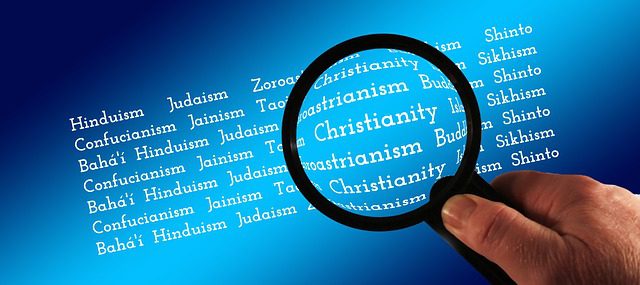
Has the word “evangelical” acquired negative connotations? Does the term need to be retired?
Many “evangelicals” think so, believing that the term has become so associated with right wing politics sand with support of Donald Trump that it turns off the unchurched and has become an obstacle to evangelism.
The term “evangelical” derives from the Greek word for “Gospel” and denotes a particular strain of conservative Protestantism. But now an increasing number of Muslims, Buddhists, and Hindus are describing themselves as “evangelicals.”
Christian sociologist Ryan Burge describes his research in his post Are We All Evangelicals Now? How The Term Has Grown To Blur Theology And Ideology.
He found that actual evangelicals are, indeed, dropping the term, with only 75% identifying in that way. But non-Protestants are now using the term, including 20% of non-white Catholics and 29% of the Orthodox. Among Mormons–sorry, Latter-Day Saints–over a third, 34%, consider themselves to be evangelicals. Such statistics show an increase over the last decade.
This is also happening among adherents of religions that are not Christian at all. One-fifth of Muslims (20%) consider themselves to be evangelicals. As do nearly 10% of Buddhists and 15% of Hindus.
Burge concludes,
There’s an argument to be made here that evangelicalism is not just influencing all of American Christianity, it’s seeping into all aspects of American religion. More Catholics are evangelical today than ever before, the same is true for mainline Protestants. Many Muslims, Jews and Buddhists now take on the moniker. It’s no secret that many Americans have antipathy toward evangelicals, in no small due to their embrace of Donald Trump. But it’s surprising that all that political baggage has not made the term radioactive. In fact, that linkage between Trump, the GOP and evangelicals has actually opened up the “born-again” identity to a larger segment of American religion. If that’s a positive or negative development is something that social scientists and theologians will be working out for decades.
How can this be? Burge finds correlations with such things as church attendance or the equivalent in other religions. Those who identify as evangelicals in whatever religion they follow tend to attend services more than their co-religionists who do not say they are evangelicals.
I suspect that what is happening is not so much that religions are changing but that the language is changing. Linguists and historians of language recognize a phenomenon known as “semantic broadening.” A word acquires a broader meaning than it started with. The word “dog” used to refer to a particular breed of canine, but the word has broadened to include them all.
My sense is that “evangelical” is now being used as someone who is not just religious but very religious. It perhaps includes from the word “evangelism” the sense of wanting to convert other people to one’s religion. Thus, some companies today are calling their marketing employees “evangelists.”
In his survey, Berge worked in another descriptive term, asking whether the respondent is evangelical or “born again.” It may be that Muslims and other non-Christians who had a conversion experience or a personal awakening to their religion are considering themselves “born again” and thus evangelical.
Which reminds us that religion has to do with the content and the object of one’s faith–not just the experience, or converting from one religion to another, or the level of commitment.
Image by Gerd Altmann from Pixabay
Christianity and other religions
Previous Post

April 19, 2021
Churches without Members, Christians without Churches
Next Post

April 21, 2021 The New, Improved Edition of "Spirituality of the Cross"
Recent Comments
"Turns out, she wasn’t the right tool for the job."
"You may have just given me my next sermon opening line."
"So Katie Zacharia lasted only a demiScaramucci as press secretary......"
"Apropos to the post on Gen Z a couple days ago: "If you want the ..."
Browse Our Archives
Select a Category America Apologetics Art baseball Bible Blog Christ Church crime Culture Economics Education Ethics Family Food Football Government History Holidays Holy Week Humor International Islam Language Law Life Issues Literature Media Medicine Movies Music Nature News Personal Philosophy Politics psychology Reformation Religions Sacraments Science sex Social Science Sports technology television terrorism Theology Uncategorized Vocation war
Select a Month October 2026 September 2026 August 2026 July 2026 June 2026 May 2026 April 2026 March 2026 February 2026 January 2026 December 2025 November 2025 October 2025 September 2025 August 2025 July 2025 June 2025 May 2025 April 2025 March 2025 February 2025 January 2025 December 2024 November 2024 October 2024 September 2024 August 2024 July 2024 June 2024 May 2024 April 2024 March 2024 February 2024 January 2024 December 2023 November 2023 October 2023 September 2023 August 2023 July 2023 June 2023 May 2023 April 2023 March 2023 February 2023 January 2023 December 2022 November 2022 October 2022 September 2022 August 2022 July 2022 June 2022 May 2022 April 2022 March 2022 February 2022 January 2022 December 2021 November 2021 October 2021 September 2021 August 2021 July 2021 June 2021 May 2021 April 2021 March 2021 February 2021 January 2021 December 2020 November 2020 October 2020 September 2020 August 2020 July 2020 June 2020 May 2020 April 2020 March 2020 February 2020 January 2020 December 2019 November 2019 October 2019 September 2019 August 2019 July 2019 June 2019 May 2019 April 2019 March 2019 February 2019 January 2019 December 2018 November 2018 October 2018 September 2018 August 2018 July 2018 June 2018 May 2018 April 2018 March 2018 February 2018 January 2018 December 2017 November 2017 October 2017 September 2017 August 2017 July 2017 June 2017 May 2017 April 2017 March 2017 February 2017 January 2017 December 2016 November 2016 October 2016 September 2016 August 2016 July 2016 June 2016 May 2016 April 2016 March 2016 February 2016 January 2016 December 2015 November 2015 October 2015 September 2015 August 2015 July 2015 June 2015 May 2015 April 2015 March 2015 February 2015 January 2015 December 2014 November 2014 October 2014 September 2014 August 2014 July 2014 June 2014 May 2014 April 2014 March 2014 February 2014 January 2014 December 2013 November 2013 October 2013 September 2013 August 2013 July 2013 June 2013 May 2013 April 2013 March 2013 February 2013 January 2013 December 2012 November 2012 October 2012 September 2012 August 2012 July 2012 June 2012 May 2012 April 2012 March 2012 February 2012 January 2012 December 2011 November 2011 October 2011 September 2011 August 2011 July 2011 June 2011 May 2011 April 2011 March 2011 February 2011 January 2011 December 2010 November 2010 October 2010 September 2010 August 2010 July 2010 June 2010 May 2010 April 2010 March 2010 February 2010 January 2010 December 2009 November 2009 October 2009 September 2009 August 2009 July 2009 June 2009 May 2009 April 2009 March 2009 February 2009 January 2009 December 2008 November 2008 October 2008 September 2008 August 2008 July 2008 June 2008 May 2008 April 2008 March 2008 February 2008 January 2008 December 2007 November 2007 October 2007
Follow Us!
TAKE THE
Religious Wisdom Quiz
Where did God tell Moses to remove his shoes because it was holy ground?
Select your answer to see how you score.
Egyptian palace At the burning bush Red Sea Mount Sinai
Books by This Author Books by Gene Veith
Related posts from Cranach

On Trump's Political Ads That You Paid For


Why AI Bots Don't Really Have Emotions
TRENDING AT PATHEOS Evangelical

A new article, written by Jeff Lindsay and Gale L. Pooley,...

Swimfan: Forgotten Aughts Pleasures
This is a recovery effort. In 2002, My Big Fat Greek Wedding...

Top Three Anti-Catholic Lies About Catholicism
This is my initial transcript for the video, "THE 3 WORST...

Pope Leo Celebrates Mass for Nurses & Docs...
I don't have any idea how he did it, but Pope Leo...

The Sermon on the Mount, Part I: Matthew...
The Sermon on the Mount, Part I (Matthew 4:12-5:12) St. Matthew moves...

What's up from Crossway: Reviewing some of their latest A few weeks...
view all Evangelical blogs
What Are Your Thoughts?leave a comment
Ad-Free & Subscriber Log-In Subscription Support
- About Us
- 2026 Calendar
- Videos
- Podcasts
- Library of World Religions
- Faith In Media Tracker
- Advertise With Us
- Write for Us
- Privacy Policy
- Terms of Service
- Do Not Sell My Data
- Contact Us
- Radiant Digital
- Manage Newsletter Subscriptions
- Unsubscribe From Notifications
- Sitemap
Copyright 2008-2026, Patheos. All rights reserved.
Subscription Support Ad-Free & Subscriber Log-In
Follow Patheos