
BuddhistCatholicContemplativeEvangelicalGeneral ChristianHinduJewishLatter-day SaintMuslimNew VisionsProgressive Christian
Beliefs
- Buddhist
- Catholic
- Contemplative
- Evangelical
- General Christian
- Hindu
- Jewish
- Latter-day Saint
- More Voices
- Muslim
- New Visions
- Pagan
- Progressive Christian
Topics
- Religion News
- Food and Religion
- Sports and Religion
- Religious Art
- Religious Music and Entertainment
- Religious Events
- History and Religion
- Style and Religion
- Politics and Religion
- Women in Religion
- Recreation Outdoors and Religion
- Business Finance and Religion
- Careers Workplace and Religion
- Education and Religion
- Family Parenting and Religion
- Health Fitness and Religion
- Home and Religion
- Relationships and Religion
- Technology and Religion
- Travel and Religion
Columnists
- Buddhist Columnists
- Business Finance and Religion Columnists
- Careers Workplace and Religion Columnists
- Catholic Columnists
- Contemplative Columnists
- Education and Religion Columnists
- Evangelists Columnists
- Family Parenting and Religion Columnists
- General Christian Columnists
- Health Fitness and Religion Columnists
- Hindu Columnists
- History and Religion Columnists
- Home and Religion Columnists
- Jewish Columnists
- More Voices Columnists
- Latter Day Columnists
- Muslim Columnists
- New Visions Columnists
- Nonreligious Columnists
- Pagan Columnists
- Politics and Religion Columnists
- Progressive Columnists
- Recreation Outdoors and Religion Columnists
- Relationships and Religion Columnists
- Religion News Columnists
- Religious Art Columnists
- Religious Events Columnists
- Religious Music and Entertainment Columnists
- Sports and Religion Columnists
- Style and Religion Columnists
- Technology and Religion Columnists
- Travel and Religion Columnists
- Women in Religion Columnists
Resource Library
- 2026 Calendar
- Library of World Religions
- The 100 Most Holy Places on Earth
- Patheos Answers
- Podcasts
- Videos
- Faith Leaders Database
- Anglican Episcopalian
- Bahai
- Baptist
- Buddhism
- Christianity
- Confucianism
- Eastern Orthodoxy
- Hinduism
- Holiness and Pentecostal
- ISKCON
- Islam
- Judaism
- Lutheran
- Methodist
- The Church of Jesus Christ of Latter-day Saints
- New Age
- Paganism
- Presbytarian and Reformed
- Protestantism
- Religion Behind the Scenes
- Roman Catholic
- Scientology
- Shia Islam
- Sikhism
- Sufism
- Sunni Islam
- Taoism
- Zen
- See all religions
Research Tools
 Ad-Free & Subscriber Log-In Subscription Support
Ad-Free & Subscriber Log-In Subscription Support
Follow Patheos 

- Trending:
- Forgiveness
- |
- Marriage
- |
- Consciousness
- |
- Death Penalty
- |
- Election
- |
- Halloween

- Home
- Evangelical
- Politics and Religion
- Foucault’s Philosophy of Power, Sex, and Death
Foucault’s Philosophy of Power, Sex, and Death
Last updated on: March 5, 2021 at 6:00 am by Gene Veith
Foucault’s Philosophy of Power, Sex, and Death 2021-03-02T13:36:24-05:00 Gene Veith
Patheos Explore the world's faith through different perspectives on religion and spirituality! Patheos has the views of the prevalent religions and spiritualities of the world.
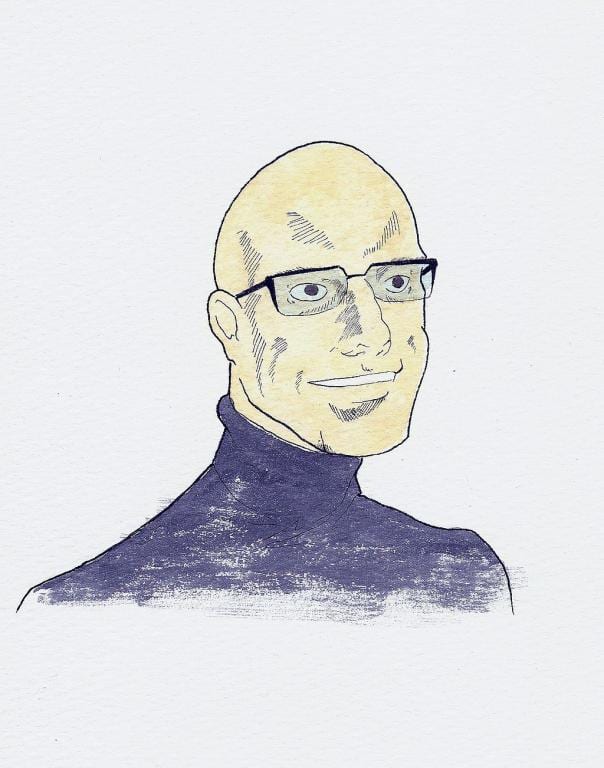
Michel Foucault was a French philosopher who died from AIDS in 1984. He is currently the most-cited scholar in the various fields of the humanities. His ideas are foundational for understanding contemporary thought. His worldview underlies that of the “critical theorists” who see oppression everywhere, and his views on sex explain the centrality of homosexuality in today’s discourse. And yet such applications miss important implications of his thought.
First Things has published a brilliant discussion of Foucault by the Catholic scholar Angela Franks. Seldom have I read a more lucid explanation of any philosopher. She clearly and without rancor explains his ideas and the basis for them. Relating his thought to his life, Prof. Franks then makes a compelling case for the contrasting worldview of Christianity.
You need to read the entire article: Foucault’s Principalities & Power. (You need to be a subscriber to have access to First Things articles, which is well worth the price, but the journal allows a certain number of free views.)
Let me attempt a summary. Here is how Prof. Franks summarizes Foucault’s thought:
The key concept in Foucault’s thought is power. His work can be read as an elaboration of Friedrich Nietzsche’s statement: “This world is the Will to Power—and nothing else! And even you yourselves are this will to power—and nothing besides!” He agreed with Nietzsche that “the omnipresence of power” does not imply some deity-like personage running the show. We are not controlled by a puppet master. Rather, we live in a vast network of demands, commandments, inducements, sorting mechanisms, disciplines, and more. “Power” has no center. It is the aggregate of multiple, shifting relationships.
Our critical theorists apply this “omnipresence of power” politically, in terms of privileged groups imposing their power on “marginalized” groups, which they see happening at every level of life, from American history to Dr. Seuss books. Thus we have political correctness and cancel culture.
Foucault teaches that we have no essence of our own–thus, the notion that innate categories such as gender are fluid and subject to change–but if our inner life, our consciousness, our very identity are all completely formed from the outside, by impositions of power, we are still trapped. No matter how politically correct you are and no matter what your choices are, you cannot escape the omnipresence of power. As Prof. Franks observes,
At American universities, Foucault’s elimination of human nature and his account of our human form as imposed by power has been celebrated as a liberation. No longer constrained by talk of “innate” potencies, Americans read Foucault as giving us the freedom to shape ourselves in any way we please. . . .Yet, while promising to give us much, Foucault’s metaphysical logic in fact steals what we already have. If the inside is an outside operation, then the inside is empty without the outside. Rather than beginning rich with a particular human nature, containing finite but innate potencies, we begin bankrupt. Rather than containing wealth within, we are only what power makes of us. In this respect, Foucault is a prophet of submission, not of freedom.
Foucault tried to find liberation in sex. But he found that sex itself is all tied up with power. In fact, he said that power applied to sex is what constructs eroticism. (No wonder he pursued sado-masochism.)
Foucault sought escape from power’s dominion through non-normative “bodies and pleasures.” Instead of sexual roles or “normal” desires, we can “counter the grips of powers with the claims of bodies, pleasures, and knowledge, in their multiplicity and their possibility of resistance.” Pleasure, he believed, had no normative overtones; it “is virgin territory, almost devoid of meaning. There is no pathology of pleasure, no ‘abnormal’ pleasure.” It simply is.
Drugs could help create this liberating pleasure. So could the “nongenital” dimension of sex that he found in the gay lifestyle and in sado-masochistic practices.
Finally, he turned his attention to death, which, he said has replaced sex as the taboo, the realm of the ultimate pleasure. “Death is beyond the reach of power,” he said. Death is as “the moment when the individual escapes all power, falls back on himself and retreats, so to speak, into his own privacy.” For Foucault, says Prof. Franks, death “is the only reliable liberation.” Which gives us the culture of death.
Prof. Franks counters this view with the notions of nature–if you don’t understand what is meant by “natural law,” she illustrates it memorably–and the soul and the power of God. Along the way, she gives us a reading of 18th century American furniture, both as Foucault and as Aristotle would interpret it, and many other insights.
Again, read it all!
Portrait of Michel Foucault by Nemomain, CC BY-SA 3.0 <https://creativecommons.org/licenses/by-sa/3.0>, via Wikimedia Commons
Previous Post

March 4, 2021
What to Do About the Backlash Against Evangelicals
Next Post

March 8, 2021 The Ten Commandments of Trumpism
Recent Comments
"While she worked for Trump she was a tool's tool!"
"I know wired earbuds are making a comeback (I never stopped using them as I ..."
"VCRs, tape decks, and cassette players are all having a revival among a segment of ..."
"As a (retired) lawyer I see potential liability from sharing things like power or sharp ..."
Browse Our Archives
Select a Category America Apologetics Art baseball Bible Blog Christ Church crime Culture Economics Education Ethics Family Food Football Government History Holidays Holy Week Humor International Islam Language Law Life Issues Literature Media Medicine Movies Music Nature News Personal Philosophy Politics psychology Reformation Religions Sacraments Science sex Social Science Sports technology television terrorism Theology Uncategorized Vocation war
Select a Month October 2026 September 2026 August 2026 July 2026 June 2026 May 2026 April 2026 March 2026 February 2026 January 2026 December 2025 November 2025 October 2025 September 2025 August 2025 July 2025 June 2025 May 2025 April 2025 March 2025 February 2025 January 2025 December 2024 November 2024 October 2024 September 2024 August 2024 July 2024 June 2024 May 2024 April 2024 March 2024 February 2024 January 2024 December 2023 November 2023 October 2023 September 2023 August 2023 July 2023 June 2023 May 2023 April 2023 March 2023 February 2023 January 2023 December 2022 November 2022 October 2022 September 2022 August 2022 July 2022 June 2022 May 2022 April 2022 March 2022 February 2022 January 2022 December 2021 November 2021 October 2021 September 2021 August 2021 July 2021 June 2021 May 2021 April 2021 March 2021 February 2021 January 2021 December 2020 November 2020 October 2020 September 2020 August 2020 July 2020 June 2020 May 2020 April 2020 March 2020 February 2020 January 2020 December 2019 November 2019 October 2019 September 2019 August 2019 July 2019 June 2019 May 2019 April 2019 March 2019 February 2019 January 2019 December 2018 November 2018 October 2018 September 2018 August 2018 July 2018 June 2018 May 2018 April 2018 March 2018 February 2018 January 2018 December 2017 November 2017 October 2017 September 2017 August 2017 July 2017 June 2017 May 2017 April 2017 March 2017 February 2017 January 2017 December 2016 November 2016 October 2016 September 2016 August 2016 July 2016 June 2016 May 2016 April 2016 March 2016 February 2016 January 2016 December 2015 November 2015 October 2015 September 2015 August 2015 July 2015 June 2015 May 2015 April 2015 March 2015 February 2015 January 2015 December 2014 November 2014 October 2014 September 2014 August 2014 July 2014 June 2014 May 2014 April 2014 March 2014 February 2014 January 2014 December 2013 November 2013 October 2013 September 2013 August 2013 July 2013 June 2013 May 2013 April 2013 March 2013 February 2013 January 2013 December 2012 November 2012 October 2012 September 2012 August 2012 July 2012 June 2012 May 2012 April 2012 March 2012 February 2012 January 2012 December 2011 November 2011 October 2011 September 2011 August 2011 July 2011 June 2011 May 2011 April 2011 March 2011 February 2011 January 2011 December 2010 November 2010 October 2010 September 2010 August 2010 July 2010 June 2010 May 2010 April 2010 March 2010 February 2010 January 2010 December 2009 November 2009 October 2009 September 2009 August 2009 July 2009 June 2009 May 2009 April 2009 March 2009 February 2009 January 2009 December 2008 November 2008 October 2008 September 2008 August 2008 July 2008 June 2008 May 2008 April 2008 March 2008 February 2008 January 2008 December 2007 November 2007 October 2007
Follow Us!
TAKE THE
Religious Wisdom Quiz
Who taught, "Love your enemies and pray for those who persecute you"?
Select your answer to see how you score.
John James Jesus Paul
Books by This Author Books by Gene Veith
Related posts from Cranach


Gen Z Wants Evildoers to Be Punished, Not...

On Trump's Political Ads That You Paid For
TRENDING AT PATHEOS Evangelical

Emotion in Early Christianity by Andrew Crislip
Andrew Crislip’s Emotion in Early Christianity examines an often overlooked dimension of...

16 Spiritual Touchstones for a More Grounded Life
After decades of spiritual study, here are 16 principles I try...

Catholic Evangelization: Sharing Your Faith Every Day
Welcome back to the Graceful Awakening mini-series called, “From Faith to Mission.” ...

The Pillar of the Boatmen: the Ancient Monument...
The Pillar of the Boatmen is a Romano-Gaulish sculpture that dates from...

In one sense walking into Westminster Abbey is like walking down the...

'Super Scam Me' Exposes AI Jon Bon Jovi...
Leslie Pickett believed she was in a relationship with Jon Bon Jovi....
view all Evangelical blogs
What Are Your Thoughts?leave a comment
Ad-Free & Subscriber Log-In Subscription Support
- About Us
- 2026 Calendar
- Videos
- Podcasts
- Library of World Religions
- Faith In Media Tracker
- Advertise With Us
- Write for Us
- Privacy Policy
- Terms of Service
- Do Not Sell My Data
- Contact Us
- Radiant Digital
- Manage Newsletter Subscriptions
- Unsubscribe From Notifications
- Sitemap
Copyright 2008-2026, Patheos. All rights reserved.
Subscription Support Ad-Free & Subscriber Log-In
Follow Patheos