
BuddhistCatholicContemplativeEvangelicalGeneral ChristianHinduJewishLatter-day SaintMuslimNew VisionsProgressive Christian
Beliefs
- Buddhist
- Catholic
- Contemplative
- Evangelical
- General Christian
- Hindu
- Jewish
- Latter-day Saint
- More Voices
- Muslim
- New Visions
- Pagan
- Progressive Christian
Topics
- Religion News
- Food and Religion
- Sports and Religion
- Religious Art
- Religious Music and Entertainment
- Religious Events
- History and Religion
- Style and Religion
- Politics and Religion
- Women in Religion
- Recreation Outdoors and Religion
- Business Finance and Religion
- Careers Workplace and Religion
- Education and Religion
- Family Parenting and Religion
- Health Fitness and Religion
- Home and Religion
- Relationships and Religion
- Technology and Religion
- Travel and Religion
Columnists
- Buddhist Columnists
- Business Finance and Religion Columnists
- Careers Workplace and Religion Columnists
- Catholic Columnists
- Contemplative Columnists
- Education and Religion Columnists
- Evangelists Columnists
- Family Parenting and Religion Columnists
- General Christian Columnists
- Health Fitness and Religion Columnists
- Hindu Columnists
- History and Religion Columnists
- Home and Religion Columnists
- Jewish Columnists
- More Voices Columnists
- Latter Day Columnists
- Muslim Columnists
- New Visions Columnists
- Nonreligious Columnists
- Pagan Columnists
- Politics and Religion Columnists
- Progressive Columnists
- Recreation Outdoors and Religion Columnists
- Relationships and Religion Columnists
- Religion News Columnists
- Religious Art Columnists
- Religious Events Columnists
- Religious Music and Entertainment Columnists
- Sports and Religion Columnists
- Style and Religion Columnists
- Technology and Religion Columnists
- Travel and Religion Columnists
- Women in Religion Columnists
Resource Library
- 2026 Calendar
- Library of World Religions
- The 100 Most Holy Places on Earth
- Patheos Answers
- Podcasts
- Videos
- Faith Leaders Database
- Anglican Episcopalian
- Bahai
- Baptist
- Buddhism
- Christianity
- Confucianism
- Eastern Orthodoxy
- Hinduism
- Holiness and Pentecostal
- ISKCON
- Islam
- Judaism
- Lutheran
- Methodist
- The Church of Jesus Christ of Latter-day Saints
- New Age
- Paganism
- Presbytarian and Reformed
- Protestantism
- Religion Behind the Scenes
- Roman Catholic
- Scientology
- Shia Islam
- Sikhism
- Sufism
- Sunni Islam
- Taoism
- Zen
- See all religions
Research Tools
 Ad-Free & Subscriber Log-In Subscription Support
Ad-Free & Subscriber Log-In Subscription Support
Follow Patheos 

- Trending:
- Forgiveness
- |
- Marriage
- |
- Consciousness
- |
- Death Penalty
- |
- Election
- |
- Halloween

- Home
- Evangelical
- Politics and Religion
- Not Relativism but “Myside Bias”
Not Relativism but “Myside Bias”
Last updated on: October 14, 2020 at 6:00 am by Gene Veith
Not Relativism but “Myside Bias” 2020-10-11T17:26:49-04:00 Gene Veith
Patheos Explore the world's faith through different perspectives on religion and spirituality! Patheos has the views of the prevalent religions and spiritualities of the world.
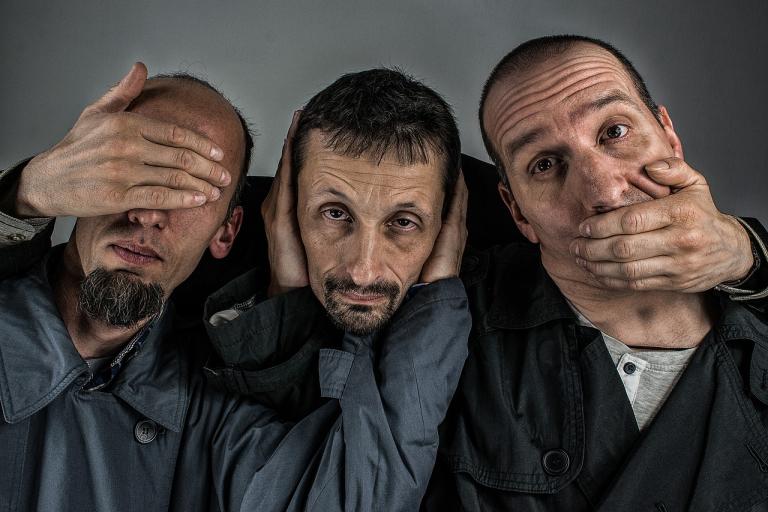
The reason we can’t agree with or persuade each other is not relativism, irrationalism, or the rejection of objective truth.
“What our society is really suffering from is myside bias: People evaluate evidence, generate evidence, and test hypotheses in a manner biased toward their own prior beliefs, opinions, and attitudes.” These are largely determined by what social group we belong to.
So says University of Toronto psychology professor Keith E. Stanovich in his article The Bias that Divides Us.
In his extensive research into the phenomenon, which is being published in a forthcoming book of the same title from MIT Press, Prof. Stanovich finds that, unlike other kinds of bias, virtually everyone displays myside bias. It is evident in both liberals and conservatives. It can be found among rationalists and scientists, as well as less-sophisticated folks.
Prof. Stanovich summarizes some of the research:
Research has shown that myside bias is displayed in a variety of experimental situations: people evaluate the same virtuous act more favourably if committed by a member of their own group and evaluate a negative act less unfavourably if committed by a member of their own group; they evaluate an identical experiment more favourably if the results support their prior beliefs than if the results contradict their prior beliefs; and when searching for information, people select information sources that are likely to support their own position. Even the interpretation of a purely numerical display of outcome data is tipped in the direction of the subject’s prior belief. Likewise, judgments of logical validity are skewed by people’s prior beliefs. Valid syllogisms with the conclusion “therefore, marijuana should be legal” are easier for liberals to judge correctly and harder for conservatives; whereas valid syllogisms with the conclusion “therefore, no one has the right to end the life of a fetus” are harder for liberals to judge correctly and easier for conservatives.
Not only do highly-intelligent and highly-educated people exhibit myside bias, they are especially susceptible to it:
If you are a person of high intelligence, if you are highly educated, and if you are strongly committed to an ideological viewpoint, you will be highly likely to think you have thought your way to your viewpoint. And you will be even less likely than the average person to realize that you have derived your beliefs from the social groups you belong to and because they fit with your temperament and your innate psychological propensities.
Identity politics and the rise of critical theory have accelerated and given a justification for myside bias. “If myside bias is the fire that has set ablaze the public communications commons in our society, then identity politics is the gasoline that is turning a containable fire into an epic conflagration. By encouraging people to view every issue through an identity lens, it creates the tendency to turn simple beliefs about testable propositions into full-blown convictions that are then projected onto new evidence.”
Prof. Stanovich shows how myside bias is rampant in academia, to the point of undermining the public’s trust in universities and making some kinds of research impossible:
Identity politics advocates have succeeded in making certain research conclusions within the university verboten. They have made it very hard for any university professor (particularly the junior and untenured ones) to publish and publicly promote any conclusions that these advocates dislike. . . .
University research on all of the charged topics where identity politics has predetermined the conclusions—immigration, racial profiling, gay marriage, income inequality, college admissions biases, sex differences, intelligence differences, and the list goes on—is simply not believable anymore by anyone cognizant of the pressures exerted by the ideological monoculture of the university. Whether or not some cultures promote human flourishing more than others; whether or not men and women have different interests and proclivities; whether or not culture affects poverty rates; whether or not intelligence is partially heritable; whether or not the gender wage gap is largely due to factors other than discrimination; whether or not race-based admissions policies have some unintended consequences; whether or not traditional masculinity is useful to society; whether or not crime rates vary between the races—these are all topics on which the modern university has dictated the conclusion before the results of any investigation are in. . . .
For research evidence to scientifically support a proposition, that proposition must itself be “falsifiable”—capable of being proven false. However, the public is increasingly aware that, in universities, for many issues related to identity politics, preferred conclusions are now dictated in advance and falsifying them in open inquiry is no longer allowed.
It appears that Prof. Stanovic is not criticizing myside bias, as such. Rather, he presents it as a “given.” If he is right, we do not, in fact, come to our beliefs purely by reasoning or by assembling evidence.
He does say that there is a sense in which myside bias has a rational basis, in that building on what we already know allows us to go forward, rather than going back all the time and starting from scratch. And yet, myside bias can be corrected for by, for example, the scientific method, with its blind and double-blind studies, its insistence on replicability, and, again, “falsifiability” (that is, to be meaningful, a hypothesis must at least theoretically be capable of being proven false, that some kind of evidence could conceivably disprove it). The problem is that some lines of inquiry and research are not allowed. The social pressures in academia–the desire to be accepted by one’s peers–make them unthinkable.
How does myside bias apply in the church? Well, it is certainly true that a Lutheran, a Calvinist, and a Baptist can read the same Bible and find their distinctive doctrines. Is their disagreement, despite the same Biblical evidence, a matter of insufficient scholarship? Maybe, at least to a point. And yet, our religious convictions are not usually a matter simply of a logical chain of thought. Apologetics have an important role to play, and thinking through what we believe should be more common than it is. But faith is a gift. It comes to us from the outside. We do not figure it out for ourselves. Rather, God reveals Himself to us, through His Word and (Lutherans believe) His sacraments, thus forming our Christian identity and convictions. That the social group we belong to shapes our thinking need not undermine the concept of truth. But it does show us why the church–the local congregation, the particular theological tradition it is a part of, and the historic church going back through the ages–is important.
Perhaps Prof. Stanovich in his upcoming book will tell us how to break out of myside bias. I would think that simply being aware of the phenomenon can help us to be more objective in our thinking, more self-critical, and less dismissive of other sides.
Image by Szilárd Szabó from Pixabay
Previous Post

October 13, 2020
Additional Principles for Good Writing
Next Post

October 15, 2020 Deciding How to Vote #1: The Candidate
Recent Comments
"I know wired earbuds are making a comeback (I never stopped using them as I ..."
"VCRs, tape decks, and cassette players are all having a revival among a segment of ..."
"As a (retired) lawyer I see potential liability from sharing things like power or sharp ..."
"I am not sure the items you mentioned, though disused, discontinued, discarded, could be considered ..."
Browse Our Archives
Select a Category America Apologetics Art baseball Bible Blog Christ Church crime Culture Economics Education Ethics Family Food Football Government History Holidays Holy Week Humor International Islam Language Law Life Issues Literature Media Medicine Movies Music Nature News Personal Philosophy Politics psychology Reformation Religions Sacraments Science sex Social Science Sports technology television terrorism Theology Uncategorized Vocation war
Select a Month October 2026 September 2026 August 2026 July 2026 June 2026 May 2026 April 2026 March 2026 February 2026 January 2026 December 2025 November 2025 October 2025 September 2025 August 2025 July 2025 June 2025 May 2025 April 2025 March 2025 February 2025 January 2025 December 2024 November 2024 October 2024 September 2024 August 2024 July 2024 June 2024 May 2024 April 2024 March 2024 February 2024 January 2024 December 2023 November 2023 October 2023 September 2023 August 2023 July 2023 June 2023 May 2023 April 2023 March 2023 February 2023 January 2023 December 2022 November 2022 October 2022 September 2022 August 2022 July 2022 June 2022 May 2022 April 2022 March 2022 February 2022 January 2022 December 2021 November 2021 October 2021 September 2021 August 2021 July 2021 June 2021 May 2021 April 2021 March 2021 February 2021 January 2021 December 2020 November 2020 October 2020 September 2020 August 2020 July 2020 June 2020 May 2020 April 2020 March 2020 February 2020 January 2020 December 2019 November 2019 October 2019 September 2019 August 2019 July 2019 June 2019 May 2019 April 2019 March 2019 February 2019 January 2019 December 2018 November 2018 October 2018 September 2018 August 2018 July 2018 June 2018 May 2018 April 2018 March 2018 February 2018 January 2018 December 2017 November 2017 October 2017 September 2017 August 2017 July 2017 June 2017 May 2017 April 2017 March 2017 February 2017 January 2017 December 2016 November 2016 October 2016 September 2016 August 2016 July 2016 June 2016 May 2016 April 2016 March 2016 February 2016 January 2016 December 2015 November 2015 October 2015 September 2015 August 2015 July 2015 June 2015 May 2015 April 2015 March 2015 February 2015 January 2015 December 2014 November 2014 October 2014 September 2014 August 2014 July 2014 June 2014 May 2014 April 2014 March 2014 February 2014 January 2014 December 2013 November 2013 October 2013 September 2013 August 2013 July 2013 June 2013 May 2013 April 2013 March 2013 February 2013 January 2013 December 2012 November 2012 October 2012 September 2012 August 2012 July 2012 June 2012 May 2012 April 2012 March 2012 February 2012 January 2012 December 2011 November 2011 October 2011 September 2011 August 2011 July 2011 June 2011 May 2011 April 2011 March 2011 February 2011 January 2011 December 2010 November 2010 October 2010 September 2010 August 2010 July 2010 June 2010 May 2010 April 2010 March 2010 February 2010 January 2010 December 2009 November 2009 October 2009 September 2009 August 2009 July 2009 June 2009 May 2009 April 2009 March 2009 February 2009 January 2009 December 2008 November 2008 October 2008 September 2008 August 2008 July 2008 June 2008 May 2008 April 2008 March 2008 February 2008 January 2008 December 2007 November 2007 October 2007
Follow Us!
TAKE THE
Religious Wisdom Quiz
True or False: Mordecai refused to bow down to Haman.
Select your answer to see how you score.
FALSE TRUE
Books by This Author Books by Gene Veith
Related posts from Cranach


The Family Estrangement Epidemic
TRENDING AT PATHEOS Evangelical

When Halloween Unmasks Married Hearts
Written by Dr. David K. Ewen from Eternal Truth Bible College Behind...

Aristotle. He’s been called the father of logic, the father of the...

Methodist Central Hall and Westminster Abbey
Situated on the same square is Methodist Central Hall and Westminster Abbey. ...

57th Dove Awards Honor Dolly Parton, Crown New...
On gospel music’s biggest night, the 57th annual GMA Dove Awards honored...

The First Eucharistic Controversy: Christ’s Real Presence
For Catholics, the Eucharist is the source and summit of the Christian...

What a Stop Sign Can Teach Us About...
How to Make a Decision When You Can't Hear God Main point:...
view all Evangelical blogs
What Are Your Thoughts?leave a comment
Ad-Free & Subscriber Log-In Subscription Support
- About Us
- 2026 Calendar
- Videos
- Podcasts
- Library of World Religions
- Faith In Media Tracker
- Advertise With Us
- Write for Us
- Privacy Policy
- Terms of Service
- Do Not Sell My Data
- Contact Us
- Radiant Digital
- Manage Newsletter Subscriptions
- Unsubscribe From Notifications
- Sitemap
Copyright 2008-2026, Patheos. All rights reserved.
Subscription Support Ad-Free & Subscriber Log-In
Follow Patheos