
BuddhistCatholicContemplativeEvangelicalGeneral ChristianHinduJewishLatter-day SaintMuslimNew VisionsProgressive Christian
Beliefs
- Buddhist
- Catholic
- Contemplative
- Evangelical
- General Christian
- Hindu
- Jewish
- Latter-day Saint
- More Voices
- Muslim
- New Visions
- Pagan
- Progressive Christian
Topics
- Religion News
- Food and Religion
- Sports and Religion
- Religious Art
- Religious Music and Entertainment
- Religious Events
- History and Religion
- Style and Religion
- Politics and Religion
- Women in Religion
- Recreation Outdoors and Religion
- Business Finance and Religion
- Careers Workplace and Religion
- Education and Religion
- Family Parenting and Religion
- Health Fitness and Religion
- Home and Religion
- Relationships and Religion
- Technology and Religion
- Travel and Religion
Columnists
- Buddhist Columnists
- Business Finance and Religion Columnists
- Careers Workplace and Religion Columnists
- Catholic Columnists
- Contemplative Columnists
- Education and Religion Columnists
- Evangelists Columnists
- Family Parenting and Religion Columnists
- General Christian Columnists
- Health Fitness and Religion Columnists
- Hindu Columnists
- History and Religion Columnists
- Home and Religion Columnists
- Jewish Columnists
- More Voices Columnists
- Latter Day Columnists
- Muslim Columnists
- New Visions Columnists
- Nonreligious Columnists
- Pagan Columnists
- Politics and Religion Columnists
- Progressive Columnists
- Recreation Outdoors and Religion Columnists
- Relationships and Religion Columnists
- Religion News Columnists
- Religious Art Columnists
- Religious Events Columnists
- Religious Music and Entertainment Columnists
- Sports and Religion Columnists
- Style and Religion Columnists
- Technology and Religion Columnists
- Travel and Religion Columnists
- Women in Religion Columnists
Resource Library
- 2026 Calendar
- Library of World Religions
- The 100 Most Holy Places on Earth
- Patheos Answers
- Podcasts
- Videos
- Faith Leaders Database
- Anglican Episcopalian
- Bahai
- Baptist
- Buddhism
- Christianity
- Confucianism
- Eastern Orthodoxy
- Hinduism
- Holiness and Pentecostal
- ISKCON
- Islam
- Judaism
- Lutheran
- Methodist
- The Church of Jesus Christ of Latter-day Saints
- New Age
- Paganism
- Presbytarian and Reformed
- Protestantism
- Religion Behind the Scenes
- Roman Catholic
- Scientology
- Shia Islam
- Sikhism
- Sufism
- Sunni Islam
- Taoism
- Zen
- See all religions
Research Tools
 Ad-Free & Subscriber Log-In Subscription Support
Follow Patheos 

- Trending:
- Advent
- |
- Forgiveness
- |
- Thanksgiving
- |
- Election
- |
- Seasonal Holidays
- |
- Marriage

- Home
- Evangelical
- Politics and Religion
- Count von Zinzendorf Did Not Lead a Vampire Sex Cult
Count von Zinzendorf Did Not Lead a Vampire Sex Cult
Last updated on: September 25, 2020 at 9:23 am by Gene Veith
Count von Zinzendorf Did Not Lead a Vampire Sex Cult 2020-09-25T09:23:28-04:00 Gene Veith
Patheos Explore the world's faith through different perspectives on religion and spirituality! Patheos has the views of the prevalent religions and spiritualities of the world.
As secularism and religious illiteracy increases, Christianity will be seen as more and more exotic. And weird.
Christians have a ritualistic meal in which they think they are eating Christ’s body and drinking Christ’s blood–that’s cannibalism! (So charged the Roman Empire when persecuting Christians.) Christians say Jesus rose from the dead–so he’s like, a zombie! (So said a commenter on this blog.)
An almost comical example of getting a Christian teacher all wrong is the second episode of Van Der Valk, a British mystery about a Dutch detective airing on Masterpiece on PBS. (You can watch it for free here.) The Amsterdam police are investigating a sadomasochistic “vampiric” murder. Their leads take them to a research library that specializes in “spirituality,” including a collection of “medieval religious erotica” that somehow seems to be involved.
A scholar named Lionel VEITH is giving a lecture on a book he has written about Count von Zinzendorf. (“Veith”! That’s the first time I have come across my uncommon name in a work of fiction since my childhood when I found it as the name of the villain in a Batman comic book!) This Dr. Veith (pronounced and spelled the same, according to the closed captions) was saying how von Zinzendorf “worshiped the wounds of Christ.” He later said that his followers engaged in some bizarre “sexual practices.” Detective Van der Valk and his team used all of this as clues for unravelling the mystery.
Despite this portrayal of Zinzendorf, the erotic illuminated illuminated manuscripts, and the character of a prurient nun, the show did not cast Christianity in a bad light. In fact, this little known underside of the Christian tradition was presented as kind of cool. Dr. Veith concluded his lecture by saying that Count von Zinzendorf “has lessons for us all.” At the end. . . .Well, I shouldn’t give spoilers, especially in a murder mystery. Still, the ignorance and misinterpretation exhibited on this show are staggering.
Since the name of Zinzendorf was traduced and since my own name was dragged into it, I feel called upon to offer some corrections and explanations.
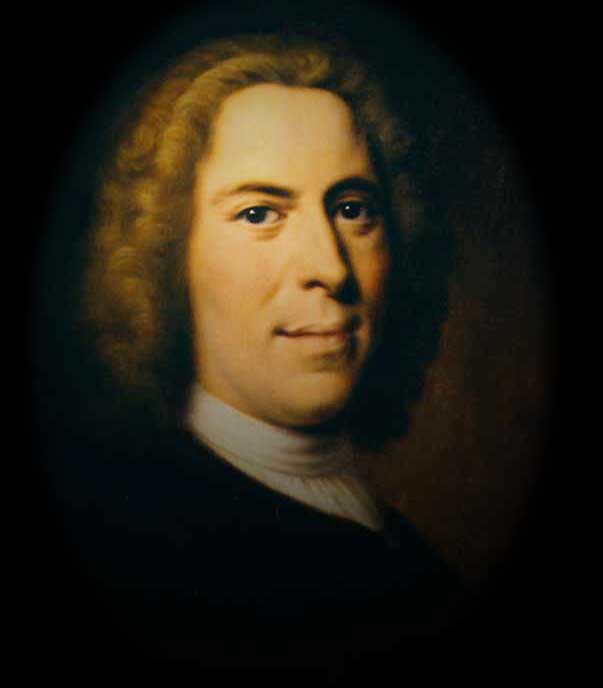
Nikolaus Ludwig von Zinzendorf (1700-1760) was a Lutheran Pietist. An important figure in 18th century Christianity, Zinzendorf was a founder of the Mission Movement, which would become so important especially in Scandinavian Lutheranism, an anti-slavery activist, and a missionary to the slaves of the West Indies and to Native American tribes in the United States. His followers became known as Moravians, which is now a distinct denomination.
Now we Missouri-Synod Lutherans hold more to the Lutheran orthodoxy of the 17th century and are often critical of Pietism as being overly subjective and promoting a legalistic lifestyle. The early Pietists promoted a deeply personal faith and an intense, emotional devotional life that was a reaction against what was perceived as an overly-intellectualized religion. But some of the Pietists were quite orthodox as Lutherans, though others would drift into anti-sacramentalism and opposition to the institutional church. Zinzendorf affirmed the Augsburg Confession, but he drifted away from Lutheranism as such and, again, his Moravians became a separate church body.
But, to return to the PBS mystery, Zinzendorf did NOT “worship the wounds of Christ.” He did have a high view of the Atonement and wrote much about Christ’s suffering and its relevance for Christians. For example, he would exhort sinners to hide themselves in the wounds of Christ. Two of his hymns are in the Lutheran Service Book, the LCMS hymnal, and are quite beloved: “Jesus, Lead Thou On” (#718) and “Jesus, Thy Blood and Righteousness” (#563), which goes on to say that His blood and righteousness “My beauty are, my glorious dress” (#563). Some of his vivid, bloody imagery may seem over the top to today’s sensibility, but it was a commonplace of Baroque devotions and can also be found in the Catholic meditations of the time, for example in the poetry of Richard Crashaw and in popular devotions such as those to the Five Holy Wounds of Christ Crucified.
As for his followers engaging in bizarre sexual practices, perhaps the TV-writers were thinking of chastity and reserving sex for marriage. Such an approach to sex evidently seems perverse and transgressive in today’s sex-obsessed climate. The Moravians did have congregations that lived in commune-like arrangements. They shared child-raising responsibilities, but not each other’s spouses! Zinzendorf had a high view of marriage, considering it a sacrament (contrary to Lutheran orthodoxy), which the Moravians took to heart.
John Wesley was converted to Christianity when he met with Moravians and heard them read from Luther’s Preface to the Book of Romans. This would lead to Methodism and, later, the evangelistic revivals in America. Scholars today are seeing the connection between the Pietist awakenings in Europe and the two “Great Awakenings” in the United States. In fact, many scholars are saying that the origins of American evangelicalism are to be found not so much with the Puritans as with European Pietists such as Zinzendorf.
So no, Dr. Veith, Count von Zinzendorf did not “worship the wounds of Christ,” nor did he start a sex cult, and when he referred to drinking the blood of Christ, he was not being a vampire. But he does “have lessons for us today.”
One more fun fact about Count von Zinzendorf: He was converted by a work of art, a painting of Christ after his torture by Pilate with the caption “”This have I suffered for you” (faith comes by the Word); “now what will you do for me?” (vocation). The painting was “Ecce Homo” by Domenica Feti. Read about the painting and what happened here. Here is the painting:
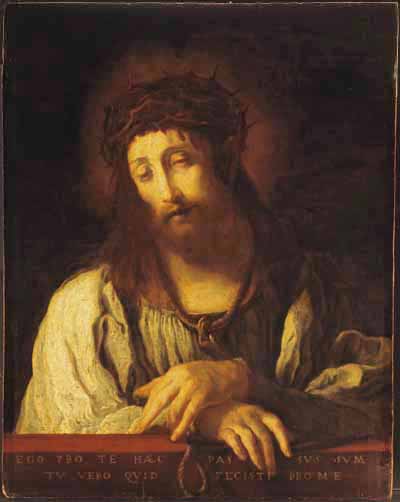
So evidently, art can have an evangelistic effect. Just don’t count on it in PBS mystery stories.
Illustrations: Portrait of Nikolaus Ludwig von Zinzendorf by Balthasar Denner (1685-1749), public domain. “Ecce Homo” by Domenica Feti (1589 – 1623), public domain.
Previous Post

September 24, 2020
And Now, Book Burning
Next Post

September 28, 2020 How Court Packing Could End Constitutional Government
Recent Comments
""all the things we see around us are contingent; they do not have to exist, ..."
God and the Contingency of This ..."
"So much of the arguments sounds very much like the language of quantum probabilities or ..."
God and the Contingency of This ..."
"One might even imagine people beginning to believe that they transcend NVIDIA chips, their material ..."
The Contingency of Our Technology
"We have been directed to call it Super Intelligence. Your flouting of this edict is ..."
The Contingency of Our Technology
Browse Our Archives
Select a Category America Apologetics Art baseball Bible Blog Christ Church crime Culture Economics Education Ethics Family Food Football Government History Holidays Holy Week Humor International Islam Language Law Life Issues Literature Media Medicine Movies Music Nature News Personal Philosophy Politics psychology Reformation Religions Sacraments Science sex Social Science Sports technology television terrorism Theology Uncategorized Vocation war
Select a Month November 2026 October 2026 September 2026 August 2026 July 2026 June 2026 May 2026 April 2026 March 2026 February 2026 January 2026 December 2025 November 2025 October 2025 September 2025 August 2025 July 2025 June 2025 May 2025 April 2025 March 2025 February 2025 January 2025 December 2024 November 2024 October 2024 September 2024 August 2024 July 2024 June 2024 May 2024 April 2024 March 2024 February 2024 January 2024 December 2023 November 2023 October 2023 September 2023 August 2023 July 2023 June 2023 May 2023 April 2023 March 2023 February 2023 January 2023 December 2022 November 2022 October 2022 September 2022 August 2022 July 2022 June 2022 May 2022 April 2022 March 2022 February 2022 January 2022 December 2021 November 2021 October 2021 September 2021 August 2021 July 2021 June 2021 May 2021 April 2021 March 2021 February 2021 January 2021 December 2020 November 2020 October 2020 September 2020 August 2020 July 2020 June 2020 May 2020 April 2020 March 2020 February 2020 January 2020 December 2019 November 2019 October 2019 September 2019 August 2019 July 2019 June 2019 May 2019 April 2019 March 2019 February 2019 January 2019 December 2018 November 2018 October 2018 September 2018 August 2018 July 2018 June 2018 May 2018 April 2018 March 2018 February 2018 January 2018 December 2017 November 2017 October 2017 September 2017 August 2017 July 2017 June 2017 May 2017 April 2017 March 2017 February 2017 January 2017 December 2016 November 2016 October 2016 September 2016 August 2016 July 2016 June 2016 May 2016 April 2016 March 2016 February 2016 January 2016 December 2015 November 2015 October 2015 September 2015 August 2015 July 2015 June 2015 May 2015 April 2015 March 2015 February 2015 January 2015 December 2014 November 2014 October 2014 September 2014 August 2014 July 2014 June 2014 May 2014 April 2014 March 2014 February 2014 January 2014 December 2013 November 2013 October 2013 September 2013 August 2013 July 2013 June 2013 May 2013 April 2013 March 2013 February 2013 January 2013 December 2012 November 2012 October 2012 September 2012 August 2012 July 2012 June 2012 May 2012 April 2012 March 2012 February 2012 January 2012 December 2011 November 2011 October 2011 September 2011 August 2011 July 2011 June 2011 May 2011 April 2011 March 2011 February 2011 January 2011 December 2010 November 2010 October 2010 September 2010 August 2010 July 2010 June 2010 May 2010 April 2010 March 2010 February 2010 January 2010 December 2009 November 2009 October 2009 September 2009 August 2009 July 2009 June 2009 May 2009 April 2009 March 2009 February 2009 January 2009 December 2008 November 2008 October 2008 September 2008 August 2008 July 2008 June 2008 May 2008 April 2008 March 2008 February 2008 January 2008 December 2007 November 2007 October 2007
Give A Subscription
Follow Us!
TAKE THE
Religious Wisdom Quiz
What did John see coming down from heaven in Revelation 21?
Select your answer to see how you score.
The four horsemen The New Jerusalem The Ark of the Covenant A chariot of fire
Books by This Author Books by Gene Veith
Related posts from Cranach
God and the Contingency of This World

Who Receives the New Benefit of Clergy
TRENDING AT PATHEOS Evangelical

Book III, Chapter 3: Christ "Classic" (Matt. 9:9-34)
Book III, Chapter 3: Christ "Classic" (Matt. 9:9-34) In honor of tomorrow's...

Jesus explicitly mentions the book of Jonah twice, but he retells the...

Peggy Sue Got Married: Coppola’s Always Been Like...
I enjoyed Megalopolis (2024). It’s a mess, but I enjoyed it. The...

My dissertation The Place of Mysticism in the Late Middle Ages concerns...

God and the Contingency of This World
The great Catholic philosopher Aquinas and the great Lutheran philosopher Leibniz developed...

Pope Francis and The Devil – A Pagan...
According to his private diaries, Pope Francis saw visions of the devil...
view all Evangelical blogs
What Are Your Thoughts?leave a comment
Ad-Free & Subscriber Log-In Subscription Support
- About Us
- 2026 Calendar
- Videos
- Podcasts
- Library of World Religions
- Faith In Media Tracker
- Advertise With Us
- Write for Us
- Privacy Policy
- Terms of Service
- Do Not Sell My Data
- Contact Us
- Radiant Digital
- Manage Newsletter Subscriptions
- Unsubscribe From Notifications
- Sitemap
Copyright 2008-2026, Patheos, part of the Radiant Digital network of media brands. All rights reserved.
Subscription Support Ad-Free & Subscriber Log-In
Follow Patheos