
BuddhistCatholicContemplativeEvangelicalGeneral ChristianHinduJewishLatter-day SaintMuslimNew VisionsProgressive Christian
Beliefs
- Buddhist
- Catholic
- Contemplative
- Evangelical
- General Christian
- Hindu
- Jewish
- Latter-day Saint
- More Voices
- Muslim
- New Visions
- Pagan
- Progressive Christian
Topics
- Religion News
- Food and Religion
- Sports and Religion
- Religious Art
- Religious Music and Entertainment
- Religious Events
- History and Religion
- Style and Religion
- Politics and Religion
- Women in Religion
- Recreation Outdoors and Religion
- Business Finance and Religion
- Careers Workplace and Religion
- Education and Religion
- Family Parenting and Religion
- Health Fitness and Religion
- Home and Religion
- Relationships and Religion
- Technology and Religion
- Travel and Religion
Columnists
- Buddhist Columnists
- Business Finance and Religion Columnists
- Careers Workplace and Religion Columnists
- Catholic Columnists
- Contemplative Columnists
- Education and Religion Columnists
- Evangelists Columnists
- Family Parenting and Religion Columnists
- General Christian Columnists
- Health Fitness and Religion Columnists
- Hindu Columnists
- History and Religion Columnists
- Home and Religion Columnists
- Jewish Columnists
- More Voices Columnists
- Latter Day Columnists
- Muslim Columnists
- New Visions Columnists
- Nonreligious Columnists
- Pagan Columnists
- Politics and Religion Columnists
- Progressive Columnists
- Recreation Outdoors and Religion Columnists
- Relationships and Religion Columnists
- Religion News Columnists
- Religious Art Columnists
- Religious Events Columnists
- Religious Music and Entertainment Columnists
- Sports and Religion Columnists
- Style and Religion Columnists
- Technology and Religion Columnists
- Travel and Religion Columnists
- Women in Religion Columnists
Resource Library
- 2026 Calendar
- Library of World Religions
- The 100 Most Holy Places on Earth
- Patheos Answers
- Podcasts
- Videos
- Faith Leaders Database
- Anglican Episcopalian
- Bahai
- Baptist
- Buddhism
- Christianity
- Confucianism
- Eastern Orthodoxy
- Hinduism
- Holiness and Pentecostal
- ISKCON
- Islam
- Judaism
- Lutheran
- Methodist
- The Church of Jesus Christ of Latter-day Saints
- New Age
- Paganism
- Presbytarian and Reformed
- Protestantism
- Religion Behind the Scenes
- Roman Catholic
- Scientology
- Shia Islam
- Sikhism
- Sufism
- Sunni Islam
- Taoism
- Zen
- See all religions
Research Tools
 Ad-Free & Subscriber Log-In Subscription Support
Ad-Free & Subscriber Log-In Subscription Support
Follow Patheos 

- Trending:
- Forgiveness
- |
- Marriage
- |
- Consciousness
- |
- Death Penalty
- |
- Election
- |
- Halloween

- Home
- Evangelical
- Politics and Religion
- Why Do We Admire Certain Vocations?
Why Do We Admire Certain Vocations?
Last updated on: July 24, 2020 at 7:45 am by Gene Veith
Why Do We Admire Certain Vocations? 2020-07-24T07:45:19-04:00 Gene Veith
Patheos Explore the world's faith through different perspectives on religion and spirituality! Patheos has the views of the prevalent religions and spiritualities of the world.
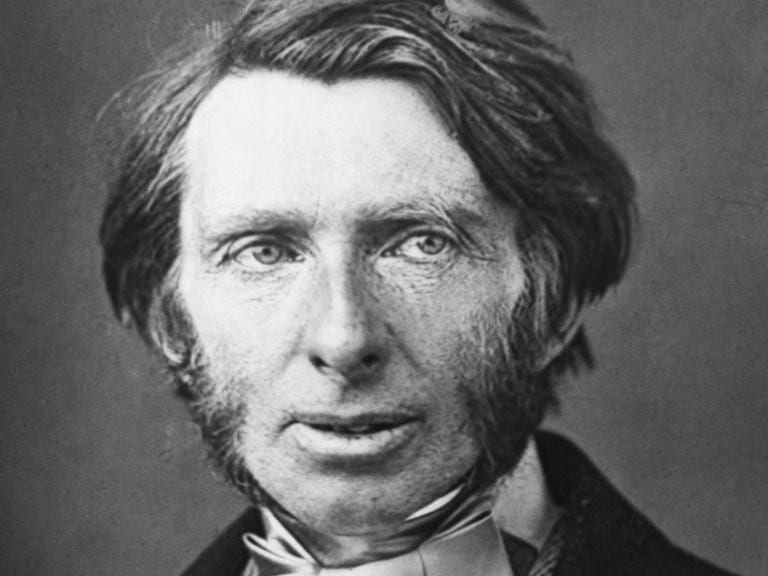
In his book that I blogged about, Defending Boyhood, Anthony Esolen discusses the masculine qualities that lead to the military virtues. He quotes the Victorian author John Ruskin on why we tend to admire soldiers more than “merchants.”
The quotation is from Ruskin’s 1862 book Unto This Last. He goes on to apply his principle to other occupations that we admire, and in doing so, makes some striking points about what we can recognize as the Reformation doctrine of vocation. I’ll discuss those, and then say a few words on behalf of “merchants.”
From John Ruskin, Unto This Last (free online):
For the soldier’s trade, verily and essentially, is not slaying, but being slain. This, without well knowing its own meaning, the world honours it for. A bravo’s trade is slaying; but the world has never respected bravos more than merchants: the reason it honours the soldier is, because he holds his life at the service of the State. Reckless he may be — fond of pleasure or of adventure-all kinds of bye-motives and mean impulses may have determined the choice of his profession, and may affect (to all appearance exclusively) his daily conduct in it; but our estimate of him is based on this ultimate fact — of which we are well assured — that put him in a fortress breach, with all the pleasures of the world behind him, and only death and his duty in front of him, he will keep his face to the front; and he knows that his choice may be put to him at any moment — and has beforehand taken his part — virtually takes such part continually — does, in reality, die daily.
From the soldier’s willingness to die out of a sense of service, Ruskin develops the concept of self-sacrifice, of being willing to deny oneself for a higher principle or for the good of someone else. He then addresses other professions that we admire: lawyers (OK, the Victorians evidently held that profession in greater esteem than is common today), physicians, and (quite rightly) clergymen:
Not less is the respect we pay to the lawyer and physician, founded ultimately on their self-sacrifice. Whatever the learning or acuteness of a great lawyer, our chief respect for him depends on our belief that, set in a judge’s seat, he will strive to judge justly, come of it what may. Could we suppose that he would take bribes, and use his acuteness and legal knowledge to give plausibility to iniquitous decisions, no degree of intellect would win for him our respect. Nothing will win it, short of our tacit conviction, that in all important acts of his life justice is first with him; his own interest, second.
In the case of a physician, the ground of the honour we render him is clearer still. Whatever his science, we would shrink from him in horror if we found him regard his patients merely as subjects to experiment upon; much more, if we found that, receiving bribes from persons interested in their deaths, he was using his best skill to give poison in the mask of medicine.
Finally, the principle holds with utmost clearness as it respects clergymen. No goodness of disposition will excuse want of science in a physician, or of shrewdness in an advocate; but a clergyman, even though his power of intellect be small, is respected on the presumed ground of his unselfishness and serviceableness.
All of this, of course, is the doctrine of vocation, that in every sphere of relationship or responsibility to which we have been called–in the workplace, the family, the church, and the society–we are to love and serve the neighbors who are brought into our lives by this calling. And love and service to our neighbor in vocation is our “living sacrifice,” an example of the cross bearing that our Lord calls us to: “If anyone would come after me, let him deny himself and take up his cross daily and follow me.”(Luke 9:23).
But what about the “merchant”–that is, people in the business world? Ruskin says that running a business takes just as much intelligence, personal skills, and leadership ability as is needed in the military, the legal profession, and the church. The difference, he concludes, is that people in business are perceived to be primarily self-interested:
Now, there can be no question but that the tact, foresight, decision, and other mental powers, required for the successful management of a large mercantile concern, if not such as could be compared with those of a great lawyer, general, or divine, would at least match the general conditions of mind required in the subordinate officers of a ship, or of a regiment, or in the curate of a country parish. If, therefore, all the efficient members of the so-called liberal professions are still, somehow, in public estimate of honour, preferred before the head of a commercial firm, the reason must lie deeper than in the measurement of their several powers of mind.
And the essential reason for such preference will he found to lie in the fact that the merchant is presumed to act always selfishly. His work may be very necessary to the community, but the motive of it is understood to be wholly personal. The merchant’s first object in all his dealings must be (the public believe) to get as much for himself, and leave as little to his neighbour (or customer) as possible.
In defense of all of you “merchants,” I would add, though, that people in business do serve their neighbors, often in self-sacrificial ways. Ruskin omits the aspect of vocation that teaches how God works through human beings in their various callings in order to bless and provide for His creation. Even the selfish merchant only interested in his profits is compelled to serve his neighbor. If the businesses doesn’t provide goods or services that help their customers, they will not stay in business very long.
The merchant serves his neighbor, whether or not he loves them. Likely, because of his sinful nature, he mainly loves himself. Faith in Christ bears fruit, though, in the love of neighbor. So the Christian merchant can carry out his vocation as an act of faith and love. The business still must make a profit or it will not last, but vocation can give it another dimension. And if Christians in business demonstrate a spirit of self-sacrificial love and service for their customers and their employees, they too will find themselves admired.
The same, of course, is true for soldiers, lawyers, clergymen, and every other vocation we look up to. (What would those be today? Not politicians, who have developed a reputation for selfishness and power-seeking, rather than public service. We admire athletes, though I’m not sure how Ruskin’s thesis applies to them. I suppose they sacrifice themselves in their physical discipline and for the sake of their team.) A soldier might serve his country without loving it, or give his life for his comrades without loving them, but the love gives his sacrifice a greater meaning. A pastor might serve his flock without loving them as he should, though this is something all Christians must grow in as their faith grows.
Here is how Ruskin summarizes his thoughts about vocation:
Five great intellectual professions, relating to daily necessities of life, have hitherto existed — three exist necessarily, in every civilised nation:
The Soldier’s profession is to defend it.
The Pastor’s to teach it.
The Physician’s to keep it in health.
The lawyer’s to enforce justice in it.
The Merchant’s to provide for it.
And the duty of all these men is, on due occasion, to die for it.
“On due occasion,” namely: –
The Soldier, rather than leave his post in battle.
The Physician, rather than leave his post in plague.
The Pastor, rather than teach Falsehood.
The lawyer, rather than countenance Injustice.
The Merchant–what is his “due occasion” of death?
It is the main question for the merchant, as for all of us. For, truly, the man who does not know when to die, does not know how to live.
Ruskin, by the way, often applies Christian ideas in fresh and unexpected ways. In my book Painters of Faith, I discuss and apply Ruskin’s view that aesthetics–what we find beautiful–is an intimation of the qualities of God, since, he said, ultimately, we can find pleasure in no one but Him. Thus, evocations of infinity are sublime and give us pleasure–because God is infinite. Works of art that combine unity and complexity are beautiful–because the Triune God is both complex and unified. (Painters of Faith is selling on Amazon for $59, but my daughter is selling them, through a coupon code she is offering, for just $18!)
Photograph: John Ruskin by W. & D. Downey / Public domain via Wikimedia Commons [detail]
Previous Post

July 23, 2020
Defending Boyhood
Next Post

July 27, 2020 COVID-19 as a Sign from God
Recent Comments
"I know wired earbuds are making a comeback (I never stopped using them as I ..."
"VCRs, tape decks, and cassette players are all having a revival among a segment of ..."
"As a (retired) lawyer I see potential liability from sharing things like power or sharp ..."
"I am not sure the items you mentioned, though disused, discontinued, discarded, could be considered ..."
Browse Our Archives
Select a Category America Apologetics Art baseball Bible Blog Christ Church crime Culture Economics Education Ethics Family Food Football Government History Holidays Holy Week Humor International Islam Language Law Life Issues Literature Media Medicine Movies Music Nature News Personal Philosophy Politics psychology Reformation Religions Sacraments Science sex Social Science Sports technology television terrorism Theology Uncategorized Vocation war
Select a Month October 2026 September 2026 August 2026 July 2026 June 2026 May 2026 April 2026 March 2026 February 2026 January 2026 December 2025 November 2025 October 2025 September 2025 August 2025 July 2025 June 2025 May 2025 April 2025 March 2025 February 2025 January 2025 December 2024 November 2024 October 2024 September 2024 August 2024 July 2024 June 2024 May 2024 April 2024 March 2024 February 2024 January 2024 December 2023 November 2023 October 2023 September 2023 August 2023 July 2023 June 2023 May 2023 April 2023 March 2023 February 2023 January 2023 December 2022 November 2022 October 2022 September 2022 August 2022 July 2022 June 2022 May 2022 April 2022 March 2022 February 2022 January 2022 December 2021 November 2021 October 2021 September 2021 August 2021 July 2021 June 2021 May 2021 April 2021 March 2021 February 2021 January 2021 December 2020 November 2020 October 2020 September 2020 August 2020 July 2020 June 2020 May 2020 April 2020 March 2020 February 2020 January 2020 December 2019 November 2019 October 2019 September 2019 August 2019 July 2019 June 2019 May 2019 April 2019 March 2019 February 2019 January 2019 December 2018 November 2018 October 2018 September 2018 August 2018 July 2018 June 2018 May 2018 April 2018 March 2018 February 2018 January 2018 December 2017 November 2017 October 2017 September 2017 August 2017 July 2017 June 2017 May 2017 April 2017 March 2017 February 2017 January 2017 December 2016 November 2016 October 2016 September 2016 August 2016 July 2016 June 2016 May 2016 April 2016 March 2016 February 2016 January 2016 December 2015 November 2015 October 2015 September 2015 August 2015 July 2015 June 2015 May 2015 April 2015 March 2015 February 2015 January 2015 December 2014 November 2014 October 2014 September 2014 August 2014 July 2014 June 2014 May 2014 April 2014 March 2014 February 2014 January 2014 December 2013 November 2013 October 2013 September 2013 August 2013 July 2013 June 2013 May 2013 April 2013 March 2013 February 2013 January 2013 December 2012 November 2012 October 2012 September 2012 August 2012 July 2012 June 2012 May 2012 April 2012 March 2012 February 2012 January 2012 December 2011 November 2011 October 2011 September 2011 August 2011 July 2011 June 2011 May 2011 April 2011 March 2011 February 2011 January 2011 December 2010 November 2010 October 2010 September 2010 August 2010 July 2010 June 2010 May 2010 April 2010 March 2010 February 2010 January 2010 December 2009 November 2009 October 2009 September 2009 August 2009 July 2009 June 2009 May 2009 April 2009 March 2009 February 2009 January 2009 December 2008 November 2008 October 2008 September 2008 August 2008 July 2008 June 2008 May 2008 April 2008 March 2008 February 2008 January 2008 December 2007 November 2007 October 2007
Follow Us!
TAKE THE
Religious Wisdom Quiz
How did Saul die?
Select your answer to see how you score.
Killed by Philistines Fell on his own sword Stoned by Israelites Died of old age
Books by This Author Books by Gene Veith
Related posts from Cranach


Our New Book on Technology & Vocation

The Family Estrangement Epidemic
Childcare Subsidies for Stay-at-home Moms?
TRENDING AT PATHEOS Evangelical

Methodist Central Hall and Westminster Abbey
Situated on the same square is Methodist Central Hall and Westminster Abbey. ...

57th Dove Awards Honor Dolly Parton, Crown New...
On gospel music’s biggest night, the 57th annual GMA Dove Awards honored...

The First Eucharistic Controversy: Christ’s Real Presence
For Catholics, the Eucharist is the source and summit of the Christian...

What a Stop Sign Can Teach Us About...
How to Make a Decision When You Can't Hear God Main point:...

Archdiocese Hosts Military Marriage Retreat in Germany
RASTATT, Germany — The transient military lifestyle, with its frequent deployments and...

Nearly every morning, I make the drive to Detroit with my high-school-age...
view all Evangelical blogs
What Are Your Thoughts?leave a comment
Ad-Free & Subscriber Log-In Subscription Support
- About Us
- 2026 Calendar
- Videos
- Podcasts
- Library of World Religions
- Faith In Media Tracker
- Advertise With Us
- Write for Us
- Privacy Policy
- Terms of Service
- Do Not Sell My Data
- Contact Us
- Radiant Digital
- Manage Newsletter Subscriptions
- Unsubscribe From Notifications
- Sitemap
Copyright 2008-2026, Patheos. All rights reserved.
Subscription Support Ad-Free & Subscriber Log-In
Follow Patheos