
BuddhistCatholicContemplativeEvangelicalGeneral ChristianHinduJewishLatter-day SaintMuslimNew VisionsProgressive Christian
Beliefs
- Buddhist
- Catholic
- Contemplative
- Evangelical
- General Christian
- Hindu
- Jewish
- Latter-day Saint
- More Voices
- Muslim
- New Visions
- Pagan
- Progressive Christian
Topics
- Religion News
- Food and Religion
- Sports and Religion
- Religious Art
- Religious Music and Entertainment
- Religious Events
- History and Religion
- Style and Religion
- Politics and Religion
- Women in Religion
- Recreation Outdoors and Religion
- Business Finance and Religion
- Careers Workplace and Religion
- Education and Religion
- Family Parenting and Religion
- Health Fitness and Religion
- Home and Religion
- Relationships and Religion
- Technology and Religion
- Travel and Religion
Columnists
- Buddhist Columnists
- Business Finance and Religion Columnists
- Careers Workplace and Religion Columnists
- Catholic Columnists
- Contemplative Columnists
- Education and Religion Columnists
- Evangelists Columnists
- Family Parenting and Religion Columnists
- General Christian Columnists
- Health Fitness and Religion Columnists
- Hindu Columnists
- History and Religion Columnists
- Home and Religion Columnists
- Jewish Columnists
- More Voices Columnists
- Latter Day Columnists
- Muslim Columnists
- New Visions Columnists
- Nonreligious Columnists
- Pagan Columnists
- Politics and Religion Columnists
- Progressive Columnists
- Recreation Outdoors and Religion Columnists
- Relationships and Religion Columnists
- Religion News Columnists
- Religious Art Columnists
- Religious Events Columnists
- Religious Music and Entertainment Columnists
- Sports and Religion Columnists
- Style and Religion Columnists
- Technology and Religion Columnists
- Travel and Religion Columnists
- Women in Religion Columnists
Resource Library
- 2026 Calendar
- Library of World Religions
- The 100 Most Holy Places on Earth
- Patheos Answers
- Podcasts
- Videos
- Faith Leaders Database
- Anglican Episcopalian
- Bahai
- Baptist
- Buddhism
- Christianity
- Confucianism
- Eastern Orthodoxy
- Hinduism
- Holiness and Pentecostal
- ISKCON
- Islam
- Judaism
- Lutheran
- Methodist
- The Church of Jesus Christ of Latter-day Saints
- New Age
- Paganism
- Presbytarian and Reformed
- Protestantism
- Religion Behind the Scenes
- Roman Catholic
- Scientology
- Shia Islam
- Sikhism
- Sufism
- Sunni Islam
- Taoism
- Zen
- See all religions
Research Tools
 Ad-Free & Subscriber Log-In Subscription Support
Ad-Free & Subscriber Log-In Subscription Support
Follow Patheos 

- Trending:
- Forgiveness
- |
- Marriage
- |
- Consciousness
- |
- Death Penalty
- |
- Election
- |
- Halloween

- Home
- Evangelical
- Politics and Religion
- Morality and Music
Morality and Music
Last updated on: July 29, 2020 at 6:00 am by Gene Veith
Morality and Music 2020-07-27T15:08:40-04:00 Gene Veith
Patheos Explore the world's faith through different perspectives on religion and spirituality! Patheos has the views of the prevalent religions and spiritualities of the world.
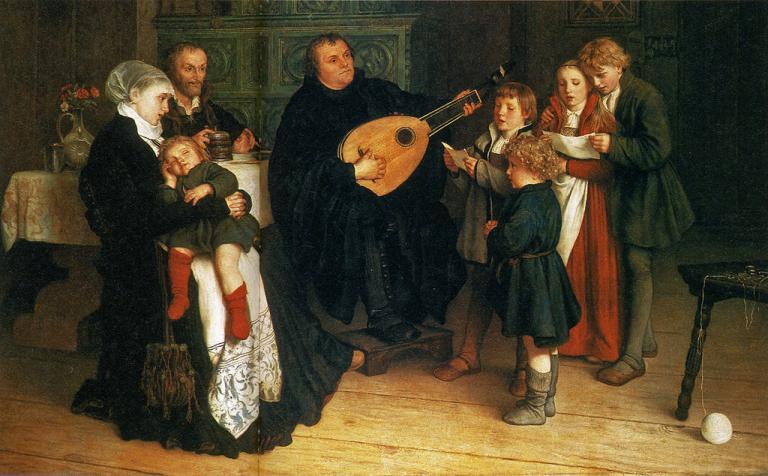
In his book Defending Boyhood, which we blogged about, Anthony Esolen includes a chapter on music. Boys used to sing. So did virtually everybody else. Sailors would sing as they cranked up the anchor. Soldiers would sing as they went into battle. Builders and miners and farmers would sing as they worked. Families would sing and make music together. This is the context of worshippers singing in church.
Today, it has been said that the only places people still sing together is in church and during a ball game. But now, with our 2020 troubles, singing in those two remaining places has become problematic. Church singing risks spreading coronavirus in the air and singing the National Anthem has become an occasion for protests and controversy.
Music today has been reduced to a performance. We listen to someone else sing. We can go to concerts, download music, or stream it via the internet. If we sing ourselves, we emulate the performers, whether in the shower or in a karaoke bar. Even music education, it seems to me, has become oriented to training professional performers, as opposed to making music for personal or corporate expression.
We watch and listen to the musical performer from a distance. People used to form a circle when they sang or played music, so that they can hear each other (as in the song “Will the Circle Be Unbroken?”).
This loss, or marginalization or narrowing, of music is a great loss to our culture, to our cohesiveness as human beings and to the integration of beauty into our everyday lives. Esolen sees it also as a loss of character-building.
He explores the moral significance of music, how it has historically been seen as a way of educating and channeling the passions and as a means of inspiring virtue. Esolen draws on Plato, as well as C. S. Lewis:
Plato understood the power of music, and that is why he said that all education was at base a musical one. For music is expressive of a harmony between body and soul. It appeals most directly to the seat of rational or irrational passions, depending on what kind of music we are talking about. There is all the difference in the world between a man who knows what to do and has the heart to do it, and the man who knows what to do but will not do it, because he lacks the courage, the chest, as C. S. Lewis would call it in The Abolition of Man, following Plato’s lead in the Phaedrus and the Republic. ‘The good man,” says Plato, “is the only excellent musician, because he gives forth a perfect harmony not with a lyre or other instrument but with the whole of his life.” Good music builds the chest.
Bad music lets the chest cave in. Plato said that the first sign of decay in a commonwealth would be a radical change in the people’s music. An elderly minister once told me, and my experience confirms it, that when a congregation is about to go bad, the first thing to be corrupted will be the music. (p. 132).
Esolen concludes, “The head rules the belly through the chest, said Lewis. Otherwise the belly, or the region further south, will rule, and the head will be mainly employed in finding excuses for the groin” (p. 133).
Music is important in developing good character, according to Esolen, because “when we sing, we give artistic form to our thoughts and words and passions” (p. 140).
This is not just a matter of aesthetic form, though it includes that. Music can help us form “our thoughts and words and passions” in a way that is beautiful, yes, but also good and true. Thus, music–in particular, the songs we sing–helps give a salutary form to our appetites and passions: not just sexual desire but romantic love; not just fighting but heroism; not just doctrine but worship.
Then again, music can also misdirect our thoughts and words and passions, indulging the appetites instead of forming them.
Esolen applies all of this to the formation of boys, and in doing so brings in a wealth of specific examples of how songs–including poetry, with a special emphasis on hymns–have functioned historically in the development of character and in the cultivation of virtues such as courage, love, and commitment.
I cannot do justice here to the depth and scope of his discussion. You need to read the book.
Esolen grounds his analysis in the example of Jesus Himself:
“When Jesus had broken the bread at the Last Supper and shared the wine–instituting the sacrament of the Eucharist–and commanded his apostles to go and do the same in remembrance of him, he and they proceeded to do something else in remembrance. They sang a hymn (see Mt 26:30)” (p. 127).
And Esolen’s analysis of the ways music can influence and motivate us helped me to understand the negative example described by Shakespeare in Merchant of Venice:
The man that hath no music in himself,
Nor is not moved with concord of sweet sounds,
Is fit for treasons, stratagems and spoils;
The motions of his spirit are dull as night
And his affections dark as Erebus:
Let no such man be trusted. Mark the music. (Act V. scene 1. lines 81-86)
Illustration: “Luther in the Circle of His Family Making Music” by Gustav Spangenberg, Museum der bildenden Künste / Public domain via Wikimedia Commons
Previous Post

July 28, 2020
President Kanye West & the Million Dollar Baby
Next Post

July 30, 2020 Big Corporations vs. Capitalism
Recent Comments
"Apropos to the post on Gen Z a couple days ago: "If you want the ..."
"“Don't eat with your hands, son, use your entrenching tool.”"
"You serious, Clark?"
"And all tools are made of media, thus making language and literature a tool (see, ..."
Browse Our Archives
Select a Category America Apologetics Art baseball Bible Blog Christ Church crime Culture Economics Education Ethics Family Food Football Government History Holidays Holy Week Humor International Islam Language Law Life Issues Literature Media Medicine Movies Music Nature News Personal Philosophy Politics psychology Reformation Religions Sacraments Science sex Social Science Sports technology television terrorism Theology Uncategorized Vocation war
Select a Month October 2026 September 2026 August 2026 July 2026 June 2026 May 2026 April 2026 March 2026 February 2026 January 2026 December 2025 November 2025 October 2025 September 2025 August 2025 July 2025 June 2025 May 2025 April 2025 March 2025 February 2025 January 2025 December 2024 November 2024 October 2024 September 2024 August 2024 July 2024 June 2024 May 2024 April 2024 March 2024 February 2024 January 2024 December 2023 November 2023 October 2023 September 2023 August 2023 July 2023 June 2023 May 2023 April 2023 March 2023 February 2023 January 2023 December 2022 November 2022 October 2022 September 2022 August 2022 July 2022 June 2022 May 2022 April 2022 March 2022 February 2022 January 2022 December 2021 November 2021 October 2021 September 2021 August 2021 July 2021 June 2021 May 2021 April 2021 March 2021 February 2021 January 2021 December 2020 November 2020 October 2020 September 2020 August 2020 July 2020 June 2020 May 2020 April 2020 March 2020 February 2020 January 2020 December 2019 November 2019 October 2019 September 2019 August 2019 July 2019 June 2019 May 2019 April 2019 March 2019 February 2019 January 2019 December 2018 November 2018 October 2018 September 2018 August 2018 July 2018 June 2018 May 2018 April 2018 March 2018 February 2018 January 2018 December 2017 November 2017 October 2017 September 2017 August 2017 July 2017 June 2017 May 2017 April 2017 March 2017 February 2017 January 2017 December 2016 November 2016 October 2016 September 2016 August 2016 July 2016 June 2016 May 2016 April 2016 March 2016 February 2016 January 2016 December 2015 November 2015 October 2015 September 2015 August 2015 July 2015 June 2015 May 2015 April 2015 March 2015 February 2015 January 2015 December 2014 November 2014 October 2014 September 2014 August 2014 July 2014 June 2014 May 2014 April 2014 March 2014 February 2014 January 2014 December 2013 November 2013 October 2013 September 2013 August 2013 July 2013 June 2013 May 2013 April 2013 March 2013 February 2013 January 2013 December 2012 November 2012 October 2012 September 2012 August 2012 July 2012 June 2012 May 2012 April 2012 March 2012 February 2012 January 2012 December 2011 November 2011 October 2011 September 2011 August 2011 July 2011 June 2011 May 2011 April 2011 March 2011 February 2011 January 2011 December 2010 November 2010 October 2010 September 2010 August 2010 July 2010 June 2010 May 2010 April 2010 March 2010 February 2010 January 2010 December 2009 November 2009 October 2009 September 2009 August 2009 July 2009 June 2009 May 2009 April 2009 March 2009 February 2009 January 2009 December 2008 November 2008 October 2008 September 2008 August 2008 July 2008 June 2008 May 2008 April 2008 March 2008 February 2008 January 2008 December 2007 November 2007 October 2007
Follow Us!
TAKE THE
Religious Wisdom Quiz
What does Paul say will happen to those who are in Christ at the last trumpet?
Select your answer to see how you score.
They will be changed in a flash, in the twinkling of an eye They will receive new bodies They will meet the Lord in the air They will be caught up together
Books by This Author Books by Gene Veith
Related posts from Cranach


Gen Z Wants Evildoers to Be Punished, Not...

The Family Estrangement Epidemic
TRENDING AT PATHEOS Evangelical

Pope Leo Celebrates Mass for Nurses & Docs...
I don't have any idea how he did it, but Pope Leo...

The Sermon on the Mount, Part I: Matthew...
The Sermon on the Mount, Part I (Matthew 4:12-5:12) St. Matthew moves...

What's up from Crossway: Reviewing some of their latest A few weeks...

Janie Learns the Way of the Cross: A...
Teaching children about Jesus' Passion can be challenging. Many parents and educators...

Looking For Good Catholic Writing - October 2026
He alone extends the heavens, and he walks upon the waves of...

In "Irreplaceable," our book on vocation and technology, Trevor Sutton and I...
view all Evangelical blogs
What Are Your Thoughts?leave a comment
Ad-Free & Subscriber Log-In Subscription Support
- About Us
- 2026 Calendar
- Videos
- Podcasts
- Library of World Religions
- Faith In Media Tracker
- Advertise With Us
- Write for Us
- Privacy Policy
- Terms of Service
- Do Not Sell My Data
- Contact Us
- Radiant Digital
- Manage Newsletter Subscriptions
- Unsubscribe From Notifications
- Sitemap
Copyright 2008-2026, Patheos. All rights reserved.
Subscription Support Ad-Free & Subscriber Log-In
Follow Patheos