
BuddhistCatholicContemplativeEvangelicalGeneral ChristianHinduJewishLatter-day SaintMuslimNew VisionsProgressive Christian
Beliefs
- Buddhist
- Catholic
- Contemplative
- Evangelical
- General Christian
- Hindu
- Jewish
- Latter-day Saint
- More Voices
- Muslim
- New Visions
- Pagan
- Progressive Christian
Topics
- Religion News
- Food and Religion
- Sports and Religion
- Religious Art
- Religious Music and Entertainment
- Religious Events
- History and Religion
- Style and Religion
- Politics and Religion
- Women in Religion
- Recreation Outdoors and Religion
- Business Finance and Religion
- Careers Workplace and Religion
- Education and Religion
- Family Parenting and Religion
- Health Fitness and Religion
- Home and Religion
- Relationships and Religion
- Technology and Religion
- Travel and Religion
Columnists
- Buddhist Columnists
- Business Finance and Religion Columnists
- Careers Workplace and Religion Columnists
- Catholic Columnists
- Contemplative Columnists
- Education and Religion Columnists
- Evangelists Columnists
- Family Parenting and Religion Columnists
- General Christian Columnists
- Health Fitness and Religion Columnists
- Hindu Columnists
- History and Religion Columnists
- Home and Religion Columnists
- Jewish Columnists
- More Voices Columnists
- Latter Day Columnists
- Muslim Columnists
- New Visions Columnists
- Nonreligious Columnists
- Pagan Columnists
- Politics and Religion Columnists
- Progressive Columnists
- Recreation Outdoors and Religion Columnists
- Relationships and Religion Columnists
- Religion News Columnists
- Religious Art Columnists
- Religious Events Columnists
- Religious Music and Entertainment Columnists
- Sports and Religion Columnists
- Style and Religion Columnists
- Technology and Religion Columnists
- Travel and Religion Columnists
- Women in Religion Columnists
Resource Library
- 2026 Calendar
- Library of World Religions
- The 100 Most Holy Places on Earth
- Patheos Answers
- Podcasts
- Videos
- Faith Leaders Database
- Anglican Episcopalian
- Bahai
- Baptist
- Buddhism
- Christianity
- Confucianism
- Eastern Orthodoxy
- Hinduism
- Holiness and Pentecostal
- ISKCON
- Islam
- Judaism
- Lutheran
- Methodist
- The Church of Jesus Christ of Latter-day Saints
- New Age
- Paganism
- Presbytarian and Reformed
- Protestantism
- Religion Behind the Scenes
- Roman Catholic
- Scientology
- Shia Islam
- Sikhism
- Sufism
- Sunni Islam
- Taoism
- Zen
- See all religions
Research Tools
 Ad-Free & Subscriber Log-In Subscription Support
Ad-Free & Subscriber Log-In Subscription Support
Follow Patheos 

- Trending:
- Forgiveness
- |
- Marriage
- |
- Consciousness
- |
- Death Penalty
- |
- Election
- |
- Halloween

- Home
- Evangelical
- Politics and Religion
- A Nomination for Lutheran Sainthood?
A Nomination for Lutheran Sainthood?
Last updated on: April 29, 2020 at 6:00 am by Gene Veith
A Nomination for Lutheran Sainthood? 2020-04-27T08:26:33-04:00 Gene Veith
Patheos Explore the world's faith through different perspectives on religion and spirituality! Patheos has the views of the prevalent religions and spiritualities of the world.
Although we Lutherans will use the title “saint” to refer to Biblical heroes of the faith, such as “St. Paul” and “St. John,” we don’t have a mechanism for giving other Christians that title. Indeed, we affirm that ALL Christians are “saints,” as well as simultaneously being “sinners.”
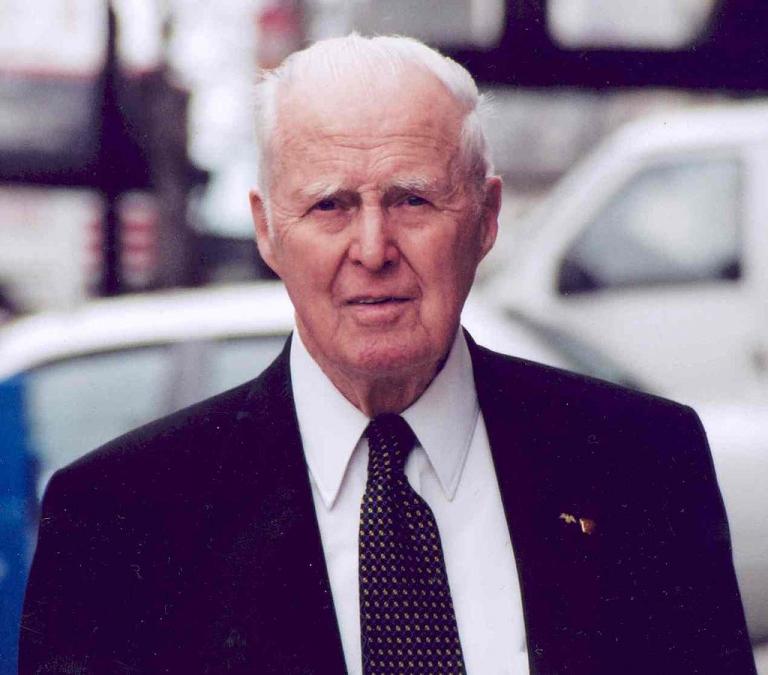
But if we did have some kind of process for recognizing remarkable and imitation-worthy Christians, which we don’t and don’t want to, I would nominate Norman Borlaug.
The Roman Catholic Church, which has such a process, requires that the person recommended for sainthood perform miracles. How about this miracle from Norman Borlaug? Eliminating world hunger.
Borlaug was the scientist who launched the “green revolution”–not “green” as in environmentalism, but as in an agricultural revolution on a par with the industrial revolution. By crossbreeding and genetic study (not genetic modification), Borlaug developed new strains of crop plants that resisted disease and insects, grew better, and produced much greater yields. As a result, combined with innovative farming practices that Borlaug also developed, the global food supply soared.
Thanks to Borlaug, the perennial problem of global hunger essentially went away. Of course, hunger and starvation still exist, as in North Korea and Venezuela, but the reasons now are mainly political and economic. But there is plenty of food.
Borlaug is credited with directly saving over a billion lives.
Although he concentrated his work on poor countries with food problems–particularly Mexico, India, and Pakistan–his innovations have also helped those of us in more developed nations. Americans now spend just 9.7% of their disposable income on food. Throughout history, getting enough to eat has been a major preoccupation for human beings in a never-ending struggle for survival. Now we Americans have food even in the midst of an epidemic and economic shutdown (though, as we blogged about earlier this week, those political and economic factors are getting in the way).
Malthus (1766-1834) had predicted that since population rises at a greater rate than growth in food supplies, overpopulation would lead to mass starvation. His theories led to the “population explosion” fears, as in the books of Paul Ehrlich, who predicted in 1968 that India would be doomed by 1980 and that nothing could save its vast population. That was about the time Borlaug went to India, where he solved its food problem, which, in turn, became the foundation of its economic Renaissance.
Borlaug won the Nobel Peace Prize in 1970. Also the Presidential Medal of Freedom and the Congressional Gold Medal, among many other honors. The magicians and fraud exposers Penn & Teller hailed him on their TV show as the “Greatest Human Being That Ever Lived,” even though, they observed, “you’ve probably never heard of him.”
Borlaug lived 95 years, from 1914 to 2009. I blogged about him when he died. Read his Wikipedia article for his life, research, and contributions.
As that article says, Borlaug was a life-long Lutheran. His parents were Norwegian-American farmers who settled in Iowa. He was baptized and confirmed in the Saude Lutheran Church, presently a congregation of the Evangelical Lutheran Synod. He attended the University of Minnesota, though he at first failed the entrance examination, going on to get his Ph.D. in plant pathology and genetics. At some point he became affiliated with the Evangelical Lutheran Church in America.
In an obituary published at the ELCA website, the pastor who presided at his memorial service in College Station, Texas, where Borlaug served on the faculty at Texas A&M, said that the scientist often talked about his Lutheran faith. And the pastor observed, “He got the connection between his faith and his commitment to his work.”
That is to say, he “got” vocation.
What qualifies Norman Borlaug for the Lutheran equivalent of sainthood is that he carried out his work in light of the doctrine of vocation.
He loved and served his neighbors by using his God-given talents and opportunities. God worked through him to bless the world.
God, in his government of the world, mitigated human hunger through natural, physical means: a scientist studying and applying His creation. God preserves and sustains His temporal kingdom primarily by means of material reality and vocation, and he did so in a spectacular way through an Iowa farm boy who at first flunked his college entrance exam.
All of this is very Lutheran.
Why do I bring up Norman Borlaug now? Because a PBS documentary is attacking his legacy. In “The Man Who Tried to Feed the World: A Tale of Good Deeds and Unintended Consequences,” Borlaug is given credit for his work in feeding the world. In the words of a critique of that documentary in the Wall Street Journal, the film goes
light on the lives saved and heavy on the “unintended consequences.” These include everything from diminished water supplies and depleted soil to increased urbanization in Mexico and a “broken society” in India. What these critics never say is what the alternative was, or answer whether their implicit message is that it might have been better if Borlaug had done nothing and let tens of millions of people starve.
But even in his lifetime, Borlaug had his critics. The Wikipedia article quotes his response:
Of environmental lobbyists opposing crop yield improvements, he stated, “some of the environmental lobbyists of the Western nations are the salt of the earth, but many of them are elitists. They’ve never experienced the physical sensation of hunger. They do their lobbying from comfortable office suites in Washington or Brussels. If they lived just one month amid the misery of the developing world, as I have for fifty years, they’d be crying out for tractors and fertilizer and irrigation canals and be outraged that fashionable elitists back home were trying to deny them these things.”
He did take environmental concerns seriously, pointing out that increased crop production can prevent deforestation, which is usually caused by the need for ever more farm land. But I most appreciated this answer:
He stated that his work has been “a change in the right direction, but it has not transformed the world into a Utopia”.
He was not presuming to solve all the world’s problems by his own human efforts. Utopias in this fallen world are impossible–those cursed man-made political and economic problems keep getting in the way–but we can do what we can. We can do what we are called to do. This too is very Lutheran.
Photo: Norman Borlaug (2004) by Ben Zinner, USAID / Public domain via Wikimedia Commons
Previous Post

April 28, 2020
The Last Time We Had a Pandemic Like This
Next Post

April 30, 2020 The End of Big Churches?
Recent Comments
"I know wired earbuds are making a comeback (I never stopped using them as I ..."
"VCRs, tape decks, and cassette players are all having a revival among a segment of ..."
"As a (retired) lawyer I see potential liability from sharing things like power or sharp ..."
"I am not sure the items you mentioned, though disused, discontinued, discarded, could be considered ..."
Browse Our Archives
Select a Category America Apologetics Art baseball Bible Blog Christ Church crime Culture Economics Education Ethics Family Food Football Government History Holidays Holy Week Humor International Islam Language Law Life Issues Literature Media Medicine Movies Music Nature News Personal Philosophy Politics psychology Reformation Religions Sacraments Science sex Social Science Sports technology television terrorism Theology Uncategorized Vocation war
Select a Month October 2026 September 2026 August 2026 July 2026 June 2026 May 2026 April 2026 March 2026 February 2026 January 2026 December 2025 November 2025 October 2025 September 2025 August 2025 July 2025 June 2025 May 2025 April 2025 March 2025 February 2025 January 2025 December 2024 November 2024 October 2024 September 2024 August 2024 July 2024 June 2024 May 2024 April 2024 March 2024 February 2024 January 2024 December 2023 November 2023 October 2023 September 2023 August 2023 July 2023 June 2023 May 2023 April 2023 March 2023 February 2023 January 2023 December 2022 November 2022 October 2022 September 2022 August 2022 July 2022 June 2022 May 2022 April 2022 March 2022 February 2022 January 2022 December 2021 November 2021 October 2021 September 2021 August 2021 July 2021 June 2021 May 2021 April 2021 March 2021 February 2021 January 2021 December 2020 November 2020 October 2020 September 2020 August 2020 July 2020 June 2020 May 2020 April 2020 March 2020 February 2020 January 2020 December 2019 November 2019 October 2019 September 2019 August 2019 July 2019 June 2019 May 2019 April 2019 March 2019 February 2019 January 2019 December 2018 November 2018 October 2018 September 2018 August 2018 July 2018 June 2018 May 2018 April 2018 March 2018 February 2018 January 2018 December 2017 November 2017 October 2017 September 2017 August 2017 July 2017 June 2017 May 2017 April 2017 March 2017 February 2017 January 2017 December 2016 November 2016 October 2016 September 2016 August 2016 July 2016 June 2016 May 2016 April 2016 March 2016 February 2016 January 2016 December 2015 November 2015 October 2015 September 2015 August 2015 July 2015 June 2015 May 2015 April 2015 March 2015 February 2015 January 2015 December 2014 November 2014 October 2014 September 2014 August 2014 July 2014 June 2014 May 2014 April 2014 March 2014 February 2014 January 2014 December 2013 November 2013 October 2013 September 2013 August 2013 July 2013 June 2013 May 2013 April 2013 March 2013 February 2013 January 2013 December 2012 November 2012 October 2012 September 2012 August 2012 July 2012 June 2012 May 2012 April 2012 March 2012 February 2012 January 2012 December 2011 November 2011 October 2011 September 2011 August 2011 July 2011 June 2011 May 2011 April 2011 March 2011 February 2011 January 2011 December 2010 November 2010 October 2010 September 2010 August 2010 July 2010 June 2010 May 2010 April 2010 March 2010 February 2010 January 2010 December 2009 November 2009 October 2009 September 2009 August 2009 July 2009 June 2009 May 2009 April 2009 March 2009 February 2009 January 2009 December 2008 November 2008 October 2008 September 2008 August 2008 July 2008 June 2008 May 2008 April 2008 March 2008 February 2008 January 2008 December 2007 November 2007 October 2007
Follow Us!
TAKE THE
Religious Wisdom Quiz
What did Eve eat in the Garden of Eden?
Select your answer to see how you score.
An unclean animal Bread Fruit from the Tree of Knowledge A vine branch
Books by This Author Books by Gene Veith
Related posts from Cranach


Our New Book on Technology & Vocation


The Family Estrangement Epidemic
TRENDING AT PATHEOS Evangelical

57th Dove Awards Honor Dolly Parton, Crown New...
On gospel music’s biggest night, the 57th annual GMA Dove Awards honored...

The First Eucharistic Controversy: Christ’s Real Presence
For Catholics, the Eucharist is the source and summit of the Christian...

What a Stop Sign Can Teach Us About...
How to Make a Decision When You Can't Hear God Main point:...

Archdiocese Hosts Military Marriage Retreat in Germany
RASTATT, Germany — The transient military lifestyle, with its frequent deployments and...

Nearly every morning, I make the drive to Detroit with my high-school-age...

The Real AI Story Is Adoption Without Trust
Artificial intelligence has crossed a political threshold. It is no longer a...
view all Evangelical blogs
What Are Your Thoughts?leave a comment
Ad-Free & Subscriber Log-In Subscription Support
- About Us
- 2026 Calendar
- Videos
- Podcasts
- Library of World Religions
- Faith In Media Tracker
- Advertise With Us
- Write for Us
- Privacy Policy
- Terms of Service
- Do Not Sell My Data
- Contact Us
- Radiant Digital
- Manage Newsletter Subscriptions
- Unsubscribe From Notifications
- Sitemap
Copyright 2008-2026, Patheos. All rights reserved.
Subscription Support Ad-Free & Subscriber Log-In
Follow Patheos