
BuddhistCatholicContemplativeEvangelicalGeneral ChristianHinduJewishLatter-day SaintMuslimNew VisionsProgressive Christian
Beliefs
- Buddhist
- Catholic
- Contemplative
- Evangelical
- General Christian
- Hindu
- Jewish
- Latter-day Saint
- More Voices
- Muslim
- New Visions
- Pagan
- Progressive Christian
Topics
- Religion News
- Food and Religion
- Sports and Religion
- Religious Art
- Religious Music and Entertainment
- Religious Events
- History and Religion
- Style and Religion
- Politics and Religion
- Women in Religion
- Recreation Outdoors and Religion
- Business Finance and Religion
- Careers Workplace and Religion
- Education and Religion
- Family Parenting and Religion
- Health Fitness and Religion
- Home and Religion
- Relationships and Religion
- Technology and Religion
- Travel and Religion
Columnists
- Buddhist Columnists
- Business Finance and Religion Columnists
- Careers Workplace and Religion Columnists
- Catholic Columnists
- Contemplative Columnists
- Education and Religion Columnists
- Evangelists Columnists
- Family Parenting and Religion Columnists
- General Christian Columnists
- Health Fitness and Religion Columnists
- Hindu Columnists
- History and Religion Columnists
- Home and Religion Columnists
- Jewish Columnists
- More Voices Columnists
- Latter Day Columnists
- Muslim Columnists
- New Visions Columnists
- Nonreligious Columnists
- Pagan Columnists
- Politics and Religion Columnists
- Progressive Columnists
- Recreation Outdoors and Religion Columnists
- Relationships and Religion Columnists
- Religion News Columnists
- Religious Art Columnists
- Religious Events Columnists
- Religious Music and Entertainment Columnists
- Sports and Religion Columnists
- Style and Religion Columnists
- Technology and Religion Columnists
- Travel and Religion Columnists
- Women in Religion Columnists
Resource Library
- 2026 Calendar
- Library of World Religions
- The 100 Most Holy Places on Earth
- Patheos Answers
- Podcasts
- Videos
- Faith Leaders Database
- Anglican Episcopalian
- Bahai
- Baptist
- Buddhism
- Christianity
- Confucianism
- Eastern Orthodoxy
- Hinduism
- Holiness and Pentecostal
- ISKCON
- Islam
- Judaism
- Lutheran
- Methodist
- The Church of Jesus Christ of Latter-day Saints
- New Age
- Paganism
- Presbytarian and Reformed
- Protestantism
- Religion Behind the Scenes
- Roman Catholic
- Scientology
- Shia Islam
- Sikhism
- Sufism
- Sunni Islam
- Taoism
- Zen
- See all religions
Research Tools
 Ad-Free & Subscriber Log-In Subscription Support
Ad-Free & Subscriber Log-In Subscription Support
Follow Patheos 

- Trending:
- Forgiveness
- |
- Marriage
- |
- Consciousness
- |
- Death Penalty
- |
- Election
- |
- Halloween

- Home
- Evangelical
- Politics and Religion
- A Creedal Testimony from Less Than Five Years after Jesus’ Resurrection
A Creedal Testimony from Less Than Five Years after Jesus’ Resurrection
Last updated on: April 15, 2020 at 6:00 am by Gene Veith
A Creedal Testimony from Less Than Five Years after Jesus’ Resurrection 2020-04-13T16:06:11-04:00 Gene Veith
Patheos Explore the world's faith through different perspectives on religion and spirituality! Patheos has the views of the prevalent religions and spiritualities of the world.
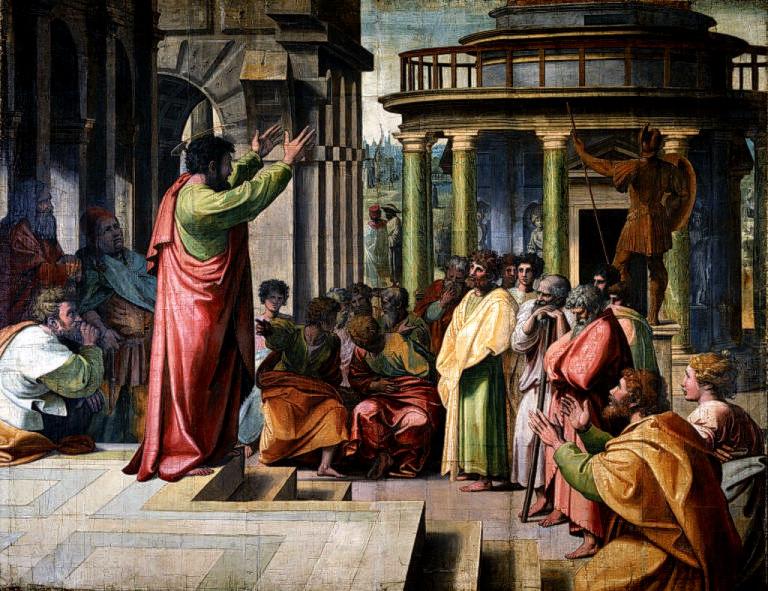
It perhaps escaped your attention but scholars have identified a creedal testimony to the atoning death and resurrection of Jesus that is dated within five years, possibly just months, after it happened.
Justin Bass, New Testament Professor at the Jordan Evangelical Theological Seminary, writes about this for the Gospel Coalition and in Christianity Today. He has also written a book on the subject that has just been released: The Bedrock of Christianity: The Unalterable Facts of Jesus’ Death and Resurrection.
The text has been right under our nose. It’s something St. Paul quotes in 1 Corinthians 15: 3-7:
For I delivered to you as of first importance what I also received: that Christ died for our sins in accordance with the Scriptures, that he was buried, that he was raised on the third day in accordance with the Scriptures, and that he appeared to Cephas, then to the twelve. Then he appeared to more than five hundred brothers at one time, most of whom are still alive, though some have fallen asleep. Then he appeared to James, then to all the apostles.
Around the turn of the 21st century, New Testament scholars began studying these words. They realized that they were not being presented as thoughts from the Apostle. Rather, Paul says that he “received” them and then “delivered” them. Researchers then determined that the language of the passage does not accord with Paul’s usual style of writing, neither in this letter to the Corinthians nor his other epistles. They concluded that this passage is a statement that the convert Paul was taught and that he then passed on.
Paul’s first epistle to the Corinthians has been reliably dated 53-54 A.D., and he is believed to have established the church in the Greek city-state of Corinth in 50 A.D. The scholars studying the creedal testimony estimate that it would have been composed at least a decade before that date, which would put it in the 40s. But it might have been even earlier. Paul’s conversion is said to have occurred between 31-36 A.D. Historians believe that Jesus died in 30 or 33 A.D.
Dr. Bass says that the average date given for the text by various scholars is 5 years after the death of Christ. At least one scholar, though, argues that it was written just a few months afterwards.
Furthermore, Dr. Bass says that this view and dating of the text is now the scholarly consensus, agreed to by virtually all scholars, including liberal higher critics, agnostics, and atheists. One of the latter says that this discovery is “one of the great achievements of recent New Testament scholarship.”
This is significant in itself. The early “higher critics” of the 19th and 20th century posited very late dates for the books of the Bible, then maintained that Christian doctrines evolved over time. In line with modernist rationalism and liberal theology, they said that the miracles described in the Gospels and the theological content of the different books in the New Testament were creations of the church, which drew from a long oral tradition and which invented teachings to respond to their historical situation.
But textual scholarship, using far more sophisticated methodology and further discoveries of ancient texts, has since shown that the New Testament documents were written far earlier than the pioneering higher critics assumed. There was not much time for an oral tradition, much less the evolution of doctrine.
So what does this text, described as “the earliest evidence for Christianity” tell us?
First of all, it is about eyewitnesses to the resurrection of Christ. Some have said that the resurrection was merely a story made up by a group of women, or a subjective vision of Peter, or a mass hallucination, or an inner conviction of the disciples that Jesus was with them. This text emphasizes that Jesus was raised from the dead “in accordance with the Scriptures”–as an article of faith, as predicted in the Old Testament–and that this resurrection is an objective fact attested to by numerous witnesses over a period of time.
This text even goes beyond the testimony of the four Gospels, which concentrate on Jesus’ appearances to His immediate circle of the apostles and other disciples. He also appeared to “more than five hundred brothers at one time,” along with a detail supporting its contemporaneity to the event, “most of whom are still alive.” After that, the text seems to refer to some later appearances to James, an early leader of the church, and “then to all the apostles,” which must refer to more than just “the twelve,” including apparently James and the Apostle Paul, who adds his name to the company: “Last of all, as to one untimely born, he appeared also to me. For I am the least of the apostles, unworthy to be called an apostle, because I persecuted the church of God” (1 Corinthians 15:8-9).
Also, as creedal statement, this text affirms “that Christ died for our sins in accordance with the Scriptures.” Again, as with His resurrection, the Old Testament Scriptures are described as the theological authority, showing the church at its very earliest state relying on the Word of God. And what that Word teaches is that Christ’s death was sacrificial and atoning. This was no later invention of the church imposed on the sad end of a great moral teacher, nor was such a belief created as is sometimes said by the Apostle Paul. Instead, what we see here is the church from its very beginning confessing the gospel of salvation through the work of Christ on the cross, “the article upon which the church stands or falls.”
As if this were not enough, this text is not all that Paul “received” and “delivered.” He uses the same language for other things, which also must mean they too originate from a similarly early date. Dr. Bass summarizes them:
When Paul planted the church in Corinth, he delivered certain traditions to the Corinthians that further illumined the gospel (cf. 1 Cor. 11:2) he himself had received. These included some teachings and stories about Jesus (1 Cor. 7:10; 9:14; 11:1; 2 Cor. 10:1), the account of the Lord’s Supper (1 Cor. 11:23–26), hymns (1 Cor. 8:6; 2 Cor. 8:9), and this creedal tradition on Jesus’s death, burial, resurrection, and appearances (1 Cor. 15:3–7).
Thus, the church evidently, in its earliest state, from the very beginning, was worshipping: singing hymns, preaching about Jesus, confessing their faith, and receiving the sacrament. As the church continues to do today.
Illustration: Raphael, “St. Paul Preaching” (1515), Public domain via Wikimedia Commons
eyewitnesses to Christ's resurrection
Previous Post
April 14, 2020
What Is So Wonderful about Lutheran Worship
Next Post

April 16, 2020 The Religion of Desire
Recent Comments
"I know wired earbuds are making a comeback (I never stopped using them as I ..."
"VCRs, tape decks, and cassette players are all having a revival among a segment of ..."
"As a (retired) lawyer I see potential liability from sharing things like power or sharp ..."
"I am not sure the items you mentioned, though disused, discontinued, discarded, could be considered ..."
Browse Our Archives
Select a Category America Apologetics Art baseball Bible Blog Christ Church crime Culture Economics Education Ethics Family Food Football Government History Holidays Holy Week Humor International Islam Language Law Life Issues Literature Media Medicine Movies Music Nature News Personal Philosophy Politics psychology Reformation Religions Sacraments Science sex Social Science Sports technology television terrorism Theology Uncategorized Vocation war
Select a Month October 2026 September 2026 August 2026 July 2026 June 2026 May 2026 April 2026 March 2026 February 2026 January 2026 December 2025 November 2025 October 2025 September 2025 August 2025 July 2025 June 2025 May 2025 April 2025 March 2025 February 2025 January 2025 December 2024 November 2024 October 2024 September 2024 August 2024 July 2024 June 2024 May 2024 April 2024 March 2024 February 2024 January 2024 December 2023 November 2023 October 2023 September 2023 August 2023 July 2023 June 2023 May 2023 April 2023 March 2023 February 2023 January 2023 December 2022 November 2022 October 2022 September 2022 August 2022 July 2022 June 2022 May 2022 April 2022 March 2022 February 2022 January 2022 December 2021 November 2021 October 2021 September 2021 August 2021 July 2021 June 2021 May 2021 April 2021 March 2021 February 2021 January 2021 December 2020 November 2020 October 2020 September 2020 August 2020 July 2020 June 2020 May 2020 April 2020 March 2020 February 2020 January 2020 December 2019 November 2019 October 2019 September 2019 August 2019 July 2019 June 2019 May 2019 April 2019 March 2019 February 2019 January 2019 December 2018 November 2018 October 2018 September 2018 August 2018 July 2018 June 2018 May 2018 April 2018 March 2018 February 2018 January 2018 December 2017 November 2017 October 2017 September 2017 August 2017 July 2017 June 2017 May 2017 April 2017 March 2017 February 2017 January 2017 December 2016 November 2016 October 2016 September 2016 August 2016 July 2016 June 2016 May 2016 April 2016 March 2016 February 2016 January 2016 December 2015 November 2015 October 2015 September 2015 August 2015 July 2015 June 2015 May 2015 April 2015 March 2015 February 2015 January 2015 December 2014 November 2014 October 2014 September 2014 August 2014 July 2014 June 2014 May 2014 April 2014 March 2014 February 2014 January 2014 December 2013 November 2013 October 2013 September 2013 August 2013 July 2013 June 2013 May 2013 April 2013 March 2013 February 2013 January 2013 December 2012 November 2012 October 2012 September 2012 August 2012 July 2012 June 2012 May 2012 April 2012 March 2012 February 2012 January 2012 December 2011 November 2011 October 2011 September 2011 August 2011 July 2011 June 2011 May 2011 April 2011 March 2011 February 2011 January 2011 December 2010 November 2010 October 2010 September 2010 August 2010 July 2010 June 2010 May 2010 April 2010 March 2010 February 2010 January 2010 December 2009 November 2009 October 2009 September 2009 August 2009 July 2009 June 2009 May 2009 April 2009 March 2009 February 2009 January 2009 December 2008 November 2008 October 2008 September 2008 August 2008 July 2008 June 2008 May 2008 April 2008 March 2008 February 2008 January 2008 December 2007 November 2007 October 2007
Follow Us!
TAKE THE
Religious Wisdom Quiz
What does the Greek word "Agape" mean in the Bible?
Select your answer to see how you score.
Eternal Life Grace Unconditional Love Peace
Books by This Author Books by Gene Veith
Related posts from Cranach

Gen Z Wants Evildoers to Be Punished, Not...


As Fulton Sheen Is Beatified, Don't Forget Walter...
TRENDING AT PATHEOS Evangelical

The First Eucharistic Controversy: Christ’s Real Presence
For Catholics, the Eucharist is the source and summit of the Christian...

What a Stop Sign Can Teach Us About...
How to Make a Decision When You Can't Hear God Main point:...

Archdiocese Hosts Military Marriage Retreat in Germany
RASTATT, Germany — The transient military lifestyle, with its frequent deployments and...

Nearly every morning, I make the drive to Detroit with my high-school-age...

The Real AI Story Is Adoption Without Trust
Artificial intelligence has crossed a political threshold. It is no longer a...

A new article, written by Jeff Lindsay and Gale L. Pooley,...
view all Evangelical blogs
What Are Your Thoughts?leave a comment
Ad-Free & Subscriber Log-In Subscription Support
- About Us
- 2026 Calendar
- Videos
- Podcasts
- Library of World Religions
- Faith In Media Tracker
- Advertise With Us
- Write for Us
- Privacy Policy
- Terms of Service
- Do Not Sell My Data
- Contact Us
- Radiant Digital
- Manage Newsletter Subscriptions
- Unsubscribe From Notifications
- Sitemap
Copyright 2008-2026, Patheos. All rights reserved.
Subscription Support Ad-Free & Subscriber Log-In
Follow Patheos