
BuddhistCatholicContemplativeEvangelicalGeneral ChristianHinduJewishLatter-day SaintMuslimNew VisionsProgressive Christian
Beliefs
- Buddhist
- Catholic
- Contemplative
- Evangelical
- General Christian
- Hindu
- Jewish
- Latter-day Saint
- More Voices
- Muslim
- New Visions
- Pagan
- Progressive Christian
Topics
- Religion News
- Food and Religion
- Sports and Religion
- Religious Art
- Religious Music and Entertainment
- Religious Events
- History and Religion
- Style and Religion
- Politics and Religion
- Women in Religion
- Recreation Outdoors and Religion
- Business Finance and Religion
- Careers Workplace and Religion
- Education and Religion
- Family Parenting and Religion
- Health Fitness and Religion
- Home and Religion
- Relationships and Religion
- Technology and Religion
- Travel and Religion
Columnists
- Buddhist Columnists
- Business Finance and Religion Columnists
- Careers Workplace and Religion Columnists
- Catholic Columnists
- Contemplative Columnists
- Education and Religion Columnists
- Evangelists Columnists
- Family Parenting and Religion Columnists
- General Christian Columnists
- Health Fitness and Religion Columnists
- Hindu Columnists
- History and Religion Columnists
- Home and Religion Columnists
- Jewish Columnists
- More Voices Columnists
- Latter Day Columnists
- Muslim Columnists
- New Visions Columnists
- Nonreligious Columnists
- Pagan Columnists
- Politics and Religion Columnists
- Progressive Columnists
- Recreation Outdoors and Religion Columnists
- Relationships and Religion Columnists
- Religion News Columnists
- Religious Art Columnists
- Religious Events Columnists
- Religious Music and Entertainment Columnists
- Sports and Religion Columnists
- Style and Religion Columnists
- Technology and Religion Columnists
- Travel and Religion Columnists
- Women in Religion Columnists
Resource Library
- 2026 Calendar
- Library of World Religions
- The 100 Most Holy Places on Earth
- Patheos Answers
- Podcasts
- Videos
- Faith Leaders Database
- Anglican Episcopalian
- Bahai
- Baptist
- Buddhism
- Christianity
- Confucianism
- Eastern Orthodoxy
- Hinduism
- Holiness and Pentecostal
- ISKCON
- Islam
- Judaism
- Lutheran
- Methodist
- The Church of Jesus Christ of Latter-day Saints
- New Age
- Paganism
- Presbytarian and Reformed
- Protestantism
- Religion Behind the Scenes
- Roman Catholic
- Scientology
- Shia Islam
- Sikhism
- Sufism
- Sunni Islam
- Taoism
- Zen
- See all religions
Research Tools
 Ad-Free & Subscriber Log-In Subscription Support
Ad-Free & Subscriber Log-In Subscription Support
Follow Patheos 

- Trending:
- Forgiveness
- |
- Marriage
- |
- Consciousness
- |
- Death Penalty
- |
- Election
- |
- Halloween

- Home
- Evangelical
- Politics and Religion
- The Politics of Feelings
The Politics of Feelings
Last updated on: October 29, 2019 at 6:00 am by Gene Veith
The Politics of Feelings 2019-10-28T15:36:29-04:00 Gene Veith
Patheos Explore the world's faith through different perspectives on religion and spirituality! Patheos has the views of the prevalent religions and spiritualities of the world.
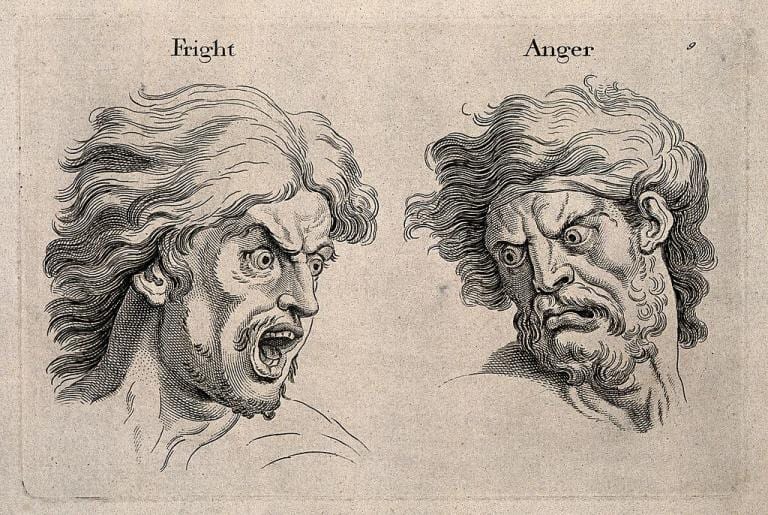
Americans are extremely polarized politically. But this is not just a matter of ideology. In fact, most Americans of both parties are flexible when it comes to ideology, holding positions that are pretty centrist and agreeing with each other more than either side would like to admit. Nevertheless, advocates of both parties fear each other, even hate each other. Both sides do little with reasoning or evidence; rather, they try to raise the passions of voters. Ours is now a politics of feelings.
So says Jonathan Rauch in his article in National Affairs entitled Rethinking Polarization. Rauch is a scholar at the liberal think tank the Brookings Institution, and although he uses the Donald Trump phenomenon as his main example, he admits that what he describes had its origins before Trump and occurs on both sides.
Today, as others too have noticed, we do not so much vote for a candidate, as vote against a candidate. Many Trump voters had qualms about his candidacy, but voted for him because they just could not stand Hillary Clinton. Today many people will vote for the Democratic candidate, whoever it is, because they just cannot stand Donald Trump. This is called “negative partisanship,” and it is characterizing not just the national election but state and local elections as well.
Rauch discusses this trend and relates it to another one that scholars have been noticing: “affective polarization.” That is, we are divided by our feelings. Both sides are angry at the other side and their politicians stoke up that anger. Rauch cites research that shows that both sides fear each other. Liberals are afraid of Trump supporters. Leftists say that they do not “feel safe” when conservatives are around, which becomes the excuse to exclude them on college campuses. Conservatives fear that electing a leftist will lead to the end of our liberties, or even the demise of our nation.
Rauch comments, “Increasingly, partisan disagreement is rooted not in policy differences but in a sense of threat — a sense gleefully amplified by demagogues. If the other side wins, our own side’s lifestyles, our values, our very ability to exist will hang by a thread.” He cites the “Flight 93” defense of Trump, the notion that Americans need to rise up in an extraordinary way to save our country, just as the passengers on that doomed 9/11 flight rose up to fight the terrorists. But surely the “sense of threat” has become a staple of Democratic rhetoric: Republicans are accused of waging a “war against women.” A Republican victory will mean “Blacks will go back into slavery.” Evangelicals are plotting to replace American democracy with a theocracy that will be just like it is in Handmaid’s Tale.
Notice too the decline of rational deliberation and debate. “Presenting people with facts that challenge an identity- or group-defining opinion does not work; instead of changing their minds, they will often reject the facts and double down on their false beliefs.” In today’s controversies, both sides are using the same accusation of “fake news.”
Actual ideology–that is, beliefs and policy proposals–hardly matters. Most Americans are in broad agreement. Despite liberals’ accusations, most conservatives are fine with civil rights, women’s rights, and gay rights. They even share in beliefs usually associated with liberals, such as being suspicious of big corporations and advocating protectionist economic policies. Liberal Americans also tend to share in beliefs associated with conservatives, such as libertarianism and suspicion of the government.
Rauch also notes the phenomenon of ideological “flipping,” as partisans change their long-held beliefs so as to support their “brand.” He notes how Republican conservatives are tossing aside their own ideology–which traditionally has advocated free trade, balanced budgets, entitlement reform, activist foreign policy, and traditional morality–in their zeal to support Donald Trump, who cuts against the grain of all of these conservative principles. I would add that we see the same thing with Democrats, who used to be the main opponents of illegal immigration, were often pro-life, and opposed same-sex marriage.
From the Greek historians through the authors of the Federalist Papers, thoughtful analysts warned against what could happen to democracy when the people’s “passions” are unleashed. One symptom is the rise of the demagogue, the would-be ruler who stirs up the people’s fears and emotions–often by scapegoating an outside group–as a way of seizing power. Rauch, predictably, cites Trump as exploiting people’s fears of Islamic terrorists and illegal immigrants. But, as George Will, who discusses Rauch’s article from a relatively conservative point of view, points out, it also applies to the other side:
Consider Massachusetts Sen. Elizabeth Warren’s grotesque — and classically demagogic — ascription of blame to unpopular others for everyone else’s personal complaints — which she says government can remedy: “You’ve got things that are broken in your life? I’ll tell you exactly why. It’s because giant corporations, billionaires have seized our government.”
All demagogues begin by rejecting Samuel Johnson’s wisdom: “How small, of all that human hearts endure, that part which laws or kings can cause or cure.” Warren is a millimeter away from Trump’s “I alone can fix it,” where the antecedent of the pronoun “it” is: everything.
Rauch says that these shifts in our politics points to a reversion to a different form of government entirely, a form that the vast majority of humanity has followed throughout the history of the human race: Tribalism. This, he says, is the natural form of government, the kind that is hard-wired into the human brain:
Humans are designed to be tribal. We are wired to organize ourselves socially into in-groups (our own group) and out-groups (others’ groups), and to organize ourselves cognitively so that our reasoning processes and even our sensory perceptions support in-group solidarity.
This often means fighting other tribes, not because of ideological differences, but because of revenge codes, territorial disputes, or ancient rivalries. At issue, fundamentally, is tribal belonging and the need to protect each other and assert one’s tribal identity.
Advanced societies, particularly liberal democracies, have found ways to bind tribes together into nations. But we have lost that sense of a larger unity. Why? Rauch cites many reasons, including these:
“The declining hold of organized religion and especially the collapse of mainline Protestant denominations have displaced apocalyptic and redemptive impulses into politics, where they don’t belong. Identity politics on the left and market fundamentalism on the right erode the feeling of shared citizenship and identity. . . .The fragmenting of media isolates us in our separate information bubbles. Algorithmic social-media platforms provide a lucrative business model for viral outrage. “
Furthermore, we had built defenses against tribalism–the rule of law, the Constitution, political parties, social institutions–but now all of those have eroded:
“In civic life, we have succumbed to — in fact, we have valorized — cynicism about core institutions. In education, elite universities frequently encourage students to burrow into their tribal identities rather than transcend them. In media, new technologies enable and monetize outrage and extremism. In the realm of social mores, norms like forbearance, truth-telling, and respect for law have come under attack. . . .
The founders were well aware of the dangers of populism, demagoguery, and faction. They built a constitutional order designed to force compromise and impede sociopathic behavior. But the institutions they put in place to act as gatekeepers (the Electoral College, the appointed Senate) became obsolete, and the successor gatekeepers (political bosses, smoke-filled rooms, big media) came to seem undemocratic and lost their grip.
What can be done? Rauch agrees with the conservative thinker Yuval Levin on the need to rebuild institutions. Rauch quotes Levin:
What does stand out about our time…is not the strength of these pressures but the weakness of our institutions — from the family on up through the national government with lots in between — which leaves us less able to handle the pressures and to hold together. And it leaves us with something more like formless connectedness, a social life without structural supports, which can work fine for people with lots of social capital to spend but doesn’t work nearly as well for those who need to build their stock of it.
Rauch comments, “Rebuilding institutions — and, just as important, noticing and valuing them — is more important for containing tribalism than pretty much anything that public policy could do. And two institutions in particular deserve strengthening: the Republican Party and the Democratic Party.”
This will no doubt seem strange. Aren’t the parties, almost by definition, the very font of partisan polarization? Actually, no. Paradoxically, partisanship has never been stronger, but the party organizations have never been weaker — and this is not a paradox at all. When they had the capacity to do so, party organizations engaged citizens in volunteer work, local party clubs, and social events, giving ordinary people a sense of political engagement that merely voting or writing a check cannot provide. Until they lost the power to do so, they road-tested and vetted political candidates, screening out incompetents, sociopaths, and those with no interest in governing. When they could, they used incentives like jobs, money, and protection from primary challenges to get legislators to work together and accept tough compromises. Perversely, the weakening of parties as organizations has led individuals to coalesce instead around parties as brands, turning organizational politics into identity politics.
To put the point another way, the more parties weaken as institutions, whose members are united by loyalty to their organization, the more they strengthen as tribes, whose members are united by hostility to their enemy (whether real, exaggerated, or invented). In that respect, polarization is called upon to provide solidarity when institutions cannot.
I think ideology is more important than Rauch thinks it is–specifically, the ideology surrounding life issues. There is a chasm between those who believe there is nothing wrong with abortion and those who believe it takes the life of a child. Secular observers think this is just one opinion among many, but this makes them blind to its existential importance for both sides. At stake also in this issue for pro-abortion advocates is feminism and the sexual revolution. For pro-lifers, the issue also touches on the nature of sexuality, the protection of the family, and the value of life itself. For both sides, this “ideological” issue is also emotional, and rightly so.
Still, I think Rauch is onto something. He thinks that once we are aware of the problem–and many Americans are complaining about the symptoms–we can rebuild the safeguards against tribalism. These include, interestingly, preserving the Electoral College (which Democratic candidates are seeking to abolish) and bringing back the “smoke-filled rooms” of the political parties (an “establishment” that both sides have condemned in favor of primary elections, which provide “greater democracy”). More fundamentally, though, by his own logic, we need to recover the centrality of institutions such as the family and the church.
Illustration: A frightened and an angry face,c. 1760, after C. Le Brun [CC BY 4.0 (https://creativecommons.org/licenses/by/4.0)] via Wikimedia Commons
Previous Post

October 28, 2019
Revising the Bill of Rights
Next Post

October 30, 2019 Swimming the Mississippi
Recent Comments
"I am told one only gets the $90 if one is on a Supplemental Medicare ..."
On Trump’s Political Ads That You ..."
"I too don't think the $5,000 giveaway will happen, but only because the Trumpublicans won't ..."
On Trump’s Political Ads That You ..."
"Well, large cash give-aways are generally bad policy, but really bad in any of the ..."
On Trump’s Political Ads That You ..."
"Well, we think it pretty much fits my thesis, except I'm not sure whether all ..."
On Trump’s Political Ads That You ..."
Browse Our Archives
Select a Category America Apologetics Art baseball Bible Blog Christ Church crime Culture Economics Education Ethics Family Food Football Government History Holidays Holy Week Humor International Islam Language Law Life Issues Literature Media Medicine Movies Music Nature News Personal Philosophy Politics psychology Reformation Religions Sacraments Science sex Social Science Sports technology television terrorism Theology Uncategorized Vocation war
Select a Month October 2026 September 2026 August 2026 July 2026 June 2026 May 2026 April 2026 March 2026 February 2026 January 2026 December 2025 November 2025 October 2025 September 2025 August 2025 July 2025 June 2025 May 2025 April 2025 March 2025 February 2025 January 2025 December 2024 November 2024 October 2024 September 2024 August 2024 July 2024 June 2024 May 2024 April 2024 March 2024 February 2024 January 2024 December 2023 November 2023 October 2023 September 2023 August 2023 July 2023 June 2023 May 2023 April 2023 March 2023 February 2023 January 2023 December 2022 November 2022 October 2022 September 2022 August 2022 July 2022 June 2022 May 2022 April 2022 March 2022 February 2022 January 2022 December 2021 November 2021 October 2021 September 2021 August 2021 July 2021 June 2021 May 2021 April 2021 March 2021 February 2021 January 2021 December 2020 November 2020 October 2020 September 2020 August 2020 July 2020 June 2020 May 2020 April 2020 March 2020 February 2020 January 2020 December 2019 November 2019 October 2019 September 2019 August 2019 July 2019 June 2019 May 2019 April 2019 March 2019 February 2019 January 2019 December 2018 November 2018 October 2018 September 2018 August 2018 July 2018 June 2018 May 2018 April 2018 March 2018 February 2018 January 2018 December 2017 November 2017 October 2017 September 2017 August 2017 July 2017 June 2017 May 2017 April 2017 March 2017 February 2017 January 2017 December 2016 November 2016 October 2016 September 2016 August 2016 July 2016 June 2016 May 2016 April 2016 March 2016 February 2016 January 2016 December 2015 November 2015 October 2015 September 2015 August 2015 July 2015 June 2015 May 2015 April 2015 March 2015 February 2015 January 2015 December 2014 November 2014 October 2014 September 2014 August 2014 July 2014 June 2014 May 2014 April 2014 March 2014 February 2014 January 2014 December 2013 November 2013 October 2013 September 2013 August 2013 July 2013 June 2013 May 2013 April 2013 March 2013 February 2013 January 2013 December 2012 November 2012 October 2012 September 2012 August 2012 July 2012 June 2012 May 2012 April 2012 March 2012 February 2012 January 2012 December 2011 November 2011 October 2011 September 2011 August 2011 July 2011 June 2011 May 2011 April 2011 March 2011 February 2011 January 2011 December 2010 November 2010 October 2010 September 2010 August 2010 July 2010 June 2010 May 2010 April 2010 March 2010 February 2010 January 2010 December 2009 November 2009 October 2009 September 2009 August 2009 July 2009 June 2009 May 2009 April 2009 March 2009 February 2009 January 2009 December 2008 November 2008 October 2008 September 2008 August 2008 July 2008 June 2008 May 2008 April 2008 March 2008 February 2008 January 2008 December 2007 November 2007 October 2007
Follow Us!
TAKE THE
Religious Wisdom Quiz
Who does Paul describe as his true son in the faith?
Select your answer to see how you score.
Onesimus Timothy Titus Philemon
Books by This Author Books by Gene Veith
Related posts from Cranach


Gen Z Wants Evildoers to Be Punished, Not...

On Trump's Political Ads That You Paid For
TRENDING AT PATHEOS Evangelical

In "Irreplaceable," our book on vocation and technology, Trevor Sutton and I...

I was strolling through the top floor of the brand new Parthenon...

What Does Gêvâh Mean For Kimberley Guifoyle &...
This week, a lot of the news is focused on Kimberly Guilfoyle....

INNER CIRCLE: Profound Mystery (Of Christ In All...
Ephesians 5:31-32 “For this reason, a man will leave his father and...

Do Not Rejoice When Your Enemy Falls: The...
Turning an execution into a public spectacle is a disturbing expression of...

'The Chosen' S6 Trailer: The Passion Gets Very...
Not many watching 'The Chosen' worry about spoilers, but just because they...
view all Evangelical blogs
What Are Your Thoughts?leave a comment
Ad-Free & Subscriber Log-In Subscription Support
- About Us
- 2026 Calendar
- Videos
- Podcasts
- Library of World Religions
- Faith In Media Tracker
- Advertise With Us
- Write for Us
- Privacy Policy
- Terms of Service
- Do Not Sell My Data
- Contact Us
- Radiant Digital
- Manage Newsletter Subscriptions
- Unsubscribe From Notifications
- Sitemap
Copyright 2008-2026, Patheos. All rights reserved.
Subscription Support Ad-Free & Subscriber Log-In
Follow Patheos