
BuddhistCatholicContemplativeEvangelicalGeneral ChristianHinduJewishLatter-day SaintMuslimNew VisionsProgressive Christian
Beliefs
- Buddhist
- Catholic
- Contemplative
- Evangelical
- General Christian
- Hindu
- Jewish
- Latter-day Saint
- More Voices
- Muslim
- New Visions
- Pagan
- Progressive Christian
Topics
- Religion News
- Food and Religion
- Sports and Religion
- Religious Art
- Religious Music and Entertainment
- Religious Events
- History and Religion
- Style and Religion
- Politics and Religion
- Women in Religion
- Recreation Outdoors and Religion
- Business Finance and Religion
- Careers Workplace and Religion
- Education and Religion
- Family Parenting and Religion
- Health Fitness and Religion
- Home and Religion
- Relationships and Religion
- Technology and Religion
- Travel and Religion
Columnists
- Buddhist Columnists
- Business Finance and Religion Columnists
- Careers Workplace and Religion Columnists
- Catholic Columnists
- Contemplative Columnists
- Education and Religion Columnists
- Evangelists Columnists
- Family Parenting and Religion Columnists
- General Christian Columnists
- Health Fitness and Religion Columnists
- Hindu Columnists
- History and Religion Columnists
- Home and Religion Columnists
- Jewish Columnists
- More Voices Columnists
- Latter Day Columnists
- Muslim Columnists
- New Visions Columnists
- Nonreligious Columnists
- Pagan Columnists
- Politics and Religion Columnists
- Progressive Columnists
- Recreation Outdoors and Religion Columnists
- Relationships and Religion Columnists
- Religion News Columnists
- Religious Art Columnists
- Religious Events Columnists
- Religious Music and Entertainment Columnists
- Sports and Religion Columnists
- Style and Religion Columnists
- Technology and Religion Columnists
- Travel and Religion Columnists
- Women in Religion Columnists
Resource Library
- 2026 Calendar
- Library of World Religions
- The 100 Most Holy Places on Earth
- Patheos Answers
- Podcasts
- Videos
- Faith Leaders Database
- Anglican Episcopalian
- Bahai
- Baptist
- Buddhism
- Christianity
- Confucianism
- Eastern Orthodoxy
- Hinduism
- Holiness and Pentecostal
- ISKCON
- Islam
- Judaism
- Lutheran
- Methodist
- The Church of Jesus Christ of Latter-day Saints
- New Age
- Paganism
- Presbytarian and Reformed
- Protestantism
- Religion Behind the Scenes
- Roman Catholic
- Scientology
- Shia Islam
- Sikhism
- Sufism
- Sunni Islam
- Taoism
- Zen
- See all religions
Research Tools
 Ad-Free & Subscriber Log-In Subscription Support
Ad-Free & Subscriber Log-In Subscription Support
Follow Patheos 

- Trending:
- Forgiveness
- |
- Marriage
- |
- Consciousness
- |
- Death Penalty
- |
- Election
- |
- Halloween

- Home
- Evangelical
- Politics and Religion
- Was America’s True Founding the Introduction of Slavery?
Was America’s True Founding the Introduction of Slavery?
Last updated on: August 21, 2019 at 5:55 am by Gene Veith
Was America’s True Founding the Introduction of Slavery? 2019-08-20T15:28:17-04:00 Gene Veith
Patheos Explore the world's faith through different perspectives on religion and spirituality! Patheos has the views of the prevalent religions and spiritualities of the world.
Racism, as manifested by slavery, has been described as America’s Original Sin. But is racism the essence of America, the distinguishing characteristic of our history, our culture, and our national identity?
Some of our presidential candidates suggest that it is. “This country, though we would like to think otherwise,” said Beto O’Rourke, “was founded on racism, has persisted through racism, and is racist today.” Bernie Sanders has said much the same thing.
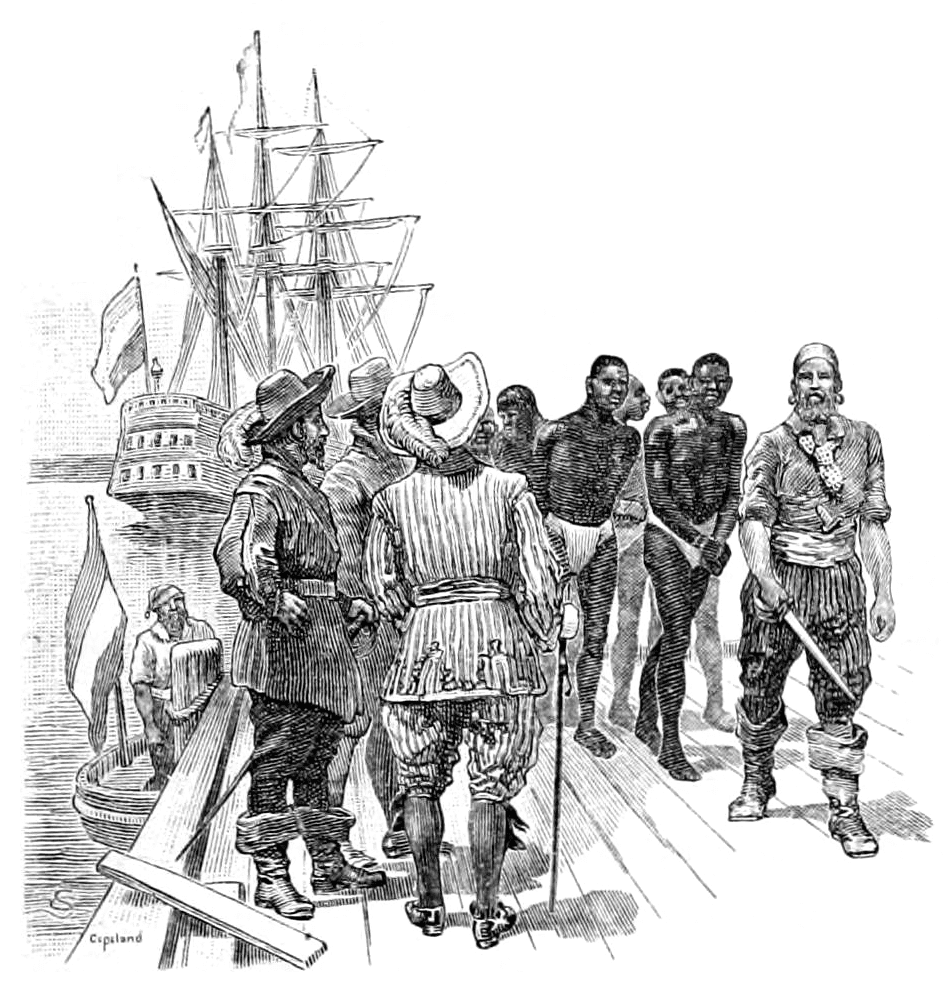
But the New York Times is taking this further with its 1619 project [subscription required], commemorating the first arrival of 20 African slaves brought to Jamestown on August 20, 1619, 400 years ago. The newspaper is publishing a series of articles that seeks “to reframe the country’s history, understanding 1619 as our true founding, and placing the consequences of slavery and the contributions of black Americans at the very center of the story we tell ourselves about who we are.”
It isn’t just replacing 1776, the issuing of the Declaration of Independence, or 1789, the signing of the Constitution, with 1619 as the birth of our nation. The contention is that virtually everything about America–our economy, our political system, our culture, the very food we eat–is tainted by racism. “In the days and weeks to come,” says the New York Times, “we will publish essays demonstrating that nearly everything that has made America exceptional grew out of slavery.”
So much for “American exceptionalism”! It’s hard to imagine how anyone who believes this could have any love of this country at all. Or how someone who believes this could run for president. It would be like campaigning for leadership of the Ku Klux Klan. As for Beto O’Rourke, who holds these assumptions, how can he make the case that voters should elect him, a self-confessed descendant of slave owners, instead of the black or Hispanic candidates he is running against?
This reduction of America to being all about racism is effectively rebutted by, for example, Rich Lowry, who calls the claim “an odious and reductive lie,” and John Daniel Davidson, who shows that it’s based on “garbage history.”
Davidson shows how the Founders wrestled with slavery from the very beginning, recognizing it as contradicting the American principles of freedom and equality, even though many of them owned slaves. Conversely, apologists for slavery specifically criticized that freedom and equality talk in our founding documents.
In one of the New York Times Project 1619 articles, the author argues that recent Republican legislative tactics–use of the filibuster, blocking Obama’s Supreme Court nomination, changing state campaign finance laws, etc.–are drawn from the philosophy of Sen. John C. Calhoun, the ante bellum Senator who fought to keep slavery legal. But far from embodying America’s Constitutionalism and proving its underlying racism, Calhoun actually opposed the Founders’ philosophy. As Davidson says,
As early as the 1820s, Calhoun was trying to correct what he saw as a monumental error by the Founders. To Calhoun, it was folly to base the republic on universal ideals like “all men are created equal,” or to suppose that something like the Bill of Rights could protect the rights of a minority from the “tyranny” of the majority.
He believed instead that politics was the exercise of pure will, and that the scope and exercise of political power should be based on “scientific” principles, not natural law or inherent human rights.
Sound familiar? It sounds like Calhoun would agree with the postmodern political theorists–like those behind the 1619 Project– who contend that all laws and cultures are nothing more than masks for the exercise of power and oppression. The problem is, if you reject “universal ideals,” whether because they get in your way or out of a “hermeneutic of suspicion,” there is nothing left for you to do but to exercise power and oppress people whenever you get the chance.
If August 20, 1619, marks the true founding of America, built on the foundation of slavery, what was the Emancipation Proclamation on January 1, 1863, which abolished slavery? The end of America? If slavery is the essence of America, why did America have a Civil War over the issue, and why did hundreds of thousands of Americans give their lives to abolish slavery?
Yes, racism continued with the Jim Crow laws. So what was the Civil Rights Act of 1964? Was it anti-American? Or the enactment of American principles that had long been neglected? Was Martin Luther King, Jr., wrong when he called the Declaration of Independence a “promissory note to which every American was to fall heir”?
Yes, slavery and racism have tarnished American history. We should add to this shameful record the treatment of Native Americans, who were slaughtered, plundered, and displaced, and who could claim that America’s racist founding was not 1619 but 1492.
But the bad things that America has done do not negate the good things that America has done. And the bad actions certainly do not negate the good ideals. That Americans have not always lived up to their own ideals does not mean that the ideals are not valid, much less that they are nothing more than cover-ups for the bad behavior.
The Declaration of Independence sets forth the founding assumptions of the United States of America: “We hold these truths to be self-evident, that all men are created equal, that they are endowed by their Creator with certain unalienable Rights, that among these are Life, Liberty and the pursuit of Happiness.” Thomas Jefferson, who wrote these words, was a slave-owner and so did not live up to his own beliefs.
But this failure to follow what we know is right is a flaw in the human condition. It is, in fact, what we mean by Original Sin.
Actually, the notion that racism is America’s Original Sin gives us an analogy that can help us understand these issues (though, of course, nations are not individual human beings). Our inherent sinfulness keeps spoiling our best attempts, ruining our relationships and preventing us from living the life that we want. On a collective scale, Original Sin keeps wrecking every utopian plan.
Similarly, racism keeps wrecking America’s efforts to build “a new order of the ages,” in the words on the American seal, as we continually fall short of our national principles.
And yet, as a section of the Lutheran Confessions emphasizes, Original Sin is not the essence of a human being. From Epitome of the Formula of Concord, Article I:
- We believe, teach, and confess that there is a distinction between man’s nature, not only as he was originally created by God pure and holy and without sin, but also as we have it [that nature] now after the Fall, namely, between the nature [itself], which even after the Fall is and remains a creature of God, and original sin, and that this distinction is as great as the distinction between a work of God and a work of the devil.
3] 2. We believe, teach, and confess also that this distinction should be maintained with the greatest care, because this doctrine, that no distinction is to be made between our corrupt human nature and original sin, conflicts with the chief articles of our Christian faith concerning creation, redemption, sanctification, and the resurrection of our body, and cannot coexist therewith.
As the Article and its explanation in the Solid Declaration makes clear, to say that the essence of a human being is sin–that is, that he is exclusively evil with nothing good about him–is to deny God’s creation (“God saw every thing that he had made, and, behold, it was very good ” [Genesis 1:31]), His specific creation of Man in His image (Genesis 1:26-27), the Incarnation (how could Christ, in His human nature, be sinless if human nature is sin?), sanctification (how could redeemed sinners do good works if they are intrinsically evil), etc., etc.
To be sure, “original sin is not a slight, but so deep a corruption of human nature that nothing healthy or uncorrupt has remained in man’s body or soul,” and this corruption necessitates the Redemption of Christ, who helps those whom He has forgiven battle this corruption throughout their lives.
By analogy, our national legacy of racism, slavery, and conquest are not slight but deep corruptions of American principles. And, although nations cannot be saved as human beings can be, they can battle this corruption throughout their histories.
Illustration: “The First Negro Slaves Brought to Virginia” from the 1910 edition of The Leading Facts of American History. Engraver “Copeland” (signature lower left); book copyright D.H. Montgomery [Public domain] via Wikimedia Commons.
Previous Post

August 20, 2019
If Old-School Reporters Covered the Epstein Story
Next Post

August 22, 2019 Luxury Beliefs
Recent Comments
"While she worked for Trump she was a tool's tool!"
"I know wired earbuds are making a comeback (I never stopped using them as I ..."
"VCRs, tape decks, and cassette players are all having a revival among a segment of ..."
"As a (retired) lawyer I see potential liability from sharing things like power or sharp ..."
Browse Our Archives
Select a Category America Apologetics Art baseball Bible Blog Christ Church crime Culture Economics Education Ethics Family Food Football Government History Holidays Holy Week Humor International Islam Language Law Life Issues Literature Media Medicine Movies Music Nature News Personal Philosophy Politics psychology Reformation Religions Sacraments Science sex Social Science Sports technology television terrorism Theology Uncategorized Vocation war
Select a Month October 2026 September 2026 August 2026 July 2026 June 2026 May 2026 April 2026 March 2026 February 2026 January 2026 December 2025 November 2025 October 2025 September 2025 August 2025 July 2025 June 2025 May 2025 April 2025 March 2025 February 2025 January 2025 December 2024 November 2024 October 2024 September 2024 August 2024 July 2024 June 2024 May 2024 April 2024 March 2024 February 2024 January 2024 December 2023 November 2023 October 2023 September 2023 August 2023 July 2023 June 2023 May 2023 April 2023 March 2023 February 2023 January 2023 December 2022 November 2022 October 2022 September 2022 August 2022 July 2022 June 2022 May 2022 April 2022 March 2022 February 2022 January 2022 December 2021 November 2021 October 2021 September 2021 August 2021 July 2021 June 2021 May 2021 April 2021 March 2021 February 2021 January 2021 December 2020 November 2020 October 2020 September 2020 August 2020 July 2020 June 2020 May 2020 April 2020 March 2020 February 2020 January 2020 December 2019 November 2019 October 2019 September 2019 August 2019 July 2019 June 2019 May 2019 April 2019 March 2019 February 2019 January 2019 December 2018 November 2018 October 2018 September 2018 August 2018 July 2018 June 2018 May 2018 April 2018 March 2018 February 2018 January 2018 December 2017 November 2017 October 2017 September 2017 August 2017 July 2017 June 2017 May 2017 April 2017 March 2017 February 2017 January 2017 December 2016 November 2016 October 2016 September 2016 August 2016 July 2016 June 2016 May 2016 April 2016 March 2016 February 2016 January 2016 December 2015 November 2015 October 2015 September 2015 August 2015 July 2015 June 2015 May 2015 April 2015 March 2015 February 2015 January 2015 December 2014 November 2014 October 2014 September 2014 August 2014 July 2014 June 2014 May 2014 April 2014 March 2014 February 2014 January 2014 December 2013 November 2013 October 2013 September 2013 August 2013 July 2013 June 2013 May 2013 April 2013 March 2013 February 2013 January 2013 December 2012 November 2012 October 2012 September 2012 August 2012 July 2012 June 2012 May 2012 April 2012 March 2012 February 2012 January 2012 December 2011 November 2011 October 2011 September 2011 August 2011 July 2011 June 2011 May 2011 April 2011 March 2011 February 2011 January 2011 December 2010 November 2010 October 2010 September 2010 August 2010 July 2010 June 2010 May 2010 April 2010 March 2010 February 2010 January 2010 December 2009 November 2009 October 2009 September 2009 August 2009 July 2009 June 2009 May 2009 April 2009 March 2009 February 2009 January 2009 December 2008 November 2008 October 2008 September 2008 August 2008 July 2008 June 2008 May 2008 April 2008 March 2008 February 2008 January 2008 December 2007 November 2007 October 2007
Follow Us!
TAKE THE
Religious Wisdom Quiz
How many times did Peter deny Jesus?
Select your answer to see how you score.
3 5 4 2
Books by This Author Books by Gene Veith
Related posts from Cranach


Gen Z Wants Evildoers to Be Punished, Not...


The Family Estrangement Epidemic
TRENDING AT PATHEOS Evangelical

The Pillar of the Boatmen: the Ancient Monument...
The Pillar of the Boatmen is a Romano-Gaulish sculpture that dates from...

In one sense walking into Westminster Abbey is like walking down the...

'Super Scam Me' Exposes AI Jon Bon Jovi...
Leslie Pickett believed she was in a relationship with Jon Bon Jovi....

The Brazilian Remake of Kendricks' 'Flywheel' Opens in...
“Flywheel,” the story that launched the Kendrick Brothers’ filmmaking career is getting...

The Dangers of Gradual Accommodation (Winking at Sin)
Recently, the “law of gradualness” resurfaced during the opening of a weeklong,...

The Iron Gates and the Lion of the...
Yesterday, I didn't finish my report about, well, yesterday. So I'll...
view all Evangelical blogs
What Are Your Thoughts?leave a comment
Ad-Free & Subscriber Log-In Subscription Support
- About Us
- 2026 Calendar
- Videos
- Podcasts
- Library of World Religions
- Faith In Media Tracker
- Advertise With Us
- Write for Us
- Privacy Policy
- Terms of Service
- Do Not Sell My Data
- Contact Us
- Radiant Digital
- Manage Newsletter Subscriptions
- Unsubscribe From Notifications
- Sitemap
Copyright 2008-2026, Patheos. All rights reserved.
Subscription Support Ad-Free & Subscriber Log-In
Follow Patheos