
BuddhistCatholicContemplativeEvangelicalGeneral ChristianHinduJewishLatter-day SaintMuslimNew VisionsProgressive Christian
Beliefs
- Buddhist
- Catholic
- Contemplative
- Evangelical
- General Christian
- Hindu
- Jewish
- Latter-day Saint
- More Voices
- Muslim
- New Visions
- Pagan
- Progressive Christian
Topics
- Religion News
- Food and Religion
- Sports and Religion
- Religious Art
- Religious Music and Entertainment
- Religious Events
- History and Religion
- Style and Religion
- Politics and Religion
- Women in Religion
- Recreation Outdoors and Religion
- Business Finance and Religion
- Careers Workplace and Religion
- Education and Religion
- Family Parenting and Religion
- Health Fitness and Religion
- Home and Religion
- Relationships and Religion
- Technology and Religion
- Travel and Religion
Columnists
- Buddhist Columnists
- Business Finance and Religion Columnists
- Careers Workplace and Religion Columnists
- Catholic Columnists
- Contemplative Columnists
- Education and Religion Columnists
- Evangelists Columnists
- Family Parenting and Religion Columnists
- General Christian Columnists
- Health Fitness and Religion Columnists
- Hindu Columnists
- History and Religion Columnists
- Home and Religion Columnists
- Jewish Columnists
- More Voices Columnists
- Latter Day Columnists
- Muslim Columnists
- New Visions Columnists
- Nonreligious Columnists
- Pagan Columnists
- Politics and Religion Columnists
- Progressive Columnists
- Recreation Outdoors and Religion Columnists
- Relationships and Religion Columnists
- Religion News Columnists
- Religious Art Columnists
- Religious Events Columnists
- Religious Music and Entertainment Columnists
- Sports and Religion Columnists
- Style and Religion Columnists
- Technology and Religion Columnists
- Travel and Religion Columnists
- Women in Religion Columnists
Resource Library
- 2026 Calendar
- Library of World Religions
- The 100 Most Holy Places on Earth
- Patheos Answers
- Podcasts
- Videos
- Faith Leaders Database
- Anglican Episcopalian
- Bahai
- Baptist
- Buddhism
- Christianity
- Confucianism
- Eastern Orthodoxy
- Hinduism
- Holiness and Pentecostal
- ISKCON
- Islam
- Judaism
- Lutheran
- Methodist
- The Church of Jesus Christ of Latter-day Saints
- New Age
- Paganism
- Presbytarian and Reformed
- Protestantism
- Religion Behind the Scenes
- Roman Catholic
- Scientology
- Shia Islam
- Sikhism
- Sufism
- Sunni Islam
- Taoism
- Zen
- See all religions
Research Tools
 Ad-Free & Subscriber Log-In Subscription Support
Ad-Free & Subscriber Log-In Subscription Support
Follow Patheos 

- Trending:
- Forgiveness
- |
- Marriage
- |
- Consciousness
- |
- Death Penalty
- |
- Election
- |
- Halloween

- Home
- Evangelical
- Politics and Religion
- Tyrannical Souls
Tyrannical Souls
Last updated on: January 25, 2019 at 6:00 am by Gene Veith
Tyrannical Souls 2019-01-24T18:13:15-05:00 Gene Veith
Patheos Explore the world's faith through different perspectives on religion and spirituality! Patheos has the views of the prevalent religions and spiritualities of the world.
Politics reflects the culture, we are told, and this is certainly true. But, more profoundly, both politics and culture reflect the soul. Plato made this point, and so, more recently, does Damon Linker, who writes about the “tyrannical souls” that stir up the outrage mobs on Twitter. First, I want to quote Linker. And then I want to bring up Plato.
From Damon Linker, How Twitter could be the death of liberal democracy, in The Week:
As Andrew Sullivan noted nearly three years ago in an important essay on America’s slow drift toward tyranny, Plato believed that political regimes and the souls of their citizens mirror each other. A change in political form can lead to a change in the character of citizens, and vice versa. Tyrannies emerge in many ways, but sometimes they arise when the citizens of a democratic political community develop tyrannical souls.
What Twitter shows us is a real-time ultrasound of the souls of America’s cultural and intellectual elite and its most committed activists — the people in charge of disseminating knowledge and who take the lead in organizing political action in our society. The picture it reveals is ugly, vulgar, shrill, and intolerant, with souls exhibiting an incapacity to deliberate, weigh evidence, and judge judiciously. They display an impulsiveness and unhinged rage at political enemies that is incompatible with reasoned thinking about how we might go about governing ourselves, heal the divisions in our country, and avoid a collapse into civic violence that could usher in tyranny.
In 1984, George Orwell famously described a totalitarian political order in which people were kept as docile subjects in part by a daily ritual called “Two Minutes Hate” in which the population directs all of its pent up fury at “Goldstein,” a possibly fictional enemy of the state.
Thanks to Twitter, we now know that the same dynamic can arise spontaneously, with fresh ire directed at a new manifestation of the partisan enemy nearly every day. It shows us that under certain circumstances — our circumstances — people can and will fasten onto an endless succession of real-life Goldsteins for the sheer, addictive joy of it — for the pure, delirious pleasure of denouncing manifestations of evil in our midst. Nothing, it seems, is quite as satisfying as singling out our fellow citizens for their moral failings and indulging in fantasies of their fully justified punishment.
We see this on the right, we see it on the left, and we increasingly see it among ostensibly nonpartisan journalists. No matter where it originates on the political spectrum, it is an impulse we indulge at our peril.
How long will a citizenry consumed by the untamed lust to banish ideological opponents into outer darkness continue to view the sharing and alternation of political rule as a worthwhile civic habit and ritual? We may be dangerously close to finding out.
Here is an extract from the Andrew Sullivan article Linker was referencing. He is condensing the discussion of Socrates in Book VIII of Plato’s Republic. From Andrew Sullivan, Democracies end when they are too democratic.:
The passage is from the part of the dialogue where Socrates and his friends are talking about the nature of different political systems, how they change over time, and how one can slowly evolve into another. And Socrates seemed pretty clear on one sobering point: that “tyranny is probably established out of no other regime than democracy.” What did Plato mean by that? Democracy, for him, I discovered, was a political system of maximal freedom and equality, where every lifestyle is allowed and public offices are filled by a lottery. And the longer a democracy lasted, Plato argued, the more democratic it would become. Its freedoms would multiply; its equality spread. Deference to any sort of authority would wither; tolerance of any kind of inequality would come under intense threat; and multiculturalism and sexual freedom would create a city or a country like “a many-colored cloak decorated in all hues.”
This rainbow-flag polity, Plato argues, is, for many people, the fairest of regimes. The freedom in that democracy has to be experienced to be believed — with shame and privilege in particular emerging over time as anathema. But it is inherently unstable. As the authority of elites fades, as Establishment values cede to popular ones, views and identities can become so magnificently diverse as to be mutually uncomprehending. And when all the barriers to equality, formal and informal, have been removed; when everyone is equal; when elites are despised and full license is established to do “whatever one wants,” you arrive at what might be called late-stage democracy. There is no kowtowing to authority here, let alone to political experience or expertise.
The very rich come under attack, as inequality becomes increasingly intolerable. Patriarchy is also dismantled: “We almost forgot to mention the extent of the law of equality and of freedom in the relations of women with men and men with women.” Family hierarchies are inverted: “A father habituates himself to be like his child and fear his sons, and a son habituates himself to be like his father and to have no shame before or fear of his parents.” In classrooms, “as the teacher … is frightened of the pupils and fawns on them, so the students make light of their teachers.” Animals are regarded as equal to humans; the rich mingle freely with the poor in the streets and try to blend in. The foreigner is equal to the citizen.
And it is when a democracy has ripened as fully as this, Plato argues, that a would-be tyrant will often seize his moment.
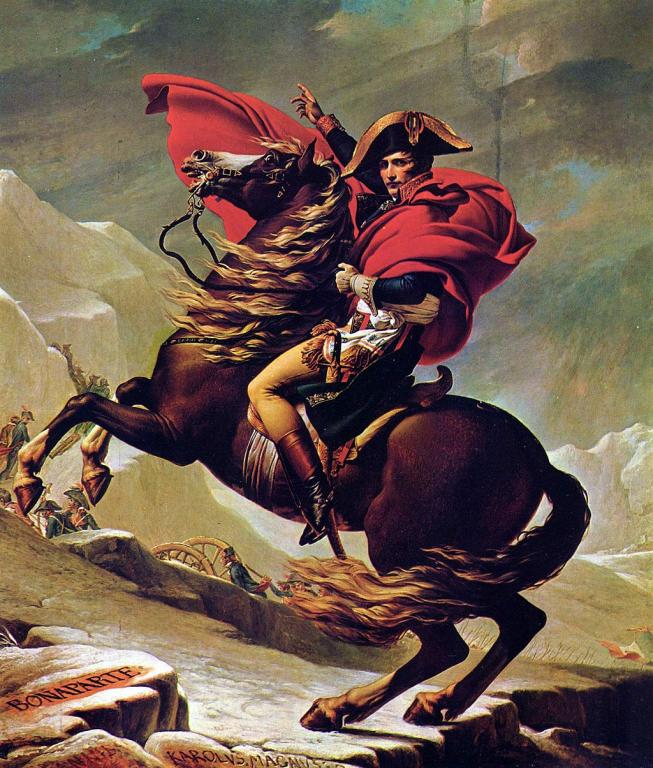
This morphing of democracy into tyranny happened numerous times in the Greek democracies. It can be seen in the way the radical egalitarianism of the French Revolution led to the tyranny of Napoleon. The various Communist revolutions went through a similar development.
Ironically, Andrew Sullivan was expressing his alarm over Donald Trump! I can see the concern back then of a paralyzed democracy turning to a “strong man” who would protect the people, at the cost of the people’s liberty, but Trump, for all of his vilification, has not actually governed that way. What Sullivan and Plato are describing exactly is the course of progressivism: sexual freedom, equality of men and women, multiculturalism, animal rights, resentment of “the rich,” adults trying to be young, teachers trying to please their students, opposition to all authority, the repudiation of all limits upon what the citizens want to do.
Plato went on to say that Democracy ends when the have-nots vote away the property of those who have. The result is political chaos and social breakdown, which provokes a “friend of the people” to arise and promise to protect them. The people vote him into absolute power, whereupon “an excess of freedom” gives way to “an excess of tyranny.”
Are we in this “late stage democracy”? Does this account for how former liberals are now turning politically to socialists and becoming increasingly authoritarian?
The United States, of course, is not a pure democracy but a representational constitutional republic, with checks and balances and the rule of law. Will that be enough to prevent social chaos, if the people have chaotic souls? Is there a way to counter or reverse the dysfunctions of democracy predicted by Plato that have already arisen?
Illustration: Napoleon Bonaparte by Jacques-Louis David [Public domain]
Previous Post

January 24, 2019
Marijuana and Religion
Next Post

January 28, 2019 Trump's Base: Evangelicals Who Don't Go to Church
Recent Comments
"I am told one only gets the $90 if one is on a Supplemental Medicare ..."
On Trump’s Political Ads That You ..."
"I too don't think the $5,000 giveaway will happen, but only because the Trumpublicans won't ..."
On Trump’s Political Ads That You ..."
"Well, large cash give-aways are generally bad policy, but really bad in any of the ..."
On Trump’s Political Ads That You ..."
"Well, we think it pretty much fits my thesis, except I'm not sure whether all ..."
On Trump’s Political Ads That You ..."
Browse Our Archives
Select a Category America Apologetics Art baseball Bible Blog Christ Church crime Culture Economics Education Ethics Family Food Football Government History Holidays Holy Week Humor International Islam Language Law Life Issues Literature Media Medicine Movies Music Nature News Personal Philosophy Politics psychology Reformation Religions Sacraments Science sex Social Science Sports technology television terrorism Theology Uncategorized Vocation war
Select a Month October 2026 September 2026 August 2026 July 2026 June 2026 May 2026 April 2026 March 2026 February 2026 January 2026 December 2025 November 2025 October 2025 September 2025 August 2025 July 2025 June 2025 May 2025 April 2025 March 2025 February 2025 January 2025 December 2024 November 2024 October 2024 September 2024 August 2024 July 2024 June 2024 May 2024 April 2024 March 2024 February 2024 January 2024 December 2023 November 2023 October 2023 September 2023 August 2023 July 2023 June 2023 May 2023 April 2023 March 2023 February 2023 January 2023 December 2022 November 2022 October 2022 September 2022 August 2022 July 2022 June 2022 May 2022 April 2022 March 2022 February 2022 January 2022 December 2021 November 2021 October 2021 September 2021 August 2021 July 2021 June 2021 May 2021 April 2021 March 2021 February 2021 January 2021 December 2020 November 2020 October 2020 September 2020 August 2020 July 2020 June 2020 May 2020 April 2020 March 2020 February 2020 January 2020 December 2019 November 2019 October 2019 September 2019 August 2019 July 2019 June 2019 May 2019 April 2019 March 2019 February 2019 January 2019 December 2018 November 2018 October 2018 September 2018 August 2018 July 2018 June 2018 May 2018 April 2018 March 2018 February 2018 January 2018 December 2017 November 2017 October 2017 September 2017 August 2017 July 2017 June 2017 May 2017 April 2017 March 2017 February 2017 January 2017 December 2016 November 2016 October 2016 September 2016 August 2016 July 2016 June 2016 May 2016 April 2016 March 2016 February 2016 January 2016 December 2015 November 2015 October 2015 September 2015 August 2015 July 2015 June 2015 May 2015 April 2015 March 2015 February 2015 January 2015 December 2014 November 2014 October 2014 September 2014 August 2014 July 2014 June 2014 May 2014 April 2014 March 2014 February 2014 January 2014 December 2013 November 2013 October 2013 September 2013 August 2013 July 2013 June 2013 May 2013 April 2013 March 2013 February 2013 January 2013 December 2012 November 2012 October 2012 September 2012 August 2012 July 2012 June 2012 May 2012 April 2012 March 2012 February 2012 January 2012 December 2011 November 2011 October 2011 September 2011 August 2011 July 2011 June 2011 May 2011 April 2011 March 2011 February 2011 January 2011 December 2010 November 2010 October 2010 September 2010 August 2010 July 2010 June 2010 May 2010 April 2010 March 2010 February 2010 January 2010 December 2009 November 2009 October 2009 September 2009 August 2009 July 2009 June 2009 May 2009 April 2009 March 2009 February 2009 January 2009 December 2008 November 2008 October 2008 September 2008 August 2008 July 2008 June 2008 May 2008 April 2008 March 2008 February 2008 January 2008 December 2007 November 2007 October 2007
Follow Us!
TAKE THE
Religious Wisdom Quiz
Who was the major prophet during King Hezekiah's reign in Judah?
Select your answer to see how you score.
Daniel Ezekiel Jeremiah Isaiah
Books by This Author Books by Gene Veith
Related posts from Cranach



Our New Book on Technology & Vocation

Gen Z Wants Evildoers to Be Punished, Not...
TRENDING AT PATHEOS Evangelical

Janie Learns the Way of the Cross: A...
Teaching children about Jesus' Passion can be challenging. Many parents and educators...

Looking For Good Catholic Writing - October 2026
He alone extends the heavens, and he walks upon the waves of...

In "Irreplaceable," our book on vocation and technology, Trevor Sutton and I...

I was strolling through the top floor of the brand new Parthenon...

What Does Gêvâh Mean For Kimberley Guifoyle &...
This week, a lot of the news is focused on Kimberly Guilfoyle....

INNER CIRCLE: Profound Mystery (Of Christ In All...
Ephesians 5:31-32 “For this reason, a man will leave his father and...
view all Evangelical blogs
What Are Your Thoughts?leave a comment
Ad-Free & Subscriber Log-In Subscription Support
- About Us
- 2026 Calendar
- Videos
- Podcasts
- Library of World Religions
- Faith In Media Tracker
- Advertise With Us
- Write for Us
- Privacy Policy
- Terms of Service
- Do Not Sell My Data
- Contact Us
- Radiant Digital
- Manage Newsletter Subscriptions
- Unsubscribe From Notifications
- Sitemap
Copyright 2008-2026, Patheos. All rights reserved.
Subscription Support Ad-Free & Subscriber Log-In
Follow Patheos