
BuddhistCatholicContemplativeEvangelicalGeneral ChristianHinduJewishLatter-day SaintMuslimNew VisionsProgressive Christian
Beliefs
- Buddhist
- Catholic
- Contemplative
- Evangelical
- General Christian
- Hindu
- Jewish
- Latter-day Saint
- More Voices
- Muslim
- New Visions
- Pagan
- Progressive Christian
Topics
- Religion News
- Food and Religion
- Sports and Religion
- Religious Art
- Religious Music and Entertainment
- Religious Events
- History and Religion
- Style and Religion
- Politics and Religion
- Women in Religion
- Recreation Outdoors and Religion
- Business Finance and Religion
- Careers Workplace and Religion
- Education and Religion
- Family Parenting and Religion
- Health Fitness and Religion
- Home and Religion
- Relationships and Religion
- Technology and Religion
- Travel and Religion
Columnists
- Buddhist Columnists
- Business Finance and Religion Columnists
- Careers Workplace and Religion Columnists
- Catholic Columnists
- Contemplative Columnists
- Education and Religion Columnists
- Evangelists Columnists
- Family Parenting and Religion Columnists
- General Christian Columnists
- Health Fitness and Religion Columnists
- Hindu Columnists
- History and Religion Columnists
- Home and Religion Columnists
- Jewish Columnists
- More Voices Columnists
- Latter Day Columnists
- Muslim Columnists
- New Visions Columnists
- Nonreligious Columnists
- Pagan Columnists
- Politics and Religion Columnists
- Progressive Columnists
- Recreation Outdoors and Religion Columnists
- Relationships and Religion Columnists
- Religion News Columnists
- Religious Art Columnists
- Religious Events Columnists
- Religious Music and Entertainment Columnists
- Sports and Religion Columnists
- Style and Religion Columnists
- Technology and Religion Columnists
- Travel and Religion Columnists
- Women in Religion Columnists
Resource Library
- 2026 Calendar
- Library of World Religions
- The 100 Most Holy Places on Earth
- Patheos Answers
- Podcasts
- Videos
- Faith Leaders Database
- Anglican Episcopalian
- Bahai
- Baptist
- Buddhism
- Christianity
- Confucianism
- Eastern Orthodoxy
- Hinduism
- Holiness and Pentecostal
- ISKCON
- Islam
- Judaism
- Lutheran
- Methodist
- The Church of Jesus Christ of Latter-day Saints
- New Age
- Paganism
- Presbytarian and Reformed
- Protestantism
- Religion Behind the Scenes
- Roman Catholic
- Scientology
- Shia Islam
- Sikhism
- Sufism
- Sunni Islam
- Taoism
- Zen
- See all religions
Research Tools
 Ad-Free & Subscriber Log-In Subscription Support
Ad-Free & Subscriber Log-In Subscription Support
Follow Patheos 

- Trending:
- Forgiveness
- |
- Marriage
- |
- Consciousness
- |
- Death Penalty
- |
- Election
- |
- Halloween

- Home
- Evangelical
- Politics and Religion
- “Good fences make good neighbors”
“Good fences make good neighbors”
Last updated on: January 10, 2019 at 6:00 am by Gene Veith
“Good fences make good neighbors” 2019-01-09T18:38:29-05:00 Gene Veith
Patheos Explore the world's faith through different perspectives on religion and spirituality! Patheos has the views of the prevalent religions and spiritualities of the world.
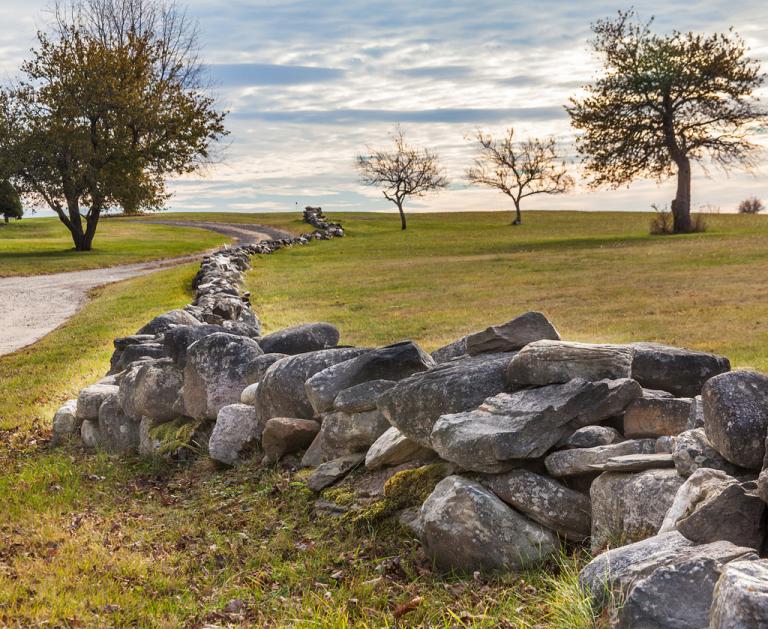
My fellow Patheos blogger Roger Olsen has written an eloquent critique of President Trump’s desire for a border wall and of walls in general. Throughout, he cites a recurring line from Robert Frost’s poem “Mending Wall”: “Something there is that doesn’t love a wall.” But that poem has another recurring line: “Good fences make good neighbors.”
The poem is NOT about physical barriers along the border. Rather, it is about the stone fences that separate New England farms. And, metaphorically, it is about the paradox that human relationships need both openness and privacy, free exchanges and personal boundaries. The poem captures well the sense in which we do need walls as well as the sense in which we do need them. It includes a dialogue between a “pro-wall” person and an “anti-wall” person, giving both their due.
As such, it may help us think through the wisdom of that proposed border wall, at least to clarify the issues. Then again, it may not. At any rate, it is a wonderful poem. (Lots of Frost’s poems are going into public domain as of this year, along with a vast amount of other classic literature due to a quirk in the copyright law, though the copyright for this particular poem has already expired, so I can quote it in its entirety.)
Mending Wall
BY ROBERT FROST
Something there is that doesn’t love a wall,
That sends the frozen-ground-swell under it,
And spills the upper boulders in the sun;
And makes gaps even two can pass abreast.
The work of hunters is another thing:
I have come after them and made repair
Where they have left not one stone on a stone,
But they would have the rabbit out of hiding,
To please the yelping dogs. The gaps I mean,
No one has seen them made or heard them made,
But at spring mending-time we find them there.
The piled-up stones that constitute the fences keep falling down. Nature causes them to fall (such as the effect of freezes) as do human beings (such as hunters who don’t respect the landowner’s property). But the speaker cannot really explain the big gaps.
I let my neighbour know beyond the hill;
And on a day we meet to walk the line
And set the wall between us once again.
We keep the wall between us as we go.
To each the boulders that have fallen to each.
And some are loaves and some so nearly balls
We have to use a spell to make them balance:
“Stay where you are until our backs are turned!”
We wear our fingers rough with handling them.
Oh, just another kind of out-door game,
One on a side. It comes to little more:
So once a year, in the spring, the speaker sets a date for his neighbor and they mend the wall. Each farmer, on his side, picks up the rocks and piles them back, working along the line across from each other, having conversation as they work.
There where it is we do not need the wall:
He is all pine and I am apple orchard.
My apple trees will never get across
And eat the cones under his pines, I tell him.
He only says, “Good fences make good neighbours.”
Actually, they don’t need the wall. The speaker raises apples, and the neighbor’s land is all woods. Their different kinds of property will not intrude on each other if the stone fence didn’t exist. But the other farmer says that the barrier between them helps them to be good neighbors to each other.
Spring is the mischief in me, and I wonder
If I could put a notion in his head:
“Why do they make good neighbours? Isn’t it
Where there are cows? But here there are no cows.
Before I built a wall I’d ask to know
What I was walling in or walling out,
And to whom I was like to give offence.
The poet light-heartedly challenges the other farmer. Why do we need fences? Yes, if one of us had cows, a fence would be necessary to keep them from wandering away and damaging the other one’s property. But neither of us have cows!
He then raises a bigger issue about walls. Are we walling in or walling out? The wall around a prison keeps people in. The wall around a castle keeps enemies out. The Berlin Wall kept those oppressed by East German Communism from leaving the country. The Great Wall of China helped prevent enemies from invading.
What is the purpose of this particular wall? Might my walling someone out be needlessly offensive?
Something there is that doesn’t love a wall,
That wants it down.” I could say “Elves” to him,
But it’s not elves exactly, and I’d rather
He said it for himself. I see him there
Bringing a stone grasped firmly by the top
In each hand, like an old-stone savage armed.
He moves in darkness as it seems to me,
Not of woods only and the shade of trees.
He will not go behind his father’s saying,
And he likes having thought of it so well
He says again, “Good fences make good neighbours.”
But if he is walling his neighbor out, the neighbor is not offended. And yet the poet describes the neighbor in terms of a stone-aged “savage,” who uses such stones as weapons. He “moves in darkness.” The implication is that there is something primitive and atavistic in this impulse to build walls.
But the poet lets the other farmer have the last word: We do need “our own space.” We need “our boundaries,” as part of our sense of self-protection, our privacy, all of which are psychologically necessary for our sense of personal integrity. This desire is not opposed to the neighbor. Mending the wall is a mutual act of friendship. It’s the gaps in the wall that are acts of aggression and thoughtlessness to other people. The goal of having the shared fence is to be “good neighbors.”
Thus saith our text. Does this poem have any application to the current debate about a wall between the U.S. and Mexico? If we had one, could that make us “good neighbors”? Or would that work only if the two countries built it together, as these two neighbors do? Is Trump’s impulse for the wall like that of “an old-stone savage armed”? He is clearly aware of what he is walling out and walling in. He is “walling out.” Are defensive walls always legitimate? Or do we need to factor in “to whom we are like to give offence”?
This poem is usually taken to be an exploration of the personal quality associated with New Englanders of friendly reserve. Do you see how we sometimes do need to tear down the walls between us, and yet how we also need certain kinds of boundaries in order to have good relationships? A relationship totally without boundaries can be smothering, just as a relationship in which both parties are ensconced in their own space is isolating. The act of “mending” the walls suggests a positive “fixing,” an act of mutual co-operation that restores the proper balance. (Notice how the two workers have to “balance” the rocks.) Is there an equivalent resolution in international relations?
Photo by Paul VanDerWerf, Stone Fence in Harpswell, Maine via Flickr, Creative Commons License
Previous Post
January 9, 2019
How Bach Expressed His Faith Via Instrumental Music
Next Post

January 11, 2019 Psychologists on Vocation
Recent Comments
"I know wired earbuds are making a comeback (I never stopped using them as I ..."
"VCRs, tape decks, and cassette players are all having a revival among a segment of ..."
"As a (retired) lawyer I see potential liability from sharing things like power or sharp ..."
"I am not sure the items you mentioned, though disused, discontinued, discarded, could be considered ..."
Browse Our Archives
Select a Category America Apologetics Art baseball Bible Blog Christ Church crime Culture Economics Education Ethics Family Food Football Government History Holidays Holy Week Humor International Islam Language Law Life Issues Literature Media Medicine Movies Music Nature News Personal Philosophy Politics psychology Reformation Religions Sacraments Science sex Social Science Sports technology television terrorism Theology Uncategorized Vocation war
Select a Month October 2026 September 2026 August 2026 July 2026 June 2026 May 2026 April 2026 March 2026 February 2026 January 2026 December 2025 November 2025 October 2025 September 2025 August 2025 July 2025 June 2025 May 2025 April 2025 March 2025 February 2025 January 2025 December 2024 November 2024 October 2024 September 2024 August 2024 July 2024 June 2024 May 2024 April 2024 March 2024 February 2024 January 2024 December 2023 November 2023 October 2023 September 2023 August 2023 July 2023 June 2023 May 2023 April 2023 March 2023 February 2023 January 2023 December 2022 November 2022 October 2022 September 2022 August 2022 July 2022 June 2022 May 2022 April 2022 March 2022 February 2022 January 2022 December 2021 November 2021 October 2021 September 2021 August 2021 July 2021 June 2021 May 2021 April 2021 March 2021 February 2021 January 2021 December 2020 November 2020 October 2020 September 2020 August 2020 July 2020 June 2020 May 2020 April 2020 March 2020 February 2020 January 2020 December 2019 November 2019 October 2019 September 2019 August 2019 July 2019 June 2019 May 2019 April 2019 March 2019 February 2019 January 2019 December 2018 November 2018 October 2018 September 2018 August 2018 July 2018 June 2018 May 2018 April 2018 March 2018 February 2018 January 2018 December 2017 November 2017 October 2017 September 2017 August 2017 July 2017 June 2017 May 2017 April 2017 March 2017 February 2017 January 2017 December 2016 November 2016 October 2016 September 2016 August 2016 July 2016 June 2016 May 2016 April 2016 March 2016 February 2016 January 2016 December 2015 November 2015 October 2015 September 2015 August 2015 July 2015 June 2015 May 2015 April 2015 March 2015 February 2015 January 2015 December 2014 November 2014 October 2014 September 2014 August 2014 July 2014 June 2014 May 2014 April 2014 March 2014 February 2014 January 2014 December 2013 November 2013 October 2013 September 2013 August 2013 July 2013 June 2013 May 2013 April 2013 March 2013 February 2013 January 2013 December 2012 November 2012 October 2012 September 2012 August 2012 July 2012 June 2012 May 2012 April 2012 March 2012 February 2012 January 2012 December 2011 November 2011 October 2011 September 2011 August 2011 July 2011 June 2011 May 2011 April 2011 March 2011 February 2011 January 2011 December 2010 November 2010 October 2010 September 2010 August 2010 July 2010 June 2010 May 2010 April 2010 March 2010 February 2010 January 2010 December 2009 November 2009 October 2009 September 2009 August 2009 July 2009 June 2009 May 2009 April 2009 March 2009 February 2009 January 2009 December 2008 November 2008 October 2008 September 2008 August 2008 July 2008 June 2008 May 2008 April 2008 March 2008 February 2008 January 2008 December 2007 November 2007 October 2007
Follow Us!
TAKE THE
Religious Wisdom Quiz
Do not conform to the pattern of this world, but be transformed by the renewing of your ____.
Select your answer to see how you score.
Mind Spirit Heart Actions
Books by This Author Books by Gene Veith
Related posts from Cranach


Luther vs. Kuyper on Christianity & Culture
TRENDING AT PATHEOS Evangelical

When Halloween Unmasks Married Hearts
Written by Dr. David K. Ewen from Eternal Truth Bible College Behind...

Aristotle. He’s been called the father of logic, the father of the...

Methodist Central Hall and Westminster Abbey
Situated on the same square is Methodist Central Hall and Westminster Abbey. ...

57th Dove Awards Honor Dolly Parton, Crown New...
On gospel music’s biggest night, the 57th annual GMA Dove Awards honored...

The First Eucharistic Controversy: Christ’s Real Presence
For Catholics, the Eucharist is the source and summit of the Christian...

What a Stop Sign Can Teach Us About...
How to Make a Decision When You Can't Hear God Main point:...
view all Evangelical blogs
What Are Your Thoughts?leave a comment
Ad-Free & Subscriber Log-In Subscription Support
- About Us
- 2026 Calendar
- Videos
- Podcasts
- Library of World Religions
- Faith In Media Tracker
- Advertise With Us
- Write for Us
- Privacy Policy
- Terms of Service
- Do Not Sell My Data
- Contact Us
- Radiant Digital
- Manage Newsletter Subscriptions
- Unsubscribe From Notifications
- Sitemap
Copyright 2008-2026, Patheos. All rights reserved.
Subscription Support Ad-Free & Subscriber Log-In
Follow Patheos