
BuddhistCatholicContemplativeEvangelicalGeneral ChristianHinduJewishLatter-day SaintMuslimNew VisionsProgressive Christian
Beliefs
- Buddhist
- Catholic
- Contemplative
- Evangelical
- General Christian
- Hindu
- Jewish
- Latter-day Saint
- More Voices
- Muslim
- New Visions
- Pagan
- Progressive Christian
Topics
- Religion News
- Food and Religion
- Sports and Religion
- Religious Art
- Religious Music and Entertainment
- Religious Events
- History and Religion
- Style and Religion
- Politics and Religion
- Women in Religion
- Recreation Outdoors and Religion
- Business Finance and Religion
- Careers Workplace and Religion
- Education and Religion
- Family Parenting and Religion
- Health Fitness and Religion
- Home and Religion
- Relationships and Religion
- Technology and Religion
- Travel and Religion
Columnists
- Buddhist Columnists
- Business Finance and Religion Columnists
- Careers Workplace and Religion Columnists
- Catholic Columnists
- Contemplative Columnists
- Education and Religion Columnists
- Evangelists Columnists
- Family Parenting and Religion Columnists
- General Christian Columnists
- Health Fitness and Religion Columnists
- Hindu Columnists
- History and Religion Columnists
- Home and Religion Columnists
- Jewish Columnists
- More Voices Columnists
- Latter Day Columnists
- Muslim Columnists
- New Visions Columnists
- Nonreligious Columnists
- Pagan Columnists
- Politics and Religion Columnists
- Progressive Columnists
- Recreation Outdoors and Religion Columnists
- Relationships and Religion Columnists
- Religion News Columnists
- Religious Art Columnists
- Religious Events Columnists
- Religious Music and Entertainment Columnists
- Sports and Religion Columnists
- Style and Religion Columnists
- Technology and Religion Columnists
- Travel and Religion Columnists
- Women in Religion Columnists
Resource Library
- 2026 Calendar
- Library of World Religions
- The 100 Most Holy Places on Earth
- Patheos Answers
- Podcasts
- Videos
- Faith Leaders Database
- Anglican Episcopalian
- Bahai
- Baptist
- Buddhism
- Christianity
- Confucianism
- Eastern Orthodoxy
- Hinduism
- Holiness and Pentecostal
- ISKCON
- Islam
- Judaism
- Lutheran
- Methodist
- The Church of Jesus Christ of Latter-day Saints
- New Age
- Paganism
- Presbytarian and Reformed
- Protestantism
- Religion Behind the Scenes
- Roman Catholic
- Scientology
- Shia Islam
- Sikhism
- Sufism
- Sunni Islam
- Taoism
- Zen
- See all religions
Research Tools
 Ad-Free & Subscriber Log-In Subscription Support
Ad-Free & Subscriber Log-In Subscription Support
Follow Patheos 

- Trending:
- Forgiveness
- |
- Marriage
- |
- Consciousness
- |
- Death Penalty
- |
- Election
- |
- Halloween

- Home
- Evangelical
- Politics and Religion
- The Paris Statement on European Culture
The Paris Statement on European Culture
Last updated on: August 6, 2018 at 8:52 am by Gene Veith
The Paris Statement on European Culture 2018-08-06T08:52:05-04:00 Gene Veith
Patheos Explore the world's faith through different perspectives on religion and spirituality! Patheos has the views of the prevalent religions and spiritualities of the world.
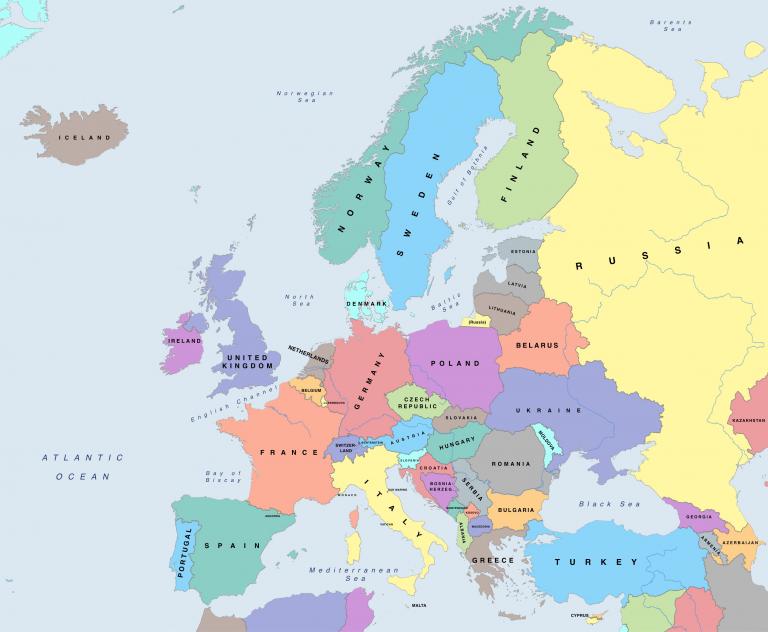
Last year a group of European conservative intellectuals (including Roger Scruton) met in Paris in an effort to define European culture and to identify the threats against it. They drew up a document they called The Paris Statement.
Essentially, they said that European culture consists of distinct nations (as opposed to a bureaucratic European Union), which have their cultural foundations in Christianity and in the Classical heritage of Greece and Rome. This “true Europe” is currently being undermined by a “false Europe” based in sexual liberation, progressivism, and multiculturalism.
The document also explores the current problem of extensive immigration into Europe, especially from Islamic countries. This threatens European culture not only because of the upsurge of people who do not share it, but because of the “false European” attitude that European culture should be replaced by multiculturalism and globalism.
Here are some sections from the Paris Statement. Afterwards, I raise two questions that I’d like you to think about and comment upon.
From The Paris Statement:
The patrons of the false Europe are bewitched by superstitions of inevitable progress. They believe that History is on their side, and this faith makes them haughty and disdainful, unable to acknowledge the defects in the post-national, post-cultural world they are constructing. Moreover, they are ignorant of the true sources of the humane decencies they themselves hold dear—as do we. They ignore, even repudiate the Christian roots of Europe. At the same time they take great care not to offend Muslims, who they imagine will cheerfully adopt their secular, multicultural outlook. Sunk in prejudice, superstition and ignorance, and blinded by vain, self-congratulating visions of a utopian future, the false Europe reflexively stifles dissent. This is done, of course, in the name of freedom and tolerance. . . .
The true Europe has been marked by Christianity. The universal spiritual empire of the Church brought cultural unity to Europe, but did so without political empire. This has allowed for particular civic loyalties to flourish within a shared European culture. The autonomy of what we call civil society became a characteristic feature of European life. Moreover, the Christian Gospel does not deliver a comprehensive divine law, and thus the diversity of the secular laws of the nations may be affirmed and honoured without threat to our European unity. It is no accident that the decline of Christian faith in Europe has been accompanied by renewed efforts to establish political unity—an empire of money and regulations, covered with sentiments of pseudo-religious universalism, that is being constructed by the European Union.
The true Europe affirms the equal dignity of every individual, regardless of sex, rank or race. This also arises from our Christian roots. Our gentle virtues are of an unmistakably Christian heritage: fairness, compassion, mercy, forgiveness, peace-making, charity. Christianity revolutionized the relationship between men and women, valuing love and mutual fidelity in an unprecedented way. The bond of marriage allows both men and women to flourish in communion. Most of the sacrifices we make are for the sake of our spouses and children. This spirit of self-giving is yet another Christian contribution to the Europe we love.
The true Europe also draws inspiration from the Classical tradition. We recognize ourselves in the literature of ancient Greece and Rome. As Europeans, we strive for greatness, the crown of the Classical virtues. At times, this has led to violent competition for supremacy. But at its best, an aspiration toward excellence inspires the men and women of Europe to craft musical and artistic works of unsurpassed beauty and to make extraordinary breakthroughs in science and technology. The grave virtues of the self-possessed Romans and the pride in civic participation and spirit of philosophical inquiry of the Greeks have never been forgotten in the real Europe. These inheritances, too, are ours. . . .
13. The true Europe is in jeopardy. The achievements of popular sovereignty, resistance to empire, cosmopolitanism capable of civic love, the Christian legacy of humane and dignified life, a living engagement with our Classical inheritance—all this is slipping away. As the patrons of the false Europe construct their faux Christendom of universal human rights, we are losing our home.
The false Europe boasts of an unprecedented commitment to human liberty. This liberty, however, is very one-sided. It sells itself as liberation from all restraints: sexual freedom, freedom of self-expression, freedom to “be oneself.” The Generation of ’68 regards these freedoms as precious victories over a once almighty and oppressive cultural regime. They see themselves as great liberators, and their transgressions are acclaimed as noble moral achievements, for which the whole world should be grateful. . . .
At the same time that we hear boasts of unprecedented liberty, European life is more and more comprehensively regulated. Rules—often confected by faceless technocrats in league with powerful interests—govern our work relationships, our business decisions, our educational qualifications, our news and entertainment media. And Europe now seeks to tighten existing regulations on freedom of speech, an aboriginal European freedom—freedom of conscience made manifest. The targets of these restrictions are not obscenity or other assaults on decency in public life. Instead, Europe’s governing classes wish to restrict manifestly political speech. Political leaders who give voice to inconvenient truths about Islam and immigration are hauled before judges. Political correctness enforces strong taboos that deem challenges to the status quo beyond the pale. The false Europe does not really encourage a culture of freedom. It promotes a culture of market-driven homogeneity and politically enforced conformity.
The false Europe also boasts of an unprecedented commitment to equality. It claims to promote non-discrimination and the inclusion of all races, religions and identities. Here, genuine progress has been made, but a utopian detachment from reality has taken hold. Over the past generation, Europe has pursued a grand project of multiculturalism. To demand or even promote the assimilation of Muslim newcomers to our manners and mores, much less to our religion, has been thought a gross injustice. A commitment to equality, we have been told, demands that we abjure any hint that we believe our culture superior. Paradoxically, Europe’s multicultural enterprise, which denies the Christian roots of Europe, trades on the Christian ideal of universal charity in an exaggerated and unsustainable form. It requires from the European peoples a saintly degree of self-abnegation. We are to affirm the very colonization of our homelands and the demise of our culture as Europe’s great twenty-first century glory—a collective act of self-sacrifice for the sake of some new global community of peace and prosperity that is being born.
Multiculturalism is unworkable.
- There is a great deal of bad faith in this thinking. Most in our governing classes doubtless presume the superiority of European culture—which must not be affirmed in public in ways that might offend immigrants. Given that superiority, they think that assimilation will happen naturally, and quickly. In an ironic echo of the imperialist thinking of old, Europe’s governing classes presume that, somehow, by the laws of nature or of history, ‘they’ will necessarily become like ‘us’—and it is inconceivable that the reverse might be true. In the meantime, official multiculturalism has been deployed as a therapeutic tool for managing the unfortunate but ‘temporary’ cultural tensions.
If Europe’s progressive elite assumes that the immigrants will become “like us” and do not consider “that the reverse might be true,” might the “false Europe” be planting the seeds of its own destruction? The immigrants pouring in from the Middle East and Africa do not go along with sexual liberation, family breakdown, or radical secularism. They may not share the culture of “true Europe,” but they are far more hostile to the culture of the “false Europe” that, ironically, is welcoming them with open arms.
By the standards of the Paris Statement, “False Europe” is more of a threat to “True Europe” than the immigrants are. Might the social conservatism of the immigrants bring about the end of “False Europe,” especially if the Islamic immigrants convert not to progressivism but to Christianity, as has started to happen?
Just as Christianity converted the Greeks, the Romans, the Germans, the Scandinavians, the English, the Czechs, the Poles, and all of the other European ethnic groups–without, as the Paris Statement says, obliterating their national identities, while still bringing them into an overarching common culture–might Christianity turn the immigrants into “True Europeans”? (Look what it did for Middle Easterners and Northern Africans in the first centuries after Christ, before the ravages of Islam.)
Another question: Americans are mostly Europeans, and our culture is largely a European culture. Many of the cultural problems discussed in the Paris Statement are problems in America too. But there are differences. As you read the Paris Statement, what would and would not apply to Americans? What would be some American distinctives, were we to draw up, say, a Paris, Texas, Statement about American culture?
For example, the U.S.A. also has an immigration problem. But whereas the huge influx of immigrants into Europe are mostly Islamic, America’s immigrants are mostly Hispanic. They are Christian and even European (via Spain) and even American (though of the Southern American variety). Shouldn’t this make their assimilation into mainstream North American culture easier? Or might it make it easier for mainstream North American culture to become more influenced in the direction of the quite different South American culture?
I would suggest that the Hispanic culture is also more socially conservative than that of the American progressive elite that is so welcoming, so that progressives too might be sowing the seeds of their own destruction in being so pro-immigration. And yet, Southern and Central America also have a strong tradition of both authoritarian governments (from European Spain) and left wing revolutionary movements (from European Marxism). So there are political issues that may overshadow the purely cultural issues. Any Paris, Texas, Statement would have to grapple with those as well.
Illustration, Political Map of Europe, via Mapswire, No changes made, Creative Commons 4.0 International License
Previous Post

August 3, 2018
The Human Face & the Face of God
Next Post

August 7, 2018 Changing Church Teaching on Capital Punishment
Recent Comments
"While she worked for Trump she was a tool's tool!"
"I know wired earbuds are making a comeback (I never stopped using them as I ..."
"VCRs, tape decks, and cassette players are all having a revival among a segment of ..."
"As a (retired) lawyer I see potential liability from sharing things like power or sharp ..."
Browse Our Archives
Select a Category America Apologetics Art baseball Bible Blog Christ Church crime Culture Economics Education Ethics Family Food Football Government History Holidays Holy Week Humor International Islam Language Law Life Issues Literature Media Medicine Movies Music Nature News Personal Philosophy Politics psychology Reformation Religions Sacraments Science sex Social Science Sports technology television terrorism Theology Uncategorized Vocation war
Select a Month October 2026 September 2026 August 2026 July 2026 June 2026 May 2026 April 2026 March 2026 February 2026 January 2026 December 2025 November 2025 October 2025 September 2025 August 2025 July 2025 June 2025 May 2025 April 2025 March 2025 February 2025 January 2025 December 2024 November 2024 October 2024 September 2024 August 2024 July 2024 June 2024 May 2024 April 2024 March 2024 February 2024 January 2024 December 2023 November 2023 October 2023 September 2023 August 2023 July 2023 June 2023 May 2023 April 2023 March 2023 February 2023 January 2023 December 2022 November 2022 October 2022 September 2022 August 2022 July 2022 June 2022 May 2022 April 2022 March 2022 February 2022 January 2022 December 2021 November 2021 October 2021 September 2021 August 2021 July 2021 June 2021 May 2021 April 2021 March 2021 February 2021 January 2021 December 2020 November 2020 October 2020 September 2020 August 2020 July 2020 June 2020 May 2020 April 2020 March 2020 February 2020 January 2020 December 2019 November 2019 October 2019 September 2019 August 2019 July 2019 June 2019 May 2019 April 2019 March 2019 February 2019 January 2019 December 2018 November 2018 October 2018 September 2018 August 2018 July 2018 June 2018 May 2018 April 2018 March 2018 February 2018 January 2018 December 2017 November 2017 October 2017 September 2017 August 2017 July 2017 June 2017 May 2017 April 2017 March 2017 February 2017 January 2017 December 2016 November 2016 October 2016 September 2016 August 2016 July 2016 June 2016 May 2016 April 2016 March 2016 February 2016 January 2016 December 2015 November 2015 October 2015 September 2015 August 2015 July 2015 June 2015 May 2015 April 2015 March 2015 February 2015 January 2015 December 2014 November 2014 October 2014 September 2014 August 2014 July 2014 June 2014 May 2014 April 2014 March 2014 February 2014 January 2014 December 2013 November 2013 October 2013 September 2013 August 2013 July 2013 June 2013 May 2013 April 2013 March 2013 February 2013 January 2013 December 2012 November 2012 October 2012 September 2012 August 2012 July 2012 June 2012 May 2012 April 2012 March 2012 February 2012 January 2012 December 2011 November 2011 October 2011 September 2011 August 2011 July 2011 June 2011 May 2011 April 2011 March 2011 February 2011 January 2011 December 2010 November 2010 October 2010 September 2010 August 2010 July 2010 June 2010 May 2010 April 2010 March 2010 February 2010 January 2010 December 2009 November 2009 October 2009 September 2009 August 2009 July 2009 June 2009 May 2009 April 2009 March 2009 February 2009 January 2009 December 2008 November 2008 October 2008 September 2008 August 2008 July 2008 June 2008 May 2008 April 2008 March 2008 February 2008 January 2008 December 2007 November 2007 October 2007
Follow Us!
TAKE THE
Religious Wisdom Quiz
What does the name "Jesus" mean?
Select your answer to see how you score.
Teacher God is with us The Lord saves Prince of peace
Books by This Author Books by Gene Veith
Related posts from Cranach


Gen Z Wants Evildoers to Be Punished, Not...

On Trump's Political Ads That You Paid For
TRENDING AT PATHEOS Evangelical

'Super Scam Me' Exposes AI Jon Bon Jovi...
Leslie Pickett believed she was in a relationship with Jon Bon Jovi....

The Brazilian Remake of Kendricks' 'Flywheel' Opens in...
“Flywheel,” the story that launched the Kendrick Brothers’ filmmaking career is getting...

The Dangers of Gradual Accommodation (Winking at Sin)
Recently, the “law of gradualness” resurfaced during the opening of a weeklong,...

The Iron Gates and the Lion of the...
Yesterday, I didn't finish my report about, well, yesterday. So I'll...

The Image: On the Horror of Capitalism and...
The Image Then went the Pharisees, and took counsel how they might...

We are approaching the date of our new American national holiday: October...
view all Evangelical blogs
What Are Your Thoughts?leave a comment
Ad-Free & Subscriber Log-In Subscription Support
- About Us
- 2026 Calendar
- Videos
- Podcasts
- Library of World Religions
- Faith In Media Tracker
- Advertise With Us
- Write for Us
- Privacy Policy
- Terms of Service
- Do Not Sell My Data
- Contact Us
- Radiant Digital
- Manage Newsletter Subscriptions
- Unsubscribe From Notifications
- Sitemap
Copyright 2008-2026, Patheos. All rights reserved.
Subscription Support Ad-Free & Subscriber Log-In
Follow Patheos