
BuddhistCatholicContemplativeEvangelicalGeneral ChristianHinduJewishLatter-day SaintMuslimNew VisionsProgressive Christian
Beliefs
- Buddhist
- Catholic
- Contemplative
- Evangelical
- General Christian
- Hindu
- Jewish
- Latter-day Saint
- More Voices
- Muslim
- New Visions
- Pagan
- Progressive Christian
Topics
- Religion News
- Food and Religion
- Sports and Religion
- Religious Art
- Religious Music and Entertainment
- Religious Events
- History and Religion
- Style and Religion
- Politics and Religion
- Women in Religion
- Recreation Outdoors and Religion
- Business Finance and Religion
- Careers Workplace and Religion
- Education and Religion
- Family Parenting and Religion
- Health Fitness and Religion
- Home and Religion
- Relationships and Religion
- Technology and Religion
- Travel and Religion
Columnists
- Buddhist Columnists
- Business Finance and Religion Columnists
- Careers Workplace and Religion Columnists
- Catholic Columnists
- Contemplative Columnists
- Education and Religion Columnists
- Evangelists Columnists
- Family Parenting and Religion Columnists
- General Christian Columnists
- Health Fitness and Religion Columnists
- Hindu Columnists
- History and Religion Columnists
- Home and Religion Columnists
- Jewish Columnists
- More Voices Columnists
- Latter Day Columnists
- Muslim Columnists
- New Visions Columnists
- Nonreligious Columnists
- Pagan Columnists
- Politics and Religion Columnists
- Progressive Columnists
- Recreation Outdoors and Religion Columnists
- Relationships and Religion Columnists
- Religion News Columnists
- Religious Art Columnists
- Religious Events Columnists
- Religious Music and Entertainment Columnists
- Sports and Religion Columnists
- Style and Religion Columnists
- Technology and Religion Columnists
- Travel and Religion Columnists
- Women in Religion Columnists
Resource Library
- 2026 Calendar
- Library of World Religions
- The 100 Most Holy Places on Earth
- Patheos Answers
- Podcasts
- Videos
- Faith Leaders Database
- Anglican Episcopalian
- Bahai
- Baptist
- Buddhism
- Christianity
- Confucianism
- Eastern Orthodoxy
- Hinduism
- Holiness and Pentecostal
- ISKCON
- Islam
- Judaism
- Lutheran
- Methodist
- The Church of Jesus Christ of Latter-day Saints
- New Age
- Paganism
- Presbytarian and Reformed
- Protestantism
- Religion Behind the Scenes
- Roman Catholic
- Scientology
- Shia Islam
- Sikhism
- Sufism
- Sunni Islam
- Taoism
- Zen
- See all religions
Research Tools
 Ad-Free & Subscriber Log-In Subscription Support
Ad-Free & Subscriber Log-In Subscription Support
Follow Patheos 

- Trending:
- Forgiveness
- |
- Marriage
- |
- Consciousness
- |
- Death Penalty
- |
- Election
- |
- Halloween

- Home
- Evangelical
- Politics and Religion
- The Osage Murders
The Osage Murders
Last updated on: January 11, 2018 at 5:45 am by Gene Veith
The Osage Murders 2018-01-10T13:23:50-05:00 Gene Veith
Patheos Explore the world's faith through different perspectives on religion and spirituality! Patheos has the views of the prevalent religions and spiritualities of the world.
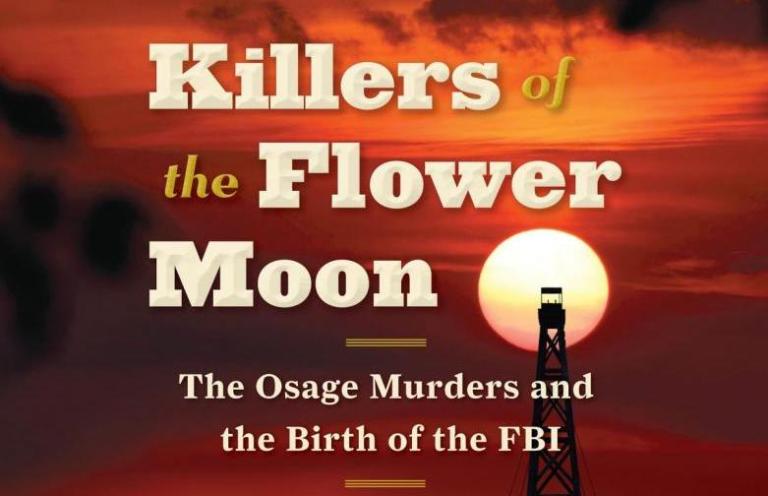
We often say of a good book that “I couldn’t put it down,” a hyperbole expressing the reader’s enjoyment. But sometimes the expression is flatly true. It’s been a long time since I picked up a book and read it throughout the day–while I was eating, during the normally unoccupied minutes usually spent waiting or puttering around, while I should have been attending to my responsibilities–and continuing to read it far into the night. That was my experience with David Grann’s Killers of the Flower Moon: The Osage Murders and the Birth of the FBI.
I’ve got to tell you about it. But first, some context: We now live in northern Oklahoma. Nearby is Osage County. We often drive through it in the course of visiting other members of our family. I’ve blogged about it before. It’s one of my favorite parts of the state, a place of wide-open prairie with rolling hills and ravines, a landscape right out of an old Western movie. Today its small towns are run-down and boarded up, though Pawhuska is enjoying something of a renaissance thanks to celebrity chef Ree “Pioneer Woman” Drummond, who lives on a nearby ranch and who has opened up a destination restaurant.
The county is coterminous with the Osage Nation, the tribal reservation that now exercises its own sovereignty under a tribal government. When they were forced out of Kansas, the Osage chose this section of Indian Territory because it seemed like the kind of place that no white men would want. Later, in what is now Oklahoma, the reservations were divided up into individual allotments, with each member of the tribe given a section or more of land, which they could farm or sell to anyone they wished, including white settlers. The allotment system is criticized today for breaking up the native cultures, changing the communal societies by introducing private property held by individuals, turning the tribal members into farmers and landowners just like the white settlers. This may not have respected the native cultures, but it did much to alleviate the poverty and segregation that are rampant on Indian reservations in other states.
When the Osage negotiated the details of these new arrangements, they did something that other tribes never thought of: They kept the mineral rights. The allotments might be bought and sold, but anything under the ground would belong to the tribe as a whole. And any proceeds would be divided among the members of the tribe.
And then, in the early 20th century around the time Oklahoma became a state in 1907, oil was discovered in Osage County. At the time, one of the largest known oil deposits in the world. The Osage oil fields would generate more wealth that all of America’s gold rushes combined. And it belonged to the members of the tribe. Almost overnight, they went from poverty to becoming the most wealthy people, per capita, in the world.
They moved from buffalo-skin lodges to sprawling mansions staffed by servants. White servants. Native women traded their buckskin clothing for designer fashions. Some families–like that of Maria Tallchief who would become a worldclass ballerina– pursued education, international travel, and high culture. Others, though, did not really know what to do with so much money. The story goes that some Osage would buy an automobile and, if a tire went flat, instead of fixing it, they would buy another one.
Then in the 1920s, there was a series of murders. Some victims were shot. Others were poisoned. A house was blown up, killing all of the inhabitants. In some cases, individual family members were picked off, one by one.
State and local authorities were baffled by the crimes. One attorney phoned from Oklahoma City that he had information about the murders from a man dying in a hospital, but as he rushed with the news back to Pawhuska, someone threw him off the train to his death. Another attorney went to Washington D.C. to beg for help in solving the crimes from the federal government, which had jurisdiction over Indian land, but he was murdered in the shadow of the nation’s capital.
But when the death toll reached 29, the Osage murders attracted the attention of J. Edgar Hoover, the head of a brand new agency that would be known as the Federal Bureau of Investigation. This would become the FBI’s first major case. Hoover put in charge a former frontier lawman, an ex-Texas Ranger turned FBI agent named Tom White, who put together a team of undercover operatives, and headed to Oklahoma, trying to solve what turned out to be one of the most remarkable crimes in American history.
In this book, the author, David Grann, has the reader looking over the shoulder of White as he collects evidence, interviews witnesses, and interrogates suspects. At the same time, the reader is following along with the author, an investigative journalist, who has access to material that the FBI at the time did not, as he makes his own discoveries.
Reading the book is thus like reading an especially complicated and well-written mystery novel. But the events described in this book actually happened.
A work of fiction has to be, paradoxically, believable, even when it indulges in the wildest fantasy. The reader has to find the story, however impossible, plausible in its own terms, forcing the author to defer to the limits of what a reader can imagine. Reality, on the other hand, is not so restrained. Thus, truth really can be stranger than fiction.
I will give no spoilers, but suffice it to say that the 27 murders were not the work of some serial killer, such as we have sadly become familiar with today, some sexually perverted psychotic. The true nature of the crimes turned out to be far more terrifying than that.
Some cautions, a suggestion, and an observation:
(1) This book packs an emotional wallop. My wife, who is a much more sensitive, empathetic, and better person than I am, found it almost too much to handle. “This all happened to real people!” she correctly observed. Fictional murders performed by fictional murderers solved by a fictional detective do not have the same impact and can be read about with detached amusement, since none of it is real. Killers of the Flower Moon discloses human sin in a way that is unsettling and haunting, though I think the experience is good for us. Also, the book is so well-written that it leaves us with a cathartic aesthetic satisfaction.
(2) Don’t open this book on a day when you are busy with lots of important things you have to accomplish. If you do, you will get none of them done. The book is that gripping and full of suspense, immersing you into a very different world that you will have a hard time getting out of. And, at the end, when the mystery is solved, the author stumbles upon additional information that throws us for another loop!
(3) Buy the hard copy, not the Kindle version. The print edition is full of photographs, showing the people involved in the story so that you can imagine them as they actually were. The Kindle version, I am told, does not have those photographs. They add a great deal to the story. I have been doing most of my reading for pleasure on my Kindle, but it was good to return to an actual book once again.
(4) After reading the book, my next drive through Osage County had a new resonance. Pawhuska was no longer just a sleepy little town to me. I noted the buildings that played a role in the book–the theater where they bid the oil leases! the courthouse overlooking the town! the old mansions now decaying relics from a once-prosperous time.
The book reminded me that beneath the surface of unassuming towns, ordinary-seeming families, and individual human beings whom we pass without noticing on the street, there are often depths of history, untold stories of tragedy, heroism, suffering, and greatness.
Previous Post

January 10, 2018
The Reformation of America
Next Post

January 11, 2018 The Protestant Reformation & the Protestant Revolution
Recent Comments
"Turns out, she wasn’t the right tool for the job."
"You may have just given me my next sermon opening line."
"So Katie Zacharia lasted only a demiScaramucci as press secretary......"
"Apropos to the post on Gen Z a couple days ago: "If you want the ..."
Browse Our Archives
Select a Category America Apologetics Art baseball Bible Blog Christ Church crime Culture Economics Education Ethics Family Food Football Government History Holidays Holy Week Humor International Islam Language Law Life Issues Literature Media Medicine Movies Music Nature News Personal Philosophy Politics psychology Reformation Religions Sacraments Science sex Social Science Sports technology television terrorism Theology Uncategorized Vocation war
Select a Month October 2026 September 2026 August 2026 July 2026 June 2026 May 2026 April 2026 March 2026 February 2026 January 2026 December 2025 November 2025 October 2025 September 2025 August 2025 July 2025 June 2025 May 2025 April 2025 March 2025 February 2025 January 2025 December 2024 November 2024 October 2024 September 2024 August 2024 July 2024 June 2024 May 2024 April 2024 March 2024 February 2024 January 2024 December 2023 November 2023 October 2023 September 2023 August 2023 July 2023 June 2023 May 2023 April 2023 March 2023 February 2023 January 2023 December 2022 November 2022 October 2022 September 2022 August 2022 July 2022 June 2022 May 2022 April 2022 March 2022 February 2022 January 2022 December 2021 November 2021 October 2021 September 2021 August 2021 July 2021 June 2021 May 2021 April 2021 March 2021 February 2021 January 2021 December 2020 November 2020 October 2020 September 2020 August 2020 July 2020 June 2020 May 2020 April 2020 March 2020 February 2020 January 2020 December 2019 November 2019 October 2019 September 2019 August 2019 July 2019 June 2019 May 2019 April 2019 March 2019 February 2019 January 2019 December 2018 November 2018 October 2018 September 2018 August 2018 July 2018 June 2018 May 2018 April 2018 March 2018 February 2018 January 2018 December 2017 November 2017 October 2017 September 2017 August 2017 July 2017 June 2017 May 2017 April 2017 March 2017 February 2017 January 2017 December 2016 November 2016 October 2016 September 2016 August 2016 July 2016 June 2016 May 2016 April 2016 March 2016 February 2016 January 2016 December 2015 November 2015 October 2015 September 2015 August 2015 July 2015 June 2015 May 2015 April 2015 March 2015 February 2015 January 2015 December 2014 November 2014 October 2014 September 2014 August 2014 July 2014 June 2014 May 2014 April 2014 March 2014 February 2014 January 2014 December 2013 November 2013 October 2013 September 2013 August 2013 July 2013 June 2013 May 2013 April 2013 March 2013 February 2013 January 2013 December 2012 November 2012 October 2012 September 2012 August 2012 July 2012 June 2012 May 2012 April 2012 March 2012 February 2012 January 2012 December 2011 November 2011 October 2011 September 2011 August 2011 July 2011 June 2011 May 2011 April 2011 March 2011 February 2011 January 2011 December 2010 November 2010 October 2010 September 2010 August 2010 July 2010 June 2010 May 2010 April 2010 March 2010 February 2010 January 2010 December 2009 November 2009 October 2009 September 2009 August 2009 July 2009 June 2009 May 2009 April 2009 March 2009 February 2009 January 2009 December 2008 November 2008 October 2008 September 2008 August 2008 July 2008 June 2008 May 2008 April 2008 March 2008 February 2008 January 2008 December 2007 November 2007 October 2007
Follow Us!
TAKE THE
Religious Wisdom Quiz
Which letter wraps up with the reminder, "Let everything be done decently and in order"?
Select your answer to see how you score.
1 Timothy Hebrews 1 Corinthians James
Books by This Author Books by Gene Veith
Related posts from Cranach


As Fulton Sheen Is Beatified, Don't Forget Walter...
TRENDING AT PATHEOS Evangelical

Nearly every morning, I make the drive to Detroit with my high-school-age...

The Real AI Story Is Adoption Without Trust
Artificial intelligence has crossed a political threshold. It is no longer a...

A new article, written by Jeff Lindsay and Gale L. Pooley,...

Swimfan: Forgotten Aughts Pleasures
This is a recovery effort. In 2002, My Big Fat Greek Wedding...

Top Three Anti-Catholic Lies About Catholicism
This is my initial transcript for the video, "THE 3 WORST...

Pope Leo Celebrates Mass for Nurses & Docs...
I don't have any idea how he did it, but Pope Leo...
view all Evangelical blogs
What Are Your Thoughts?leave a comment
Ad-Free & Subscriber Log-In Subscription Support
- About Us
- 2026 Calendar
- Videos
- Podcasts
- Library of World Religions
- Faith In Media Tracker
- Advertise With Us
- Write for Us
- Privacy Policy
- Terms of Service
- Do Not Sell My Data
- Contact Us
- Radiant Digital
- Manage Newsletter Subscriptions
- Unsubscribe From Notifications
- Sitemap
Copyright 2008-2026, Patheos. All rights reserved.
Subscription Support Ad-Free & Subscriber Log-In
Follow Patheos