
BuddhistCatholicContemplativeEvangelicalGeneral ChristianHinduJewishLatter-day SaintMuslimNew VisionsProgressive Christian
Beliefs
- Buddhist
- Catholic
- Contemplative
- Evangelical
- General Christian
- Hindu
- Jewish
- Latter-day Saint
- More Voices
- Muslim
- New Visions
- Pagan
- Progressive Christian
Topics
- Religion News
- Food and Religion
- Sports and Religion
- Religious Art
- Religious Music and Entertainment
- Religious Events
- History and Religion
- Style and Religion
- Politics and Religion
- Women in Religion
- Recreation Outdoors and Religion
- Business Finance and Religion
- Careers Workplace and Religion
- Education and Religion
- Family Parenting and Religion
- Health Fitness and Religion
- Home and Religion
- Relationships and Religion
- Technology and Religion
- Travel and Religion
Columnists
- Buddhist Columnists
- Business Finance and Religion Columnists
- Careers Workplace and Religion Columnists
- Catholic Columnists
- Contemplative Columnists
- Education and Religion Columnists
- Evangelists Columnists
- Family Parenting and Religion Columnists
- General Christian Columnists
- Health Fitness and Religion Columnists
- Hindu Columnists
- History and Religion Columnists
- Home and Religion Columnists
- Jewish Columnists
- More Voices Columnists
- Latter Day Columnists
- Muslim Columnists
- New Visions Columnists
- Nonreligious Columnists
- Pagan Columnists
- Politics and Religion Columnists
- Progressive Columnists
- Recreation Outdoors and Religion Columnists
- Relationships and Religion Columnists
- Religion News Columnists
- Religious Art Columnists
- Religious Events Columnists
- Religious Music and Entertainment Columnists
- Sports and Religion Columnists
- Style and Religion Columnists
- Technology and Religion Columnists
- Travel and Religion Columnists
- Women in Religion Columnists
Resource Library
- 2026 Calendar
- Library of World Religions
- The 100 Most Holy Places on Earth
- Patheos Answers
- Podcasts
- Videos
- Faith Leaders Database
- Anglican Episcopalian
- Bahai
- Baptist
- Buddhism
- Christianity
- Confucianism
- Eastern Orthodoxy
- Hinduism
- Holiness and Pentecostal
- ISKCON
- Islam
- Judaism
- Lutheran
- Methodist
- The Church of Jesus Christ of Latter-day Saints
- New Age
- Paganism
- Presbytarian and Reformed
- Protestantism
- Religion Behind the Scenes
- Roman Catholic
- Scientology
- Shia Islam
- Sikhism
- Sufism
- Sunni Islam
- Taoism
- Zen
- See all religions
Research Tools
 Ad-Free & Subscriber Log-In Subscription Support
Ad-Free & Subscriber Log-In Subscription Support
Follow Patheos 

- Trending:
- Forgiveness
- |
- Marriage
- |
- Consciousness
- |
- Death Penalty
- |
- Election
- |
- Halloween

- Home
- Evangelical
- Politics and Religion
- Luther on Epiphany and Vocation
Luther on Epiphany and Vocation
Last updated on: January 5, 2018 at 6:00 am by Gene Veith
Luther on Epiphany and Vocation 2018-01-04T17:50:27-05:00 Gene Veith
Patheos Explore the world's faith through different perspectives on religion and spirituality! Patheos has the views of the prevalent religions and spiritualities of the world.
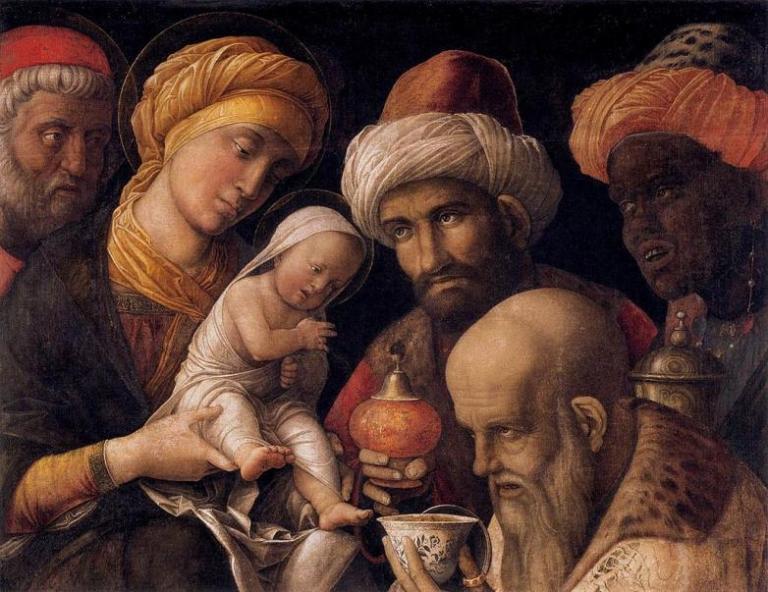
Today is the 12th and last day of Christmas. (Happy drummers drumming day!) Tomorrow is Epiphany, marking the coming of the Wise Men but also beginning the season of Epiphany, which commemorates the various “epiphanies” or revelations of Christ’s identity. These took place throughout His life on earth (His baptism, His first miracle, etc.), with the season ending with the observance of His Transfiguration. Then comes the very different season of Lent. A good way to get your Epiphany off to a good start is to read Luther’s classic Epiphany Sermon.
He preached many on this theme, but this one was preserved as one of his “church postils.” These were sermons covering the entire church year that were given to pastors as models or, in the case of the many unlearned clergy, as ready-to-read sermons to instruct their flocks. The postils thus became extremely important in teaching the principles of Reformation theology to the common people. They are of special interest to me because they include some of Luther’s most illuminating reflections on the doctrine of vocation.
Concordia Publishing House is publishing the Church Postils in five volumes as brand new editions to the Collected Works. There will be five volumes, and four have already been released. (Start here.) They are also available in other forms, including 99 cent Kindle editions. (These “church postils” were preached in church. There are also “house postils” based on Luther’s preaching in his house to family and friends. Those were published based on transcriptions of notes from people who heard them. )
Here an online version, which I’ll be quoting from: SERMONS OF MARTIN LUTHER – EPIPHANY.
In this sermon, Luther plunges into the Wise Men account in Matthew 2:1-12, which he explores in a depth and detail that few of us are used to anymore. It’s hard to imagine this discourse fitting into our 20-minute sermon mold, and it’s even harder to imagine an uneducated pastor reading out the whole thing to his congregation.
Also, the sermon is filled with digressions that are interesting in themselves, rabbit-trails though they be: How King Herod is like the Pope, leading to a discourse about the papacy. The difference between magic and natural forces. True vs. False Worship, in light of the Ten Commandments, and more.
Through it all is the charm, wit, and edge that makes Luther so enjoyable to read.
I’ll give you some samples in hopes that they will make you want to read the whole thing.
First is his reading of a Biblical prophecy that indicates the timing of Christ’s birth, something I had never heard before!
- The Evangelist first refers to Herod the king, in order to recall the prophecy of Jacob the patriarch, who said: “The scepter shall not depart from Judah, nor the ruler’s staff from between his feet, until Shiloh come; and unto him shall the obedience of the peoples be.” Genesis 4:9-10.
From this prophecy is evident that Christ must come, when the kingdom or government of the Jews is taken from them, so that no other king or ruler from the house of Judah might sit on the throne. This was fulfilled now when Herod, who was not of the house of Judah, nor of Jewish descent but of Edom, hence a foreigner, was made king over the Jews by the Romans to the great dissatisfaction of the Jewish people. Hence for thirty years he warred with them before he finally silenced and subdued them.
3. Now when this foreigner had ruled over the Jews for thirty years, had taken possession of the government, and the Jews had acquiesced therein having no hopes of getting rid of him and thus the prophecy of Jacob was fulfilled, then the time was at hand, then Christ came and was born under this first stranger and appeared according to the prophecy; as though he would say: The scepter has now departed from Judah, a stranger is ruling over my people; it is now time that I should appear and become king; the government now belongs to me.
Luther says that the Wise Men were not kings, as popularly thought, since Herod did not treat them as peers or give them the courtesy due to such a rank, but rather orders them around like commoners, which they must have been. Luther says that the star must have been an apparition that hovered above the ground, rather than a celestial body in the sky; otherwise, they couldn’t follow it. And then, in the midst of such factual speculation, Luther gives one of his startling insights into Scripture. He points out that the Magi could not find the Christ-child with the star alone, but rather needed the Word of God, as given them by Herod’s scribes:
92. It was diligently prevented that the wise men should find Christ through themselves, or men. On the contrary, they found him alone through the Scriptures of the prophet and by the aid of the stars of heaven that there might be put to naught all natural ability, all human reason, all light outside of the spirit and of grace, which now boasts and pretends to teach the truth and lead people aright, as was said above is done in the universities. Here it is concluded that Christ, the knowledge of salvation, is not taught or acquired by human teaching or assistance, but the Scriptures and divine light must reveal him. as he says, Matthew 16:17: “Blessed art thou, Simon Bar-Jonah: for flesh and blood hath not revealed it unto thee, but my Father who is in heaven.” With this Christ distinctly casts aside flesh and blood with its revelation, i.e., man and all human wisdom, which, being nothing but darkness, cannot reveal Christ.
As for vocation, Luther drifts into a discussion of when we should expect a miracle (without “tempting God”) and when we should trust God to work through His creatures, including one’s own vocation and that of others.
105. Whatever can be accomplished by ordinary means should be done. We should not presume upon faith and say in idleness: I trust in God everything will grow that is to grow. His creatures have no purpose if we make use of them. In Genesis 1 he created and ordained all creatures with their works, and indicated the use man shall make of them. This will he never recall and ordain something special for you. . . .
107. If you have not God’s Word you should continue to make use of your power, of your goods, of your friends, and of all that God has given you, and thus abide in the dispensation, established by God, Genesis 1. For he did not give it to you in vain, he will not, for your sake, turn water into wine or stone into bread, but you should use according to his order whatever he has created until he forces you by word or work to use it differently.
108. But when the hour comes that the creature cannot help you any more and all your strength fails, behold then God’s Word begins. For then he has commanded us to acknowledge him as God, i.e. expect everything that is good from him. This word, though in force all the time, will yet be only understood and made use of in need, when nothing else avails. . . .
Again we read in the legends of the fathers that two brothers journeyed and one of them died of hunger for God’s sake; that is, he went to hell; for they came amongst wicked people, who offered them something to eat, and the one said, he would not take bread from these people, but expect his food from heaven. The other took and ate and lived. That fool did nothing else but set aside God’s order and tempted him. However sinful people may be they are still God’s creatures as well as thorns and thistles. You make use of a thorn to open a boil or for some other purpose; will you look contemptuously upon it, because it is a prickly brush?
HT: Jackie
Painting, “Adoration of the Magi,” by Andrea Mantegna [Public domain], via Wikimedia Commons
Previous Post

January 5, 2018
Legalizing Marijuana as a Test Case for Federalism
Next Post

January 8, 2018 The Postmodern Exposé
Recent Comments
"I know wired earbuds are making a comeback (I never stopped using them as I ..."
"VCRs, tape decks, and cassette players are all having a revival among a segment of ..."
"As a (retired) lawyer I see potential liability from sharing things like power or sharp ..."
"I am not sure the items you mentioned, though disused, discontinued, discarded, could be considered ..."
Browse Our Archives
Select a Category America Apologetics Art baseball Bible Blog Christ Church crime Culture Economics Education Ethics Family Food Football Government History Holidays Holy Week Humor International Islam Language Law Life Issues Literature Media Medicine Movies Music Nature News Personal Philosophy Politics psychology Reformation Religions Sacraments Science sex Social Science Sports technology television terrorism Theology Uncategorized Vocation war
Select a Month October 2026 September 2026 August 2026 July 2026 June 2026 May 2026 April 2026 March 2026 February 2026 January 2026 December 2025 November 2025 October 2025 September 2025 August 2025 July 2025 June 2025 May 2025 April 2025 March 2025 February 2025 January 2025 December 2024 November 2024 October 2024 September 2024 August 2024 July 2024 June 2024 May 2024 April 2024 March 2024 February 2024 January 2024 December 2023 November 2023 October 2023 September 2023 August 2023 July 2023 June 2023 May 2023 April 2023 March 2023 February 2023 January 2023 December 2022 November 2022 October 2022 September 2022 August 2022 July 2022 June 2022 May 2022 April 2022 March 2022 February 2022 January 2022 December 2021 November 2021 October 2021 September 2021 August 2021 July 2021 June 2021 May 2021 April 2021 March 2021 February 2021 January 2021 December 2020 November 2020 October 2020 September 2020 August 2020 July 2020 June 2020 May 2020 April 2020 March 2020 February 2020 January 2020 December 2019 November 2019 October 2019 September 2019 August 2019 July 2019 June 2019 May 2019 April 2019 March 2019 February 2019 January 2019 December 2018 November 2018 October 2018 September 2018 August 2018 July 2018 June 2018 May 2018 April 2018 March 2018 February 2018 January 2018 December 2017 November 2017 October 2017 September 2017 August 2017 July 2017 June 2017 May 2017 April 2017 March 2017 February 2017 January 2017 December 2016 November 2016 October 2016 September 2016 August 2016 July 2016 June 2016 May 2016 April 2016 March 2016 February 2016 January 2016 December 2015 November 2015 October 2015 September 2015 August 2015 July 2015 June 2015 May 2015 April 2015 March 2015 February 2015 January 2015 December 2014 November 2014 October 2014 September 2014 August 2014 July 2014 June 2014 May 2014 April 2014 March 2014 February 2014 January 2014 December 2013 November 2013 October 2013 September 2013 August 2013 July 2013 June 2013 May 2013 April 2013 March 2013 February 2013 January 2013 December 2012 November 2012 October 2012 September 2012 August 2012 July 2012 June 2012 May 2012 April 2012 March 2012 February 2012 January 2012 December 2011 November 2011 October 2011 September 2011 August 2011 July 2011 June 2011 May 2011 April 2011 March 2011 February 2011 January 2011 December 2010 November 2010 October 2010 September 2010 August 2010 July 2010 June 2010 May 2010 April 2010 March 2010 February 2010 January 2010 December 2009 November 2009 October 2009 September 2009 August 2009 July 2009 June 2009 May 2009 April 2009 March 2009 February 2009 January 2009 December 2008 November 2008 October 2008 September 2008 August 2008 July 2008 June 2008 May 2008 April 2008 March 2008 February 2008 January 2008 December 2007 November 2007 October 2007
Follow Us!
TAKE THE
Religious Wisdom Quiz
Who cried out, "My God, my God, why have you forsaken me?" while dying?
Select your answer to see how you score.
Paul Stephen David Jesus
Books by This Author Books by Gene Veith
Related posts from Cranach


Our New Book on Technology & Vocation

Gen Z Wants Evildoers to Be Punished, Not...

TRENDING AT PATHEOS Evangelical

57th Dove Awards Honor Dolly Parton, Crown New...
On gospel music’s biggest night, the 57th annual GMA Dove Awards honored...

The First Eucharistic Controversy: Christ’s Real Presence
For Catholics, the Eucharist is the source and summit of the Christian...

What a Stop Sign Can Teach Us About...
How to Make a Decision When You Can't Hear God Main point:...

Archdiocese Hosts Military Marriage Retreat in Germany
RASTATT, Germany — The transient military lifestyle, with its frequent deployments and...

Nearly every morning, I make the drive to Detroit with my high-school-age...

The Real AI Story Is Adoption Without Trust
Artificial intelligence has crossed a political threshold. It is no longer a...
view all Evangelical blogs
What Are Your Thoughts?leave a comment
Ad-Free & Subscriber Log-In Subscription Support
- About Us
- 2026 Calendar
- Videos
- Podcasts
- Library of World Religions
- Faith In Media Tracker
- Advertise With Us
- Write for Us
- Privacy Policy
- Terms of Service
- Do Not Sell My Data
- Contact Us
- Radiant Digital
- Manage Newsletter Subscriptions
- Unsubscribe From Notifications
- Sitemap
Copyright 2008-2026, Patheos. All rights reserved.
Subscription Support Ad-Free & Subscriber Log-In
Follow Patheos