
BuddhistCatholicContemplativeEvangelicalGeneral ChristianHinduJewishLatter-day SaintMuslimNew VisionsProgressive Christian
Beliefs
- Buddhist
- Catholic
- Contemplative
- Evangelical
- General Christian
- Hindu
- Jewish
- Latter-day Saint
- More Voices
- Muslim
- New Visions
- Pagan
- Progressive Christian
Topics
- Religion News
- Food and Religion
- Sports and Religion
- Religious Art
- Religious Music and Entertainment
- Religious Events
- History and Religion
- Style and Religion
- Politics and Religion
- Women in Religion
- Recreation Outdoors and Religion
- Business Finance and Religion
- Careers Workplace and Religion
- Education and Religion
- Family Parenting and Religion
- Health Fitness and Religion
- Home and Religion
- Relationships and Religion
- Technology and Religion
- Travel and Religion
Columnists
- Buddhist Columnists
- Business Finance and Religion Columnists
- Careers Workplace and Religion Columnists
- Catholic Columnists
- Contemplative Columnists
- Education and Religion Columnists
- Evangelists Columnists
- Family Parenting and Religion Columnists
- General Christian Columnists
- Health Fitness and Religion Columnists
- Hindu Columnists
- History and Religion Columnists
- Home and Religion Columnists
- Jewish Columnists
- More Voices Columnists
- Latter Day Columnists
- Muslim Columnists
- New Visions Columnists
- Nonreligious Columnists
- Pagan Columnists
- Politics and Religion Columnists
- Progressive Columnists
- Recreation Outdoors and Religion Columnists
- Relationships and Religion Columnists
- Religion News Columnists
- Religious Art Columnists
- Religious Events Columnists
- Religious Music and Entertainment Columnists
- Sports and Religion Columnists
- Style and Religion Columnists
- Technology and Religion Columnists
- Travel and Religion Columnists
- Women in Religion Columnists
Resource Library
- 2026 Calendar
- Library of World Religions
- The 100 Most Holy Places on Earth
- Patheos Answers
- Podcasts
- Videos
- Faith Leaders Database
- Anglican Episcopalian
- Bahai
- Baptist
- Buddhism
- Christianity
- Confucianism
- Eastern Orthodoxy
- Hinduism
- Holiness and Pentecostal
- ISKCON
- Islam
- Judaism
- Lutheran
- Methodist
- The Church of Jesus Christ of Latter-day Saints
- New Age
- Paganism
- Presbytarian and Reformed
- Protestantism
- Religion Behind the Scenes
- Roman Catholic
- Scientology
- Shia Islam
- Sikhism
- Sufism
- Sunni Islam
- Taoism
- Zen
- See all religions
Research Tools
 Ad-Free & Subscriber Log-In Subscription Support
Ad-Free & Subscriber Log-In Subscription Support
Follow Patheos 

- Trending:
- Forgiveness
- |
- Marriage
- |
- Consciousness
- |
- Death Penalty
- |
- Election
- |
- Halloween

- Home
- Evangelical
- Politics and Religion
- The Newly Discovered “Christmas Sermon for Pagans” by C. S. Lewis
The Newly Discovered “Christmas Sermon for Pagans” by C. S. Lewis
Last updated on: December 20, 2017 at 6:00 am by Gene Veith
The Newly Discovered “Christmas Sermon for Pagans” by C. S. Lewis 2017-12-19T17:18:04-05:00 Gene Veith
Patheos Explore the world's faith through different perspectives on religion and spirituality! Patheos has the views of the prevalent religions and spiritualities of the world.
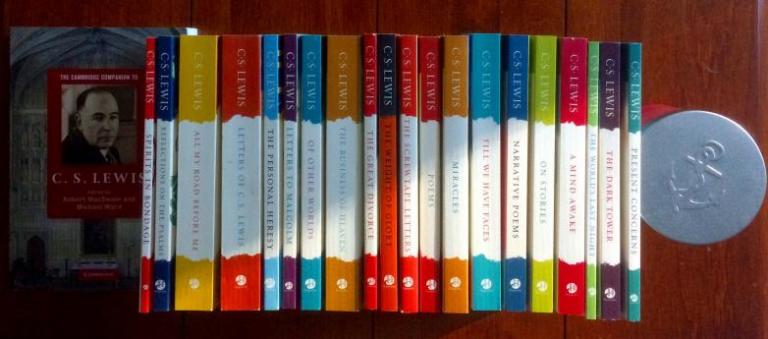
The scholar Stephanie R. Derrick tells about discovering two previously unknown essays by C. S. Lewis, including “A Christmas Sermon for Pagans.”
In an article for Christianity Today entitled Christmas and Cricket: Rediscovering Two Lost C. S. Lewis Articles After 70 Years, she summarizes the two articles that were published in The Strand in the late 1940s. Because that magazine was not indexed until 1983, which was after the standard Lewis bibliographies had been compiled, they were not included in bibliographies or collections of his works.
Dr. Derrick says of the Christmas essay that the editor of The Strand gave Lewis the topic of preaching about Christmas to modern “pagans.” But Lewis, as he does elsewhere, pointed out the difference between modern day secularists and actual pagans.
Lewis proceeded to use his Christmas “sermon” as an occasion to draw distinctions between the true Pagans or Heathens of old—“the backward people in the remote districts who had not yet been converted, who were still pre-Christian”—and modern people in Britain who have ceased to be Christians, who are sometimes referred to as “pagans.” To confuse these categories, Lewis says, is “like thinking … a street where the houses have been knocked down is the same as a field where no house has yet been built. … Rubble, dust, broken bottles, old bedsteads and stray cats are very different from grass, thyme, clover, buttercups and a lark singing overhead.”
Real Pagans differ from post-Christians, Lewis continued, firstly in that they were actually religious: “To [the Pagan] the earth was holy, the woods and waters were alive.” Secondly, they “believed in what we now call an ‘Objective’ Right or Wrong,” that is, that “the distinction between pious and impious acts was something which existed independently of human opinions.” Finally, Pagans, unlike “post-Christian man,” had “deep sadness” because of their knowledge that they did not obey the moral code perfectly. To compensate for this shortcoming, the Pagan developed a wealth of ceremonies to “take away guilt.”
Lewis goes on to unfavorably compare the enchanted worldview of ancient paganism to today’s “universe of colourless electrons.” Dr. Derrick quotes Lewis’s conclusion:
It looks to me, neighbours, as though we shall have to set about becoming true Pagans if only as a preliminary to becoming Christians. … For (in a sense) all that Christianity adds to Paganism is the cure. It confirms the old belief that in this universe we are up against Living Power: that there is a real Right and that we have failed to obey it: that existence is beautiful and terrifying. It adds a wonder of which Paganism had not distinctly heard—that the Mighty One has come down to help us, to remove our guilt, to reconcile us.
Indeed, a remedy has been provided for the “deep sadness” brought onto the world by sin. The very Pagan thing we do on December 25 of “singing and feasting because a God has been born” just may be, Lewis suggests, our “way back not only to Heaven, but to Earth too.”
This essay, “A Christmas Sermon for Pagans,” which had also been discovered by Christopher Marsh in 2015, will be published in its entirety in VII: Journal of the Marion E. Wade Center in January 2018.
Dr. Derrick also found another essay attributed to Lewis, “Cricketer’s Progress,” on the career of the famous cricket player Maurice W. Tate, turning into a reflection on the prospects for servicemen adjusting to life after the war. This author of this piece was given as “Clive Hamilton,” which was a pseudonym sometimes used by Lewis. But it is about sports, a topic Lewis was notoriously uninterested in! Dr. Derrick raises questions about whether Lewis actually wrote this piece, despite the Strand indexer’s attribution to him, though she decides that Lewis is just playing with the genre of sports-writing.
At any rate, it’s good to have more C. S. Lewis, and we can receive his “Christmas Sermon” as a Christmas present.
Photo, books by C. S. Lewis by Bill Smith via Flickr, Creative Commons License
"A Christmas Sermon for Pagans"
Previous Post
December 20, 2017
A Solution to the Pronoun Problem
Next Post

December 21, 2017 Tax Bill Passes & Will Likely Cut Your Taxes a Lot
Recent Comments
"While she worked for Trump she was a tool's tool!"
"I know wired earbuds are making a comeback (I never stopped using them as I ..."
"VCRs, tape decks, and cassette players are all having a revival among a segment of ..."
"As a (retired) lawyer I see potential liability from sharing things like power or sharp ..."
Browse Our Archives
Select a Category America Apologetics Art baseball Bible Blog Christ Church crime Culture Economics Education Ethics Family Food Football Government History Holidays Holy Week Humor International Islam Language Law Life Issues Literature Media Medicine Movies Music Nature News Personal Philosophy Politics psychology Reformation Religions Sacraments Science sex Social Science Sports technology television terrorism Theology Uncategorized Vocation war
Select a Month October 2026 September 2026 August 2026 July 2026 June 2026 May 2026 April 2026 March 2026 February 2026 January 2026 December 2025 November 2025 October 2025 September 2025 August 2025 July 2025 June 2025 May 2025 April 2025 March 2025 February 2025 January 2025 December 2024 November 2024 October 2024 September 2024 August 2024 July 2024 June 2024 May 2024 April 2024 March 2024 February 2024 January 2024 December 2023 November 2023 October 2023 September 2023 August 2023 July 2023 June 2023 May 2023 April 2023 March 2023 February 2023 January 2023 December 2022 November 2022 October 2022 September 2022 August 2022 July 2022 June 2022 May 2022 April 2022 March 2022 February 2022 January 2022 December 2021 November 2021 October 2021 September 2021 August 2021 July 2021 June 2021 May 2021 April 2021 March 2021 February 2021 January 2021 December 2020 November 2020 October 2020 September 2020 August 2020 July 2020 June 2020 May 2020 April 2020 March 2020 February 2020 January 2020 December 2019 November 2019 October 2019 September 2019 August 2019 July 2019 June 2019 May 2019 April 2019 March 2019 February 2019 January 2019 December 2018 November 2018 October 2018 September 2018 August 2018 July 2018 June 2018 May 2018 April 2018 March 2018 February 2018 January 2018 December 2017 November 2017 October 2017 September 2017 August 2017 July 2017 June 2017 May 2017 April 2017 March 2017 February 2017 January 2017 December 2016 November 2016 October 2016 September 2016 August 2016 July 2016 June 2016 May 2016 April 2016 March 2016 February 2016 January 2016 December 2015 November 2015 October 2015 September 2015 August 2015 July 2015 June 2015 May 2015 April 2015 March 2015 February 2015 January 2015 December 2014 November 2014 October 2014 September 2014 August 2014 July 2014 June 2014 May 2014 April 2014 March 2014 February 2014 January 2014 December 2013 November 2013 October 2013 September 2013 August 2013 July 2013 June 2013 May 2013 April 2013 March 2013 February 2013 January 2013 December 2012 November 2012 October 2012 September 2012 August 2012 July 2012 June 2012 May 2012 April 2012 March 2012 February 2012 January 2012 December 2011 November 2011 October 2011 September 2011 August 2011 July 2011 June 2011 May 2011 April 2011 March 2011 February 2011 January 2011 December 2010 November 2010 October 2010 September 2010 August 2010 July 2010 June 2010 May 2010 April 2010 March 2010 February 2010 January 2010 December 2009 November 2009 October 2009 September 2009 August 2009 July 2009 June 2009 May 2009 April 2009 March 2009 February 2009 January 2009 December 2008 November 2008 October 2008 September 2008 August 2008 July 2008 June 2008 May 2008 April 2008 March 2008 February 2008 January 2008 December 2007 November 2007 October 2007
Follow Us!
TAKE THE
Religious Wisdom Quiz
What does Paul tell Timothy to flee from in 2 Timothy?
Select your answer to see how you score.
Persecution The love of money Evil desires of youth False teaching
Books by This Author Books by Gene Veith
Related posts from Cranach

Gen Z Wants Evildoers to Be Punished, Not...

As Fulton Sheen Is Beatified, Don't Forget Walter...

TRENDING AT PATHEOS Evangelical

Emotion in Early Christianity by Andrew Crislip
Andrew Crislip’s Emotion in Early Christianity examines an often overlooked dimension of...

16 Spiritual Touchstones for a More Grounded Life
After decades of spiritual study, here are 16 principles I try...

Catholic Evangelization: Sharing Your Faith Every Day
Welcome back to the Graceful Awakening mini-series called, “From Faith to Mission.” ...

The Pillar of the Boatmen: the Ancient Monument...
The Pillar of the Boatmen is a Romano-Gaulish sculpture that dates from...

In one sense walking into Westminster Abbey is like walking down the...

'Super Scam Me' Exposes AI Jon Bon Jovi...
Leslie Pickett believed she was in a relationship with Jon Bon Jovi....
view all Evangelical blogs
What Are Your Thoughts?leave a comment
Ad-Free & Subscriber Log-In Subscription Support
- About Us
- 2026 Calendar
- Videos
- Podcasts
- Library of World Religions
- Faith In Media Tracker
- Advertise With Us
- Write for Us
- Privacy Policy
- Terms of Service
- Do Not Sell My Data
- Contact Us
- Radiant Digital
- Manage Newsletter Subscriptions
- Unsubscribe From Notifications
- Sitemap
Copyright 2008-2026, Patheos. All rights reserved.
Subscription Support Ad-Free & Subscriber Log-In
Follow Patheos