
BuddhistCatholicContemplativeEvangelicalGeneral ChristianHinduJewishLatter-day SaintMuslimNew VisionsProgressive Christian
Beliefs
- Buddhist
- Catholic
- Contemplative
- Evangelical
- General Christian
- Hindu
- Jewish
- Latter-day Saint
- More Voices
- Muslim
- New Visions
- Pagan
- Progressive Christian
Topics
- Religion News
- Food and Religion
- Sports and Religion
- Religious Art
- Religious Music and Entertainment
- Religious Events
- History and Religion
- Style and Religion
- Politics and Religion
- Women in Religion
- Recreation Outdoors and Religion
- Business Finance and Religion
- Careers Workplace and Religion
- Education and Religion
- Family Parenting and Religion
- Health Fitness and Religion
- Home and Religion
- Relationships and Religion
- Technology and Religion
- Travel and Religion
Columnists
- Buddhist Columnists
- Business Finance and Religion Columnists
- Careers Workplace and Religion Columnists
- Catholic Columnists
- Contemplative Columnists
- Education and Religion Columnists
- Evangelists Columnists
- Family Parenting and Religion Columnists
- General Christian Columnists
- Health Fitness and Religion Columnists
- Hindu Columnists
- History and Religion Columnists
- Home and Religion Columnists
- Jewish Columnists
- More Voices Columnists
- Latter Day Columnists
- Muslim Columnists
- New Visions Columnists
- Nonreligious Columnists
- Pagan Columnists
- Politics and Religion Columnists
- Progressive Columnists
- Recreation Outdoors and Religion Columnists
- Relationships and Religion Columnists
- Religion News Columnists
- Religious Art Columnists
- Religious Events Columnists
- Religious Music and Entertainment Columnists
- Sports and Religion Columnists
- Style and Religion Columnists
- Technology and Religion Columnists
- Travel and Religion Columnists
- Women in Religion Columnists
Resource Library
- 2026 Calendar
- Library of World Religions
- The 100 Most Holy Places on Earth
- Patheos Answers
- Podcasts
- Videos
- Faith Leaders Database
- Anglican Episcopalian
- Bahai
- Baptist
- Buddhism
- Christianity
- Confucianism
- Eastern Orthodoxy
- Hinduism
- Holiness and Pentecostal
- ISKCON
- Islam
- Judaism
- Lutheran
- Methodist
- The Church of Jesus Christ of Latter-day Saints
- New Age
- Paganism
- Presbytarian and Reformed
- Protestantism
- Religion Behind the Scenes
- Roman Catholic
- Scientology
- Shia Islam
- Sikhism
- Sufism
- Sunni Islam
- Taoism
- Zen
- See all religions
Research Tools
 Ad-Free & Subscriber Log-In Subscription Support
Ad-Free & Subscriber Log-In Subscription Support
Follow Patheos 

- Trending:
- Forgiveness
- |
- Marriage
- |
- Consciousness
- |
- Death Penalty
- |
- Election
- |
- Halloween

- Home
- Evangelical
- Politics and Religion
- Why the Word Became Flesh
Why the Word Became Flesh
Last updated on: December 26, 2017 at 6:00 am by Gene Veith
Why the Word Became Flesh 2017-12-25T20:30:59-05:00 Gene Veith
Patheos Explore the world's faith through different perspectives on religion and spirituality! Patheos has the views of the prevalent religions and spiritualities of the world.
You want to read a good Christmas book? You can’t do better than the one I am reading. It’s by St. Athansius, and it’s entitled On the Incarnation of the Word.
The edition I linked to has as an introduction by C. S. Lewis, which has been published separately as his illuminating essay On Reading Old Books, which shows how reading works from the past can give us a new perspective by freeing us from the blinders of our own day. That is certainly true of this “old book,” written in 335 A.D.
St. Athanasius here is exploring and applying what the Gospel of John teaches about the Son of God as “the Word.” The evangelist writes, “In the beginning was the Word, and the Word was with God, and the Word was God” (John 1:1).
The word–that is, the *logos–*was an important concept in Greek philosophy. In that context, it refers to the order, design, and meaning of the universe. Logos gives us the word “logic,” and is the foundation of rationality. That mental processes, such as logic, apply to the universe outside of the self is evidence that there is a common rationality, the logos, that underlies them both.
That the Greeks expressed this concept in terms of *language–*the “word”–is remarkably prescient, as contemporary philosophers have been showing that language is foundational to all thought and as contemporary scientists have been showing that the foundations of the natural world, from the laws of physics to the D.N.A. of living organisms have the qualities of language.
St. John takes the logos even further than the classic philosophers. He describes “the Word” as something like the Mind of God–God’s logic, God’s ideas, God’s self-conscious mental awareness. Thus, “All things were made through [the Word], and without him was not any thing made that was made” (John 1:3). And eventually, with Jesus Christ, “the Word became flesh and dwelt among us” (John 1: 14).
St. Athanasius writes about the Word being the agent of Creation, and then how that same Word became the agent of Redemption. He connects the Word to the Image of God, according to which human beings were created so that they too, like God, have rationality and a mind, a sort of logos of our own.
But then, due to sin, that image was effaced. Who could restore that image, except the One whom that image reflected? Who could accomplish that, except the Word according to whom human beings were created?
I’ll give you a sampling of what St. Athansius does with these concepts, from the first two chapters alone. From a version available free online, On the Incarnation of the Word – Christian Classics Ethereal Library:
We will begin, then, with the creation of the world and with God its Maker, for the first fact that you must grasp is this: the renewal of creation has been wrought by the Self-same Word Who made it in the beginning. There is thus no inconsistency between creation and salvation for the One Father has employed the same Agent for both works, effecting the salvation of the world through the same Word Who made it in the beginning. . . .
God is good—or rather, of all goodness He is Fountainhead, and it is impossible for one who is good to be mean or grudging about anything. Grudging existence to none therefore, He made all things out of nothing through His own Word, our Lord Jesus Christ and of all these His earthly creatures He reserved especial mercy for the race of men. Upon them, therefore, upon men who, as animals, were essentially impermanent, He bestowed a grace which other creatures lacked—namely the impress of His own Image, a share in the reasonable being of the very Word Himself, so that, reflecting Him and themselves becoming reasonable and expressing the Mind of God even as He does, though in limited degree they might continue for ever in the blessed and only true life of the saints in paradise. But since the will of man could turn either way, God secured this grace that He had given by making it conditional from the first upon two things—namely, a law and a place. He set them in His own paradise, and laid upon them a single prohibition. If they guarded the grace and retained the loveliness of their original innocence, then the life of paradise should be theirs, without sorrow, pain or care, and after it the assurance of immortality in heaven. But if they went astray and became vile, throwing away their birthright of beauty, then they would come under the natural law of death and live no longer in paradise, but, dying outside of it, continue in death and in corruption. . . .
It was unworthy of the goodness of God that creatures made by Him should be brought to nothing through the deceit wrought upon man by the devil; and it was supremely unfitting that the work of God in mankind should disappear, either through their own negligence or through the deceit of evil spirits. As, then, the creatures whom He had created reasonable, like the Word, were in fact perishing, and such noble works were on the road to ruin, what then was God, being Good, to do?. . . .
What—or rather Who was it that was needed for such grace and such recall as we required? Who, save the Word of God Himself, Who also in the beginning had made all things out of nothing? His part it was, and His alone, both to bring again the corruptible to incorruption and to maintain for the Father His consistency of character with all. For He alone, being Word of the Father and above all, was in consequence both able to recreate all, and worthy to suffer on behalf of all and to be an ambassador for all with the Father. . . .
For this purpose, then, the incorporeal and incorruptible and immaterial Word of God entered our world. In one sense, indeed, He was not far from it before, for no part of creation had ever been without Him Who, while ever abiding in union with the Father, yet fills all things that are. But now He entered the world in a new way, stooping to our level in His love and Self-revealing to us. . . .
Thus, taking a body like our own, because all our bodies were liable to the corruption of death, He surrendered His body to death instead of all, and offered it to the Father. This He did out of sheer love for us, so that in His death all might die, and the law of death thereby be abolished because, having fulfilled in His body that for which it was appointed, it was thereafter voided of its power for men. This He did that He might turn again to incorruption men who had turned back to corruption, and make them alive through death by the appropriation of His body and by the grace of His resurrection. Thus He would make death to disappear from them as utterly as straw from fire.
The Word perceived that corruption could not be got rid of otherwise than through death; yet He Himself, as the Word, being immortal and the Father’s Son, was such as could not die. For this reason, therefore, He assumed a body capable of death, in order that it, through belonging to the Word Who is above all, might become in dying a sufficient exchange for all, and, itself remaining incorruptible through His indwelling, might thereafter put an end to corruption for all others as well, by the grace of the resurrection.
[my bolds]
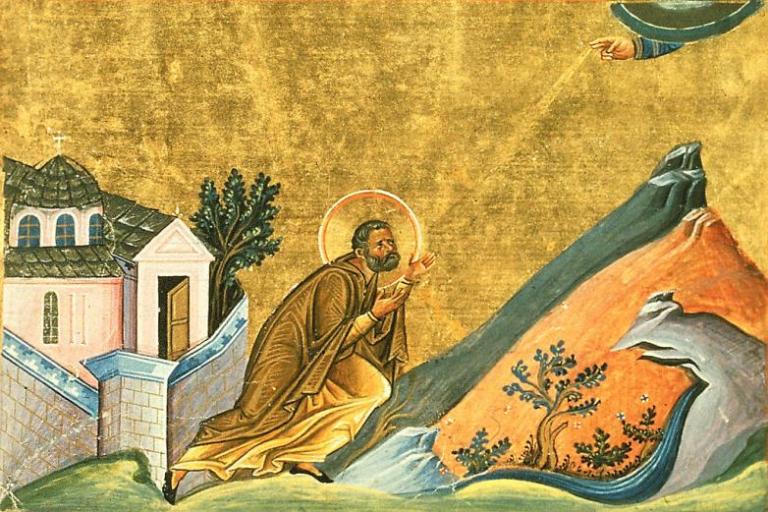
Illustration: Athanasius the Confessor of Constantinople (11th century) [Public domain], via Wikimedia Commons
On the Incarnation of the Word
Previous Post

December 26, 2017
Sexual Counter-Revolution Leads Top News Stories of 2017
Next Post

December 27, 2017 LCMS Missionary Battling Witch-Burnings in New Guinea
Recent Comments
"While she worked for Trump she was a tool's tool!"
"I know wired earbuds are making a comeback (I never stopped using them as I ..."
"VCRs, tape decks, and cassette players are all having a revival among a segment of ..."
"As a (retired) lawyer I see potential liability from sharing things like power or sharp ..."
Browse Our Archives
Select a Category America Apologetics Art baseball Bible Blog Christ Church crime Culture Economics Education Ethics Family Food Football Government History Holidays Holy Week Humor International Islam Language Law Life Issues Literature Media Medicine Movies Music Nature News Personal Philosophy Politics psychology Reformation Religions Sacraments Science sex Social Science Sports technology television terrorism Theology Uncategorized Vocation war
Select a Month October 2026 September 2026 August 2026 July 2026 June 2026 May 2026 April 2026 March 2026 February 2026 January 2026 December 2025 November 2025 October 2025 September 2025 August 2025 July 2025 June 2025 May 2025 April 2025 March 2025 February 2025 January 2025 December 2024 November 2024 October 2024 September 2024 August 2024 July 2024 June 2024 May 2024 April 2024 March 2024 February 2024 January 2024 December 2023 November 2023 October 2023 September 2023 August 2023 July 2023 June 2023 May 2023 April 2023 March 2023 February 2023 January 2023 December 2022 November 2022 October 2022 September 2022 August 2022 July 2022 June 2022 May 2022 April 2022 March 2022 February 2022 January 2022 December 2021 November 2021 October 2021 September 2021 August 2021 July 2021 June 2021 May 2021 April 2021 March 2021 February 2021 January 2021 December 2020 November 2020 October 2020 September 2020 August 2020 July 2020 June 2020 May 2020 April 2020 March 2020 February 2020 January 2020 December 2019 November 2019 October 2019 September 2019 August 2019 July 2019 June 2019 May 2019 April 2019 March 2019 February 2019 January 2019 December 2018 November 2018 October 2018 September 2018 August 2018 July 2018 June 2018 May 2018 April 2018 March 2018 February 2018 January 2018 December 2017 November 2017 October 2017 September 2017 August 2017 July 2017 June 2017 May 2017 April 2017 March 2017 February 2017 January 2017 December 2016 November 2016 October 2016 September 2016 August 2016 July 2016 June 2016 May 2016 April 2016 March 2016 February 2016 January 2016 December 2015 November 2015 October 2015 September 2015 August 2015 July 2015 June 2015 May 2015 April 2015 March 2015 February 2015 January 2015 December 2014 November 2014 October 2014 September 2014 August 2014 July 2014 June 2014 May 2014 April 2014 March 2014 February 2014 January 2014 December 2013 November 2013 October 2013 September 2013 August 2013 July 2013 June 2013 May 2013 April 2013 March 2013 February 2013 January 2013 December 2012 November 2012 October 2012 September 2012 August 2012 July 2012 June 2012 May 2012 April 2012 March 2012 February 2012 January 2012 December 2011 November 2011 October 2011 September 2011 August 2011 July 2011 June 2011 May 2011 April 2011 March 2011 February 2011 January 2011 December 2010 November 2010 October 2010 September 2010 August 2010 July 2010 June 2010 May 2010 April 2010 March 2010 February 2010 January 2010 December 2009 November 2009 October 2009 September 2009 August 2009 July 2009 June 2009 May 2009 April 2009 March 2009 February 2009 January 2009 December 2008 November 2008 October 2008 September 2008 August 2008 July 2008 June 2008 May 2008 April 2008 March 2008 February 2008 January 2008 December 2007 November 2007 October 2007
Follow Us!
TAKE THE
Religious Wisdom Quiz
How did Saul first offend God as king?
Select your answer to see how you score.
He defeated the Philistines He offered sacrifices himself He built an idol He took the Ark
Books by This Author Books by Gene Veith
Related posts from Cranach


Gen Z Wants Evildoers to Be Punished, Not...

As Fulton Sheen Is Beatified, Don't Forget Walter...

How the Integralists Are Like the Socialists
TRENDING AT PATHEOS Evangelical

The Iron Gates and the Lion of the...
Yesterday, I didn't finish my report about, well, yesterday. So I'll...

Dolly Parton’s Last Song Wins Dove Award with...
Bluegrass band The Grascals, speaking on the red carpet at the 57th...

The Image: On the Horror of Capitalism and...
The Image Then went the Pharisees, and took counsel how they might...

We are approaching the date of our new American national holiday: October...

Letters on Living the Faith by C.S. Lewis
Most of us met C.S. Lewis as a public intellectual. Mere Christianity....

When Halloween Unmasks Married Hearts
Written by Dr. David K. Ewen from Eternal Truth Bible College Behind...
view all Evangelical blogs
What Are Your Thoughts?leave a comment
Ad-Free & Subscriber Log-In Subscription Support
- About Us
- 2026 Calendar
- Videos
- Podcasts
- Library of World Religions
- Faith In Media Tracker
- Advertise With Us
- Write for Us
- Privacy Policy
- Terms of Service
- Do Not Sell My Data
- Contact Us
- Radiant Digital
- Manage Newsletter Subscriptions
- Unsubscribe From Notifications
- Sitemap
Copyright 2008-2026, Patheos. All rights reserved.
Subscription Support Ad-Free & Subscriber Log-In
Follow Patheos