
BuddhistCatholicContemplativeEvangelicalGeneral ChristianHinduJewishLatter-day SaintMuslimNew VisionsProgressive Christian
Beliefs
- Buddhist
- Catholic
- Contemplative
- Evangelical
- General Christian
- Hindu
- Jewish
- Latter-day Saint
- More Voices
- Muslim
- New Visions
- Pagan
- Progressive Christian
Topics
- Religion News
- Food and Religion
- Sports and Religion
- Religious Art
- Religious Music and Entertainment
- Religious Events
- History and Religion
- Style and Religion
- Politics and Religion
- Women in Religion
- Recreation Outdoors and Religion
- Business Finance and Religion
- Careers Workplace and Religion
- Education and Religion
- Family Parenting and Religion
- Health Fitness and Religion
- Home and Religion
- Relationships and Religion
- Technology and Religion
- Travel and Religion
Columnists
- Buddhist Columnists
- Business Finance and Religion Columnists
- Careers Workplace and Religion Columnists
- Catholic Columnists
- Contemplative Columnists
- Education and Religion Columnists
- Evangelists Columnists
- Family Parenting and Religion Columnists
- General Christian Columnists
- Health Fitness and Religion Columnists
- Hindu Columnists
- History and Religion Columnists
- Home and Religion Columnists
- Jewish Columnists
- More Voices Columnists
- Latter Day Columnists
- Muslim Columnists
- New Visions Columnists
- Nonreligious Columnists
- Pagan Columnists
- Politics and Religion Columnists
- Progressive Columnists
- Recreation Outdoors and Religion Columnists
- Relationships and Religion Columnists
- Religion News Columnists
- Religious Art Columnists
- Religious Events Columnists
- Religious Music and Entertainment Columnists
- Sports and Religion Columnists
- Style and Religion Columnists
- Technology and Religion Columnists
- Travel and Religion Columnists
- Women in Religion Columnists
Resource Library
- 2026 Calendar
- Library of World Religions
- The 100 Most Holy Places on Earth
- Patheos Answers
- Podcasts
- Videos
- Faith Leaders Database
- Anglican Episcopalian
- Bahai
- Baptist
- Buddhism
- Christianity
- Confucianism
- Eastern Orthodoxy
- Hinduism
- Holiness and Pentecostal
- ISKCON
- Islam
- Judaism
- Lutheran
- Methodist
- The Church of Jesus Christ of Latter-day Saints
- New Age
- Paganism
- Presbytarian and Reformed
- Protestantism
- Religion Behind the Scenes
- Roman Catholic
- Scientology
- Shia Islam
- Sikhism
- Sufism
- Sunni Islam
- Taoism
- Zen
- See all religions
Research Tools
 Ad-Free & Subscriber Log-In Subscription Support
Ad-Free & Subscriber Log-In Subscription Support
Follow Patheos 

- Trending:
- Forgiveness
- |
- Marriage
- |
- Consciousness
- |
- Death Penalty
- |
- Election
- |
- Halloween

- Home
- Evangelical
- Politics and Religion
- How to be a Pastor
How to be a Pastor
Last updated on: November 13, 2017 at 6:00 am by Gene Veith
How to be a Pastor 2017-11-12T20:00:14-05:00 Gene Veith
Patheos Explore the world's faith through different perspectives on religion and spirituality! Patheos has the views of the prevalent religions and spiritualities of the world.
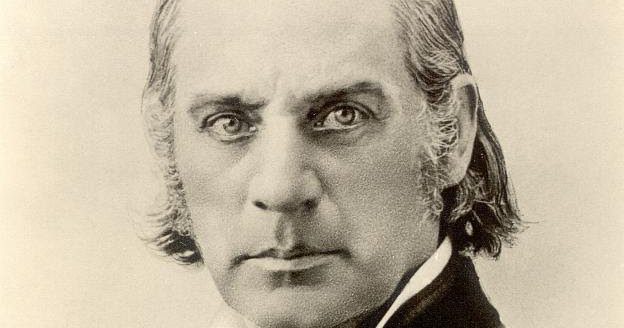
I’m in a reading group with a bunch of pastors, which has me reading titles I would probably miss on my own. I just finished a remarkable book from the 19th century that explains, in practical detail, how to be a pastor. That is to say, it gives advice to young pastors about how to navigate successfully the issues they will face in their ministry.
The author is Wilhelm Loehe, and the book is The Pastor, published by CPH in 2015, a translation of two booklets that Loehe wrote in 1847 and 1853. Loehe (1808-1872) was an important figure in the confessional revival in Germany. He is notable for his work in sending missionaries, including to North America, where the pastors he sent over became instrumental in founding the Lutheran Church Missouri-Synod. He was a key figure in the deaconness movement and was a founder of the institution that would become Concordia Theological Seminary in Ft. Wayne, Indiana.
Today Loehe’s theology, with his emphasis on liturgy and the sacraments, is especially appreciated by “high church” Lutherans. Some of his teachings, such as the notion that the ministry comes straight from Christ rather than through the call of a congregation, would go against LCMS teachings, but these, when they turn up are duly treated in footnotes. But they seldom do. This book focuses less on theology and more on the practice of being an effective pastor. As such, even non-Lutheran pastors would find this treatment illuminating.
Loehe is addressing in particular new pastors just starting out in rural parishes. He stresses the importance of “belonging to all your parishioners.”
Certainly times and culture have changed. But his advice is startlingly relevant to what pastors face today. For example, in his discussion of pastoral education, he cites the importance of a liberal arts, university education. With such an education, “he will be equal to all levels of society and can claim admittance to even the highest circles” (p.5). Now Loehe goes on to warn against over-intellectualizing ministerial training, recommending that practical pastoral training precede the technical scholarly study of theology. But he is right that pastors, perhaps more than members of any other profession, must be able to work with individuals from all levels of society and cultural backgrounds. In his day, a country pastor had to deal with the nobility in the manor house, as well as the peasants in the field, as well as all of the craftsmen, merchants, and professionals in between.
Today our congregations are probably much more culturally homogenous. The church growth theory pioneered by Donald McGavran teaches that churches grow best when they consist of people from the same socio-economic-cultural background, so that most large congregations today are made up of middle class suburbanites. But rural and small town congregations are still typically made up of people from all walks of life, and even larger congregations are now having to deal with diversity, not just that of race, but of cultural and individual backgrounds. Pastors today will typically need to interact with well-educated professionals, blue-collar workers, millennials, teen-agers, immigrants, scientists, retired folks, farmers, etc., etc. Doing so will require wide-ranging knowledge, humility, and cultural savvy.
I did not expect a 19th century writer to be so attuned to social and cultural dynamics. Loehe gives good advice to young pastors on starting out in their office–creating the right impressions, balancing friendliness and reserve; socializing with brother pastors and with parishioners; dealing with the legacy (good and bad) of predecessors; and navigating what we would call church politics.
Loehe discusses how pastors should handle finances, deal with the school when there is one, and balance hobbies with his ministry. He also gives wise counsel on how to help the poor and how to minister appropriately to women.
To be sure, there are big differences between his time and today, and the vivid portrait of 19th century rural parishes is part of the charm of this book. He writes about receiving the “collection”–the members bringing eggs, vegetables, and other produce as part of the pastor’s pay; renting out or managing the land that would sometimes be attached to the parish for the pastor’s support; managing servants. (We learn that pastors usually get good servants because “parents love to place their children [for service] in parsonages,” due to their good moral influence [p. 113]).
Loehe includes a chapter on marriage, treating whether to choose marriage or celibacy; qualities to look for in a bride; the role of the pastor’s wife; raising children in the parish. This is clearly highly Victorian–such as his euphemistic references to “the marital secret” and his simultaneous idealization and subordination of women–but there is also much good sense and wisdom along the way.
Loehe directs much of his advice to young pastors, but he covers the whole course of a pastor’s life, including how to handle old age and retirement (and knowing when it is time to step aside).
The first booklet has to do with the personal and practical issues that a pastor will need to deal with. The second booklet focuses on what the pastor does: homiletics, catechesis, liturgics, pastoral care, and pastoral care of the sick.
In the section on homiletics, Loehe discusses types and methods of teaching, rhetorical techniques, types of sermons, studying and preaching from Scripture; extemporaneous speaking vs. writing out the sermon; style; and the proper and improper use of sermon books. (We would say online sermons.) Throughout, he gives advice that grows out of extensive experience. Don’t preach sermons that are too long, he says, since that could put the divine service as a whole out of balance. The best length, he says, is about half an hour.
In the chapter on catechesis, Loehe gives excellent advice on how to teach. Despite his reputation, the chapter on liturgics does not make the case for his high church preferences. Rather, he says that pastors should attend to what his congregation is ready for, not going to extremes and being careful how elements are introduced to the congregation. His chapter on pastoral care is filled with good ideas, both for the pastoral care of the congregation as a whole and for individuals. His chapter on the specific task of pastoral care of the sick is full of outdated 19th century medical advice, but it perceptively distinguishes between physical, mental, and spiritual afflictions (including demonic temptations and possession).
Always Loehe stresses the Word of God, the Law and the Gospel (with the latter predominating), and how God works through the pastor’s vocation in bringing Christ to his people.
Modern day pastors have challenges of their own, but their vocation is the same calling that has been continuous throughout the history of the Church. To be able to hear from a pastor from a different era can help defamiliarize the work of today’s pastors, who can thus have much to learn from an experienced, insightful brother pastor such as Wilhelm Loehe.
Photo of Wilhelm Loehe credit: The original uploader was Bwag at German Wikipedia (Heiligenlexikon.de, transfered from de.wikipedia) [Public domain], via Wikimedia Commons. This version is from Pastoral Meanderings.
Previous Post

November 13, 2017
"The Universe Should Not Actually Exist"
Next Post

November 14, 2017 The Roy Moore Controversy
Recent Comments
"While she worked for Trump she was a tool's tool!"
"I know wired earbuds are making a comeback (I never stopped using them as I ..."
"VCRs, tape decks, and cassette players are all having a revival among a segment of ..."
"As a (retired) lawyer I see potential liability from sharing things like power or sharp ..."
Browse Our Archives
Select a Category America Apologetics Art baseball Bible Blog Christ Church crime Culture Economics Education Ethics Family Food Football Government History Holidays Holy Week Humor International Islam Language Law Life Issues Literature Media Medicine Movies Music Nature News Personal Philosophy Politics psychology Reformation Religions Sacraments Science sex Social Science Sports technology television terrorism Theology Uncategorized Vocation war
Select a Month October 2026 September 2026 August 2026 July 2026 June 2026 May 2026 April 2026 March 2026 February 2026 January 2026 December 2025 November 2025 October 2025 September 2025 August 2025 July 2025 June 2025 May 2025 April 2025 March 2025 February 2025 January 2025 December 2024 November 2024 October 2024 September 2024 August 2024 July 2024 June 2024 May 2024 April 2024 March 2024 February 2024 January 2024 December 2023 November 2023 October 2023 September 2023 August 2023 July 2023 June 2023 May 2023 April 2023 March 2023 February 2023 January 2023 December 2022 November 2022 October 2022 September 2022 August 2022 July 2022 June 2022 May 2022 April 2022 March 2022 February 2022 January 2022 December 2021 November 2021 October 2021 September 2021 August 2021 July 2021 June 2021 May 2021 April 2021 March 2021 February 2021 January 2021 December 2020 November 2020 October 2020 September 2020 August 2020 July 2020 June 2020 May 2020 April 2020 March 2020 February 2020 January 2020 December 2019 November 2019 October 2019 September 2019 August 2019 July 2019 June 2019 May 2019 April 2019 March 2019 February 2019 January 2019 December 2018 November 2018 October 2018 September 2018 August 2018 July 2018 June 2018 May 2018 April 2018 March 2018 February 2018 January 2018 December 2017 November 2017 October 2017 September 2017 August 2017 July 2017 June 2017 May 2017 April 2017 March 2017 February 2017 January 2017 December 2016 November 2016 October 2016 September 2016 August 2016 July 2016 June 2016 May 2016 April 2016 March 2016 February 2016 January 2016 December 2015 November 2015 October 2015 September 2015 August 2015 July 2015 June 2015 May 2015 April 2015 March 2015 February 2015 January 2015 December 2014 November 2014 October 2014 September 2014 August 2014 July 2014 June 2014 May 2014 April 2014 March 2014 February 2014 January 2014 December 2013 November 2013 October 2013 September 2013 August 2013 July 2013 June 2013 May 2013 April 2013 March 2013 February 2013 January 2013 December 2012 November 2012 October 2012 September 2012 August 2012 July 2012 June 2012 May 2012 April 2012 March 2012 February 2012 January 2012 December 2011 November 2011 October 2011 September 2011 August 2011 July 2011 June 2011 May 2011 April 2011 March 2011 February 2011 January 2011 December 2010 November 2010 October 2010 September 2010 August 2010 July 2010 June 2010 May 2010 April 2010 March 2010 February 2010 January 2010 December 2009 November 2009 October 2009 September 2009 August 2009 July 2009 June 2009 May 2009 April 2009 March 2009 February 2009 January 2009 December 2008 November 2008 October 2008 September 2008 August 2008 July 2008 June 2008 May 2008 April 2008 March 2008 February 2008 January 2008 December 2007 November 2007 October 2007
Follow Us!
TAKE THE
Religious Wisdom Quiz
What will happen to Satan at the end of time, according to Revelation 20:10?
Select your answer to see how you score.
He will repent and be forgiven He will roam the earth forever He will be cast out of heaven again He will be thrown into the lake of fire
Books by This Author Books by Gene Veith
Related posts from Cranach


Our New Book on Technology & Vocation


The Family Estrangement Epidemic
TRENDING AT PATHEOS Evangelical

The Iron Gates and the Lion of the...
Yesterday, I didn't finish my report about, well, yesterday. So I'll...

Dolly Parton’s Last Song Wins Dove Award with...
Bluegrass band The Grascals, speaking on the red carpet at the 57th...

The Image: On the Horror of Capitalism and...
The Image Then went the Pharisees, and took counsel how they might...

We are approaching the date of our new American national holiday: October...

Letters on Living the Faith by C.S. Lewis
Most of us met C.S. Lewis as a public intellectual. Mere Christianity....

When Halloween Unmasks Married Hearts
Written by Dr. David K. Ewen from Eternal Truth Bible College Behind...
view all Evangelical blogs
What Are Your Thoughts?leave a comment
Ad-Free & Subscriber Log-In Subscription Support
- About Us
- 2026 Calendar
- Videos
- Podcasts
- Library of World Religions
- Faith In Media Tracker
- Advertise With Us
- Write for Us
- Privacy Policy
- Terms of Service
- Do Not Sell My Data
- Contact Us
- Radiant Digital
- Manage Newsletter Subscriptions
- Unsubscribe From Notifications
- Sitemap
Copyright 2008-2026, Patheos. All rights reserved.
Subscription Support Ad-Free & Subscriber Log-In
Follow Patheos