
BuddhistCatholicContemplativeEvangelicalGeneral ChristianHinduJewishLatter-day SaintMuslimNew VisionsProgressive Christian
Beliefs
- Buddhist
- Catholic
- Contemplative
- Evangelical
- General Christian
- Hindu
- Jewish
- Latter-day Saint
- More Voices
- Muslim
- New Visions
- Pagan
- Progressive Christian
Topics
- Religion News
- Food and Religion
- Sports and Religion
- Religious Art
- Religious Music and Entertainment
- Religious Events
- History and Religion
- Style and Religion
- Politics and Religion
- Women in Religion
- Recreation Outdoors and Religion
- Business Finance and Religion
- Careers Workplace and Religion
- Education and Religion
- Family Parenting and Religion
- Health Fitness and Religion
- Home and Religion
- Relationships and Religion
- Technology and Religion
- Travel and Religion
Columnists
- Buddhist Columnists
- Business Finance and Religion Columnists
- Careers Workplace and Religion Columnists
- Catholic Columnists
- Contemplative Columnists
- Education and Religion Columnists
- Evangelists Columnists
- Family Parenting and Religion Columnists
- General Christian Columnists
- Health Fitness and Religion Columnists
- Hindu Columnists
- History and Religion Columnists
- Home and Religion Columnists
- Jewish Columnists
- More Voices Columnists
- Latter Day Columnists
- Muslim Columnists
- New Visions Columnists
- Nonreligious Columnists
- Pagan Columnists
- Politics and Religion Columnists
- Progressive Columnists
- Recreation Outdoors and Religion Columnists
- Relationships and Religion Columnists
- Religion News Columnists
- Religious Art Columnists
- Religious Events Columnists
- Religious Music and Entertainment Columnists
- Sports and Religion Columnists
- Style and Religion Columnists
- Technology and Religion Columnists
- Travel and Religion Columnists
- Women in Religion Columnists
Resource Library
- 2026 Calendar
- Library of World Religions
- The 100 Most Holy Places on Earth
- Patheos Answers
- Podcasts
- Videos
- Faith Leaders Database
- Anglican Episcopalian
- Bahai
- Baptist
- Buddhism
- Christianity
- Confucianism
- Eastern Orthodoxy
- Hinduism
- Holiness and Pentecostal
- ISKCON
- Islam
- Judaism
- Lutheran
- Methodist
- The Church of Jesus Christ of Latter-day Saints
- New Age
- Paganism
- Presbytarian and Reformed
- Protestantism
- Religion Behind the Scenes
- Roman Catholic
- Scientology
- Shia Islam
- Sikhism
- Sufism
- Sunni Islam
- Taoism
- Zen
- See all religions
Research Tools
 Ad-Free & Subscriber Log-In Subscription Support
Ad-Free & Subscriber Log-In Subscription Support
Follow Patheos 

- Trending:
- Forgiveness
- |
- Marriage
- |
- Consciousness
- |
- Death Penalty
- |
- Election
- |
- Halloween

- Home
- Evangelical
- Politics and Religion
- The day that God suffered and died
The day that God suffered and died
Last updated on: April 14, 2017 at 1:11 pm by Gene Veith
The day that God suffered and died 2017-04-14T13:11:08-04:00 Gene Veith
Patheos Explore the world's faith through different perspectives on religion and spirituality! Patheos has the views of the prevalent religions and spiritualities of the world.
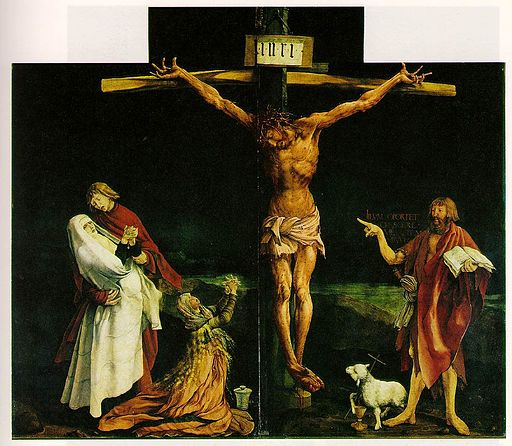 A powerful Good Friday devotion would be to read Article VIII of the Formula of Concord: “The Person of Christ.” It will help you to appreciate even more the magnitude of what happened on the Cross.
Luther’s dispute with Zwingli went beyond their disagreement over Holy Communion and whether “this is my body” is a fact or a figure of speech. They had different understandings of Christ.
This question arose: Can we say that on the Cross “God suffered” or “God died”? No, said Zwingli. God is “impassible.” He cannot suffer or die. Christ has both a divine and a human nature. So on the Cross only His human nature suffered. Zwingli dismissed scriptural language to the contrary as, again, a figure of speech.
Luther said that while it is true that God, in Himself, does not suffer or die, in Christ something else is going on. In taking on human nature, God the Son could experience what human beings experience. By virtue of the incarnation, the unity of the Trinity, the communication of the attributes, and the personal union of Christ’s two natures, we can say that God suffered and died.
Later, Chemnitz would explain it using this analogy (and it is only an imperfect analogy, since the Son of God was not simply a deity in a human body, but rather took on a human soul as well): A human being has a spiritual and a physical nature. If you cut your finger, it isn’t just your body that suffers. You suffer because your two natures come together in your person.
After the jump, read how this is treated in one of the key confessional documents of Lutheran theology. I know I trot this out every few years around this time, but it bears repeating.
For one thing, to believe that God suffered and God died helps us to understand the atonement more deeply. It isn’t God punishing his kid for what other people did, as mockers and some liberals are saying today. In the atonement, the Second Person of the Trinity sacrificed Himself for sinful human beings. And in doing so, He took into Himself, by His omnipotence, the world’s evil and the world’s suffering, our “iniquities” and “transgressions” and our “griefs” and “sorrows” (Isaiah 53, a major passage of Scripture to read for today). And this has a bearing on the problem of evil and the problem of pain, since we know that, far from looking down on the evils and sufferings of the world and doing nothing, God took them into Himself in His redemption of the world.
Illustration: The Isenheim Altarpiece by Matthias Grünewald. [Public domain], from Wikimedia Commons. Originally at the Hospital of St. Anthony, where plague victims could contemplate Christ, depicted as bearing their disease.
From The Solid Declaration of the Formula of Concord – Book of Concord, Article VIII:
20] On account of this personal union, which cannot be thought of nor exist without such a true communion of the natures, not the mere human nature, whose property it is to suffer and die, has suffered for the sins of the world, but the Son of God Himself truly suffered, however, according to the assumed human nature, and (in accordance with our simple Christian faith) [as our Apostles’ Creed testifies] truly died, although the divine nature can neither suffer nor die. This Dr. Luther has fully explained in his Large Confession concerning the Holy Supper in opposition to the blasphemous alloeosis of Zwingli, who taught that one nature should be taken and understood for the other, which Dr. Luther committed, as a devil’s mask, to the abyss of hell. . . .
38] However, since beneath the words, when it is said that what is peculiar to one nature is ascribed to the entire person, secret and open Sacramentarians conceal their pernicious error, by naming indeed the entire person, but understanding thereby nevertheless only the one nature, and entirely excluding the other nature, as though the mere human nature had suffered for us, as Dr. Luther in his Large Confession concerning the Holy Supper has written concerning the alloeosis of Zwingli, we will here set down Luther’s own words, in order that the Church of God may be guarded in the best way against this error. His words are as follows:
39] Zwingli calls that an alloeosis when something is said of the divinity of Christ which really belongs to the humanity, or vice versa. As Luke 24:26: “Ought not Christ to have suffered these things, and to enter into His glory?” Here Zwingli juggles, asserting that [the word] Christ is understood of the human nature. 40] Beware, beware, I say, of the alloeosis! For it is a devil’s mask, for at last it manufactures such a Christ after whom I certainly would not be a Christian; namely, that henceforth Christ should be no more and do no more with His sufferings and life than any other mere saint. For if I believe this [permit myself to be persuaded] that only the human nature has suffered for me, then Christ is to me a poor Savior, then He Himself indeed needs a Savior. In a word, it is unspeakable what the devil seeks by the alloeosis.
41] And shortly afterwards: If the old weather-witch, Dame Reason, the grandmother of the alloeosis, would say, Yea, divinity cannot suffer nor die; you shall reply, That is true; yet, because in Christ divinity and humanity are one person, Scripture, on account of this personal union, ascribes also to divinity everything that happens to the humanity, and vice versa. 42] And it is so in reality; for you must certainly answer this, that the person (meaning Christ) suffers and dies. Now the person is true God; therefore it is rightly said: The Son of God suffers. For although the one part (to speak thus), namely, the divinity, does not suffer, yet the person, which is God, suffers in the other part, namely, in His humanity; for in truth God’s Son has been crucified for us, that is, the person which is God. For the person, the person, I say, was crucified according to the humanity.
43] And again, shortly afterwards: If the alloeosis is to stand as Zwingli teaches it, then Christ will have to be two persons, one divine and one human, because Zwingli applies the passages concerning suffering to the human nature alone, and diverts them entirely from the divinity. For if the works be parted and separated, the person must also be divided, since all the works or sufferings are ascribed not to the natures, but to the person. For it is the person that does and suffers everything, one thing according to one nature, and another according to the other nature, all of which the learned know well. Therefore we regard our Lord Christ as God and man in one person, non confundendo naturas nec dividendo personam, so that we neither confound the natures nor divide the person.
44] Dr. Luther says also in his book Of the Councils and the Church: We Christians must know that if God is not also in the balance, and gives the weight, we sink to the bottom with our scale. By this I mean: If it were not to be said [if these things were not true], God has died for us, but only a man, we would be lost. But if “God’s death” and “God died” lie in the scale of the balance, then He sinks down, and we rise up as a light, empty scale. But indeed He can also rise again or leap out of the scale; yet He could not sit in the scale unless He became a man like us, so that it could be said: “God died,” “God’s passion,” “God’s blood,” “God’s death.” For in His nature God cannot die; but now that God and man are united in one person, it is correctly called God’s death, when the man dies who is one thing or one person with God. Thus far Luther.
From The Solid Declaration of the Formula of Concord – Book of Concord:
Previous Post

April 14, 2017
Light, darkness, & the Cross
Next Post
April 16, 2017 The Resurrection on the Isenheim altar
Recent Comments
"While she worked for Trump she was a tool's tool!"
"I know wired earbuds are making a comeback (I never stopped using them as I ..."
"VCRs, tape decks, and cassette players are all having a revival among a segment of ..."
"As a (retired) lawyer I see potential liability from sharing things like power or sharp ..."
Browse Our Archives
Select a Category America Apologetics Art baseball Bible Blog Christ Church crime Culture Economics Education Ethics Family Food Football Government History Holidays Holy Week Humor International Islam Language Law Life Issues Literature Media Medicine Movies Music Nature News Personal Philosophy Politics psychology Reformation Religions Sacraments Science sex Social Science Sports technology television terrorism Theology Uncategorized Vocation war
Select a Month October 2026 September 2026 August 2026 July 2026 June 2026 May 2026 April 2026 March 2026 February 2026 January 2026 December 2025 November 2025 October 2025 September 2025 August 2025 July 2025 June 2025 May 2025 April 2025 March 2025 February 2025 January 2025 December 2024 November 2024 October 2024 September 2024 August 2024 July 2024 June 2024 May 2024 April 2024 March 2024 February 2024 January 2024 December 2023 November 2023 October 2023 September 2023 August 2023 July 2023 June 2023 May 2023 April 2023 March 2023 February 2023 January 2023 December 2022 November 2022 October 2022 September 2022 August 2022 July 2022 June 2022 May 2022 April 2022 March 2022 February 2022 January 2022 December 2021 November 2021 October 2021 September 2021 August 2021 July 2021 June 2021 May 2021 April 2021 March 2021 February 2021 January 2021 December 2020 November 2020 October 2020 September 2020 August 2020 July 2020 June 2020 May 2020 April 2020 March 2020 February 2020 January 2020 December 2019 November 2019 October 2019 September 2019 August 2019 July 2019 June 2019 May 2019 April 2019 March 2019 February 2019 January 2019 December 2018 November 2018 October 2018 September 2018 August 2018 July 2018 June 2018 May 2018 April 2018 March 2018 February 2018 January 2018 December 2017 November 2017 October 2017 September 2017 August 2017 July 2017 June 2017 May 2017 April 2017 March 2017 February 2017 January 2017 December 2016 November 2016 October 2016 September 2016 August 2016 July 2016 June 2016 May 2016 April 2016 March 2016 February 2016 January 2016 December 2015 November 2015 October 2015 September 2015 August 2015 July 2015 June 2015 May 2015 April 2015 March 2015 February 2015 January 2015 December 2014 November 2014 October 2014 September 2014 August 2014 July 2014 June 2014 May 2014 April 2014 March 2014 February 2014 January 2014 December 2013 November 2013 October 2013 September 2013 August 2013 July 2013 June 2013 May 2013 April 2013 March 2013 February 2013 January 2013 December 2012 November 2012 October 2012 September 2012 August 2012 July 2012 June 2012 May 2012 April 2012 March 2012 February 2012 January 2012 December 2011 November 2011 October 2011 September 2011 August 2011 July 2011 June 2011 May 2011 April 2011 March 2011 February 2011 January 2011 December 2010 November 2010 October 2010 September 2010 August 2010 July 2010 June 2010 May 2010 April 2010 March 2010 February 2010 January 2010 December 2009 November 2009 October 2009 September 2009 August 2009 July 2009 June 2009 May 2009 April 2009 March 2009 February 2009 January 2009 December 2008 November 2008 October 2008 September 2008 August 2008 July 2008 June 2008 May 2008 April 2008 March 2008 February 2008 January 2008 December 2007 November 2007 October 2007
Follow Us!
TAKE THE
Religious Wisdom Quiz
Which book follows the Gospels in the New Testament?
Select your answer to see how you score.
Romans Acts 1 Corinthians Hebrews
Books by This Author Books by Gene Veith
Related posts from Cranach


Gen Z Wants Evildoers to Be Punished, Not...

TRENDING AT PATHEOS Evangelical

Letters on Living the Faith by C.S. Lewis
Most of us met C.S. Lewis as a public intellectual. Mere Christianity....

When Halloween Unmasks Married Hearts
Written by Dr. David K. Ewen from Eternal Truth Bible College Behind...

Aristotle. He’s been called the father of logic, the father of the...

Methodist Central Hall and Westminster Abbey
Situated on the same square is Methodist Central Hall and Westminster Abbey. ...

57th Dove Awards Honor Dolly Parton, Crown New...
On gospel music’s biggest night, the 57th annual GMA Dove Awards honored...

The First Eucharistic Controversy: Christ’s Real Presence
For Catholics, the Eucharist is the source and summit of the Christian...
view all Evangelical blogs
What Are Your Thoughts?leave a comment
Ad-Free & Subscriber Log-In Subscription Support
- About Us
- 2026 Calendar
- Videos
- Podcasts
- Library of World Religions
- Faith In Media Tracker
- Advertise With Us
- Write for Us
- Privacy Policy
- Terms of Service
- Do Not Sell My Data
- Contact Us
- Radiant Digital
- Manage Newsletter Subscriptions
- Unsubscribe From Notifications
- Sitemap
Copyright 2008-2026, Patheos. All rights reserved.
Subscription Support Ad-Free & Subscriber Log-In
Follow Patheos