
BuddhistCatholicContemplativeEvangelicalGeneral ChristianHinduJewishLatter-day SaintMuslimNew VisionsProgressive Christian
Beliefs
- Buddhist
- Catholic
- Contemplative
- Evangelical
- General Christian
- Hindu
- Jewish
- Latter-day Saint
- More Voices
- Muslim
- New Visions
- Pagan
- Progressive Christian
Topics
- Religion News
- Food and Religion
- Sports and Religion
- Religious Art
- Religious Music and Entertainment
- Religious Events
- History and Religion
- Style and Religion
- Politics and Religion
- Women in Religion
- Recreation Outdoors and Religion
- Business Finance and Religion
- Careers Workplace and Religion
- Education and Religion
- Family Parenting and Religion
- Health Fitness and Religion
- Home and Religion
- Relationships and Religion
- Technology and Religion
- Travel and Religion
Columnists
- Buddhist Columnists
- Business Finance and Religion Columnists
- Careers Workplace and Religion Columnists
- Catholic Columnists
- Contemplative Columnists
- Education and Religion Columnists
- Evangelists Columnists
- Family Parenting and Religion Columnists
- General Christian Columnists
- Health Fitness and Religion Columnists
- Hindu Columnists
- History and Religion Columnists
- Home and Religion Columnists
- Jewish Columnists
- More Voices Columnists
- Latter Day Columnists
- Muslim Columnists
- New Visions Columnists
- Nonreligious Columnists
- Pagan Columnists
- Politics and Religion Columnists
- Progressive Columnists
- Recreation Outdoors and Religion Columnists
- Relationships and Religion Columnists
- Religion News Columnists
- Religious Art Columnists
- Religious Events Columnists
- Religious Music and Entertainment Columnists
- Sports and Religion Columnists
- Style and Religion Columnists
- Technology and Religion Columnists
- Travel and Religion Columnists
- Women in Religion Columnists
Resource Library
- 2026 Calendar
- Library of World Religions
- The 100 Most Holy Places on Earth
- Patheos Answers
- Podcasts
- Videos
- Faith Leaders Database
- Anglican Episcopalian
- Bahai
- Baptist
- Buddhism
- Christianity
- Confucianism
- Eastern Orthodoxy
- Hinduism
- Holiness and Pentecostal
- ISKCON
- Islam
- Judaism
- Lutheran
- Methodist
- The Church of Jesus Christ of Latter-day Saints
- New Age
- Paganism
- Presbytarian and Reformed
- Protestantism
- Religion Behind the Scenes
- Roman Catholic
- Scientology
- Shia Islam
- Sikhism
- Sufism
- Sunni Islam
- Taoism
- Zen
- See all religions
Research Tools
 Ad-Free & Subscriber Log-In Subscription Support
Ad-Free & Subscriber Log-In Subscription Support
Follow Patheos 

- Trending:
- Forgiveness
- |
- Marriage
- |
- Consciousness
- |
- Death Penalty
- |
- Election
- |
- Halloween

- Home
- Evangelical
- Politics and Religion
- Grappling with Bach’s theology
Grappling with Bach’s theology
Last updated on: January 5, 2017 at 6:00 am by Gene Veith
Grappling with Bach’s theology 2017-01-04T17:51:45-05:00 Gene Veith
Patheos Explore the world's faith through different perspectives on religion and spirituality! Patheos has the views of the prevalent religions and spiritualities of the world.
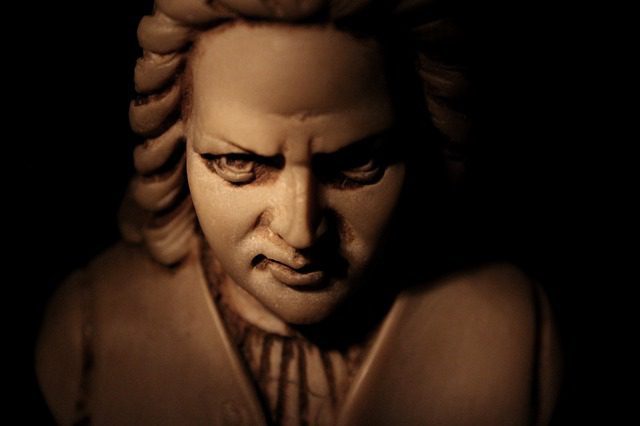 Alex Ross, music critic for The New Yorker has written a fascinating piece on Bach’s theology. He says that while much research of the past tried to look at Bach in purely secular terms, today’s scholarship is attempting to unpack the musical impact of his Lutheranism.
Ross reviews several recent books on the subject, including one that tries to read into Bach’s music elements of anti-semitism, as if that is what Lutheranism is all about. (Despite Luther’s senile ravings at the end of his life, Lutheran theology at the very least removed the stigma that Jews are to be blamed as Christ-killers–what the book in question is looking for in Bach’s *Passions–*since Lutheran theology sees Christ’s death as the result of all human sin, making possible their redemption.) In reading the review of the books, which touches on the struggles and spiritual dynamism reflected in Bach’s music, I was struck by how little outsiders know about the distinctive, unique elements of Lutheran spirituality, such as the contrast between Cross and Glory, and the spiritual desolation known as Anfechtung. These would be highly relevant to Bach’s music, accounting for some of what these scholars otherwise struggle to explain.
But I love Ross’s close readings of Bach’s music, particularly, St. John’s Passion, in which he shows the Biblical and theological meaning of the musical structures the composer employs. I love this quotation of one the authors: “Marissen identifies himself as an agnostic, but adds that in the vicinity of Bach’s music he will never be a “comfortable agnostic.” I love that so much of this research draws on the copy of Bach’s annotated Bible held by Concordia Seminary in St. Louis, which Ross discusses. And I love the overall question asked by this article and by the books themselves: How is it that music based on such archaic theological ideas can connect so profoundly with people in our time? (I would answer that Bach is evidence that Lutheranism itself, properly understood, can connect profoundly with people in our time.)
From Alex Ross, Bach’s Holy Dread – The New Yorker:
“Bach & God” (Oxford) is the splendid title of a new book by Michael Marissen, a professor emeritus at Swarthmore College. It brings to mind two approximately equal figures engaged in a complicated dialogue, like Jefferson and Adams, or Siskel and Ebert. The book is one of a number of recent attempts to grapple with Bach’s religiosity. Others are Gardiner’s “Bach: Music in the Castle of Heaven” (Knopf); Eric Chafe’s “J. S. Bach’s Johannine Theology” (Oxford); and John Butt’s “Bach’s Dialogue with Modernity: Perspectives on the Passions” (Cambridge). All ask, in different ways, how we should approach works whose devotional intensity is alien to most modern listeners. Marissen identifies himself as an agnostic, but adds that in the vicinity of Bach’s music he will never be a “comfortable agnostic.”
Previous Bach scholarship tended to take a more secular tack. Many of us grew up with an Enlightenment Bach, a nondenominational divinity of mathematical radiance. Glenn Gould’s commentary on the “Goldberg Variations” spoke of a “fundamental coordinating intelligence.” One German scholar went so far as to question the sincerity of Bach’s religious convictions. But the historically informed performance movement, in trying to replicate the conditions in which Bach’s works were first played, helped to restore awareness of his firm theological grounding. Recorded surveys of the two hundred or so sacred cantatas, including Gardiner’s epic undertaking in 1999 and 2000, have brought Bach’s spirituality to the forefront. To what extent does he faithfully transmit Lutheran doctrine? What did he privately believe? Marissen also confronts an issue that many prefer to avoid: do Bach’s Passions project anti-Semitism?. . . .
The book that perhaps reveals more of Bach than any other can be found at the Concordia Seminary, in St. Louis. By chance, that organization came into possession of Bach’s copy of Abraham Calov’s three-volume edition of the Bible, which contains Luther’s translation of the Bible alongside commentaries by Luther and Calov. Bach made notes in it and, in 1733, signed his name on the title page of each volume. The marginalia establish the fervor of his belief: no Sunday Christian could have made such acute observations. Bach singles out passages describing music as a vessel of divinity: in one note, he observes that music was “especially ordered by God’s spirit through David,” and in another he writes, “With devotional music, God is always present in his grace.” The annotations also seem to reveal some soul-searching. This passage is marked as important, and is partly underlined: “As far as your person is concerned, you must not get angry with anyone regardless of the injury he may have done to you. But, where your office requires it, there you must get angry.” One can picture Bach struggling to determine whether his “almost continual vexation” stemmed from his person or his office—from vanity or duty.
Yes, Bach believed in God. What is harder to pin down is how he positioned himself among the theological trends of the time. The Pietist movement, which arose in the late seventeenth century, aimed at reinvigorating an orthodox Lutheran establishment that, in its view, had become too rigid. Pietists urged a renewal of personal devotion and a less combative attitude toward rival religious systems, including Judaism. Bach made passing contact with Pietist figures and themes, though he remained aligned with the orthodox wing—not least because Pietists held that music had too prominent a role in church services.
Illustration by Isabella Quintana, “Bach Musician,” Pixabay, CC0, Public Domain.
Previous Post

January 5, 2017
Simulated relationships
Next Post
January 6, 2017 Democrats hope to come back by going left
Recent Comments
"I know wired earbuds are making a comeback (I never stopped using them as I ..."
"VCRs, tape decks, and cassette players are all having a revival among a segment of ..."
"As a (retired) lawyer I see potential liability from sharing things like power or sharp ..."
"I am not sure the items you mentioned, though disused, discontinued, discarded, could be considered ..."
Browse Our Archives
Select a Category America Apologetics Art baseball Bible Blog Christ Church crime Culture Economics Education Ethics Family Food Football Government History Holidays Holy Week Humor International Islam Language Law Life Issues Literature Media Medicine Movies Music Nature News Personal Philosophy Politics psychology Reformation Religions Sacraments Science sex Social Science Sports technology television terrorism Theology Uncategorized Vocation war
Select a Month October 2026 September 2026 August 2026 July 2026 June 2026 May 2026 April 2026 March 2026 February 2026 January 2026 December 2025 November 2025 October 2025 September 2025 August 2025 July 2025 June 2025 May 2025 April 2025 March 2025 February 2025 January 2025 December 2024 November 2024 October 2024 September 2024 August 2024 July 2024 June 2024 May 2024 April 2024 March 2024 February 2024 January 2024 December 2023 November 2023 October 2023 September 2023 August 2023 July 2023 June 2023 May 2023 April 2023 March 2023 February 2023 January 2023 December 2022 November 2022 October 2022 September 2022 August 2022 July 2022 June 2022 May 2022 April 2022 March 2022 February 2022 January 2022 December 2021 November 2021 October 2021 September 2021 August 2021 July 2021 June 2021 May 2021 April 2021 March 2021 February 2021 January 2021 December 2020 November 2020 October 2020 September 2020 August 2020 July 2020 June 2020 May 2020 April 2020 March 2020 February 2020 January 2020 December 2019 November 2019 October 2019 September 2019 August 2019 July 2019 June 2019 May 2019 April 2019 March 2019 February 2019 January 2019 December 2018 November 2018 October 2018 September 2018 August 2018 July 2018 June 2018 May 2018 April 2018 March 2018 February 2018 January 2018 December 2017 November 2017 October 2017 September 2017 August 2017 July 2017 June 2017 May 2017 April 2017 March 2017 February 2017 January 2017 December 2016 November 2016 October 2016 September 2016 August 2016 July 2016 June 2016 May 2016 April 2016 March 2016 February 2016 January 2016 December 2015 November 2015 October 2015 September 2015 August 2015 July 2015 June 2015 May 2015 April 2015 March 2015 February 2015 January 2015 December 2014 November 2014 October 2014 September 2014 August 2014 July 2014 June 2014 May 2014 April 2014 March 2014 February 2014 January 2014 December 2013 November 2013 October 2013 September 2013 August 2013 July 2013 June 2013 May 2013 April 2013 March 2013 February 2013 January 2013 December 2012 November 2012 October 2012 September 2012 August 2012 July 2012 June 2012 May 2012 April 2012 March 2012 February 2012 January 2012 December 2011 November 2011 October 2011 September 2011 August 2011 July 2011 June 2011 May 2011 April 2011 March 2011 February 2011 January 2011 December 2010 November 2010 October 2010 September 2010 August 2010 July 2010 June 2010 May 2010 April 2010 March 2010 February 2010 January 2010 December 2009 November 2009 October 2009 September 2009 August 2009 July 2009 June 2009 May 2009 April 2009 March 2009 February 2009 January 2009 December 2008 November 2008 October 2008 September 2008 August 2008 July 2008 June 2008 May 2008 April 2008 March 2008 February 2008 January 2008 December 2007 November 2007 October 2007
Follow Us!
TAKE THE
Religious Wisdom Quiz
What New Testament book is known for its chapter on charity?
Select your answer to see how you score.
1 Corinthians Philippians Hebrews Romans
Books by This Author Books by Gene Veith
Related posts from Cranach


Gen Z Wants Evildoers to Be Punished, Not...

As Fulton Sheen Is Beatified, Don't Forget Walter...

How the Integralists Are Like the Socialists
TRENDING AT PATHEOS Evangelical

Methodist Central Hall and Westminster Abbey
Situated on the same square is Methodist Central Hall and Westminster Abbey. ...

57th Dove Awards Honor Dolly Parton, Crown New...
On gospel music’s biggest night, the 57th annual GMA Dove Awards honored...

The First Eucharistic Controversy: Christ’s Real Presence
For Catholics, the Eucharist is the source and summit of the Christian...

What a Stop Sign Can Teach Us About...
How to Make a Decision When You Can't Hear God Main point:...

Archdiocese Hosts Military Marriage Retreat in Germany
RASTATT, Germany — The transient military lifestyle, with its frequent deployments and...

Nearly every morning, I make the drive to Detroit with my high-school-age...
view all Evangelical blogs
What Are Your Thoughts?leave a comment
Ad-Free & Subscriber Log-In Subscription Support
- About Us
- 2026 Calendar
- Videos
- Podcasts
- Library of World Religions
- Faith In Media Tracker
- Advertise With Us
- Write for Us
- Privacy Policy
- Terms of Service
- Do Not Sell My Data
- Contact Us
- Radiant Digital
- Manage Newsletter Subscriptions
- Unsubscribe From Notifications
- Sitemap
Copyright 2008-2026, Patheos. All rights reserved.
Subscription Support Ad-Free & Subscriber Log-In
Follow Patheos